Ingredients
Equipment
Method
Cook the berries
- Bring fresh cranberries, sugar, and water to a boil in a pot over medium-high heat, then reduce to a steady simmer for 10 minutes until all the berries burst.
- Keep the simmer going without stirring constantly so the berries break down evenly and the mixture thickens slightly, then remove from heat.
Strain for a smooth gel
- Press the mixture through a fine-mesh strainer, scraping to push all the pulp through, and discard the skins.
- Return the strained puree to the pot and stir in lemon juice and salt.
Set the jellied sauce
- Bring the mixture to a boil, then boil for 3-4 minutes while stirring to ensure the gel base is fully cooked.
- Pour into a lightly oiled mold, loaf pan, or clean can and let it cool briefly at room temperature.
- Chill at least 6 hours or overnight until firm.
Unmold and slice
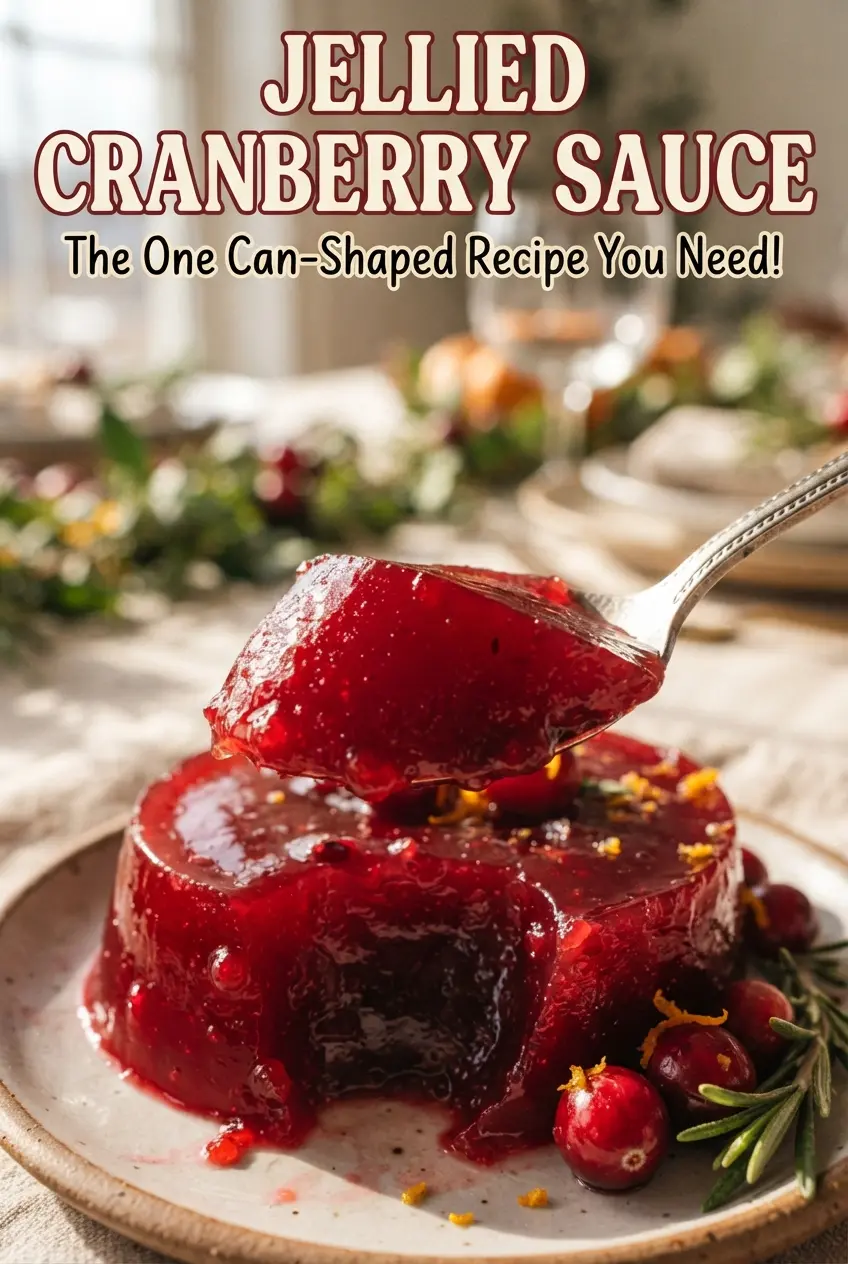
- Run a knife around the edge, invert onto a plate, and slice into rounds to serve.
Notes
For the smoothest, sliceable texture, scrape the strained solids thoroughly so you leave behind only the skins. Refrigerate covered for up to 5 days; freeze yes—wrap tightly and freeze up to 2 months, thaw in the refrigerator overnight before slicing. If you prefer a lower-sugar option, use a 1:1 granulated sugar substitute intended for cooking and setting (gel results may vary).