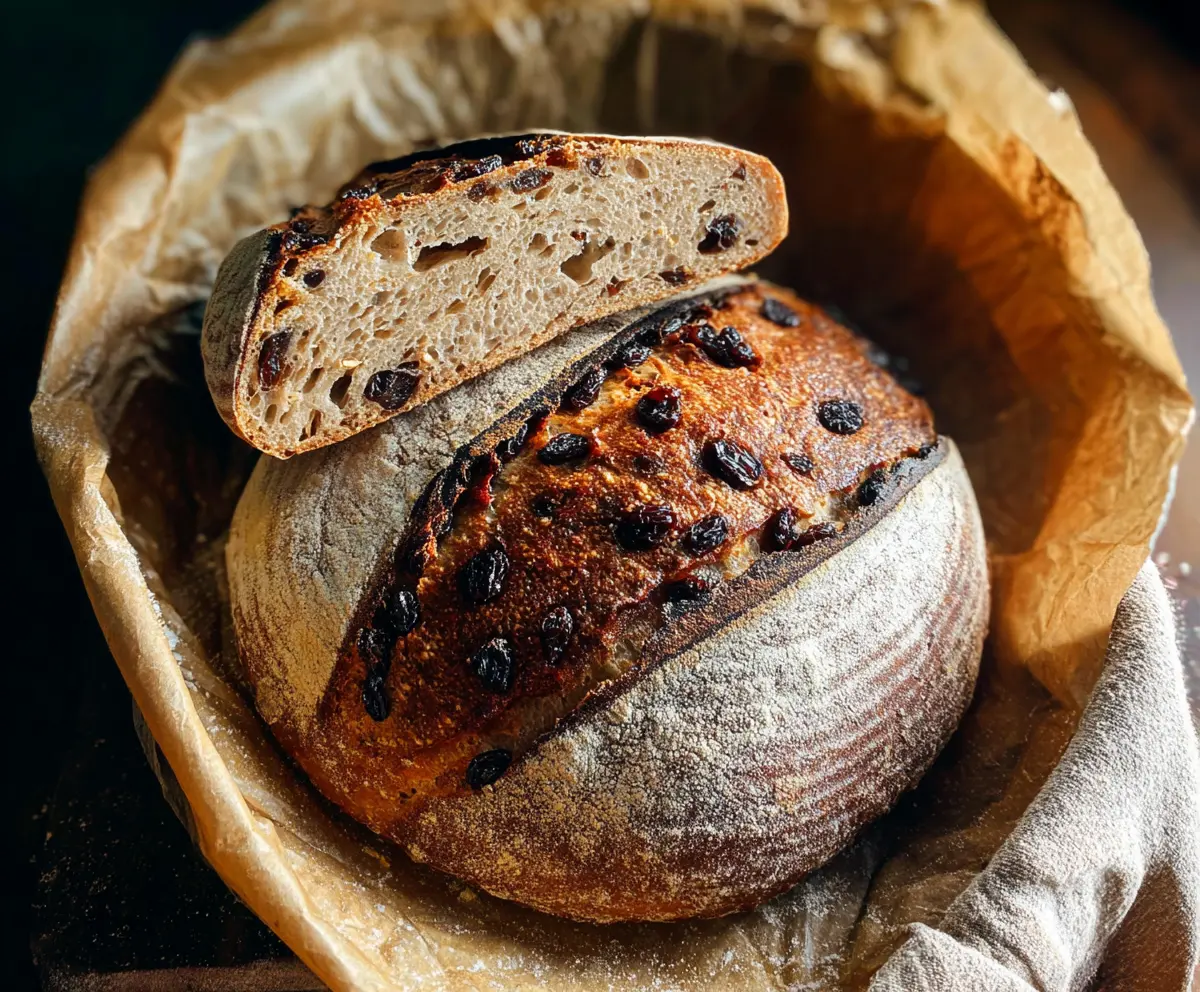
This delightful Cinnamon Raisin Sourdough Bread is soft, fluffy, and packed with sweet raisins and warm cinnamon. It’s perfect for breakfast or a cozy snack!
I love to toast a slice for a yummy start to my day, maybe with a bit of butter on top. It fills the kitchen with the best smell—surely, it’s the happiest bread around! 😄
Key Ingredients & Substitutions
Bread Flour: This gives the bread its structure and chewiness. You can substitute with all-purpose flour, but your bread may not be as airy. I personally love the robust texture that bread flour provides.
Sourdough Starter: Make sure your starter is active and bubbly! If you don’t have one, you can use store-bought sourdough starter or even instant yeast, but the flavor will differ. I find that an active starter brings the best tangy flavor.
Raisins: Regular raisins add sweetness and chew. You can swap them with currants or sultanas for different flavor notes. Sometimes, I prefer using golden raisins for their unique taste.
Cinnamon: This is key for that cozy flavor. You could use ground nutmeg or allspice for a different taste, but I always stick with cinnamon for that classic profile.
Honey or Sugar: This is optional but adds a touch of sweetness. I like honey for its depth, but brown sugar works well if you prefer that caramel flavor!
How Do You Properly Incorporate Raisins into Your Dough?
Adding raisins to your dough requires a gentle touch. Their sweetness and moisture can alter the texture, so here’s how to do it well:
- After the rest period (autolyse), gently fold the soaked raisins into your dough instead of mixing aggressively. This helps in preserving their shape and moisture.
- Make sure they are evenly distributed throughout the dough to enjoy that sweet burst in every bite.
By incorporating them smoothly, the dough won’t get too dense, and you’ll have a beautiful, flavorful loaf at the end!
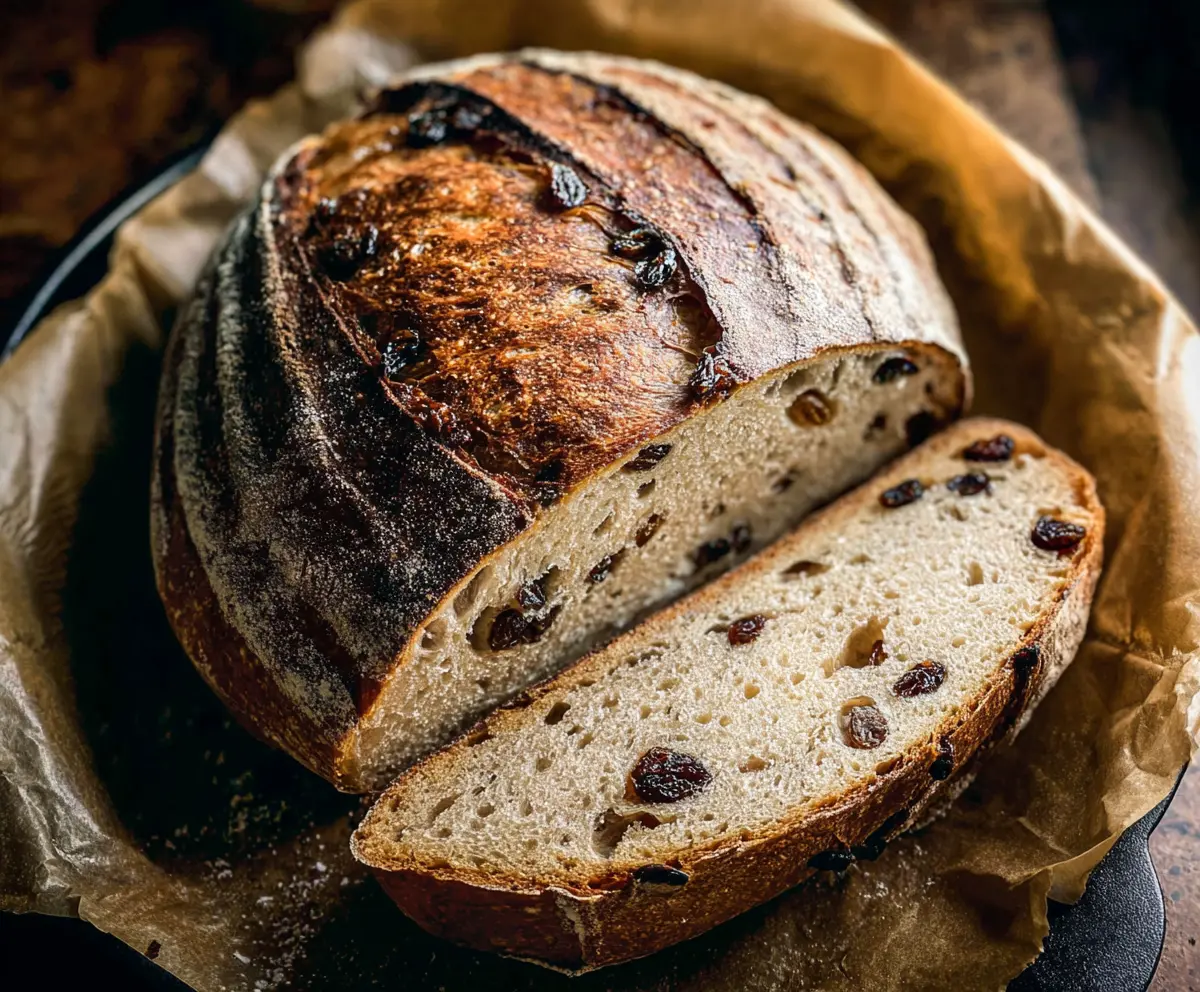
How to Make Cinnamon Raisin Sourdough Bread
Ingredients You’ll Need:
- 500 g bread flour
- 350 g water (room temperature)
- 100 g active sourdough starter (100% hydration)
- 10 g salt
- 50 g raisins
- 1 tbsp ground cinnamon
- 1 tbsp honey or sugar (optional, to enhance sweetness)
- 50 g warm water (to soak raisins)
How Much Time Will You Need?
This recipe will take approximately 5 to 7 hours from start to finish. You’ll need about 30 minutes for the initial mixing and shaping, followed by 4 to 6 hours for bulk fermentation, and 3 to 4 hours for final proofing. Lastly, you’ll spend about 40-50 minutes baking the bread. It’s a bit of patience, but the smell and taste are absolutely worth it!
Step-by-Step Instructions:
1. Prepare the Raisins:
First things first, let’s plump those raisins! Soak the raisins in 50 g of warm water for about 20 minutes. This will make them soft and chewy. Once they’re nice and plump, drain them and set them aside for later.
2. Mix the Dough:
In a large mixing bowl, add the bread flour, the water (350 g), your active sourdough starter, salt, ground cinnamon, and honey or sugar if you’re using it. Stir everything together until it’s just combined. Now, cover the bowl with a cloth or plastic wrap and let it rest for about 30 minutes. This rest is called autolyse and helps with the dough’s development.
3. Incorporate the Raisins:
After the autolyse period, gently fold the soaked raisins into the dough. Be careful not to mix too aggressively; you want to preserve that soft texture. Just fold them in until they’re evenly spread throughout!
4. Bulk Fermentation:
Cover the bowl again and let the dough ferment at room temperature for 4 to 6 hours. During the first 2 hours, every 30 to 45 minutes, perform a series of stretch and folds to help develop the gluten. Simply grab a corner of the dough, stretch it up, and fold it over itself. Do this on all four sides. Repeat this about 4 times.
5. Shape the Dough:
Once your dough has fermented and has nice bubbles on the surface, turn it out onto a lightly floured surface. Shape it into a tight round mound or boule. Once shaped, place the dough seam-side up into a floured proofing basket (banneton) to help it hold its shape.
6. Proofing Phase:
Now, cover the basket and let it proof at room temperature for about 3 to 4 hours. If you prefer developed flavor, you can also put it in the refrigerator overnight for easier handling later. Just remember to take it out to warm up for about an hour before baking!
7. Preheat the Oven:
While your dough is proofing, preheat your oven to 230°C (450°F) with a Dutch oven inside. The Dutch oven will create steam, helping your bread to rise beautifully.
8. Bake the Bread:
Once the oven is hot, turn the proofed dough out onto a piece of parchment paper. Use a sharp blade to score the top of the dough to allow for proper expansion. Carefully transfer the dough with the parchment into the hot Dutch oven, cover it with the lid, and bake for 20 minutes.
9. Finish Baking:
After 20 minutes, remove the lid from the Dutch oven and continue baking for another 20 to 25 minutes until the crust is a deep golden brown and smells incredible!
10. Cool Down:
Once baked, take the bread out of the oven and let it cool completely on a wire rack. This step is essential to ensure your bread has the perfect texture. Once cooled, slice, and enjoy your homemade treat!
Toast a slice with some butter or enjoy it plain. Either way, it’s sure to be delicious!
Can I Use Whole Wheat Flour Instead of Bread Flour?
Absolutely! You can substitute up to 50% of the bread flour with whole wheat flour for added nutrition and flavor. Just be aware that the texture may be denser, so you might want to increase the hydration slightly by adding a bit more water.
What Can I Substitute for Raisins?
If you’re not a fan of raisins, you can replace them with other dried fruits like cranberries, dried cherries, or even chopped dried apricots. Just make sure they are plumped if they are particularly dry, and adjust the sweetness if needed.
How Should I Store the Bread?
To store your Cinnamon Raisin Sourdough Bread, let it cool completely, then wrap it in parchment paper or a kitchen towel and place it in a bread box or a paper bag at room temperature. It will stay fresh for about 3 days. If you want to keep it longer, slice and freeze it in an airtight container. Just toast a slice straight from the freezer when you’re ready to enjoy!
Can I Use Instant Yeast Instead of Sourdough Starter?
Yes, you can use instant yeast instead of sourdough starter! Use about 1-2 teaspoons of instant yeast for this recipe. However, the flavor will change, and you won’t achieve the same sour tang. Proof the dough for about 1-2 hours until it doubles in size instead of the longer fermentation time required for sourdough.