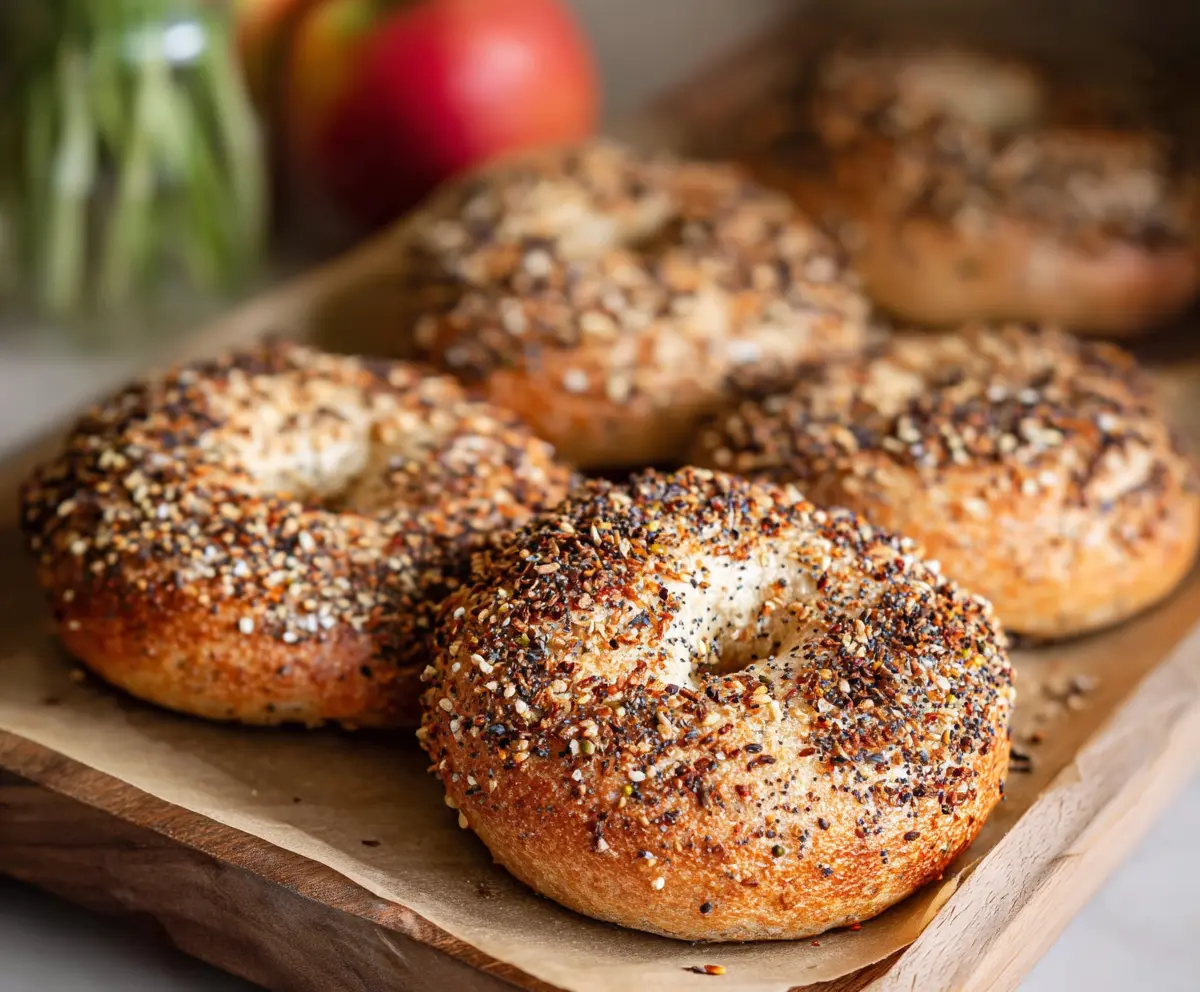
These overnight sourdough bagels are soft, chewy, and simply delightful! You make the dough the night before, let it rise, and shape the bagels in the morning. Easy peasy!
There’s nothing quite like sinking your teeth into a fresh bagel. I like to toast them and spread on some cream cheese. Seriously, it’s a breakfast win! 🥯✨
Key Ingredients & Substitutions
Sourdough Starter: A strong, active starter is crucial. If you’re new to sourdough, you could substitute with instant yeast (1 tsp) but you’ll miss out on the unique flavor sourdough brings!
Bread Flour: This flour provides the right amount of protein for chewy bagels. If you don’t have bread flour, all-purpose flour works in a pinch, though the texture will be slightly different.
Brown Sugar or Barley Malt Syrup: Both enhance flavor! If neither is available, honey or maple syrup can add sweetness, but might slightly alter the taste.
Toppings: Get creative! If you don’t have everything bagel seasoning, try sesame seeds, poppy seeds, or your favorite herbs. You can also skip toppings for plain bagels—still delicious!
How Do I Knead the Dough Properly?
Kneading is key to developing the gluten structure for that perfect bagel chewiness. Start by placing your dough on a floured surface and push it down with the heel of your hand, then fold it over itself. Here’s a short guide:
- Knead for 8-10 minutes until the dough is smooth and elastic. It should feel slightly tacky but not sticky.
- If it feels too sticky, add just a sprinkle of flour at a time—too much will make the bagels dense.
- To check if it’s ready, poke it with a finger. It should spring back slightly!
Happy baking, and enjoy those chewy sourdough bagels!
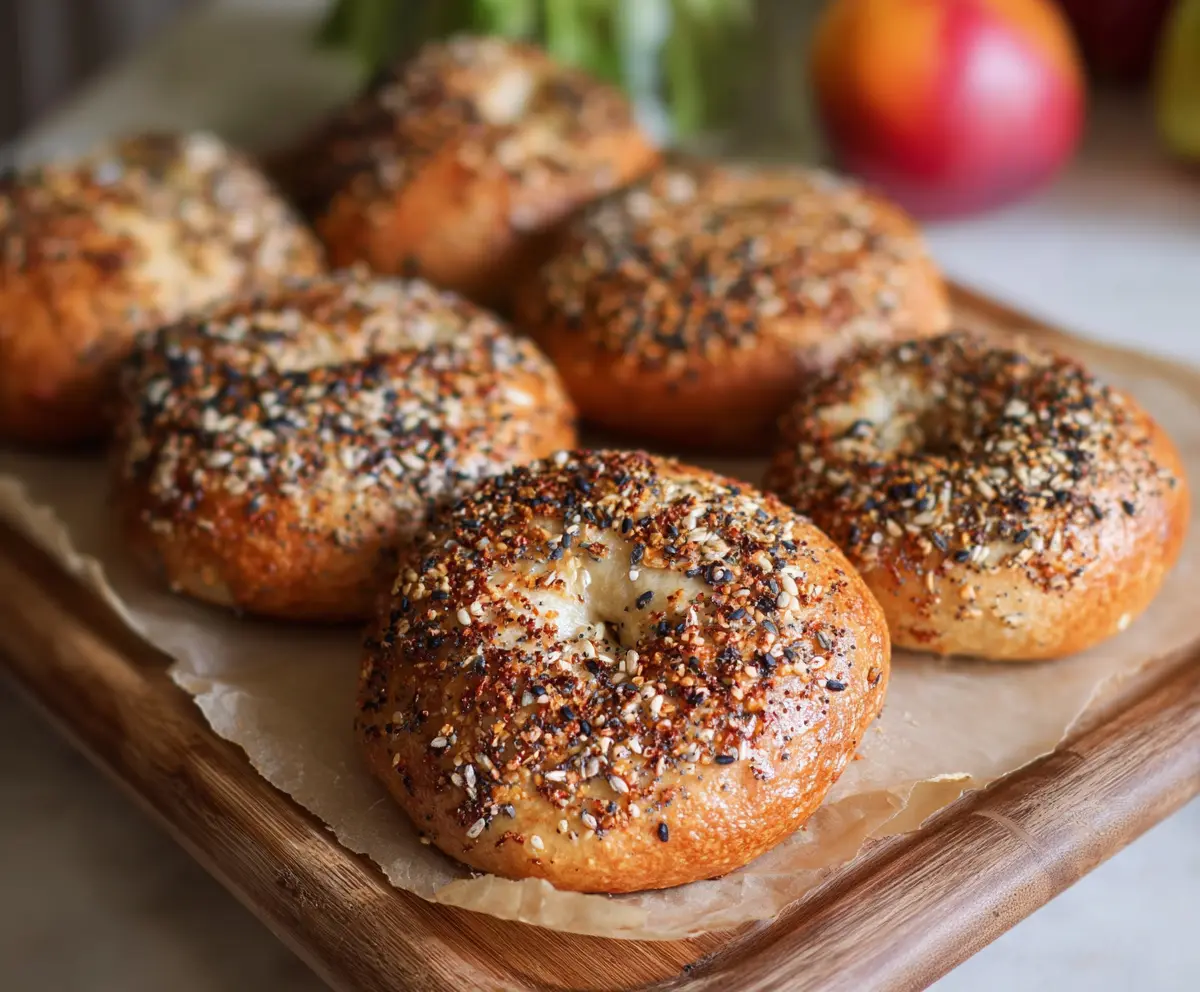
How to Make Overnight Sourdough Bagels
Ingredients You’ll Need:
For the Dough:
- 1 cup (240g) active sourdough starter (100% hydration)
- 2 ½ cups (340g) bread flour, plus extra for dusting
- 1 tsp fine sea salt
- 1 tbsp brown sugar or barley malt syrup
- ¾ cup (180ml) lukewarm water (adjust as needed)
For Boiling:
- 2 liters water
- 1 tbsp baking soda
- 1 tbsp brown sugar or barley malt syrup
For Toppings (everything bagel seasoning mix):
- 1 tbsp sesame seeds
- 1 tbsp poppy seeds
- 1 tbsp dried minced onion or onion flakes
- 1 tbsp dried minced garlic or garlic flakes
- 1 tsp coarse sea salt
How Much Time Will You Need?
This recipe requires about 20 minutes of prep time and then needs to rise for approximately 3-4 hours at room temperature, followed by an overnight refrigeration (8-12 hours). On the day of baking, you’ll need about 30-40 minutes to shape, boil, and bake the bagels.
Step-by-Step Instructions:
1. Prepare the Dough:
In a large bowl, mix the active sourdough starter, lukewarm water, and brown sugar (or barley malt syrup) until combined. Add the bread flour and salt, mixing until a rough dough forms. You should see a bit of flour left unincorporated at this point.
2. Knead:
Turn the dough out onto a lightly floured surface. Knead it for about 8-10 minutes until it’s smooth and elastic. The dough should feel slightly tacky but not sticky. If it sticks too much, sprinkle a little more flour as needed.
3. First Rise (Bulk Fermentation):
Shape the dough into a ball and place it in a bowl lightly greased with oil. Cover it with a damp towel or plastic wrap and let it sit at room temperature for about 3-4 hours, or until it becomes slightly puffy (but not doubled in size).
4. Refrigerate Overnight:
Once the dough has risen, cover the bowl tightly with plastic wrap and refrigerate overnight. This slow fermentation process allows deep flavors to develop in your bagels.
5. Shape Bagels:
The next day, remove the dough from the fridge. Turn it out onto a floured surface and divide it into 6 equal pieces. Pre-shape each piece into a round ball. Let them rest for 15 minutes under a loose towel.
6. Form Bagels:
Using your finger, poke a hole through the center of each ball and gently stretch the hole to about 2 inches in diameter. You should now have the classic bagel shape!
7. Second Rise:
Place the shaped bagels on lined baking sheets. Cover them with a towel and let them rest for another 30-60 minutes, until they become a little puffy.
8. Preheat Oven:
While the bagels are rising, preheat your oven to 450°F (230°C). To create steam, place a tray with water on the bottom rack of your oven.
9. Prepare Boiling Water:
In a large pot, bring 2 liters of water to a boil. Once boiling, stir in the baking soda and brown sugar (or malt syrup) until dissolved.
10. Boil Bagels:
With a slotted spoon, gently lower 2-3 bagels into the boiling water. Boil for 45 seconds, then carefully flip them over and boil for another 45 seconds. Remove them and drain on a clean kitchen towel or wire rack.
11. Add Toppings:
Immediately after boiling, sprinkle or dip the tops of the bagels in your everything seasoning mix.
12. Bake:
Carefully place the bagels on a parchment-lined baking sheet and bake them in the preheated oven for 15-20 minutes, or until they are golden brown and crisp.
13. Cool:
After baking, transfer the bagels to a wire rack to cool down slightly before slicing them. Enjoy your delicious, chewy Overnight Sourdough Bagels with cream cheese or your favorite toppings!
Happy baking!
Can I Use Active Dry Yeast Instead of Sourdough Starter?
Yes, you can substitute active dry yeast if you don’t have a sourdough starter. Use about 2 ¼ teaspoons (1 packet) of yeast mixed with the lukewarm water and let it activate for 5-10 minutes before adding the flour and sugar. Keep in mind that the flavor will differ from traditional sourdough bagels!
How Do I Store Leftover Bagels?
Store leftover bagels in an airtight container at room temperature for up to 2 days. For longer storage, place them in a sealed plastic bag and freeze them for up to 3 months. When ready to enjoy, thaw at room temperature or pop them in a toaster for a quick warm-up!
Can I Make Smaller or Larger Bagels?
Absolutely! Feel free to adjust the portion sizes when shaping your bagels. Just remember that the cooking time may vary: smaller bagels will need less time to boil and bake, while larger ones may require a few extra minutes.
What If My Bagels Turn Out Too Dense?
Densely textured bagels can result from not kneading enough, improper measuring of flour, or an underdeveloped gluten structure. Make sure to knead until smooth and elastic, measuring flour accurately, and don’t skip the overnight refrigeration—it enhances flavor and texture!