1770 House meatloaf lands on the plate with a browned, savory crust and a sliceable, tender center that eats more like a steakhouse main than the heavy diner version most people grew up with. The roasted garlic sauce is what makes it memorable. It’s creamy, gently sweet from the garlic, and just loose enough to pour around each slice without drowning the meat.
The texture comes from a few small choices that matter: soaking the breadcrumbs in milk before they go into the bowl, using a mix of beef and pork for richness, and shaping the loaf free-form so the exterior can caramelize instead of steaming in a pan. Sautéing the onion first softens its bite and keeps the loaf from tasting rough or undercooked in the middle.
Below you’ll find the timing that keeps the loaf juicy, the one place people usually overmix, and a couple of ways to adapt the sauce if you want it a little lighter or a little richer.
The loaf held together beautifully and the garlic sauce came out silky after I blended it. I used the full 70 minutes and it sliced cleanly after resting, which never happens for me with meatloaf.
Save this 1770 House Meatloaf with Garlic Sauce for the nights when you want a deeply browned meatloaf with a creamy roasted garlic finish.
The Free-Form Shape That Gives You the Crust You Want
Most meatloaves fail in the same way: they bake up soft on the outside because they’re packed into a loaf pan, which traps moisture and turns the edges pale. This version goes on a parchment-lined baking sheet, so hot air can reach all sides and build that dark, caramelized exterior that makes the first slice worth serving.
The other thing that matters here is the mix. Beef brings flavor, pork brings tenderness, and the breadcrumbs soaked in milk keep the loaf from tightening up in the oven. If your meatloaf has ever turned dense or crumbly, the problem was usually one of two things: dry binder or overmixing. Stop as soon as the ingredients are evenly distributed.
What the Beef, Pork, and Roasted Garlic Each Bring to the Pan
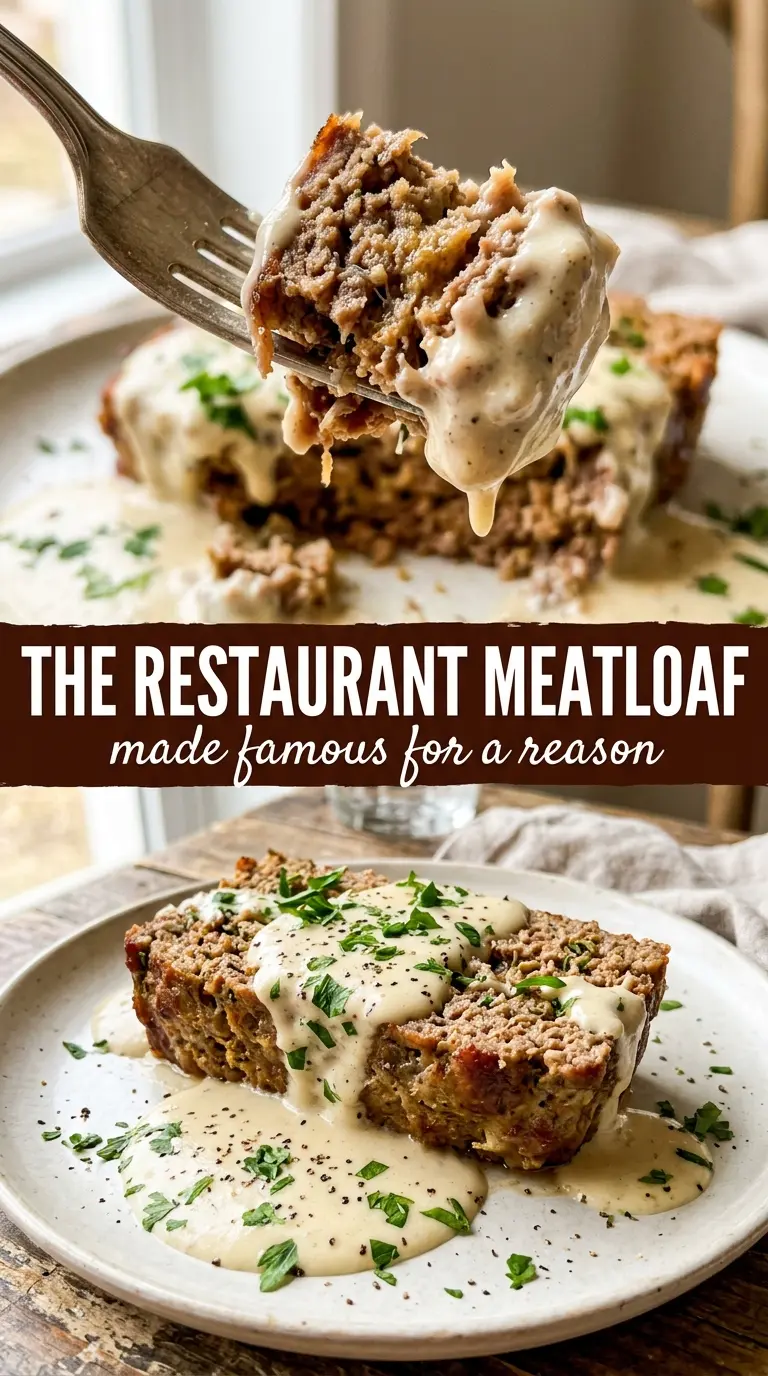
- Ground beef (80/20) — This is the backbone of the loaf. The fat keeps the meatloaf juicy and gives the finished slices real beefy flavor. Leaner beef works, but the texture gets drier and the sauce has to carry more of the dish.
- Ground pork — Pork softens the texture and adds richness without making the loaf taste heavy. If you only have beef, it still works, but the result is a little tighter and less plush.
- Breadcrumbs soaked in milk — This is the difference between tender and dry. The crumbs swell before they go into the meat, so they help the loaf hold moisture instead of stealing it in the oven.
- Roasted garlic — Raw garlic would be sharp and aggressive in the sauce. Roasted garlic turns sweet and mellow, which is why the sauce tastes round instead of pungent.
- Heavy cream — This gives the sauce its silky body. Half-and-half can work in a pinch, but the sauce will be thinner and a little less luxurious.
Building the Loaf and Finishing the Garlic Sauce
Softening the Breadcrumbs First
Soak the breadcrumbs in the milk for the full 5 minutes before they go into the bowl. They should look damp and swollen, not soupy. If you skip this step, the breadcrumbs pull moisture from the meat while it bakes, and the center can end up dry even when the loaf is cooked through.
Mixing Without Packing It Tight
Add the beef, pork, onion, garlic, Worcestershire, Dijon, thyme, salt, pepper, and the soaked crumbs, then mix just until everything looks evenly combined. Use your hands and stop early. If you keep working the mixture, the proteins tighten and the loaf turns springy instead of tender. A few uneven streaks disappear once it bakes.
Baking Until the Center Hits the Right Temperature
Shape the meat into a free-form loaf and bake until the internal temperature reaches 160°F. The top should be deeply browned and the edges should look set and slightly crisp. If the outside is browning too quickly before the center is done, your oven is running hot; tent the loaf loosely with foil for the last part of baking instead of lowering the heat and drying everything out.
Turning Roasted Garlic Into Sauce
Squeeze the roasted garlic into a saucepan with the broth and cream, then simmer just long enough for the flavors to come together. Blend it until smooth before adding the butter, and season at the end. If the sauce looks grainy, it usually means the garlic wasn’t blended fully or the heat was too high when the cream went in. Keep the simmer gentle and the sauce stays silky.
Make It All Beef
If you don’t want to use pork, replace it with another 1/2 pound of 80/20 ground beef. The loaf will still hold together, but it will be a little less tender and a touch more dense, so don’t overbake it.
Dairy-Free Adjustment
Use unsweetened oat milk or plain almond milk in the breadcrumb soak and swap the cream for full-fat coconut milk or a dairy-free cooking cream. The sauce won’t taste exactly the same, but you’ll still get a smooth, pourable finish with enough richness to balance the meatloaf.
Gluten-Free Version
Use gluten-free breadcrumbs and check that your Worcestershire sauce is certified gluten-free. The texture stays close to the original as long as the crumbs are fine and fully moistened before mixing.
Make It Ahead
Shape the loaf, cover it tightly, and refrigerate it for up to 24 hours before baking. The rest helps the flavors settle in, but bring it closer to room temperature before it goes into the oven so the center doesn’t lag behind the edges.
Storage and Reheating
- Refrigerator: Store sliced meatloaf in an airtight container for up to 4 days. The loaf stays moist, and the flavor often gets better by the next day.
- Freezer: Meatloaf freezes well. Wrap slices or the whole cooled loaf tightly, then freeze for up to 3 months. The sauce is best frozen separately if you want the smoothest texture.
- Reheating: Warm slices covered in a 300°F oven with a spoonful of sauce or broth until heated through. The biggest mistake is blasting it in the microwave, which dries the edges before the center is hot.
Questions I Get Asked About This Recipe
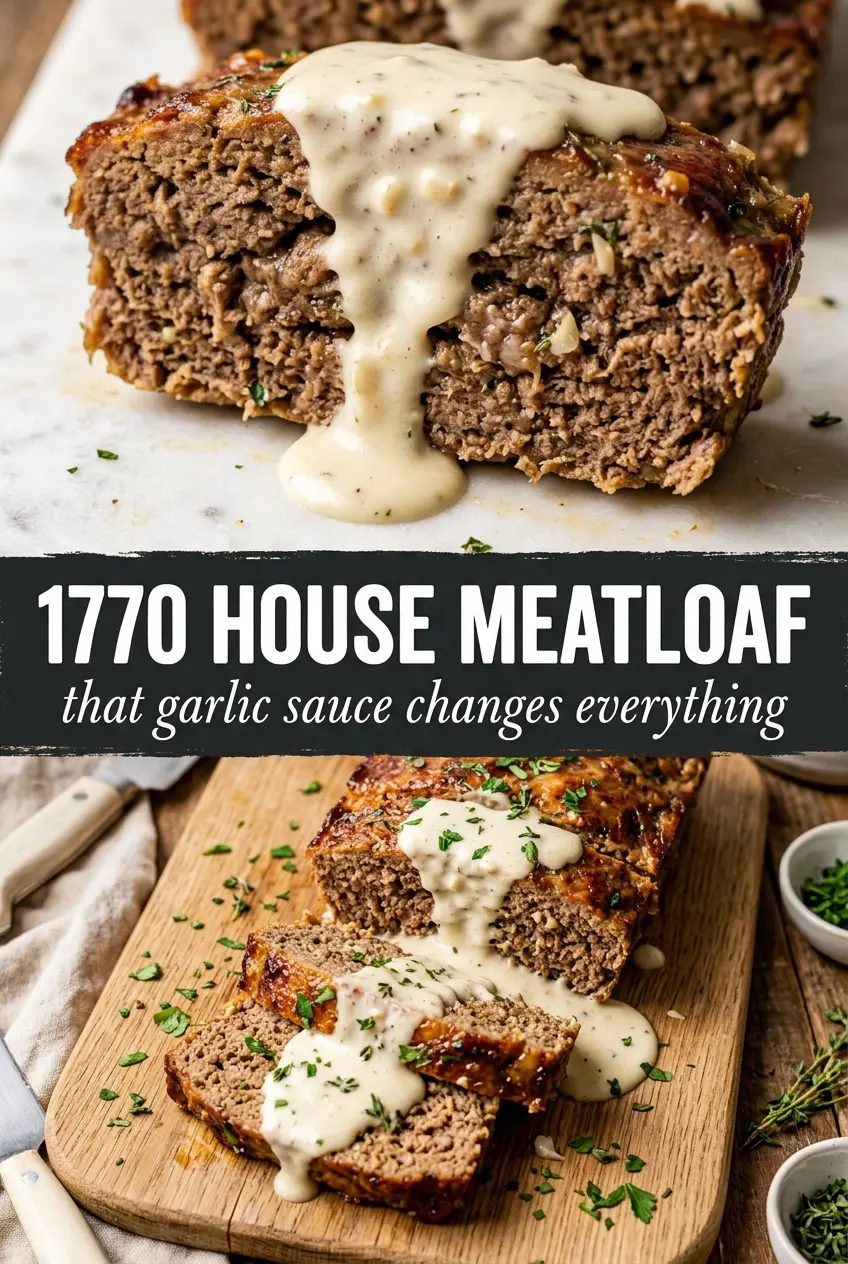
1770 House Meatloaf with Garlic Sauce
Ingredients
Equipment
Method
- Preheat the oven to 325°F.
- Soak the breadcrumbs in the whole milk for 5 minutes, then squeeze out excess milk so the mixture stays cohesive.
- Combine the ground beef (80/20), ground pork, soaked breadcrumbs, eggs, sautéed diced onion, minced garlic, Worcestershire sauce, Dijon mustard, fresh thyme, salt, and pepper, mixing until just combined.
- Shape the mixture into a free-form loaf on a parchment-lined baking sheet.
- Bake at 325°F for 60–70 minutes until the internal temperature reaches 160°F.
- Rest the meatloaf for 10 minutes before slicing so the juices settle and the loaf holds its shape.
- Squeeze the roasted garlic into a saucepan with the chicken broth and heavy cream, then bring it to a simmer and cook for 5 minutes.
- Stir in the butter, blend until smooth, and season with salt and pepper to taste.
- Serve the sauce poured over the sliced meatloaf.