Jammy cranberry sauce with a bright, clean tartness beats the canned version every time. When it’s done right, it sets into a glossy spoonable sauce with whole berries still visible, and it lands on the plate with just enough sweetness to keep people going back for another bite. This version earns its place because it keeps the ingredient list short without tasting thin or sharp.
The trick is simple: dissolve the sugar first, then cook the cranberries just until most of them burst and the liquid turns syrupy. Cranberries are naturally full of pectin, so once the heat comes off, the sauce thickens on its own as it cools. If you stop cooking when the berries are popped but still hold some shape, you get that nice balance of texture instead of cranberry soup.
Below, I’ll show you how to judge the simmer so the sauce finishes thick and glossy, plus a few practical swaps if you want to adjust the sweetness without losing that classic cranberry bite.
The sauce thickened up exactly as promised once it cooled, and the berries kept just enough shape that it didn’t turn into a puree. I made it the night before, and it was even better the next day.
Save this 3 Ingredient Cranberry Sauce for a glossy, jammy side that thickens as it cools.
The Part That Keeps Cranberry Sauce From Ending Up Watery
Cranberry sauce goes wrong when the berries don’t cook long enough to release their pectin, or when the heat stays too low and the sugar never fully dissolves before the fruit goes in. That leaves you with sharp, loose liquid instead of a sauce that clings to the spoon. The answer is to get the sugar-water mixture boiling first, then let the cranberries cook at a lively simmer until you hear them pop and see the liquid turn slightly glossy.
Don’t chase a thick texture in the pot. Cranberry sauce looks looser when it’s hot than it will after chilling, and that’s exactly how it should be. If it still seems thin after 10 minutes, give it another minute or two, but don’t cook it down until all the berries collapse completely or the sauce turns dull and jammy in the wrong way.
What Each Ingredient Is Actually Doing Here
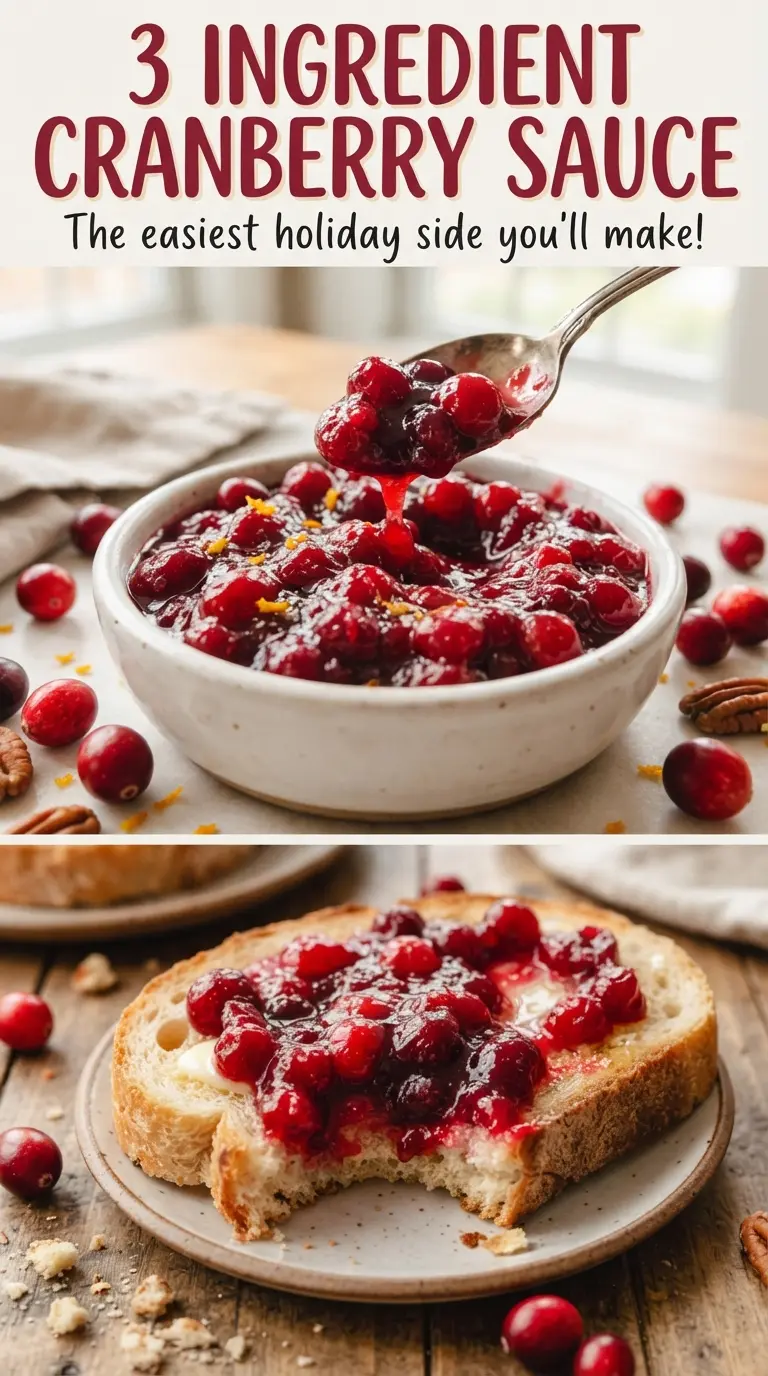
- Fresh cranberries — These are the backbone of the sauce. Their skins split as they cook, releasing natural pectin and giving the sauce its signature set once it cools. Frozen cranberries also work; use them straight from the freezer and add a minute or two to the simmer.
- Granulated sugar — Sugar doesn’t just sweeten here. It balances the sharp cranberry bite and helps the sauce feel glossy instead of harsh. You can reduce it a little if you like a tarter sauce, but cutting it too far can make the finished sauce taste thin and flat.
- Water — This creates the syrupy base that carries the fruit until it breaks down. You can swap in orange juice for part of the water if you want a citrus note, but keep some plain water in the mix so the sauce doesn’t turn bitter or overly sweet before the cranberries soften.
Cooking the Berries Until They Set Themselves
Dissolving the Sugar First
Bring the water and sugar to a full boil and stir until the granules disappear completely. If sugar crystals are still visible when the cranberries go in, they can linger in the finished sauce and make the texture feel slightly sandy. A clear syrup base gives you a cleaner, smoother result from the start.
Cooking the Cranberries to the Right Burst Point
Add the cranberries and return the pan to a boil, then lower the heat to a steady simmer. You should hear a few berries pop within the first couple of minutes, then more as the sauce cooks. Stir occasionally so the fruit at the bottom doesn’t scorch, but don’t stir constantly or you’ll break the berries down before they have a chance to hold any shape.
Stopping When It Still Looks a Touch Loose
After about 10 minutes, the sauce should look thick, shiny, and full of split berries. Turn off the heat while there’s still some visible liquid in the pan; that liquid is what turns into the final sauce once it cools. If you wait until it looks fully thick on the stove, it usually ends up pasty after chilling.
Cooling and Chilling for the Final Texture
Let the sauce cool completely before covering and chilling it. This is when the pectin finishes doing its work, and the texture changes from loose and saucy to spoonable and set. If you taste it warm and think it needs more body, wait until it’s cold before adjusting anything.
How to Tweak Cranberry Sauce Without Losing the Classic Set
Orange Cranberry Sauce
Replace up to half the water with orange juice for a brighter, more fragrant sauce. The citrus rounds out the tart berries, but using all juice can make the flavor a little too sweet and can muddy the clean cranberry taste.
Lower-Sugar Version
Drop the sugar to 3/4 cup if you like a sharper sauce, but don’t go much lower than that unless you want a very tart result. Sugar helps soften the cranberries’ edge and contributes to the glossy finish, so cutting it too far changes both flavor and texture.
Make-Ahead Holiday Side
This sauce is better after a day in the fridge, which makes it one of the easiest parts of the meal to plan ahead. Make it up to 5 days before serving, keep it covered, and stir it once after chilling if you want a smoother spoonful.
Frozen Cranberries
Frozen berries work without thawing, which is handy when fresh cranberries are out of season. They may take a minute longer to burst, but the texture and set are the same once the sauce cools.
Storage and Reheating
- Refrigerator: Store covered for up to 1 week. It thickens more as it chills, so expect a firmer, more spreadable texture the next day.
- Freezer: It freezes well for up to 2 months. Pack it into an airtight container and leave a little headspace so the sauce can expand.
- Reheating: Serve it cold or bring it to room temperature. If you warm it, do it gently on low heat or in short microwave bursts; high heat can make the sauce separate and turn loose again.
Questions I Get Asked About This Recipe
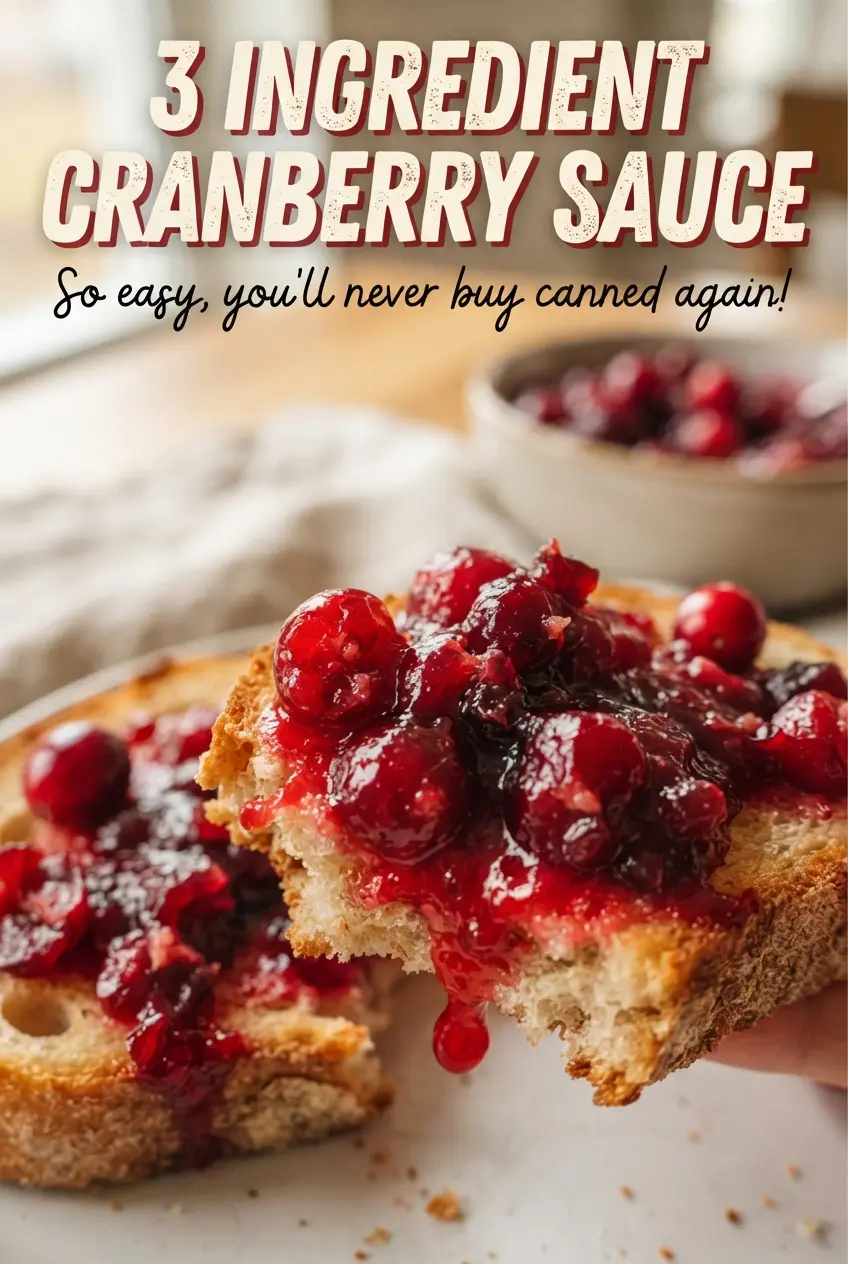
3 Ingredient Cranberry Sauce
Ingredients
Equipment
Method
- Bring granulated sugar and water to a boil in a saucepan over medium-high heat, stirring until the sugar dissolves.
- Add fresh cranberries and return to a boil, stirring to coat the berries.
- Reduce heat to maintain a gentle simmer and cook for 10 minutes, stirring occasionally, until the berries burst and the mixture thickens to jammy ruby sauce.
- Remove the saucepan from the heat and cool completely until the sauce looks slightly more set.
- Chill until serving so the sauce sets as it cools to a thick, spoonable consistency.