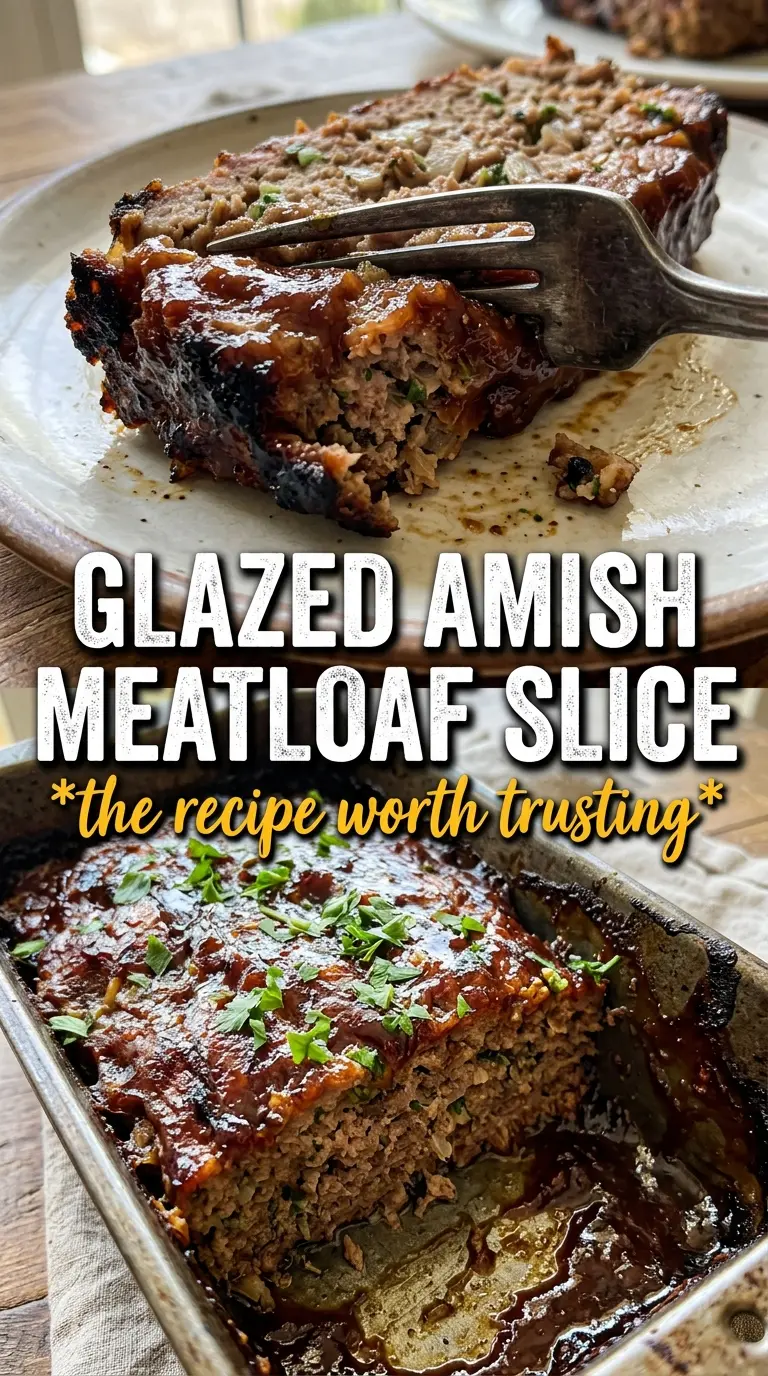
Amish meatloaf bakes up dense, sliceable, and deeply satisfying, with a simple ketchup glaze that turns sticky and caramelized at the edges. It’s the kind of loaf that holds together when you cut it, but still eats tender, not dry or crumbly. The combination of beef and pork gives it a fuller, more old-fashioned flavor than beef alone, and the crushed saltines keep the texture soft without making it pasty.
The trick here is in the balance. Grated onion melts into the meat as it bakes, which gives you moisture and flavor without sharp chunks breaking up the slice. A little Worcestershire and mustard do quiet work in the background, giving the loaf enough depth that the glaze doesn’t have to do all the heavy lifting. Pressing the mixture firmly into the pan also matters; this isn’t a loose, rustic loaf. It’s meant to carve cleanly.
Below, I’ve included the part that makes the biggest difference in an old-fashioned meatloaf like this, plus a few swaps and storage notes so you know exactly what to expect.
The loaf held together beautifully and sliced clean after resting. The glaze got sticky and a little tangy, and the grated onion disappeared into the meat just like you said.
Save this Amish meatloaf for a classic dinner with a sticky ketchup glaze and a firm, old-fashioned slice.
The Part That Keeps This Loaf Dense Instead of Crumbly
Most meatloaf problems start with the same mistake: the mixture is handled too loosely, so it bakes up airy and falls apart when sliced. Amish meatloaf is meant to be compact. That firm texture comes from two things working together — the cracker crumbs bind the meat without turning gummy, and pressing the mixture into the pan removes the little air pockets that cause a loaf to split or crumble.
The other detail that matters is the grated onion. Chopped onion can leave sharp pockets and uneven moisture, especially in a loaf that bakes as long as this one. Grating it lets it melt into the meat, which helps keep every slice juicy from edge to center. If your meatloaf has ever tasted dry on the outside and bland in the middle, this is the fix.
- Ground beef and ground pork — Beef brings the backbone, while pork adds softness and a little richness. All-beef meatloaf works, but it tastes leaner and slices up a bit firmer.
- Crushed saltine crackers — These do the binding job without making the loaf heavy. Plain breadcrumbs can work in a pinch, but saltines bring a little salt and a lighter texture.
- Whole milk and eggs — The milk hydrates the crumbs before baking, and the eggs hold everything together. Low-fat milk is fine, but whole milk gives a rounder, fuller texture.
- Worcestershire and mustard — They don’t shout, but they keep the loaf from tasting flat. Don’t skip both unless you have to; together they give the meat a deeper, more seasoned taste without making it taste like sauce.
What Each Ingredient Is Actually Doing in This Recipe
- Primary ingredient (the star) — Quality matters most. Choose the best you can find.
- Cooking medium (oil, butter, or broth) — This carries flavors and prevents dryness.
- Seasonings (salt, pepper, spices, herbs) — Layer flavors so nothing overpowers. Build depth gradually.
- Aromatics (garlic, onion, herbs) — Cook with fat to bloom flavors. Become the foundation.
- Supporting ingredients — Complement the main ingredient without overpowering it.
- Sauce or liquid (if applicable) — Brings flavors together. Balance richness with acid.
- Acid (lemon, vinegar, wine, or other) — Brightens and prevents flat-tasting results.
- Final finish (garnish, glaze, or sauce) — Prevents one-dimensional taste and adds visual appeal.
Building the Loaf So It Slices Cleanly
Mix the Binder First
Start by combining the crackers, eggs, milk, onion, Worcestershire, mustard, parsley, salt, and pepper before adding the meat. That lets the crackers soften and the seasonings distribute evenly, so you don’t overwork the beef and pork trying to mix them in later. The mixture should look thick and a little loose at first, then tighten as the crumbs drink in the milk. If it looks dry before the meat goes in, add a splash more milk; if it looks soupy, the loaf will bake up dense in a bad way instead of compact in a good way.
Press, Don’t Shape
Transfer the mixture to a greased 9×5 loaf pan and press it down firmly, smoothing the top with the back of a spoon or your hand. This loaf isn’t meant to be freestanding like a burger-shaped meatloaf. The pan gives it the classic straight-sided shape and helps the glaze stay on top instead of sliding off. Pressing it evenly also keeps the center from doming and overcooking before the edges are done.
Glaze Twice for a Sticky Top
Mix the ketchup, brown sugar, and apple cider vinegar, then spread half over the loaf before baking. That first layer sets into the top and gives the second layer something to cling to later. After 55 minutes, spread on the rest and finish baking until the internal temperature reaches 160°F. If you add all the glaze at the start, the sugar can darken too fast and taste bitter before the meat is fully cooked.
Let It Rest Before Slicing
Give the loaf 10 minutes to rest after it comes out of the oven. That pause lets the juices settle and the slices hold together instead of collapsing onto the cutting board. If you cut too soon, the center can look dry even when it’s cooked correctly, because the juices are still moving around. A short rest fixes that every time.
How to Adapt This Amish Meatloaf Without Losing the Old-Fashioned Feel
Make it gluten-free with crushed gluten-free crackers
Swap the saltines for gluten-free crackers in the same amount. The texture stays close to the original because you still get that soft binder, though the flavor will be a little less salty and a touch more neutral.
Use all beef if that’s what you have
You can replace the pork with another pound of ground beef, but the loaf will be leaner and a little firmer. If you go this route, don’t overbake it, and watch the center temperature closely so it stays juicy.
Replace the glaze with straight ketchup if you want it simpler
A plain ketchup topping works, but it won’t have the same sweet-tangy finish or the slight caramel note from the brown sugar and vinegar. It’s a fine shortcut for a weeknight, just less layered on the plate.
Storage and Reheating
- Refrigerator: Store leftovers in an airtight container for up to 4 days. The texture firms up a little when chilled, which actually helps with slicing.
- Freezer: It freezes well. Wrap slices tightly or freeze the whole cooled loaf, then thaw overnight in the refrigerator before reheating.
- Reheating: Warm slices covered in a 325°F oven with a spoonful of water or extra glaze until heated through. The common mistake is blasting it in the microwave, which dries out the edges before the center is warm.
Questions I Get Asked About This Recipe
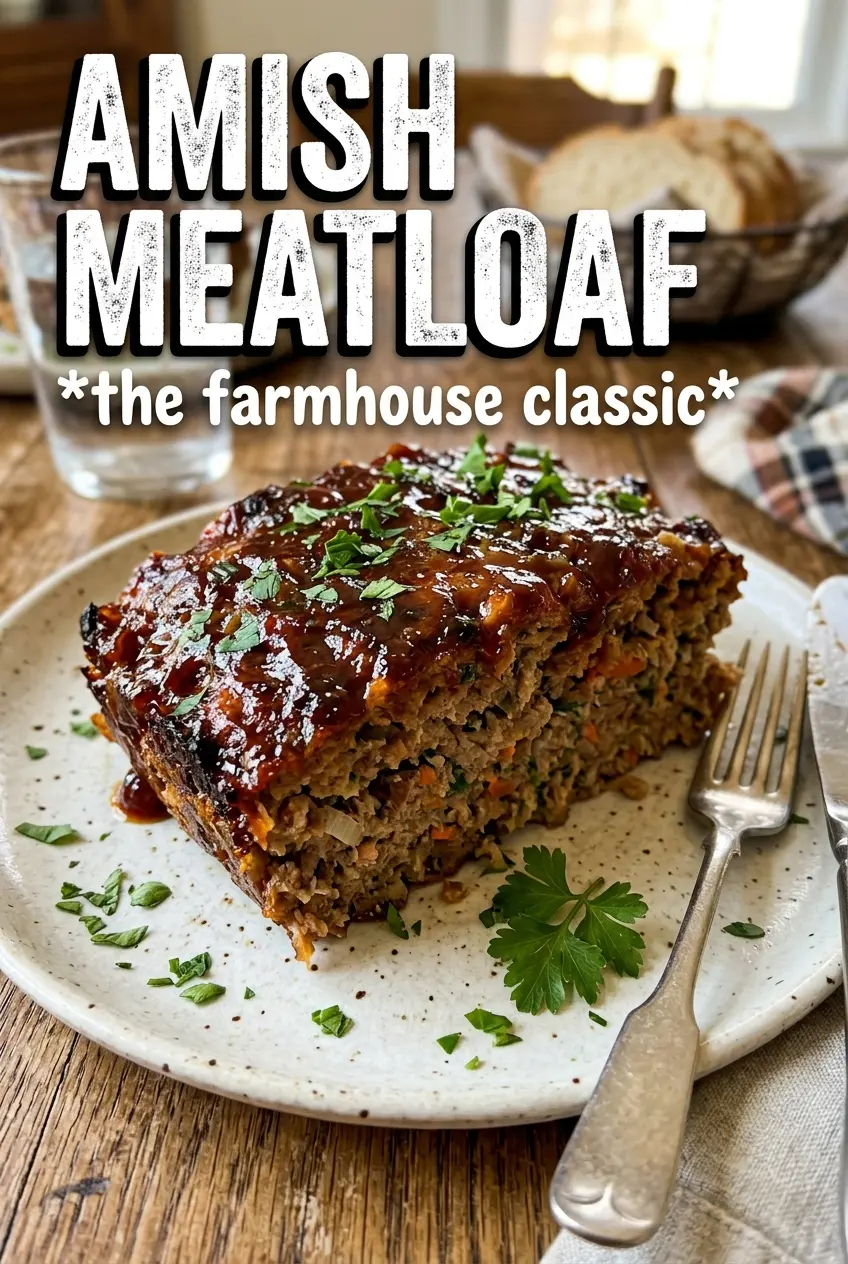
Amish Meatloaf
Ingredients
Equipment
Method
- Preheat oven to 350°F and grease a 9x5 loaf pan, so the loaf releases cleanly after baking.
- Combine ground beef, ground pork, crushed saltine crackers, eggs, whole milk, grated onion, Worcestershire sauce, prepared mustard, dried parsley, salt, and black pepper in a bowl.
- Press the mixture firmly into the loaf pan and smooth the top to create an even, dense texture.
- Mix the ketchup, brown sugar, and apple cider vinegar, then spread half over the top for a caramelizing surface.
- Bake at 350°F for 55 minutes, until the glaze begins to set and the loaf is partially cooked.
- Spread the remaining glaze over the top after 55 minutes for a second caramelized coat.
- Bake at 350°F for 15 more minutes until the internal temperature reaches 160°F.
- Rest the meatloaf for 10 minutes before slicing so the juices settle and the slice holds together.
- Slice and serve with traditional sides.