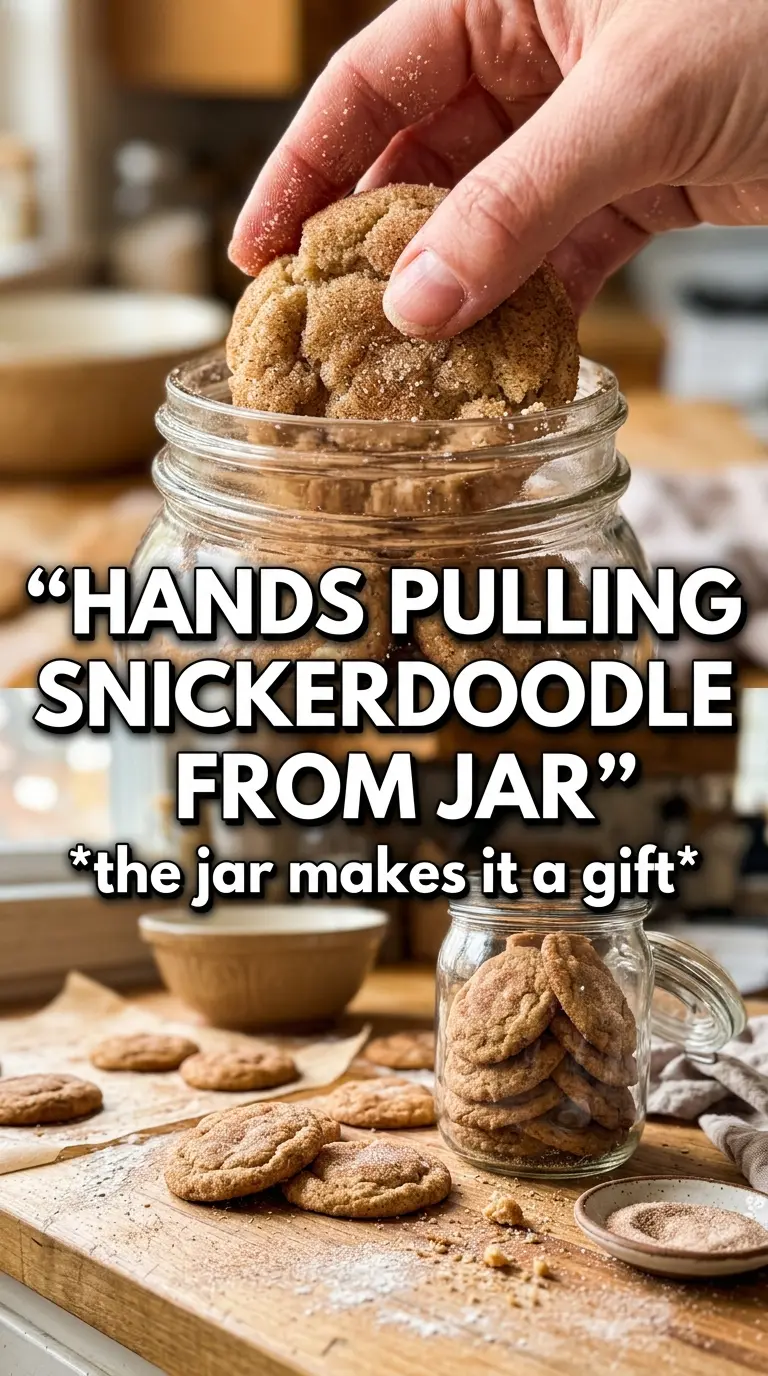
Apple butter snickerdoodles bake up soft in the middle with a gently crinkled top, cinnamon-sugar edges, and that familiar tangy snap from cream of tartar. The apple butter doesn’t make them taste like apple pie filling. It gives the dough a deeper, cooked-fruit richness that settles into the buttery base and makes the cookies taste rounder and warmer than a standard snickerdoodle.
The key is keeping the dough soft but not loose. Apple butter adds moisture, so the dough needs a short chill if it starts sticking to the scoop or your hands. That rest time keeps the cookies from spreading too fast and helps the cinnamon-sugar coating cling in a thick, crackly layer instead of sliding off in the oven.
Below, you’ll find the small details that matter here: how to judge the dough before chilling, why the spice mix includes a little apple pie spice, and how to pull the cookies when the centers still look slightly underdone so they finish with a tender bite.
The apple butter made the centers taste rich and soft, and the cinnamon-sugar coating turned out crackly instead of sandy. I chilled the dough for 30 minutes like you said, and they baked up with those perfect wrinkled tops.
Like these apple butter snickerdoodles? Save them to Pinterest for soft, crinkled cookies with a cinnamon-spice crust and a tender apple butter center.
The Dough Needs a Short Chill So the Cookies Stay Thick
Apple butter makes the dough softer than a basic snickerdoodle, and that’s where people usually run into trouble. If you scoop it right away and the dough feels tacky, the cookies spread too much before the edges set, and you lose that thick, crinkled shape. A 30-minute chill is enough to firm the butter back up and give the flour time to absorb the extra moisture from the apple butter.
The other thing that matters is how you mix the butter and sugar at the start. You want it pale and fluffy, not just combined, because that air helps the cookies bake up tender instead of dense. Once the flour goes in, stop as soon as the dough comes together. Overmixing builds too much gluten and turns a soft cookie into something tougher than it should be.
What Each Ingredient Is Actually Doing in This Recipe
- Primary ingredient (the star) — Quality matters most. Choose the best you can find.
- Cooking medium (oil, butter, or broth) — This carries flavors and prevents dryness.
- Seasonings (salt, pepper, spices, herbs) — Layer flavors so nothing overpowers. Build depth gradually.
- Aromatics (garlic, onion, herbs) — Cook with fat to bloom flavors. Become the foundation.
- Supporting ingredients — Complement the main ingredient without overpowering it.
- Sauce or liquid (if applicable) — Brings flavors together. Balance richness with acid.
- Acid (lemon, vinegar, wine, or other) — Brightens and prevents flat-tasting results.
- Final finish (garnish, glaze, or sauce) — Prevents one-dimensional taste and adds visual appeal.
What the Apple Butter Is Doing That Applesauce Won’t
- Apple butter — This is the ingredient that gives the dough its concentrated fruit depth. Applesauce has too much water and not enough cooked flavor, so it tends to make the cookies flatter and less rich. Use a smooth, thick apple butter here; if yours is loose, cook it down or expect a softer dough.
- Cream of tartar — This gives snickerdoodles their classic gentle tang and helps the cookies stay tender. There isn’t a perfect swap if you want the same flavor, but in a pinch you can use 2 teaspoons cream of tartar plus 1 teaspoon baking soda as written; don’t leave it out or the cookies lose their signature bite.
- Butter — Softened butter creams properly and traps air, which helps the cookies puff before they settle into those crinkly tops. If the butter is melted, the dough spreads too fast. It should dent when pressed, not look shiny or greasy.
- Rolling sugar and spice — The coating isn’t just for looks. The coarse layer helps the cookies develop a crackly crust in the oven and gives the first bite a little crunch before the soft center takes over. The apple pie spice deepens the cinnamon without making the coating taste flat.
Getting the Crinkled Tops and Tender Centers at the Same Time
Mix the dry ingredients first
Whisk the flour, cream of tartar, baking soda, cinnamon, nutmeg, and salt together before they ever meet the butter. That keeps the leavener and spice evenly distributed, which matters in a cookie this soft because any pocket of baking soda will show up in the flavor. The bowl should look evenly speckled, not streaky.
Cream the butter and sugar until it looks almost whipped
Beat the softened butter and granulated sugar until the mixture turns pale, fluffy, and a little lighter in volume. That step sets up the cookie’s texture, and stopping too early leaves the dough heavy. Add the eggs one at a time if you can, then mix in the apple butter and vanilla until the batter looks smooth and slightly glossy.
Bring the dough together gently
Fold in the flour mixture on low speed or by hand and stop the moment no dry streaks remain. The dough will feel soft, and that is correct. If it seems more like batter than dough, chill it before you panic; apple butter makes it look looser than it really is.
Roll, coat, and bake until the centers still look soft
Scoop 1 1/2-tablespoon portions and roll them generously in the cinnamon sugar mixture. Use enough coating that the dough looks dusty all over, because bare spots bake up dull. Bake at 375°F until the edges are set and the tops are cracked, then pull the tray when the centers still look slightly underdone. They finish on the pan, and that resting time is what keeps them soft instead of dry.
How to Make These Cookies Fit What You Have on Hand
Dairy-Free Version
Use a good plant-based butter stick in place of the unsalted butter. Choose one that behaves like real butter, not a soft tub spread, or the dough will spread too much. The cookies will still be tender and spiced, but the flavor will be a little less rich.
Gluten-Free Swap
A 1:1 gluten-free baking blend can work here if it already includes xanthan gum. The dough may need an extra 10 to 15 minutes in the fridge because gluten-free flour blends often stay softer. Expect a more delicate crumb, but the cinnamon crust and apple butter flavor still come through.
Extra-Spiced Cookies
Add another 1/2 teaspoon cinnamon or a pinch of cloves if you want the apple butter to lean warmer and deeper. Don’t go heavy on cloves, though. Too much pushes the cookies away from snickerdoodle territory and makes them taste muddy instead of bright.
Storage and Reheating
- Refrigerator: Store in an airtight container for up to 5 days. They soften a little as they sit, but the spice coating still tastes good.
- Freezer: Freeze the baked cookies for up to 2 months, or freeze the scooped dough balls after rolling in sugar and spice. Baked cookies should be layered with parchment so the coating doesn’t stick.
- Reheating: Warm cookies at 300°F for 3 to 5 minutes if you want them soft again. Don’t microwave them for long or the centers turn gummy and the sugar coating melts into a slick finish.
Questions I Get Asked About This Recipe
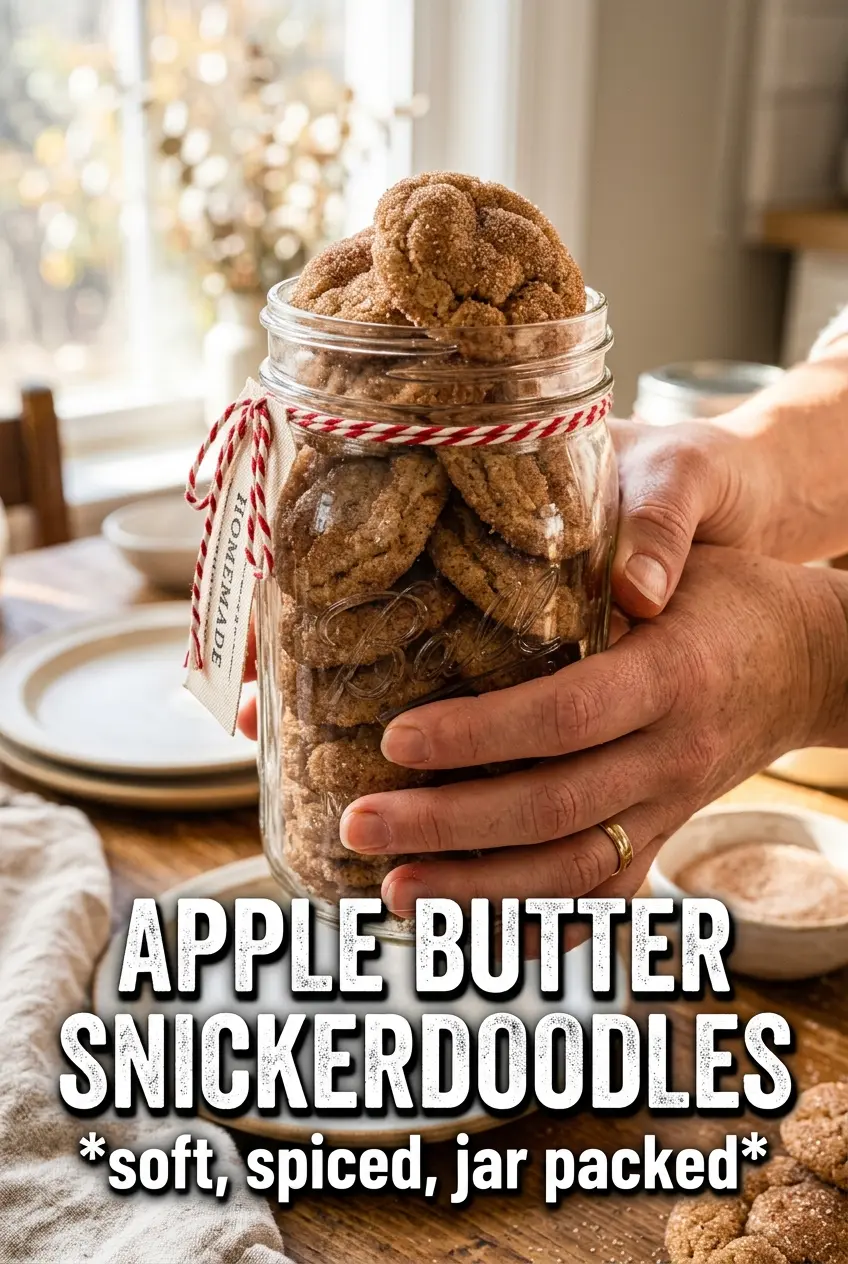
Apple Butter Snickerdoodles
Ingredients
Equipment
Method
- Preheat the oven to 375F and line baking sheets with parchment so the cookies bake without sticking.
- Whisk all-purpose flour, cream of tartar, baking soda, cinnamon, nutmeg, and salt until evenly combined and no dry streaks remain.
- Beat softened unsalted butter and granulated sugar until very light and fluffy, then add the eggs, apple butter, and vanilla extract.
- Fold in the flour mixture and mix just until the dough comes together; it should be soft.
- Refrigerate the dough for 30 minutes if it is very sticky, then proceed when it firms slightly.
- Mix the rolling spices—sugar, cinnamon, and apple pie spice—in a shallow bowl to make an even cinnamon-sugar coating.
- Scoop into 1-1/2 tablespoon balls, roll generously in the cinnamon spice sugar, and place on the lined baking sheets.
- Bake for 10-12 minutes at 375F until crinkled and the edges are just set, with the centers still slightly soft.
- Cool on the pan for 5 minutes so the centers firm as they cool before transferring if needed.