Pork shoulder turns deeply tender when it braises low and slow in apple cider, and this version gives you the kind of spoonable, glossy sauce that clings to every shred. The apples soften into the onions, the rosemary and thyme stay fragrant without taking over, and the pork comes out rich enough to pile over mashed potatoes, buttered noodles, or a piece of crusty bread.
What makes this one work is the balance. Apple cider brings sweetness and fruit, but Dijon, vinegar, and browned pork drippings keep the pot from tasting flat. Searing the pork first builds the base, and reducing the braising liquid at the end concentrates everything into a sauce that tastes cooked, not watered down.
Below, I’ve included the few details that matter most: how to get a hard sear without steaming the meat, when to add the apples so they stay intact, and how to know when the pork is ready to shred in big, juicy pieces.
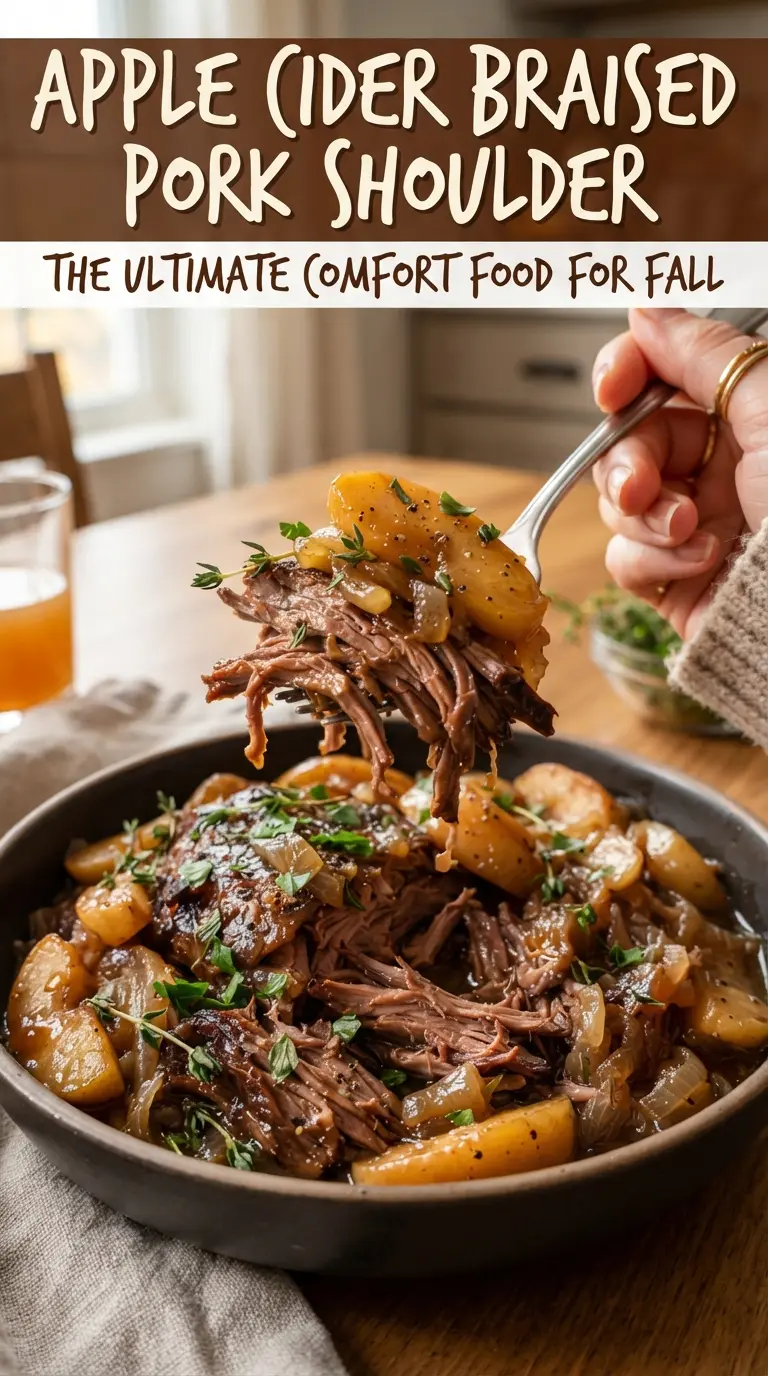
The pork shredded beautifully after the last braise, and the cider sauce reduced into something rich and glossy instead of watery. I also loved that the apples held their shape just enough to spoon over the meat without turning mushy.
Save this Apple Cider Braised Pork Shoulder for the nights when you want fork-tender pork, soft apples, and a cider sauce that tastes like it simmered all afternoon.
The Sear Is Doing More Than Browning the Pork
If the pork goes into the oven without a deep brown crust, the braising liquid has to do all the heavy lifting on its own. That works in a pinch, but you miss the savory backbone that comes from a proper sear. The browned bits stuck to the pot dissolve into the cider mixture and turn the sauce from sweet to layered.
The other trap is overcrowding the Dutch oven. Two pieces of pork shoulder are manageable, but they still need contact with the pot surface. If the meat steams instead of browns, the outside will taste pale and the sauce will never pick up that roasted depth.
- Pork shoulder — Boneless shoulder is the right cut here because it has enough fat and connective tissue to stay juicy through a long braise. Pork butt works the same way. Leaner cuts like loin dry out before the cider has time to work.
- Apple cider — Use the cloudy, unsweetened kind if you can. It tastes more like apples and less like juice box sweetness, and it reduces into a fuller sauce. If you only have sweet cider, cut the brown sugar back a little.
- Dijon mustard — This doesn’t make the dish taste mustardy. It sharpens the sauce and helps the cider, broth, and pan drippings taste like one cohesive braise instead of separate ingredients.
- Apples — Use a firm apple that can hold its shape, like Honeycrisp, Braeburn, or Pink Lady. Soft apples will collapse completely in the last braise and disappear into the sauce.
What Each Ingredient Is Actually Doing in This Recipe
- Primary ingredient (the star) — Quality matters most. Choose the best you can find.
- Cooking medium (oil, butter, or broth) — This carries flavors and prevents dryness.
- Seasonings (salt, pepper, spices, herbs) — Layer flavors so nothing overpowers. Build depth gradually.
- Aromatics (garlic, onion, herbs) — Cook with fat to bloom flavors. Become the foundation.
- Supporting ingredients — Complement the main ingredient without overpowering it.
- Sauce or liquid (if applicable) — Brings flavors together. Balance richness with acid.
- Acid (lemon, vinegar, wine, or other) — Brightens and prevents flat-tasting results.
- Final finish (garnish, glaze, or sauce) — Prevents one-dimensional taste and adds visual appeal.
Building the Braise So the Sauce Stays Rich
Seasoning and Searing
Pat the pork dry before you season it so the surface can actually brown. Once it hits the hot oil, leave it alone until the first side releases cleanly and shows a dark, even crust. If the pot looks dry or the seasoning starts to smoke too aggressively, lower the heat a touch; burnt paprika tastes harsh and carries through the whole sauce.
Softening the Onion Base
The onion needs a few minutes in the rendered fat and oil to pick up color and lose its raw bite. Add the garlic only after the onion has softened, because garlic burns fast and turns bitter if it sits in the hot pot too long. The goal here is fragrant and golden, not browned to a point of sweetness.
Deglazing and Braising
When the cider, broth, vinegar, Dijon, and brown sugar go in, scrape every browned bit from the bottom of the pot. That’s where the deepest flavor is hiding. Return the pork with the herbs, cover tightly, and let the oven do the work; the liquid should stay at a lazy simmer, not a hard boil. If it boils hard, the meat tightens up instead of softening.
Adding the Apples at the End
The apples go in after the pork has already turned tender for a reason. They need less time than the meat, and if they braise for the full 3 hours they collapse into paste. In the last 45 minutes, they soften, pick up the cider flavor, and still keep enough shape to serve alongside the pork.
Reducing the Sauce and Shredding
Pull the pork out when it shreds easily with a fork but still looks juicy in the center. Shred it into large pieces, not fine strands, so it keeps some texture on the plate. Then simmer the braising liquid uncovered until it lightly coats a spoon. If you skip this reduction, the sauce tastes thin no matter how long the pork cooked.
What to Swap When You Need a Different Version
Make It Dairy-Free and Gluten-Free Without Changing the Texture
This recipe is already naturally dairy-free and gluten-free as written, so there’s nothing to force or replace. The important thing is to check that your Dijon and broth are certified gluten-free if you’re cooking for someone who needs that level of care. The sauce still comes out thick and glossy because the reduction does the work, not flour or cream.
Use Pork Butt or a Bone-In Shoulder
Pork butt gives you the same rich, shreddable result, and bone-in shoulder works too if that’s what you can buy. Bone-in meat usually takes a little longer, and that’s fine; cook until the meat gives up easily when pulled with a fork. The bone can add a little extra flavor to the braising liquid, but the biggest difference is just timing.
Swap the Apples for Pears
Firm pears can stand in for the apples if that’s what you have on hand, but they’ll taste a little softer and less tart. Use them the same way and add them at the end so they don’t melt into the sauce. This swap makes the braise a touch gentler and less sharp.
Storage and Reheating
- Refrigerator: Store leftovers in an airtight container for up to 4 days. The pork gets even more flavorful overnight, and the sauce thickens as it chills.
- Freezer: This freezes well for up to 3 months. Freeze the pork and sauce together in portions so the meat stays moist when you reheat it.
- Reheating: Rewarm gently on the stovetop over low heat with a splash of broth or cider if the sauce has tightened up. High heat is the fastest way to dry out the pork and make the apples break apart.
Answers to the Questions Worth Asking

Apple Cider Braised Pork Shoulder
Ingredients
Equipment
Method
- Preheat the oven to 325F, then season the pork shoulder with salt, black pepper, and smoked paprika. Visual cue: the surface should look evenly dusted with seasoning.
- Heat olive oil in a Dutch oven until hot, then sear the pork 4-5 minutes per side until well browned and remove it. Visual cue: deep brown crust forms on the outside.
- Cook the onion for 5 minutes, stirring, then add the smashed garlic and cook for 1 minute. Visual cue: the onion softens and the garlic becomes fragrant without browning.
- Stir in the apple cider, chicken broth, apple cider vinegar, Dijon mustard, and brown sugar, scraping up the browned bits from the bottom. Visual cue: the sauce turns uniformly colored and glossy.
- Return the pork to the Dutch oven with the thyme and rosemary, cover, and braise for 2 1/2 hours at 325F. Visual cue: the pork begins to look very tender and pulls easily at the edges.
- Add the apple wedges and braise covered for 45 minutes more until the pork is fork-tender. Visual cue: apples soften and the pork yields readily to a fork.
- Shred the pork into large pieces, then simmer the braising liquid on the stove for 10 minutes to reduce. Visual cue: the sauce thickens slightly and coats the back of a spoon.
- Serve the shredded pork with the reduced cider sauce and apples. Visual cue: apples are visible throughout the sauce and the pork looks juicy.