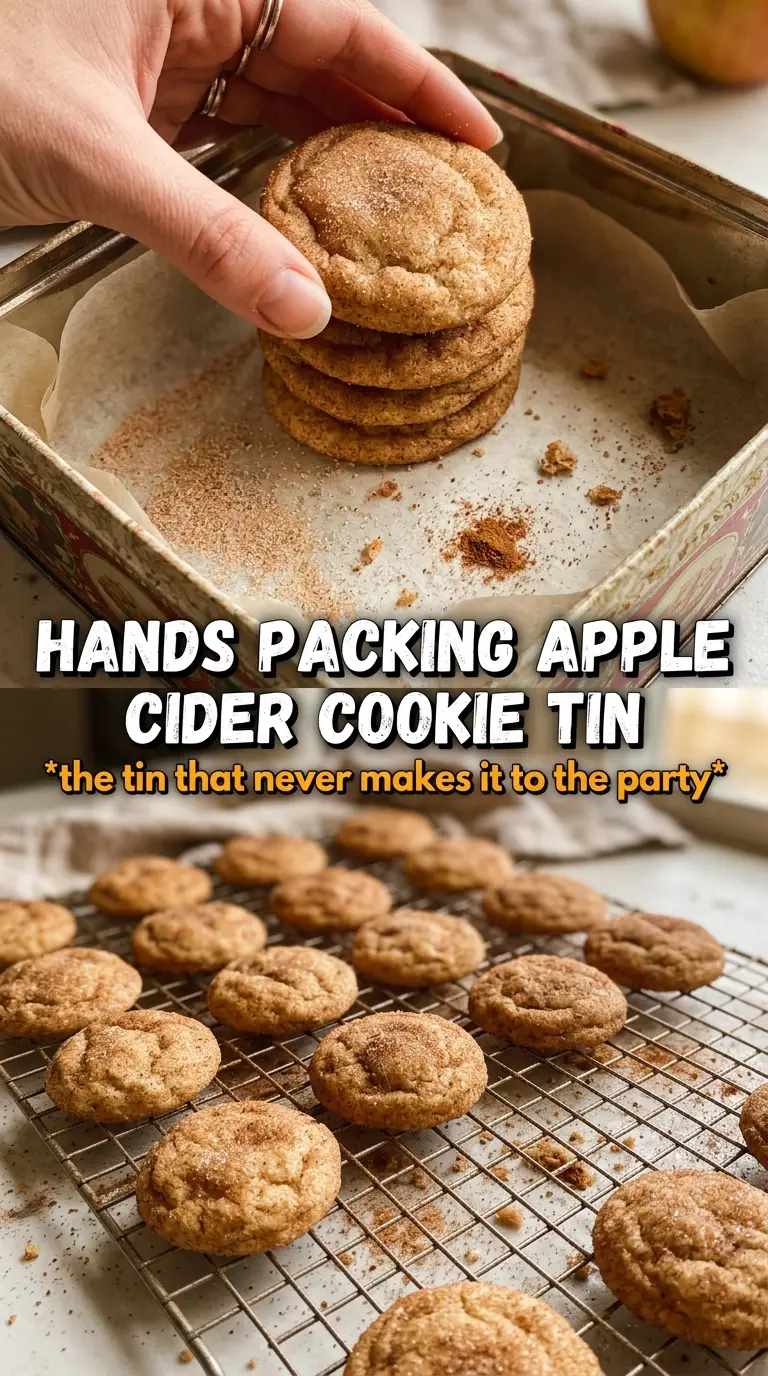
Apple cider cookies bake up soft, gently crinkled, and packed with a concentrated apple flavor that tastes deeper than plain apple spice dough. The reduced cider keeps the cookie from reading like a generic cinnamon cookie; it adds a cooked-down fruit note that lands in the finish and makes the whole batch feel warmer and more grounded. Rolled in cinnamon sugar before baking, they come out with a delicate sparkle and just enough edge to keep each bite interesting.
The part that matters most is the cider reduction. If you skip that step or add it while it’s still warm, the dough can turn loose and the flavor stays thin. Reducing the cider down first concentrates the apple taste without adding extra liquid, which keeps the cookies soft instead of cakey. The spice blend also does quiet work here: cinnamon leads, while ginger, nutmeg, and allspice round out the flavor so the cider reads clearly instead of getting buried.
Below, I’ve included the one technique that keeps these cookies from spreading too much, plus the swaps that still give you a good result if you’re short on an ingredient.
The cider flavor came through beautifully, and the cookies stayed soft with those lightly crisp sugar edges. Reducing the cider first made a big difference — mine held their shape instead of spreading flat.
Save these apple cider cookies for the days when you want soft, cinnamon-sugar cookies with real cider flavor.
The Step That Keeps Apple Cider Cookies From Going Flat
The most common mistake with cider cookies is treating the cider like a regular liquid ingredient. It isn’t. Fresh cider adds too much water, which means the dough spreads before it sets and the apple flavor never gets past the surface. Reducing it until it’s thick and syrupy gives you concentrated flavor without extra moisture, and that’s what keeps these cookies soft and rounded instead of thin and greasy.
Butter temperature matters too. Softened butter should hold a fingerprint, not look shiny or melty. If it’s too warm, the cookies spread before the oven can set the edges. The dough should scoop cleanly and roll into balls without slumping in your hand. A quick cinnamon sugar coat on the outside helps the cookies bake up with a gentle crackle that makes the texture feel finished.
What the Apple Cider, Spices, and Sugar Are Each Doing Here
- Apple cider — Reducing the cider is what gives these cookies their real apple character. Unreduced cider would just add moisture and dilute the dough, but a reduced version concentrates the flavor and keeps the texture tight enough to bake properly.
- Brown sugar — This brings moisture, chew, and a molasses note that fits the cider and spices. You can swap in more granulated sugar in a pinch, but the cookies will bake a little drier and lose some depth.
- Butter — Butter carries the spice and gives the cookies their tender center. Use unsalted butter if you can so the salt level stays in your control; if you only have salted butter, reduce the added salt a bit.
- The spice blend — Cinnamon leads, but ginger, nutmeg, and allspice keep the flavor from tasting one-note. Fresh spices matter here because the dough is simple enough that stale spices will show.
- Cinnamon sugar coating — This isn’t just for looks. It adds a thin, crisp shell that contrasts with the soft center and helps the cookies smell finished as soon as they come out of the oven.
Building the Dough So It Bakes Soft, Not Puffy
Reduce the cider all the way
Set the cider over medium heat and let it bubble until it’s thick and syrupy, with a darker color and only about half the original volume left. If it still looks watery, it will behave like extra liquid in the dough and the cookies will spread too much. Let it cool completely before you add it, or it can soften the butter too early and throw off the texture.
Whip the butter and sugars until they lighten
Beat the butter with both sugars until the mixture looks paler and a little fluffy. That traps air and helps the cookies bake with a soft center instead of a dense one. Once the egg, vanilla, and cooled cider go in, the mixture may look a little curdled for a moment; that’s normal and it smooths out as soon as the dry ingredients are added.
Stop mixing as soon as the flour disappears
Add the dry ingredients and mix only until no dry streaks remain. Overmixing develops too much gluten and gives you tougher cookies with a less tender bite. Scoop the dough into balls right away, roll them in cinnamon sugar, and bake while the dough is still cool and intact so the cookies hold their shape.
Ways to Change the Batch Without Losing the Cookie
Gluten-Free Version
Use a 1:1 gluten-free baking blend with xanthan gum already included. The cookies will still be soft and spiced, but they may spread a touch less and have a slightly more delicate crumb. Chill the dough for 20 to 30 minutes if it feels loose.
Extra-Spicy Cookies
Bump the cinnamon up by another 1/2 teaspoon and add a small pinch more ginger. That gives the cookies a warmer finish without muddying the cider flavor. Don’t overdo the nutmeg or allspice; once those take over, the apple gets lost.
Make-Ahead Dough
Shape the dough into balls, roll them in cinnamon sugar, and refrigerate them on a tray. Chilled dough bakes up a little thicker and gives you a more defined crinkle on top. Bake straight from the fridge and add a minute if needed.
Storage and Reheating
- Refrigerator: Store in an airtight container for up to 5 days. They stay soft, though the sugar coating softens a bit after the first day.
- Freezer: These freeze well after baking. Freeze in a single layer, then move to a sealed container for up to 2 months.
- Reheating: Warm a cookie for 8 to 10 seconds in the microwave or a few minutes in a low oven. Heat only until barely warm; too much heat dries out the edges and makes the centers lose their softness.