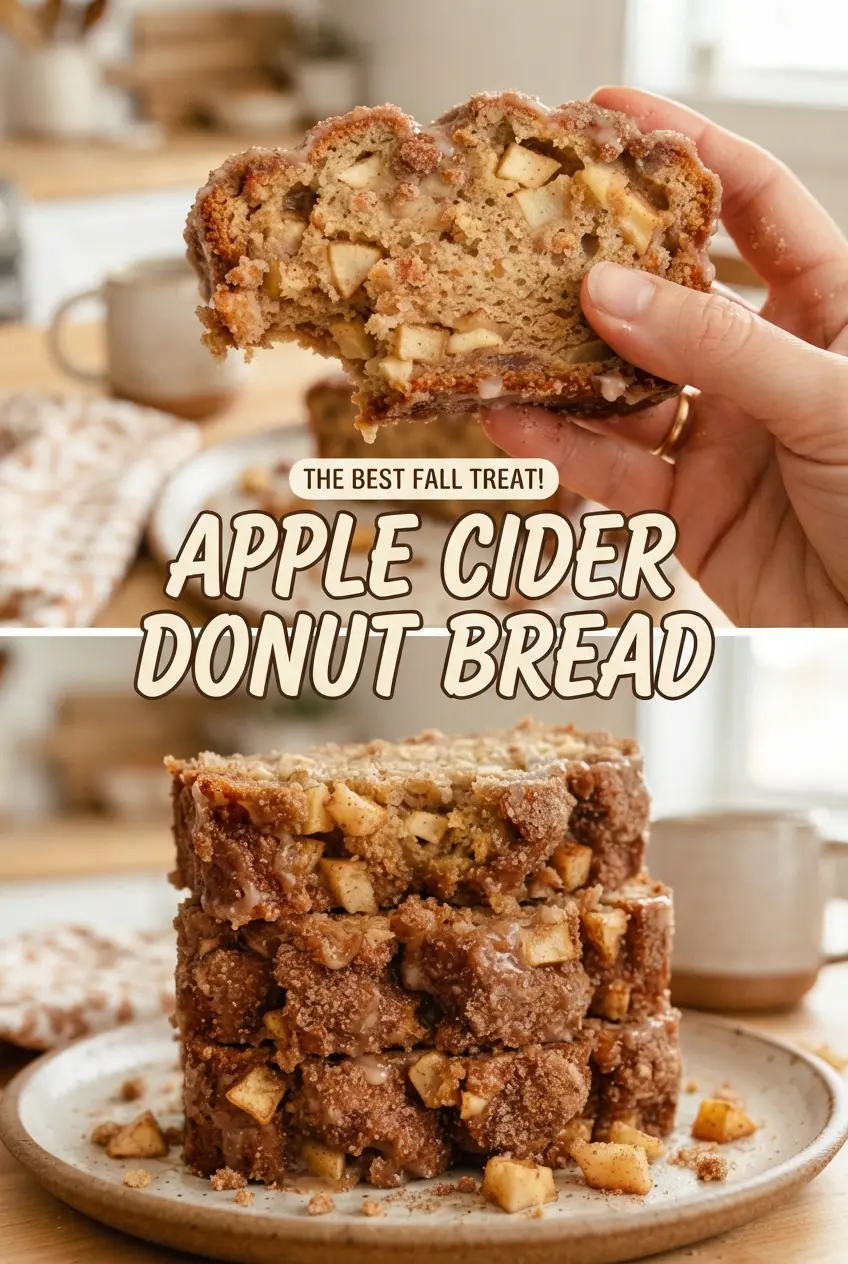
Apple cider donut bread bakes into a soft, fragrant loaf with a tender crumb and that unmistakable cinnamon-sugar shell on the outside. It has the same cozy bakery-shop appeal as a fresh cider donut, but in a sliceable loaf that works for breakfast, snacking, or dessert.
The part that gives this bread its real apple cider flavor is the reduction. Simmering the cider down concentrates the fruit and spice notes instead of watering down the batter, and the sour cream keeps the crumb moist enough to stay soft for days. The final brush of melted butter and cinnamon sugar is what turns it from a nice spice loaf into something that actually tastes like a donut.
Below, I’ve included the trick that keeps the cider flavor from disappearing in the oven, plus a few variations if you want to make the loaf a little richer, lighter, or easier to store.
The cider reduction made all the difference, and the cinnamon sugar crust stayed crunchy even after the loaf cooled. My kids kept sneaking slices before dinner.
Save this apple cider donut bread for a loaf with a crunchy cinnamon-sugar crust and a soft, spiced cider crumb.
The Cider Reduction Is What Keeps This Loaf from Tasting Flat
The biggest mistake in apple cider baking is using the cider straight from the bottle and expecting it to carry the whole loaf. It won’t. Once it goes into the oven, that flavor gets diluted fast, and you’re left with a mild spice bread instead of something that tastes like cider-donut-season in every bite.
Reducing the cider to about half a cup concentrates the apple flavor and gives the loaf a deeper, almost caramelized note. Let it cool before mixing it into the batter or it can melt the butter and make the mixture greasy. The other thing that matters here is not overmixing once the dry ingredients go in. This is a quick bread, and overworking it is how you end up with a tight, bready crumb instead of something tender.
What Each Ingredient Is Actually Doing in This Apple Cider Donut Bread
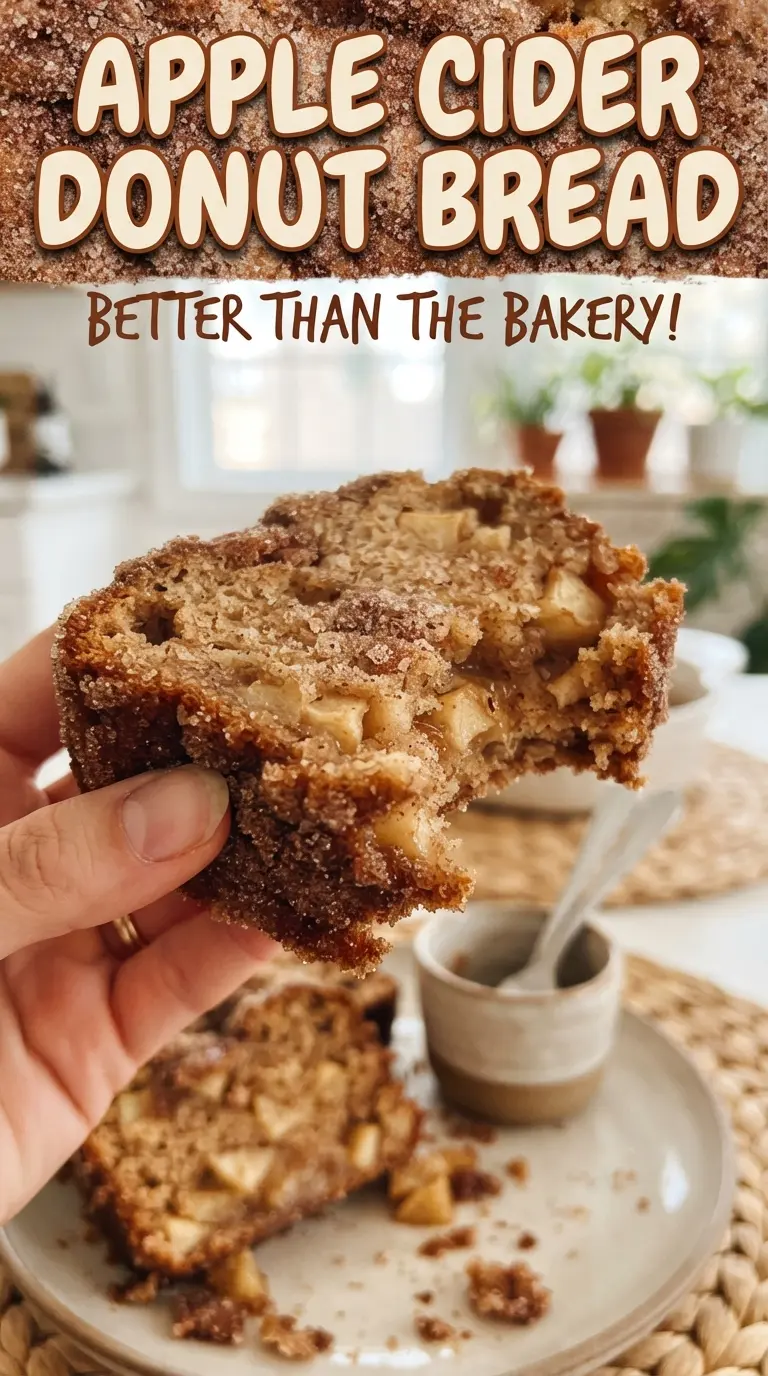
- Apple cider — Reducing it is non-negotiable if you want a real cider flavor. The simmered cider brings intensity without adding extra liquid, which helps the loaf stay plush instead of wet.
- Butter and brown sugar — This pair gives the bread its soft, rich base and a little molasses depth. Brown sugar works better than white sugar here because it echoes the warm caramel notes in the cider and cinnamon.
- Sour cream — This keeps the crumb moist and tender, and it adds a gentle tang that makes the loaf taste more bakery-style. Plain Greek yogurt works in a pinch, but the texture will be a touch tighter.
- Cinnamon and nutmeg — These don’t just season the batter; they round out the cider so the loaf tastes complete. Nutmeg especially gives it that classic donut-shop warmth.
- Cinnamon sugar topping — This is the part that makes the loaf read like a donut instead of a standard spice bread. Press it on while the loaf is still warm so it sticks and forms that sandy, crunchy crust.
Building the Loaf So the Crumb Stays Tender and the Crust Stays Crunchy
Reducing the cider
Pour the cider into a small saucepan and simmer until it drops to about half a cup. You want steady bubbles, not a hard boil, so the flavor concentrates without tasting scorched. It should look slightly syrupy at the end. If you rush this and leave too much liquid in the cider, the batter gets loose and the finished loaf can turn gummy in the center.
Mixing the batter
Beat the butter and brown sugar until pale and fluffy, then add the eggs one at a time. Stir in the sour cream, vanilla, and cooled cider, and expect the mixture to look a little loose before the flour goes in. That’s normal. Once the dry ingredients are added, fold only until no streaks of flour remain. A few small lumps are better than a overmixed batter, which makes the loaf dense.
Baking and finishing
Scrape the batter into a greased, lined 9×5-inch pan and bake until the top is deeply golden and a toothpick comes out clean from the center. Let it cool for 10 minutes, then brush the warm loaf with melted butter and shower on the cinnamon sugar. Warm bread grabs the topping best, and that’s how you get the thick, crackly coating instead of a patchy dusting. If the loaf is too hot, the sugar melts instead of clinging.
How to Adapt Apple Cider Donut Bread Without Losing the Donut Feel
Dairy-Free Version
Use plant-based butter for both the batter and the topping, and swap the sour cream for a thick dairy-free yogurt. The loaf will still be moist and spiced, though the crumb may be a little less rich and the topping may set with a slightly softer finish.
Gluten-Free Swap
Use a good 1:1 gluten-free baking flour blend that includes xanthan gum. The loaf will still rise and slice well, but it’s important not to overmix because gluten-free batters can turn gummy fast when they’re worked too much.
Extra-Spiced Loaf
Add a pinch of ground cloves or a little allspice if you want the loaf to taste even closer to a classic cider donut. Keep the amount modest so the cider still leads the flavor instead of disappearing behind the spices.
Storage and Reheating
- Refrigerator: Store tightly wrapped for up to 4 days. The sugar crust softens a bit in the fridge, but the loaf stays moist.
- Freezer: Freeze the unsugared loaf wrapped well for up to 2 months. Add the butter and cinnamon sugar after thawing so the coating stays crisp.
- Reheating: Warm slices briefly in the microwave or a low oven. If you reheat too long, the topping melts and the crumb dries out, so go just until the center loses its chill.
Answers to the Questions Worth Asking
Apple Cider Donut Bread
Ingredients
Equipment
Method
- Simmer the apple cider for 15-20 minutes until reduced to 1/2 cup, then cool.
- Cool the reduced apple cider until it is no longer hot, about 10 minutes, so it won’t curdle the batter.
- Preheat the oven to 350°F.
- Grease and line a 9x5-inch loaf pan.
- Whisk the all-purpose flour, baking powder, baking soda, salt, ground cinnamon, and nutmeg until evenly combined.
- Beat the softened butter and packed brown sugar until fluffy.
- Beat in the eggs, sour cream, vanilla extract, and the reduced cider until smooth.
- Fold in the dry ingredients just until combined, then spread the batter into the prepared pan.
- Bake at 350°F for 50-55 minutes, until a toothpick comes out clean (visual cue: top looks set and springs back lightly).
- Cool the loaf for 10 minutes in the pan.
- Brush the warm loaf all over with the melted butter.
- Press the cinnamon sugar topping onto the loaf so it forms a thick crunchy coating.