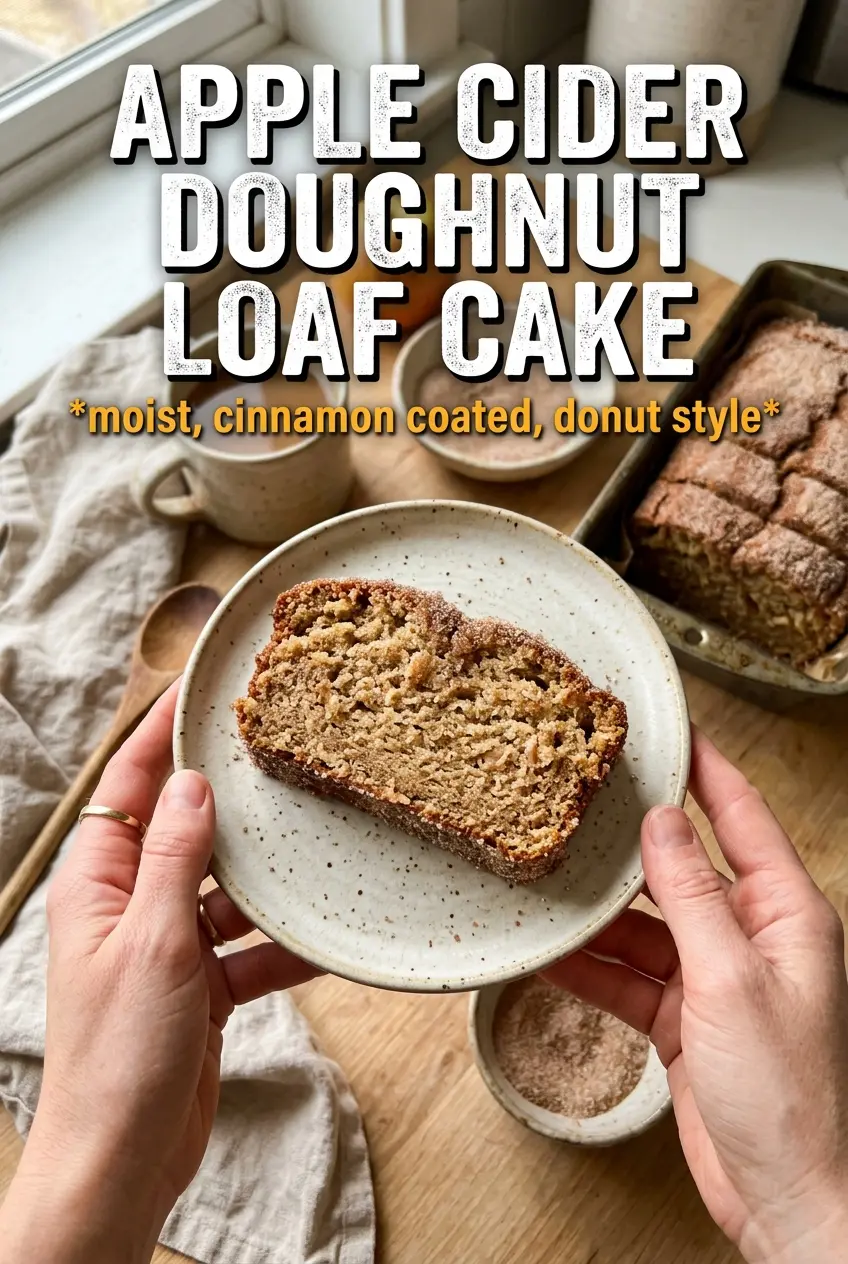
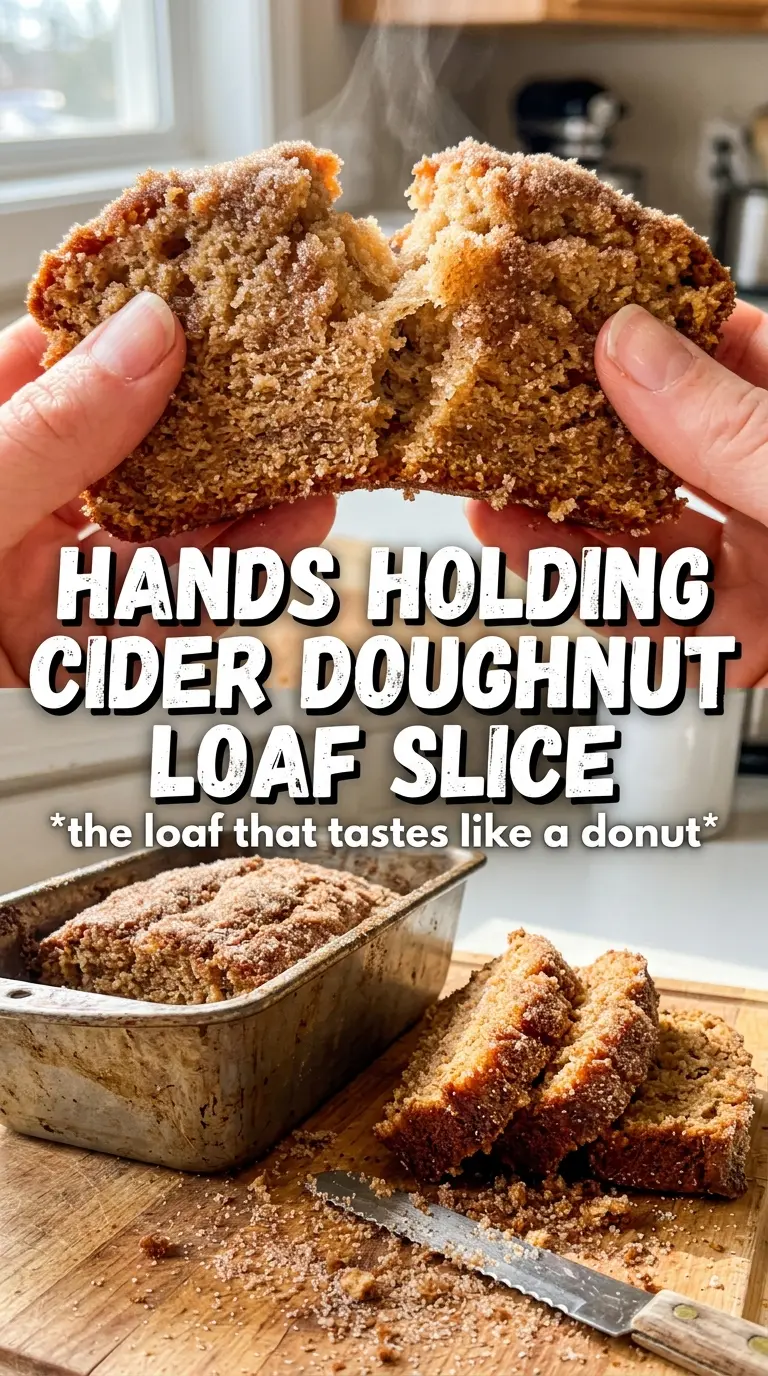
Apple cider doughnut loaf cake gives you the same cinnamon-sugar comfort of a bakery doughnut, but in a form that slices cleanly and stays tender for days. The crust turns deep golden and gets that buttery, sandy coating that crackles when you cut into it, while the crumb stays soft, spiced, and just dense enough to feel like a proper loaf cake instead of a quick bread that went flat.
The reduced cider matters here. Boiling down the apple cider concentrates the flavor without watering down the batter, and sour cream keeps the crumb moist without making it heavy. The spice blend leans into cinnamon, nutmeg, allspice, and cardamom, which gives the cake that unmistakable apple-cider-doughnut flavor instead of just another cinnamon loaf.
Below, I’ll walk through the part that makes the biggest difference: how to bake it so the center sets without drying out the edges, and how to coat it so the cinnamon sugar clings instead of sliding off.
The cider flavor came through without tasting boozy or too sweet, and the buttered cinnamon-sugar coating actually stayed on the loaf instead of falling off when I sliced it.
Save this apple cider doughnut loaf cake for the kind of dessert that needs a crisp cinnamon-sugar crust and a soft, spiced center.
The Cider Reduction Is What Keeps This Loaf From Tasting Flat
If you skip the reduction, you lose the one ingredient that makes this taste like apple cider doughnuts instead of spiced cake. Apple cider is mostly water, so straight cider can disappear into the batter and leave only sweetness behind. Reducing it concentrates the apple note and gives you a little more depth without changing the texture of the loaf.
The other thing that matters here is balance. This batter has oil for tenderness, sour cream for moisture, and enough sugar to support the cinnamon sugar coating without making the loaf cloying. That means the cider reduction doesn’t need to be dramatic; it just needs to be cooled and folded in so it doesn’t scramble the eggs or thin the batter.
What Each Ingredient Is Actually Doing In This Loaf
- Apple cider — Reducing it to 1/4 cup concentrates the apple flavor and keeps the batter from baking up bland. Let it cool before mixing it in, or it can thin the eggs and sour cream.
- Sour cream — This is what keeps the crumb tender and a little rich without turning the loaf greasy. Full-fat sour cream gives the best texture, but plain Greek yogurt works if that’s what you have.
- Oil — Oil gives you a softer, moister loaf than butter alone would. Butter tastes great, but it firms up more as the cake cools, and this recipe is supposed to stay plush.
- Brown sugar and granulated sugar — The granulated sugar helps with structure and the fine crumb, while the brown sugar brings a subtle molasses note that fits the cider and spices.
- Cardamom — This is the small detail that makes the spice mix taste bakery-style. Don’t leave it out unless you have to; even a quarter teaspoon gives the loaf a warmer, more complete finish.
Getting the Crumb Set Before the Cinnamon Sugar Goes On
Reducing the cider without overcooking it
Pour the cider into a small saucepan and simmer it over medium heat until it measures about 1/4 cup. You’re looking for a stronger aroma and a slightly syrupy feel, not a thick glaze. If you boil it too hard and reduce it too far, the flavor gets sharp instead of rounded, and you won’t have enough liquid left for the batter.
Mixing the batter without beating air into it
Whisk the dry ingredients together first so the baking powder, baking soda, and spices are evenly distributed. In the wet bowl, whisk the oil, sugars, eggs, vanilla, reduced cider, and sour cream until smooth, then fold in the flour mixture just until you stop seeing dry streaks. If you overmix, the loaf bakes up tougher and can tunnel in the center.
Baking until the center is done, not just the top
Scrape the batter into a greased 9×5 loaf pan and bake at 350°F until a toothpick comes out clean, usually 60 to 65 minutes. The top should be deep golden and set, and the center should spring back lightly when you touch it. If the top browns too quickly before the middle is done, tent it loosely with foil for the last stretch of baking.
Coating while the loaf is still warm
Let the loaf cool just enough to handle, then remove it from the pan while it’s still warm. Brush every side with melted butter and roll or sprinkle it with cinnamon sugar right away. That warmth is what makes the coating cling; if the loaf cools completely first, the sugar won’t stick as evenly and you’ll lose that doughnut-shop finish.
How to Adapt This Apple Cider Doughnut Loaf Cake Without Losing the Point
Make it dairy-free
Swap the sour cream for an unsweetened dairy-free yogurt with a thick texture, and use plant-based butter for the coating. The loaf will still be moist and tender, though the tang will be a little softer than with sour cream.
Use Greek yogurt instead of sour cream
Plain Greek yogurt works well if it’s full-fat and not too tart. The crumb will be a touch tighter and a little less rich, but the loaf still bakes up beautifully.
Make it gluten-free
Use a 1:1 gluten-free baking blend that includes xanthan gum. Don’t swap in almond flour here; this loaf needs the structure of a true flour blend to rise evenly and slice cleanly.
Turn it into muffins
Divide the batter into a lined muffin tin and bake at 350°F for about 18 to 22 minutes. You’ll get more cinnamon-sugar surface area and a slightly lighter texture, but you’ll lose the deep loaf-style center slice.
Storage and Reheating
- Refrigerator: Store tightly covered for up to 4 days. The cinnamon sugar softens a little, but the crumb stays moist.
- Freezer: Freeze the loaf without the coating for best results, wrapped well for up to 2 months. Add the butter and cinnamon sugar after thawing so the finish stays crisp.
- Reheating: Warm slices in a 300°F oven for 8 to 10 minutes or briefly in the microwave. If you reheat too hard, the sugar coating melts and the crumb dries out at the edges.