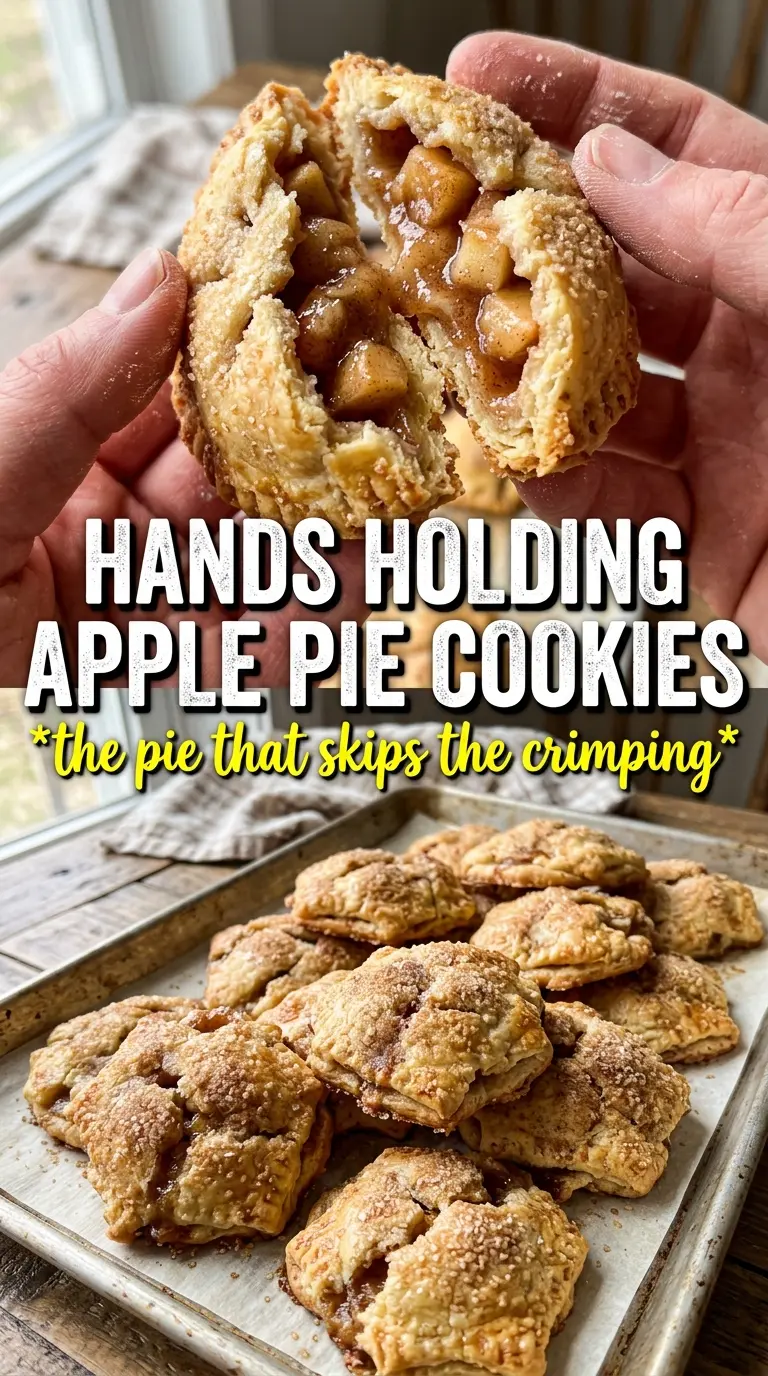
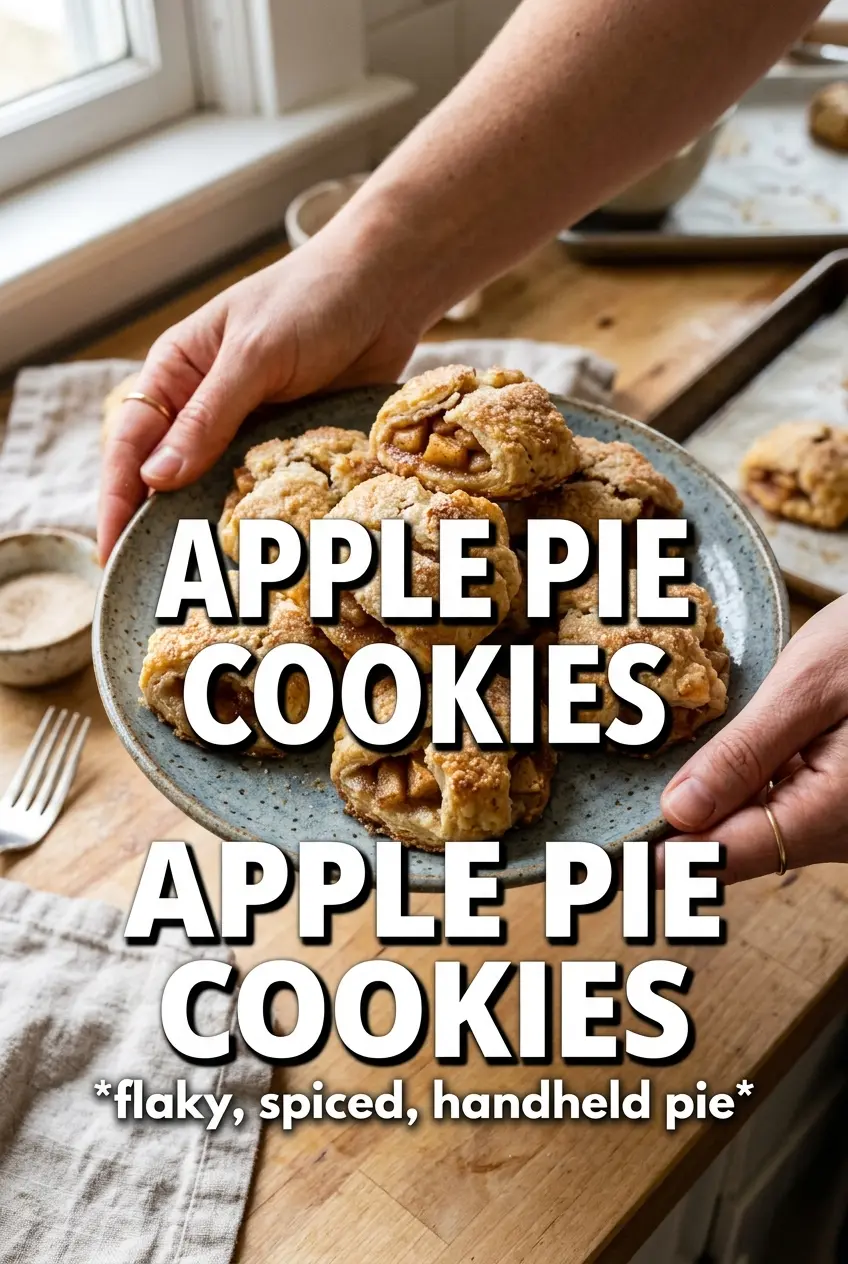
Apple pie cookies bake up with the same warm cinnamon-apple filling people love in a full pie, but in a hand-held cookie that’s easier to serve, easier to share, and a lot less fussy. The best part is the texture contrast: crisp, golden pastry on the outside and a thick little pocket of tender apples in the middle. When they come out right, the edges stay neat, the tops turn glossy from the egg wash, and the caramel drizzle settles into the cracks without making the cookies soggy.
This version works because the filling is cooked before it ever touches the dough. That small step keeps the apples from releasing too much juice in the oven, which is what usually turns pie-style cookies into a leaky mess. A spoonful of cornstarch gives the filling enough body to stay put, and cooling it first matters just as much as the baking itself. Warm filling softens the dough before the cookies even hit the oven.
Below, I’ve laid out the exact cues I watch for, plus the shortbread dough swap I use when I want a more buttery, cookie-like finish instead of a classic pie crust.
The filling stayed put and the tops baked up beautifully golden. I used the shortbread dough, and the cookies held their shape without any leaking.
Save these apple pie cookies for the days when you want all the pie flavor in a crisp, drizzle-finished handheld dessert.
The Part That Keeps Apple Pie Cookies from Leaking
The mistake with pie-style cookies is treating the filling like it can behave the same way inside a sealed pastry as it does in a pie shell. It can’t. If the apples are still juicy when they go into the dough, the steam has nowhere to go except through the seams, and you end up with split tops and soggy bottoms.
Cooking the filling for just a few minutes with brown sugar, cinnamon, butter, and cornstarch changes everything. You’re not making applesauce. You’re thickening the juices until the mixture looks glossy and spoonable, then cooling it until it’s fully set. That one decision is what keeps the cookies neat enough to serve and sturdy enough to stack.
- Cooked apples: Finely diced apples soften faster and stay contained better than larger chunks. If the pieces are too big, the cookies can bulge and tear.
- Cornstarch: This is the thickener that keeps the filling from running. Flour won’t give you the same clean, glossy finish.
- Cold dough: Whether you use pie crust or shortbread, chilled dough holds its shape and seals better around the filling.
What Each Ingredient Is Actually Doing in These Cookies
- Apples: Use a firm baking apple if you can. Granny Smith gives you tartness and structure, while Honeycrisp or Braeburn brings a softer, sweeter filling. Anything mealy turns mushy fast.
- Brown sugar and cinnamon: Brown sugar melts into the apple juices and gives the filling a deeper, pie-like flavor than white sugar would. Cinnamon should be present but not heavy-handed; it should support the apples, not bury them.
- Pie crust: This gives you the most classic result — flaky, lightly crisp, and very close to mini hand pies. If you’re using refrigerated crust, let it sit just long enough to roll without cracking.
- Shortbread dough: This is the richer, more cookie-like option. It bakes up tender and sandy instead of flaky, and it works especially well if you want a sturdier base for the caramel.
- Egg wash and cinnamon sugar: The egg wash helps the tops brown evenly and gives the sugar something to cling to. Without it, the cookies bake up paler and less finished.
- Caramel drizzle: Add it after cooling. If you drizzle while the cookies are hot, the caramel melts off the top and disappears into the baking sheet.
Building the Cookies So the Filling Stays Put
Get the Filling Thick Before You Touch the Dough
Start by cooking the diced apples with brown sugar, cinnamon, butter, and cornstarch until the mixture looks thick and glossy, about five minutes. It should mound slightly on a spoon instead of sliding off like loose fruit. If you still see a lot of liquid in the pan, keep cooking; that liquid is what causes blowouts later. Spread the filling out on a plate or shallow bowl so it cools faster before assembly.
Cut the Tops and Bottoms to Match the Dough You Chose
Roll the pie crust or chilled shortbread dough evenly so the cookies bake at the same pace. The larger rounds are your bottoms and the smaller rounds form the lids. If the dough warms and gets sticky while you cut, slide it back into the fridge for a few minutes. Warm dough stretches during handling and can pull apart after you seal it.
Seal the Edges Like You Mean It
Spoon just 1 teaspoon of filling into each center. That amount looks small, but it’s enough once the top goes on. Press the edges with a fork after laying the smaller circle over the filling, and cut a small vent in the top so steam has a place to escape. If you skip the vent, pressure builds under the lid and the cookies can burst open.
Bake Until the Tops Turn Deep Gold
Brush with egg wash, sprinkle with cinnamon sugar, and bake at 375°F until the cookies are golden and the edges look set, about 12 to 15 minutes. The tops should look dry and lightly crisp, not pale and soft. Let them cool on the pan for a few minutes before moving them, because the filling needs that short rest to firm up. Drizzle with caramel once they’re cool enough that the topping stays on the cookie instead of sliding off.
How to Adapt Apple Pie Cookies Without Losing the Point
Use shortbread dough for a sturdier cookie
Shortbread gives you a richer, more buttery cookie with less flake and more snap. It’s the better choice if you want a dessert that holds up well for gifting or stacking, but it loses some of the classic pie-crust feel.
Make them gluten-free with a 1:1 baking blend
A good 1:1 gluten-free flour blend works best in the shortbread version, where the dough has a little more structure to start with. The cookies will be a bit more delicate, so chill them well before baking and let them cool on the pan before moving them.
Skip the caramel for a less-sweet finish
The cookies still taste complete without the caramel drizzle if you want the apple filling to stay front and center. A little extra cinnamon sugar on top gives you enough finish without pushing the sweetness higher.
Storage and Reheating
- Refrigerator: Store in an airtight container for up to 4 days. The crust will soften a little after the first day, but the flavor stays good.
- Freezer: Freeze baked and cooled cookies without the caramel for up to 2 months. Wrap them well so the tops don’t pick up freezer smell, then thaw in the fridge before reheating.
- Reheating: Warm them in a 325°F oven for 6 to 8 minutes. The oven brings the crust back to life; the microwave makes the pastry soft and the filling slippery.
Questions I Get Asked About This Recipe
Apple Pie Cookies
Ingredients
Equipment
Method
- Cook the apples, brown sugar, cinnamon, cornstarch, and butter in a pan for 5 minutes until thickened, stirring as it cooks. Remove from heat and cool completely so the filling stays put inside the cookies.
- Preheat the oven to 375F and line baking sheets. Keep the dough cold while you cut circles so the tops seal cleanly.
- Roll pie crust or shortbread dough and cut 3-inch circles for the bottoms and 2.5-inch circles for the tops. Set the circles on the lined baking sheets in pairs for easier assembly.
- Place the bottom circles on the baking sheets and spoon about 1 teaspoon of apple filling in the center. Leave a small border so you can seal the edges.
- Set a top circle over each filled bottom and press the edges with a fork to seal. Cut a small vent in the center of each cookie to let steam escape.
- Brush the tops with egg wash and sprinkle with cinnamon sugar. Arrange cookies with space between them for even browning.
- Bake for 12–15 minutes at 375F until golden. Cool on the pan before drizzling so the caramel doesn’t run.
- Drizzle caramel over the cooled cookies in a thin line. Let the caramel set briefly before serving.