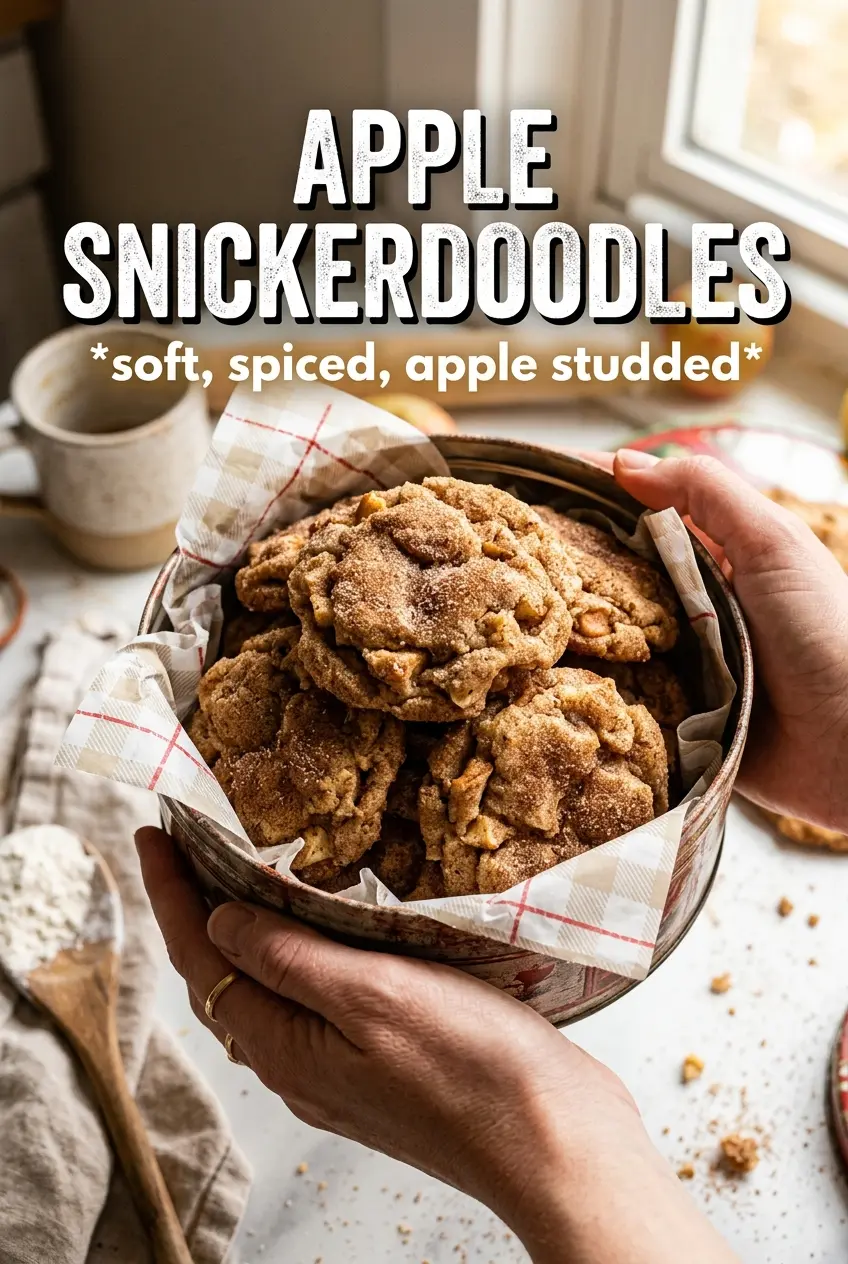
Apple snickerdoodles bake up with the soft, crinkly centers people want from the classic cookie, but the chopped dried apples give them a deeper, fruitier warmth that keeps every bite interesting. The cinnamon-sugar coating turns lacquered and sparkly in the oven, and the edges set just enough to give you that slight chew without losing the tender middle.
What makes these work is the balance: cream of tartar keeps the texture tangy and soft, while the dried apples bring flavor without adding the excess moisture that fresh fruit would. That matters here. Fresh apples can throw off the dough and leave you with cakier cookies; finely chopped dried apple pieces blend in cleanly and still show up in the finished bite.
Below, I’ve included the small details that matter most, from how finely to chop the apples to the point where the cookies come out of the oven. Those are the places where snickerdoodles usually go from good to bakery-level.
The cookies stayed soft in the middle and the dried apples gave little chewy pockets that made the cinnamon coating taste even better. I baked them for 11 minutes and they were perfect after cooling on the pan.
Save these apple snickerdoodles for the days when you want soft cinnamon cookies with chewy dried apple bits and crackly sugar tops.
The Trick to Keeping Apple Snickerdoodles Soft Instead of Dry
The biggest mistake with this style of cookie is baking them until they look finished in the center. Snickerdoodles keep cooking on the hot pan, and the apple pieces add just enough extra texture that it’s easy to overbake them by accident. Pull them when the edges are set and the tops are crinkled, but the centers still look a little pale and soft.
That short rest on the baking sheet matters just as much as the oven time. It lets the structure set without drying out the crumb. If you move them too soon, they can bend or tear; if you leave them in the oven too long, you lose the tender middle that makes snickerdoodles worth making in the first place.
What the Spices and Apples Are Doing Here
- Cream of tartar — This is what gives snickerdoodles their classic tang and soft texture. There isn’t a great one-to-one substitute for it if you want the real cookie texture, so keep it in if you can.
- Dried apple pieces — Finely chopping them is important. Larger pieces can punch holes in the dough and bake unevenly, but small pieces distribute through the cookie and give you a gentle apple flavor in every bite.
- Cinnamon, nutmeg, and allspice — The dough gets spiced from the inside out, and the rolling sugar adds a second layer on the outside. That double hit is what makes these taste warmer than a standard snickerdoodle.
- Butter — Softened butter beats into a fluffy base that traps air, which helps the cookies bake up tender instead of dense. Don’t melt it; melted butter changes the texture and spreads the cookies more than you want.
Building the Dough So the Cookies Bake Up Thick and Crinkly
Whisking the Dry Ingredients
Start by whisking the flour, cream of tartar, baking soda, cinnamon, nutmeg, allspice, and salt together until the color looks even. That keeps the leavening and spice from clumping in one bite and missing another. If the baking soda isn’t evenly distributed, you’ll get cookies that rise unevenly or taste metallic in spots.
Beating the Butter and Sugar
Beat the softened butter and sugar until the mixture looks pale and noticeably fluffy. That step creates the lift that gives these cookies their soft center, so stop when it has changed texture instead of just when it looks combined. If the butter is too cold, the mixture stays grainy; if it’s greasy and warm, the cookies spread too fast.
Adding the Apples Without Overmixing
Fold in the flour mixture just until the last streak disappears, then add the chopped dried apples. You want the dough unified but not beaten hard, because overmixing tightens the cookie and makes it less tender. The apple pieces should be scattered through the dough, not mashed into it.
Rolling and Baking
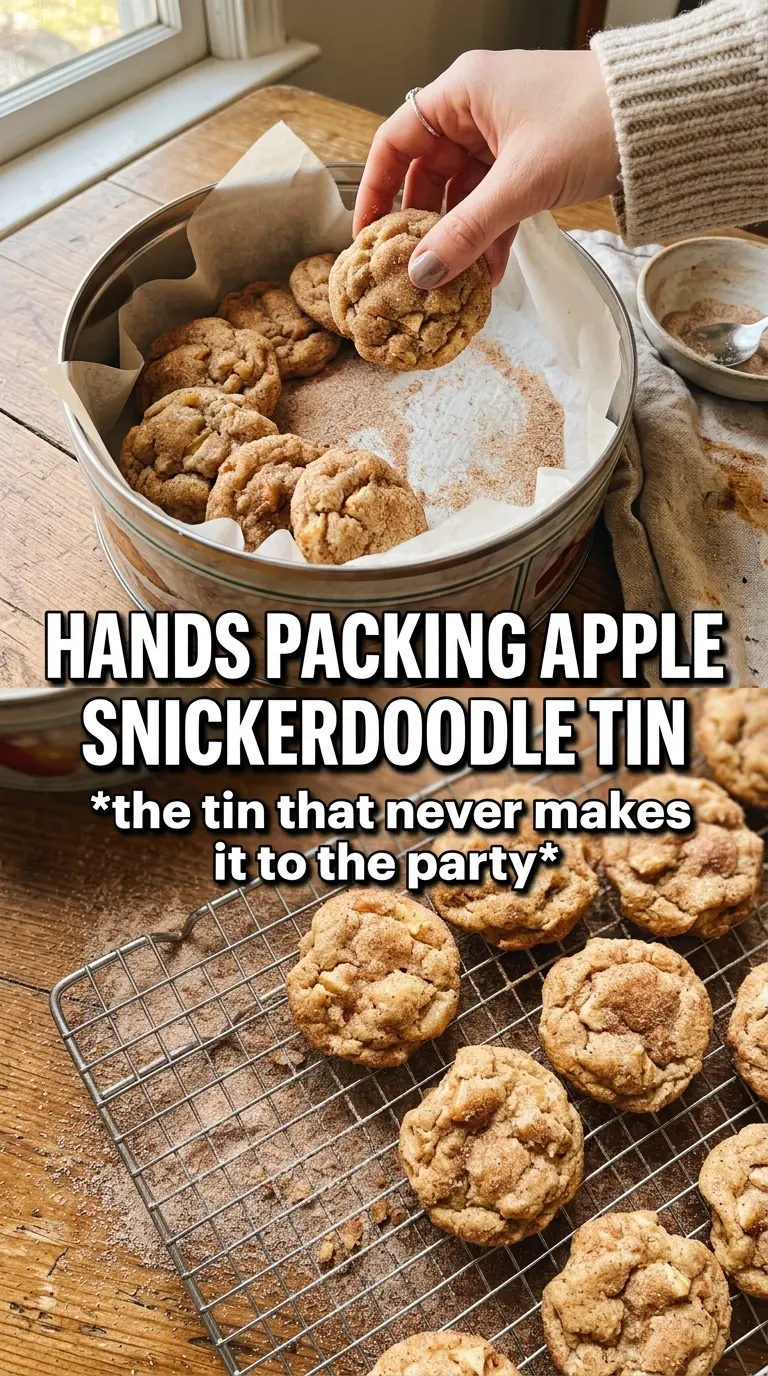
Mix the rolling sugar and spices in a shallow bowl, then scoop the dough into 1 1/2-tablespoon balls and coat each one completely. The coating should look generous and sandy, not thin. Bake until the edges are set and the tops are crinkled, and don’t wait for the centers to look dry; they should still look soft when you pull the pan.
Three Ways to Adapt These Cookies Without Losing What Makes Them Good
Use fresh apples only if you dry them first
Fresh apples release too much moisture for this dough. If that’s what you have, dice them very small and cook them briefly in a dry skillet to drive off some moisture before folding them in. The cookies will still taste good, but the texture will be softer and less chewy than the dried-apple version.
Gluten-free version with a cup-for-cup flour blend
A good 1:1 gluten-free flour blend works here because the cookie relies on butter, sugar, and spice for most of its structure and flavor. The texture will be a little more delicate, so let the cookies cool on the pan before moving them. A blend that already includes xanthan gum usually behaves best.
Extra cinnamon-sugar crust
If you want a stronger crackly coating, roll the dough balls twice: once lightly, then again after they sit for a minute. That second layer sticks in a thicker shell and gives the finished cookies a more dramatic sparkle and crunch around the edges.
Storage and Reheating
- Refrigerator: Store in an airtight container for up to 5 days. The sugar coating softens a little, but the cookies stay tender.
- Freezer: Freeze baked cookies for up to 2 months, or freeze dough balls after rolling in the spice sugar. Baked cookies thaw well; unbaked dough can go straight from freezer to oven with a minute or two added.
- Reheating: Warm baked cookies in a 300F oven for 3 to 4 minutes. The mistake is using the microwave, which makes the centers gummy and the sugar coating sticky.