Au gratin potatoes bake into something that lands between a side dish and the main event: thin slices of Yukon gold potatoes tucked into a creamy sauce, then finished with a bubbling, bronzed cheese crust. The best versions are tender all the way through without collapsing into mush, and the top keeps enough texture to give you a little crunch with every spoonful.
This version leans on Yukon golds because they hold their shape better than russets and bring a naturally buttery texture that works beautifully with cream. The sauce starts with a quick flour-and-butter roux, then gets thickened before the cheese goes in, which keeps the whole dish from turning greasy or grainy in the oven. Sharp cheddar brings the bold flavor, while Gruyere melts into the sauce and gives that nutty, French-style finish.
Below, I’m breaking down the one timing detail that keeps the sauce smooth, plus the swaps that still give you a rich, layered bake if you need to work with what’s in the kitchen.
The sauce stayed silky and the potatoes cooked through perfectly. I rested it the full 15 minutes and it sliced into neat layers instead of falling apart.
Save these au gratin potatoes for the nights when you want ultra-creamy layers and that golden cheese crust.
The Reason Most Au Gratin Potatoes Turn Gluey
The two places this dish usually goes wrong are the sauce and the potatoes. If the sauce is thin when it goes into the dish, it won’t have enough body to coat the layers, so the bake turns watery instead of creamy. If the potatoes are sliced too thick, the outside softens before the center has a chance to tenderize, and you end up with uneven bites.
The fix is straightforward: cook the sauce until it lightly coats a spoon before the cheese goes in, and slice the potatoes no thicker than 1/8 inch. That thin cut matters more than people think. It gives the sauce time to seep between the layers while the potatoes bake through at the same rate.
- Thicker slices need longer in the oven, which usually means more evaporation and a drier top before the center is done.
- A properly thickened sauce stays around the potatoes instead of sinking to the bottom of the pan.
- Freshly shredded cheese melts smoother than pre-shredded, which can turn a little sandy from the anti-caking coating.
What the Potatoes, Dairy, and Cheese Are Really Doing Here
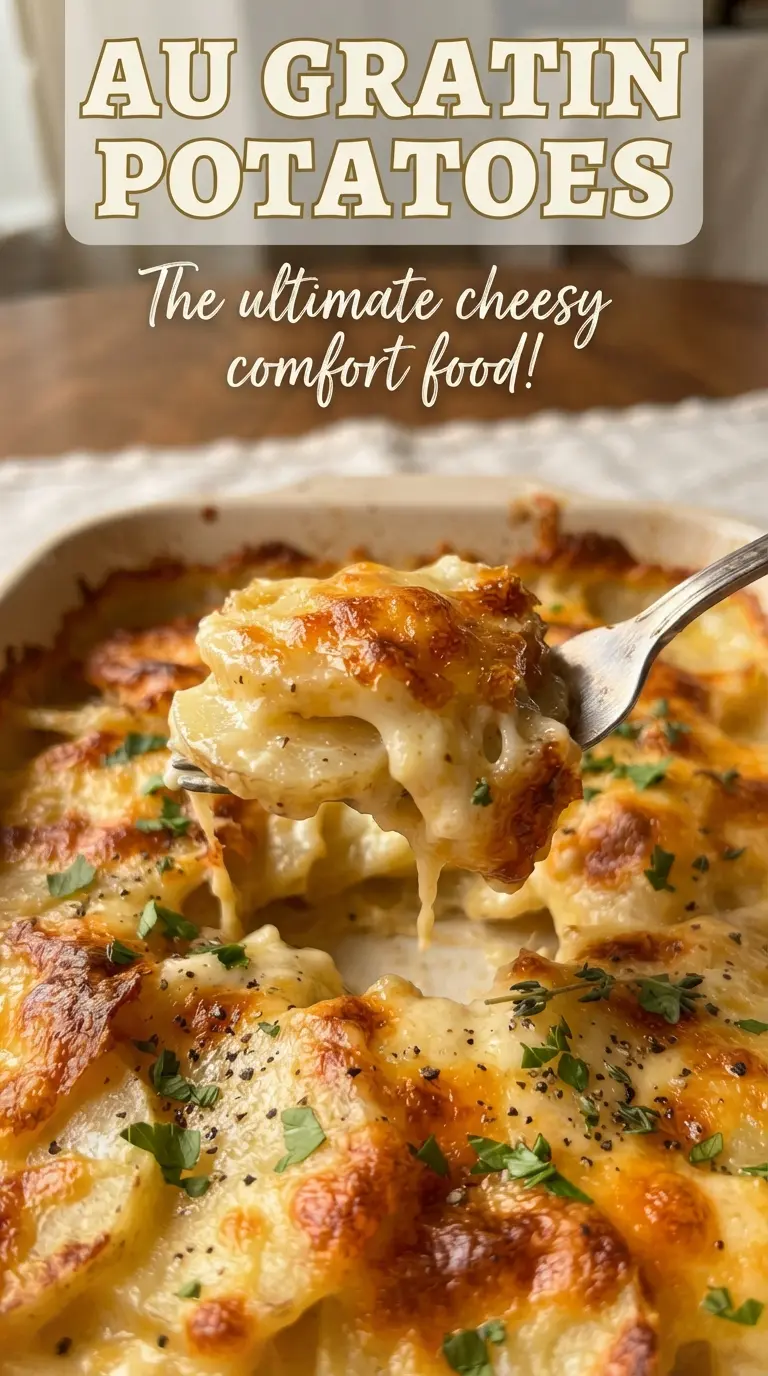
Yukon gold potatoes are the backbone of this dish. They’re waxier than russets, so they hold their shape in neat layers instead of collapsing into a mash, and they bring a naturally buttery texture that makes the sauce taste richer. If you substitute russets, the bake turns softer and starchier, which isn’t bad, but it gives you a less defined slice.
- Whole milk and heavy cream — This combination gives the sauce enough richness to feel lush without becoming overly heavy. You can swap in half-and-half in a pinch, but the finished dish will be a little looser.
- Sharp cheddar — This is the flavor driver. Mild cheddar won’t give you the same bite, and that sharper edge keeps the sauce from tasting flat.
- Gruyere — Gruyere melts smoothly and adds a nutty depth that cheddar can’t fully cover on its own. If you don’t have it, Swiss is the closest stand-in, though the flavor will be milder.
- Fresh thyme — It keeps the sauce from tasting one-note and gives the whole dish a savory lift. Dried thyme works, but use less because its flavor lands harder and more compact.
Building the Layers So the Middle Stays Creamy
Start the Sauce on the Stove, Not in the Oven
Cook the butter and garlic just until fragrant, then whisk in the flour and let it bubble for a full minute. That little bit of cooking removes the raw flour taste and gives the sauce a smoother finish. When you add the milk and cream, pour slowly and whisk constantly so the mixture stays lump-free. If it looks a little thick before the cheese goes in, that’s right where you want it.
Let the Cheese Melt Off the Heat
Pull the pan off the burner before stirring in the cheddar and Gruyere. Cheese can turn grainy if it gets blasted over direct heat, especially after the sauce has already thickened. Stir until it melts cleanly and the sauce looks glossy. If it starts to separate, the pan was too hot, so give it a minute off the heat before adding anything else.
Layer, Cover, and Bake in Stages
Build the casserole in thirds so the sauce gets into every level instead of sitting only on top. Covering for the first part of the bake traps steam, which is what softens the potatoes all the way through. Uncovering at the end lets the top brown and the edges turn a little crisp. The dish is done when a knife slides through the center without resistance and the top is deeply golden, not pale and just barely melted.
Let It Rest Before Serving
The 15-minute rest is part of the recipe, not an afterthought. It gives the sauce time to settle back into the layers, which means cleaner slices and a creamier texture on the plate. If you cut in too soon, the sauce runs and the layers slump. The flavor is still there, but the structure isn’t.
How to Adapt These Au Gratin Potatoes Without Losing the Creamy Layers
Gluten-Free Version
Swap the all-purpose flour for a gluten-free blend that thickens like wheat flour, or use a cornstarch slurry at the end of the sauce. The texture stays creamy, but cornstarch gives a slightly glossier finish and less of that classic roux flavor.
Lighter Dairy Swap
Use whole milk in place of part of the cream if you want a slightly lighter casserole. You’ll lose a bit of richness, so keep the sauce properly thick on the stove and don’t expect quite the same velvety finish.
Cheese Swap for What’s in the Fridge
Fontina, Swiss, or white cheddar all work if you’re missing Gruyere. Keep at least one strongly flavored cheese in the mix, though, or the dish loses the savory punch that makes au gratin potatoes stand out.
Make-Ahead Storage and Reheating
- Refrigerator: Store covered for up to 4 days. The sauce will set more firmly as it chills, but the flavor holds up well.
- Freezer: This dish freezes, but the texture softens a bit after thawing. For best results, freeze baked portions tightly wrapped and thaw overnight in the fridge before reheating.
- Reheating: Cover with foil and warm at 350°F until hot in the center. Uncover for the last few minutes if you want the top to crisp back up. Reheat slowly so the cheese sauce doesn’t split or turn oily.
Answers to the Questions Worth Asking

Au Gratin Potatoes
Ingredients
Equipment
Method
- Preheat oven to 375F and butter a 9x13-inch baking dish so the first layer releases easily.
- Melt the butter and cook the minced garlic for 30 seconds, stirring until fragrant.
- Whisk in the flour and cook for 1 minute to form a smooth roux without browning.
- Slowly whisk in the whole milk and heavy cream, then bring to a simmer and cook until thickened and glossy.
- Season the sauce with salt, black pepper, and fresh thyme leaves, stirring until evenly combined.
- Remove from the heat and stir in 1 cup of shredded sharp cheddar and 1/2 cup of shredded Gruyere until melted.
- Layer one third of the potato slices in the baking dish and spoon one third of the sauce over the top.
- Repeat with a second third of potatoes and sauce, spreading the sauce to the edges for even creamy layers.
- Repeat once more with the remaining potatoes and sauce, then top with the remaining cheddar and Gruyere for a browned crust.
- Cover with foil and bake for 45 minutes so the potatoes soften through.
- Uncover and bake for 25-30 minutes at 375F until golden on top and tender when pierced.
- Rest the au gratin potatoes for 15 minutes before serving, letting the sauce set into thick creamy layers.