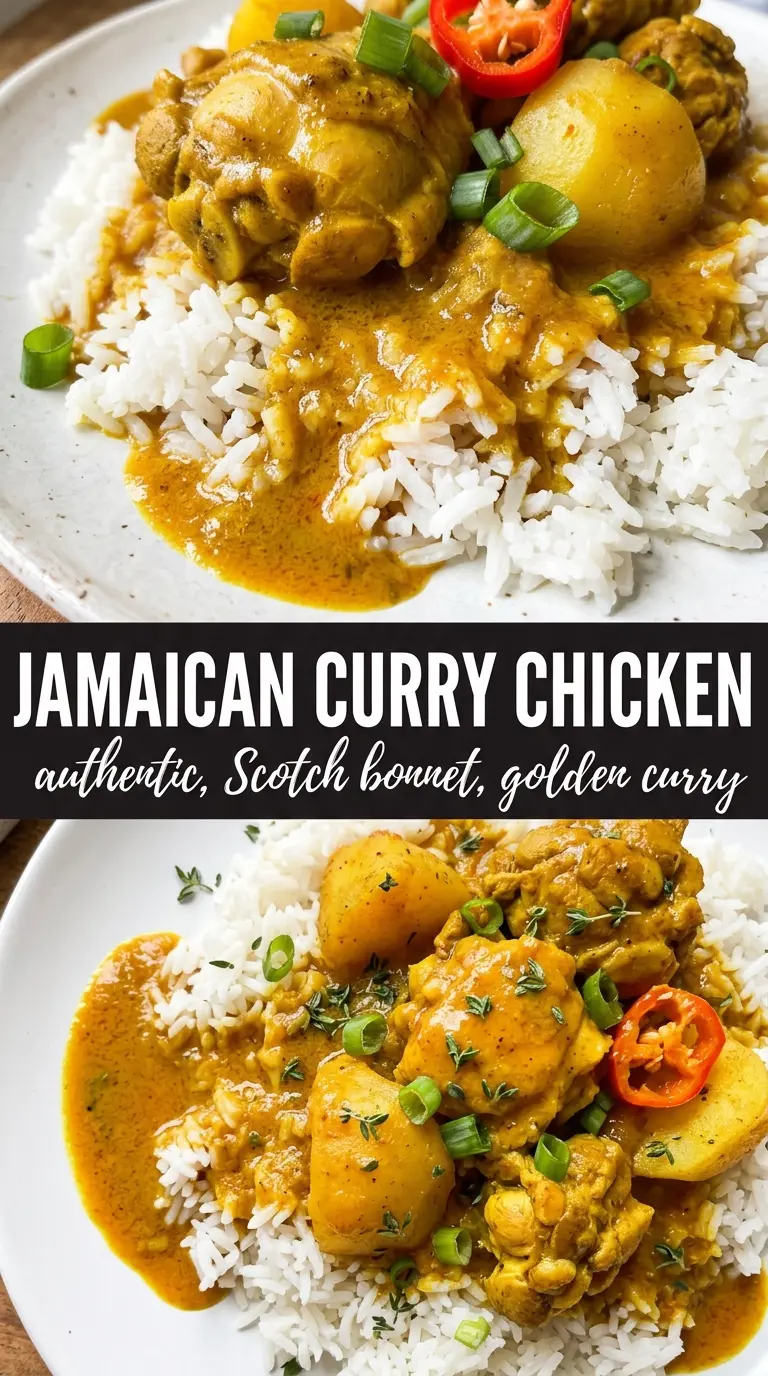
Deep golden curry chicken is one of those dishes that earns its place in the regular dinner rotation fast. The chicken turns tender without losing its shape, the sauce cooks down glossy and fragrant, and the potatoes soak up all that seasoned curry broth until every bite tastes like the pot was worked over with care.
The difference here comes from building flavor in layers instead of dumping everything into the pot at once. Marinating the chicken with curry powder and seasoning gives the meat a base, then toasting the remaining curry powder in hot oil wakes it up and takes away any raw taste. Browning the chicken before the simmer adds another level of depth, and that step matters more than most people think.
Below, I’ve included the little things that make Jamaican curry chicken work the way it should, from handling the Scotch bonnet to knowing when the sauce has reduced enough to cling to the chicken instead of pooling watery at the bottom of the bowl.
The chicken browned beautifully and the curry sauce thickened up just enough to coat the potatoes without turning watery. Removing the Scotch bonnet at the end kept the heat balanced, and my husband went back for seconds with extra rice.
Save this Jamaican curry chicken for the nights when you want tender bone-in chicken, glossy curry sauce, and potatoes that hold their shape.
The Step People Skip That Gives Jamaican Curry Its Real Depth
The biggest mistake with curry chicken is letting the spices go straight into liquid and hoping they’ll bloom later. They won’t. Jamaican curry powder needs hot oil to open up, and that brief toast in the pot is what gives the finished sauce its deep color and full, rounded flavor instead of a flat, dusty taste.
Browning the chicken first does two things at once: it builds fond on the bottom of the pot, and it gives the meat a head start on texture. If the pieces are crowded, they steam instead of sear, and you lose that savory base. Work in batches and let the skin and edges turn properly golden before moving on.
- Chicken thighs and drumsticks — Bone-in pieces stay juicy through the long simmer and give the broth more body than boneless chicken can. Skin-on is fine if that’s what you buy, but you still want a good brown on the meat before the braise takes over.
- Jamaican curry powder — This is the flavor that defines the dish, and it’s not the same as a generic curry blend. If you use a substitute, the color and spice balance change fast, so use a Jamaican-style blend if you can.
- Scotch bonnet — Keeping it whole lets the pepper perfume the pot without blowing out the heat. Habanero works as the closest swap; just leave it whole for a gentler result or split it if you want more fire.
- Potatoes — They thicken the sauce naturally as they simmer and catch the curry in all their edges. Waxy potatoes hold up best; floury potatoes break down faster and make the sauce softer.
What Each Ingredient Is Actually Doing in This Recipe
- Primary ingredient (the star) — Quality matters most. Choose the best you can find.
- Cooking medium (oil, butter, or broth) — This carries flavors and prevents dryness.
- Seasonings (salt, pepper, spices, herbs) — Layer flavors so nothing overpowers. Build depth gradually.
- Aromatics (garlic, onion, herbs) — Cook with fat to bloom flavors. Become the foundation.
- Supporting ingredients — Complement the main ingredient without overpowering it.
- Sauce or liquid (if applicable) — Brings flavors together. Balance richness with acid.
- Acid (lemon, vinegar, wine, or other) — Brightens and prevents flat-tasting results.
- Final finish (garnish, glaze, or sauce) — Prevents one-dimensional taste and adds visual appeal.
Building the Curry So the Sauce Stays Glossy, Not Watery
Seasoning and Resting the Chicken
Coat the chicken with the curry powder, all-purpose seasoning, garlic powder, onion powder, salt, and pepper until every piece looks evenly stained. That hour of marinating gives the seasoning time to sink in and keeps the meat from tasting like it was salted at the last minute. If you’re rushing this part, the chicken will still cook, but the flavor stays on the surface.
Browning in Batches
Heat the oil until it shimmers, then brown the chicken in batches instead of stacking it into the pot. You want a deep golden crust, not pale steamed pieces. If the bottom of the pot starts to look dry before the chicken is done browning, lower the heat slightly; burnt spices here will make the whole dish taste bitter.
Toasting the Curry Base
After the chicken comes out, toast the remaining curry powder in the oil for about a minute, just until it smells fragrant and the color deepens. This is the moment that gives Jamaican curry its characteristic richness. Add the onion next and scrape up the browned bits as it softens, because that fond is part of the sauce now.
Simmering Until the Sauce Clings
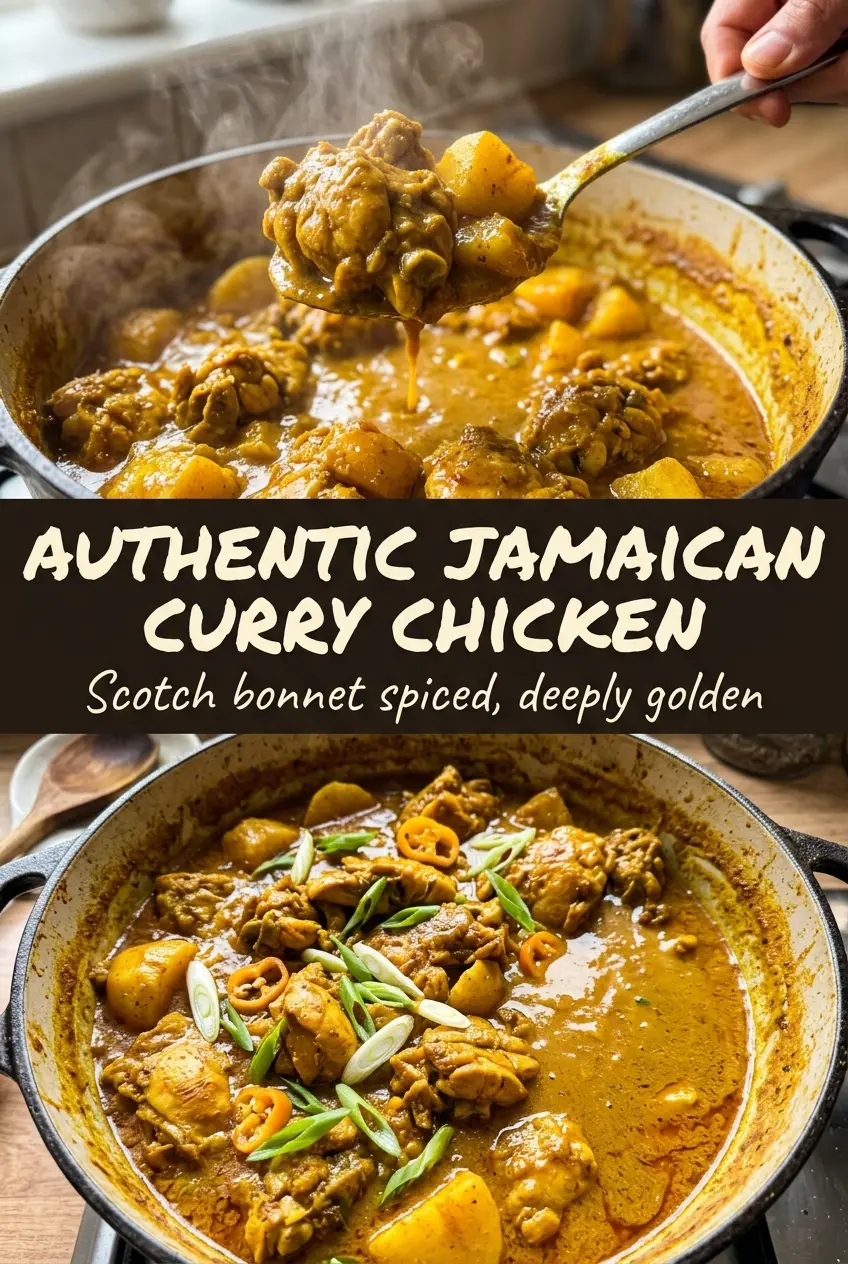
Once the broth, potatoes, thyme, and chicken go back in, bring everything to a boil and then drop it to a steady simmer. The lid should sit on loosely enough that steam can escape a little; a hard boil will tear the chicken apart before the sauce has a chance to reduce. When the meat pulls cleanly from the bone and the broth has turned into a thick, golden sauce, you’re there.
How to Adapt This Curry When You Want It Milder, Leaner, or Dairy-Free
Milder Heat Without Losing the Jamaican Flavor
Leave the Scotch bonnet whole and remove it after 10 to 15 minutes of simmering, or skip it entirely if your curry powder already brings enough warmth. You’ll still get the aroma and color from the spice blend, but the finished dish will read softer on the palate.
Chicken Breast Version
Boneless chicken breast works if that’s what you have, but cut the simmer time way back or the meat will dry out. Brown it lightly, then simmer just until cooked through and remove it from the pot as soon as it’s tender.
Gluten-Free Serving Note
The recipe is naturally close to gluten-free, but the all-purpose seasoning needs a label check because some blends contain wheat-based fillers. Pair it with plain rice and peas, and you’ve got a meal that doesn’t need any other changes.
Make-Ahead for Better Flavor
This curry tastes even better the next day because the spice and thyme settle into the broth. Cook it fully, cool it fast, and chill it overnight; the potatoes will absorb more sauce, so expect a thicker pot after reheating.
Storage and Reheating
- Refrigerator: Store for up to 4 days. The sauce thickens as it chills, and the potatoes soften a little more.
- Freezer: It freezes well for up to 2 months, though the potatoes can turn a bit softer after thawing. For the best texture, freeze in portions and reheat gently.
- Reheating: Warm it over low heat with a splash of broth or water to loosen the sauce. High heat can make the chicken dry and the potatoes fall apart before the center is hot.
Answers to the Questions Worth Asking
Authentic Jamaican Curry Chicken
Ingredients
Equipment
Method
- Season chicken with 2 tablespoons Jamaican curry powder, all-purpose seasoning, garlic powder, onion powder, salt, and black pepper, then let it marinate for at least 1 hour.
- Refrigerate the marinating chicken covered so the flavors penetrate while the curry notes develop.
- Heat vegetable oil in a heavy pot over high heat, then brown chicken in batches on all sides until deeply golden, about 3–5 minutes per batch, and remove to a plate.
- Keep the pot hot while browning so the surface caramelizes instead of steaming.
- In the same pot, toast the remaining curry powder in the oil for 1 minute while stirring until fragrant.
- Add sliced onion and cook for 4 minutes until softened.
- Stir in minced garlic, add the whole Scotch bonnet, and add fresh thyme, then cook for 1 minute to release aroma.
- Return browned chicken to the pot, then pour in chicken broth and add cubed potatoes.
- Bring everything to a boil, then reduce heat, cover, and simmer for 35–40 minutes until chicken is falling off the bone and the sauce thickens to a glossy coat.
- Remove the Scotch bonnet, taste the curry sauce, and adjust seasoning with salt and black pepper if needed.
- Serve the Jamaican curry chicken over cooked rice and peas with thyme visible and the pepper on the side if desired.