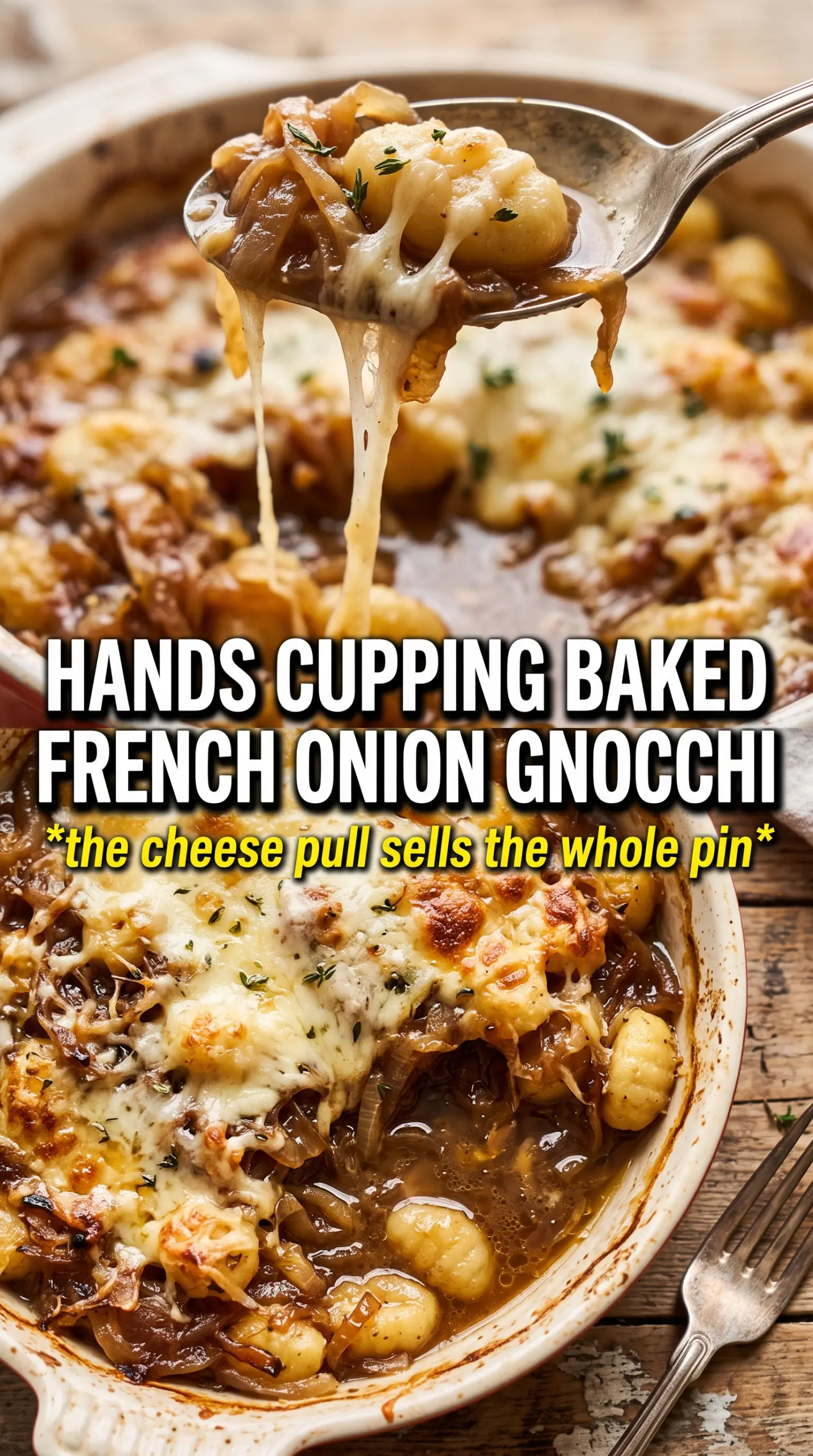
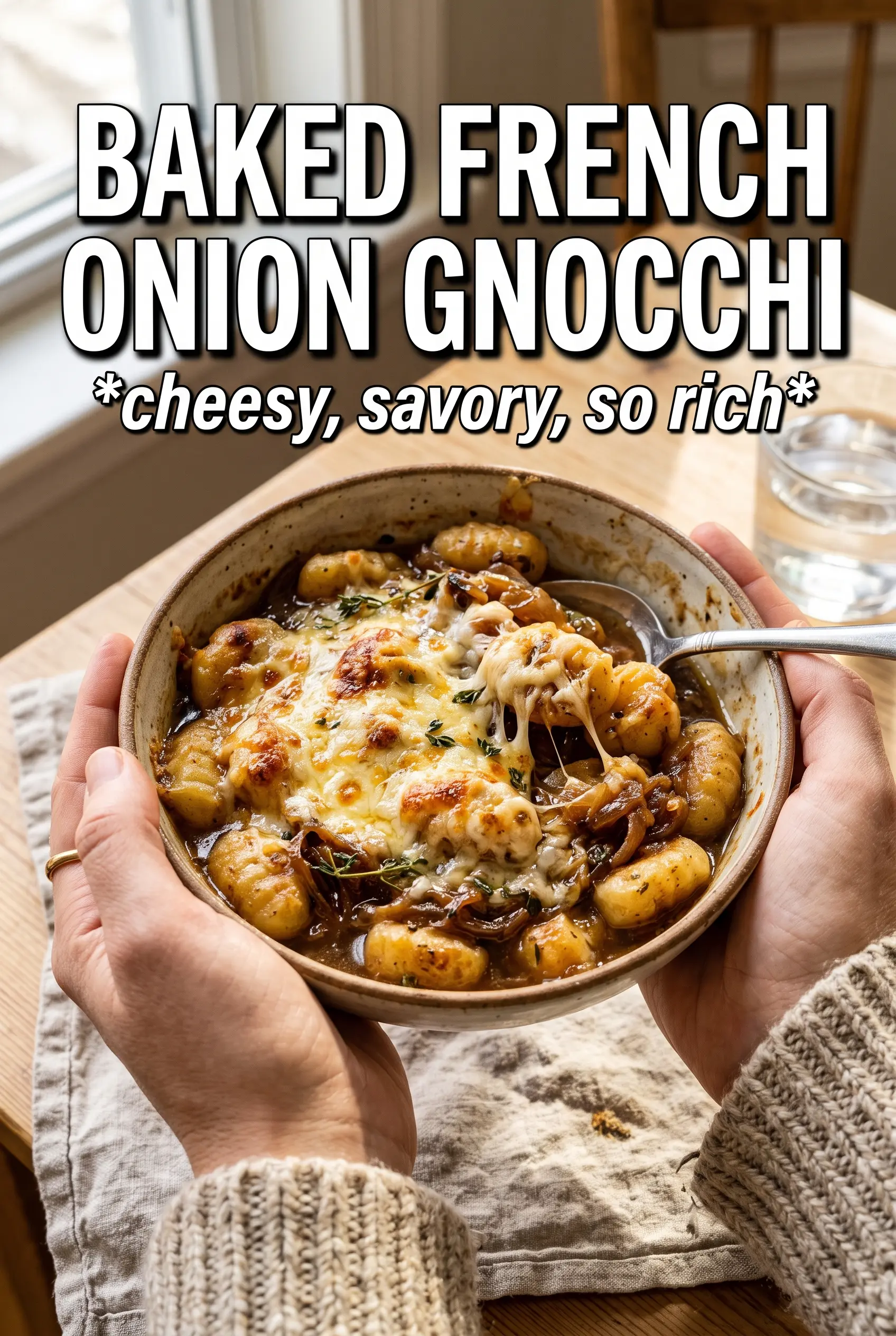
Baked French onion gnocchi lands somewhere between a stovetop onion soup and the kind of baked pasta you scrape the corners of the dish for. The onions turn sweet and jammy, the broth tightens into a savory cream sauce, and the gnocchi bake up tender under a blanket of browned Gruyere. It eats like a full dinner, but it still has that low-effort, one-pan comfort that makes it easy to repeat.
What makes this version work is patience with the onions and restraint with the liquid. You want the onions deeply caramelized before anything else goes in, because that slow browning is what gives the dish its base flavor. The wine deglazes the pan and lifts the stuck-on bits, then the cream softens the broth just enough that the gnocchi can cook in the sauce without turning it muddy or flat.
Below, I’ll walk through the part that matters most: how to get the onions dark without burning them, and how to finish with a cheese top that melts into a proper crust instead of disappearing into the sauce.
The onions took time, but it was worth it — the sauce turned silky and the gnocchi stayed pillowy instead of falling apart. That Gruyere crust on top was the part my husband kept scooping off first.
Save this baked French onion gnocchi for the night you want a brothy, cheesy one-pan dinner with a real caramelized onion finish.
The Long Caramelization Is the Whole Point Here
The onions need time, not just heat. If they stay pale, the dish tastes like onion soup broth with pasta in it instead of French onion anything. Medium-low heat gives the onions enough contact with the pan to slowly brown while their moisture cooks off, which is what builds that deep savory sweetness.
The other place people trip up is rushing the liquid. Once the wine goes in, scrape the pan hard and let it cook down before adding broth and cream. If the sauce looks thin at that stage, that’s normal; the gnocchi will absorb some of it in the oven, and the cheese will thicken the top as it bakes.
- Keep the onion slices even so they cook at the same pace. Thin, uniform slices mean fewer burnt strands hiding in the pan.
- Use an oven-safe skillet with enough surface area for the onions to spread out. Crowding traps steam and slows browning.
- Don’t cook the gnocchi separately. They finish in the sauce and pick up flavor instead of tasting like plain dumplings dropped on top.
What the Gruyere and Gnocchi Are Each Bringing to the Pan
- Potato gnocchi — Shelf-stable or refrigerated gnocchi both work. The important part is using them straight from the package so they hold their shape as they bake in the sauce.
- Yellow onions — These are the backbone of the dish. Sweet onions will work, but they soften faster and can taste flatter, so yellow onions give you the best balance of sweetness and depth.
- Dry white wine or dry sherry — This does the deglazing and adds the sharp edge French onion needs. If you skip it, use a splash of extra broth with a teaspoon of vinegar, but the wine still gives the cleanest finish.
- Gruyere — This is the cheese that makes the top taste like French onion soup instead of generic baked pasta. It melts smoothly and browns in a way mozzarella never will.
- Worcestershire sauce — A small amount gives the broth a darker, more layered savoriness. Don’t taste it as a separate ingredient; it just makes everything around it taste fuller.
- Heavy cream — This rounds out the broth so the sauce feels rich enough to coat the gnocchi. Half-and-half will work in a pinch, but the sauce won’t cling quite as well.
Building the Sauce Around the Onions, Not the Other Way Around
Caramelizing the Onion Base
Melt the butter with the olive oil, then add the onions and give them space. They should soften first, then gradually turn amber, then deep brown at the edges. If they start catching too fast, lower the heat and add a spoonful of water to loosen the pan. The color you want is dark and even, not scorched black spots.
Deglazing and Deepening the Broth
Pour in the wine and stir until the browned bits release from the bottom of the skillet. Let the wine cook until it smells less sharp and more rounded, because raw wine will make the sauce taste thin. Add the garlic and thyme after the wine has cooked down a bit; if they go in too early, the garlic can burn before the liquid has had time to work.
Letting the Gnocchi Finish in the Sauce
Once the broth, Worcestershire, and cream are simmering, stir in the gnocchi and coat them well. They should sit in a sauce that looks loose and glossy, not thick like gravy, because they’ll absorb liquid as they bake. Scatter the Gruyere across the top and bake until the sauce bubbles around the edges and the cheese turns golden in spots. If the top is browning before the center is hot, cover it loosely with foil for a few minutes and finish uncovered at the end.
How to Adapt It When You Need a Different Finish
Dairy-Free Version
Use olive oil instead of butter, swap the cream for full-fat oat cream or unsweetened coconut cream, and top with a dairy-free melt that browns well. The flavor stays savory and rich, but the sauce will be a little less silky than the original.
Gluten-Free Version
Use certified gluten-free gnocchi and check that your Worcestershire sauce is gluten-free. The texture and bake time stay the same, and this is the easiest version to adapt because the sauce doesn’t rely on flour.
Make It More Soup-Like
Add an extra 1/2 cup of broth before the gnocchi goes in and bake a few minutes less. You’ll get a looser, spoonable dish with more broth at the bottom and less of a casserole-style finish.
Leftovers
This stores well, but the gnocchi will keep absorbing sauce in the fridge. Add a splash of broth or water before reheating so it loosens back up instead of turning into a dense, cheese-coated pan of pasta.
Storage and Reheating
- Refrigerator: Store covered for up to 3 days. The sauce thickens as it chills and the gnocchi get a little firmer.
- Freezer: I don’t recommend freezing this dish. The cream sauce can separate and the gnocchi texture gets mealy after thawing.
- Reheating: Reheat covered in a 350F oven with a splash of broth until hot, then uncover for a minute or two if you want the top to crisp again. The mistake to avoid is blasting it in the microwave without extra liquid, which dries out the gnocchi and makes the sauce paste-like.
Questions I Get Asked About This Recipe
Baked French Onion Gnocchi
Ingredients
Equipment
Method
- Melt the butter with the olive oil in a large oven-safe skillet, then add the thinly sliced onions. Cook over medium-low heat for 35–40 minutes, stirring occasionally, until deeply caramelized and dark golden.
- Pour in the white wine or sherry to deglaze the pan. Cook for 2 minutes, scraping up the browned bits, until slightly reduced.
- Add the minced garlic and fresh thyme to the skillet. Cook for 1 minute, just until fragrant.
- Add the beef broth, Worcestershire sauce, and heavy cream, then bring to a simmer. Stir until combined and steaming with small bubbles at the edges.
- Add the uncooked potato gnocchi and stir to coat in the sauce. Cook until evenly distributed, then season with salt and pepper to taste.
- Scatter the shredded Gruyère over the top in an even layer. Leave some onion and gnocchi peeking through so the top browns.
- Bake or broil at 425°F for 15–18 minutes. The sauce should bubble actively and the cheese should be golden with browned spots.