Golden, roasted Baked Greek Lemon Chicken earns a regular spot in the dinner rotation because it comes out with crisp, bronzed skin and a pan sauce that tastes bright, garlicky, and deeply savory at the same time. The lemon slices soften in the oven and turn almost jammy at the edges, while the chicken broth catches every bit of oregano, paprika, and chicken drippings so nothing feels wasted.
The key is in the balance. The marinade needs enough lemon to wake everything up, but not so much that it turns the surface harsh or tight. A little broth in the pan keeps the drippings from scorching and gives you something spoonable at the end, which is the part that makes this dish taste like it came from a much more deliberate cook.
Below, I’ll walk through the small details that matter most: how long to marinate, when to baste, and why the chicken skin should stay facing up the whole time. Those are the things that keep this from being just another lemon chicken bake.
The lemon flavor came through without making the chicken soggy, and the pan juices turned into the best sauce once I spooned them over the top. The skin was crisp around the edges and the garlic got sweet instead of bitter.
Save this Baked Greek Lemon Chicken for the nights when you want crisp skin, caramelized lemon, and a garlicky pan sauce with almost no cleanup.
The Lemon Marinade Works Because It Stays Bright, Not Harsh
With chicken pieces, the biggest mistake is going heavy on acid and then roasting too hot for too long. Lemon juice can be sharp on the surface if it sits there unchecked, which is why the olive oil matters as much as the citrus here. It coats the chicken, carries the garlic and herbs, and keeps the skin from drying out before the center is cooked through.
Bone-in chicken is the right choice for this dish because it handles the oven heat without going stringy. The skin protects the meat, and the bones help the pieces stay juicy even after the long roast. If you use boneless pieces, the timing changes a lot and the finished chicken won’t give you the same roasted edges or the same depth in the pan drippings.
What Each Ingredient Is Actually Doing in the Pan
- Olive oil — This is what helps the marinade cling and keeps the skin from drying before it renders. Use a decent extra-virgin oil if you have it, because it shows up in the final flavor, but you don’t need your most expensive bottle here.
- Fresh lemon juice and zest — Juice brings the brightness, while zest carries the real lemon perfume. The zest is what keeps the dish from tasting flat after roasting; bottled juice won’t give you the same lift.
- Garlic — Minced garlic perfumes the marinade and softens into sweet, roasted bits in the pan. Slice it instead of mincing if you want a milder result, but don’t use jarred garlic if you can avoid it; it tends to taste muddy after baking.
- Dried oregano and thyme — These herbs hold up better than fresh herbs in a hot oven. Oregano is the backbone of the Greek flavor here, and thyme gives the chicken a woodsy note that keeps the lemon from taking over.
- Chicken broth — A small amount in the pan keeps the drippings from burning and turns into a spoonable jus. Water works in a pinch, but broth gives you a better finished sauce with almost no extra effort.
- Lemon slices — These roast alongside the chicken and caramelize at the edges. Use thin slices so they soften fully; thick rounds stay firm and can taste too pithy.
Roasting the Chicken So the Skin Stays Crisp
Let the Marinade Work Without Overdoing It
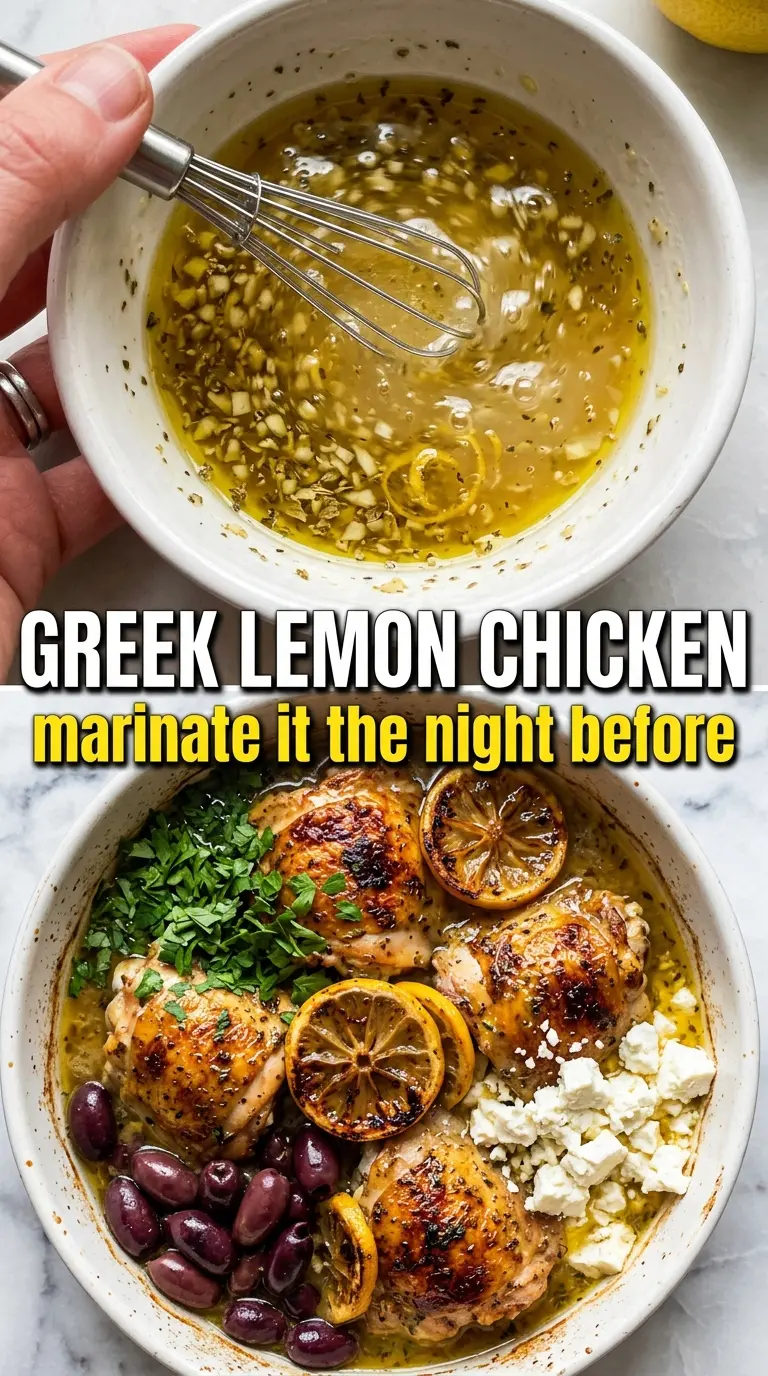
Whisk the marinade until the oil and lemon look fully combined, then coat the chicken and let it sit for at least 30 minutes. That short rest is enough to season the surface and start building flavor without making the texture soft or chalky. If you marinate much longer than that, the lemon can start to dominate the outside of the meat, especially on thinner pieces.
Keep the Pieces Skin-Side Up in a Hot Oven
Arrange the chicken skin-side up in a single layer so the fat can render and the tops can brown properly. Pour the broth around the chicken, not over it, or you’ll wash off the marinade and prevent the skin from crisping. The oven should be fully preheated to 425°F before the pan goes in; a cold start tends to steam the chicken before the skin has a chance to set.
Baste Once, Then Let the Heat Finish the Job
About halfway through roasting, spoon some of the pan juices over the chicken. That adds flavor to the surface and helps the herbs and garlic settle into the skin, but too much basting can cool the oven and delay browning. When it’s done, the skin should be deeply golden and the juices should run clear, with an internal temperature of 165°F at the thickest part.
Use the Drippings Like They Matter
Don’t leave the pan juices behind. Spoon the caramelized drippings over the chicken right before serving, along with a few roasted lemon slices and bits of garlic. That final step pulls everything together and gives the dish the glossy finish you expect from a proper roast chicken dinner.
How to Change the Dish Without Losing the Point
Use boneless chicken thighs for a faster version
Boneless thighs cook faster and stay juicy, but you’ll lose some of the deep roasted flavor that comes from bone-in pieces. Start checking them early and pull them as soon as they reach temperature so they don’t dry out. The pan drippings will still be good, just a little lighter.
Make it dairy-free and gluten-free without changing the method
This recipe is already naturally dairy-free and gluten-free as written, which is one reason it works so well for a mixed crowd. Keep an eye on your broth label if you need strict gluten-free cooking, since some brands use additives you may want to avoid. The roasting method doesn’t need to change at all.
Swap smoked paprika for sweet paprika if you want a softer finish
Smoked paprika adds a little depth and color, but it can push the dish toward a stronger roasted note. Sweet paprika gives you the same warm color with a gentler flavor, which is nice if you want the lemon and oregano to stay front and center.
Add potatoes or onions to turn it into a one-pan dinner
Chunked potatoes or thick onion wedges can roast underneath the chicken and soak up the drippings. Just give them a head start if the pieces are large, or they’ll still be firm when the chicken is done. This makes the pan more filling, but it also absorbs some of the juices you might otherwise spoon over the meat.
Storage and Reheating
- Refrigerator: Store leftovers in an airtight container for up to 4 days. The skin softens in the fridge, but the flavor gets even better after a night in the sauce.
- Freezer: The cooked chicken freezes well for up to 2 months. Freeze it with some of the pan juices so the meat doesn’t dry out, then thaw overnight in the refrigerator.
- Reheating: Warm it covered in a 325°F oven until hot through, then uncover for a few minutes at the end if you want to bring back some texture. The mistake to avoid is blasting it in the microwave, which makes the chicken rubbery and the lemon flavor flat.
Answers to the Questions Worth Asking

Baked Greek Lemon Chicken
Ingredients
Equipment
Method
- Whisk olive oil, lemon juice, lemon zest, minced garlic, dried oregano, dried thyme, smoked paprika, salt, and cracked black pepper until evenly combined. Marinate the chicken in the mixture for at least 30 minutes so the seasonings cling to the pieces.
- Preheat oven to 425°F and arrange the marinated chicken skin-side up in a large roasting pan or baking dish. Place the thinly sliced lemons around and under the chicken pieces.
- Pour the chicken broth around the chicken, then roast for 40-45 minutes. Baste with the pan juices once halfway through to keep the surface glossy.
- Continue roasting until the chicken skin is deeply golden and the internal temperature reaches 165°F. Spoon the caramelized pan drippings over the chicken before serving, then garnish with fresh oregano.