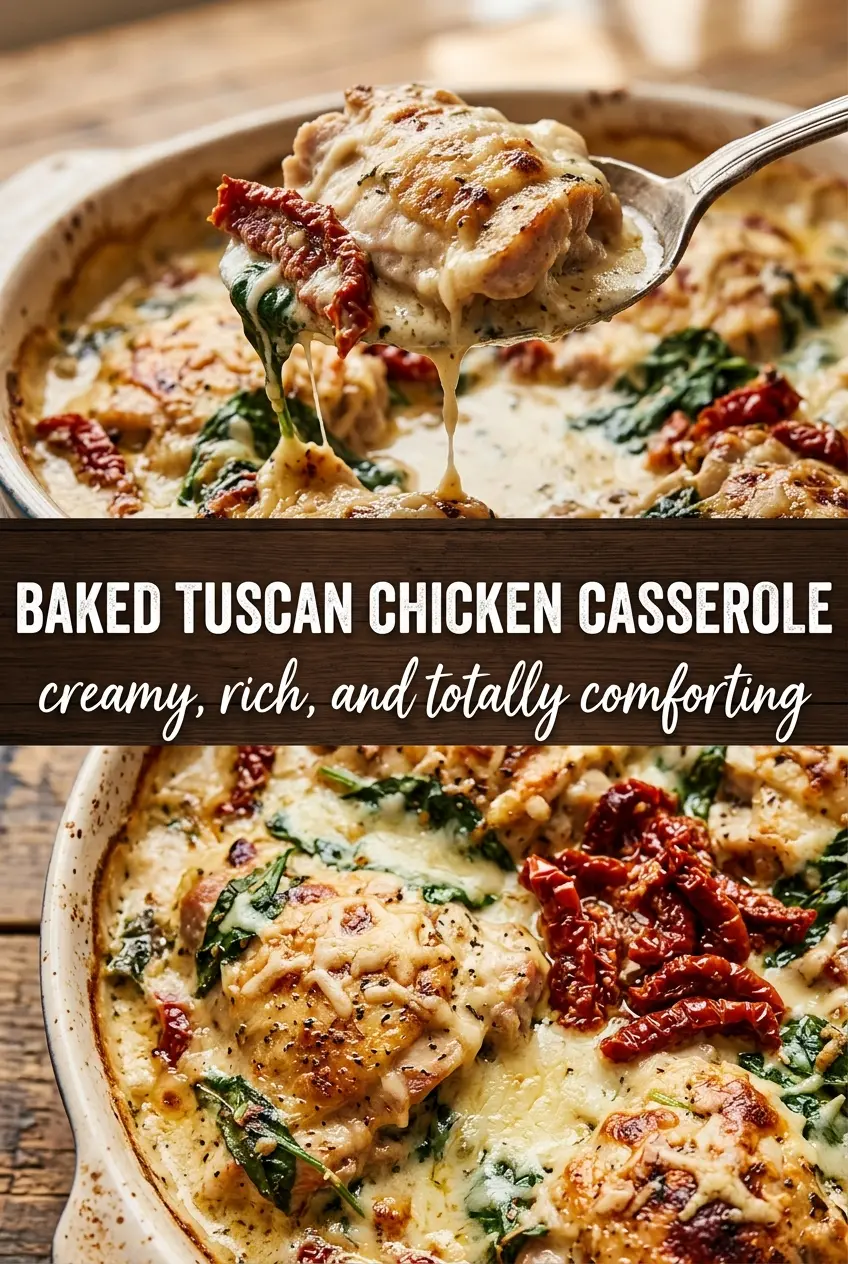
Baked Tuscan chicken casserole lands on the table with crisp, bronzed chicken thighs sitting in a silky Parmesan cream sauce that tastes rich without turning heavy. The sun-dried tomatoes bring little hits of sweetness and tang, the spinach softens into the sauce, and the whole pan bakes into something spoonable, glossy, and deeply savory.
What makes this version work is the way the chicken is seared first and baked uncovered. That gives the skin a head start on browning and keeps the sauce from steaming into something thin. The cream, broth, and Parmesan go in after the garlic and tomatoes have already flavored the pan, so the sauce starts with a real base instead of tasting flat.
Below, I’m walking through the sear, the sauce, and the small details that keep the cream from breaking. There’s also a section on swaps that still keep the casserole rich and balanced if you need to adjust for what’s in the fridge.
The sauce thickened beautifully in the oven and the chicken skin stayed crisp even after sitting for a few minutes. I loved how the sun-dried tomatoes gave it a little tang without making the cream sauce feel too rich.
Baked Tuscan chicken casserole with crispy skin, sun-dried tomatoes, and that creamy Parmesan sauce is worth keeping close for busy nights.
The Sear That Keeps the Chicken Juicy Instead of Boiling It
The mistake with casserole-style chicken is starting everything in the oven and hoping the sauce will carry the dish. That usually leaves you with pale skin and a sauce that tastes like it never had a chance to pick up any color. Here, the skillet does the work first. The chicken goes skin-side down until the fat renders and the surface turns deeply golden, then it finishes in the oven where the meat stays juicy and the skin stays ahead of the sauce.
The other key move is baking uncovered. Covered chicken dumps steam into the pan and softens everything you worked for. Uncovered, the sauce reduces around the edges while the chicken finishes cooking, which gives you those browned bits and a thicker, more cohesive sauce when you spoon it over rice, pasta, or crusty bread.
What the Sun-Dried Tomatoes, Cream, and Parmesan Are Doing Here
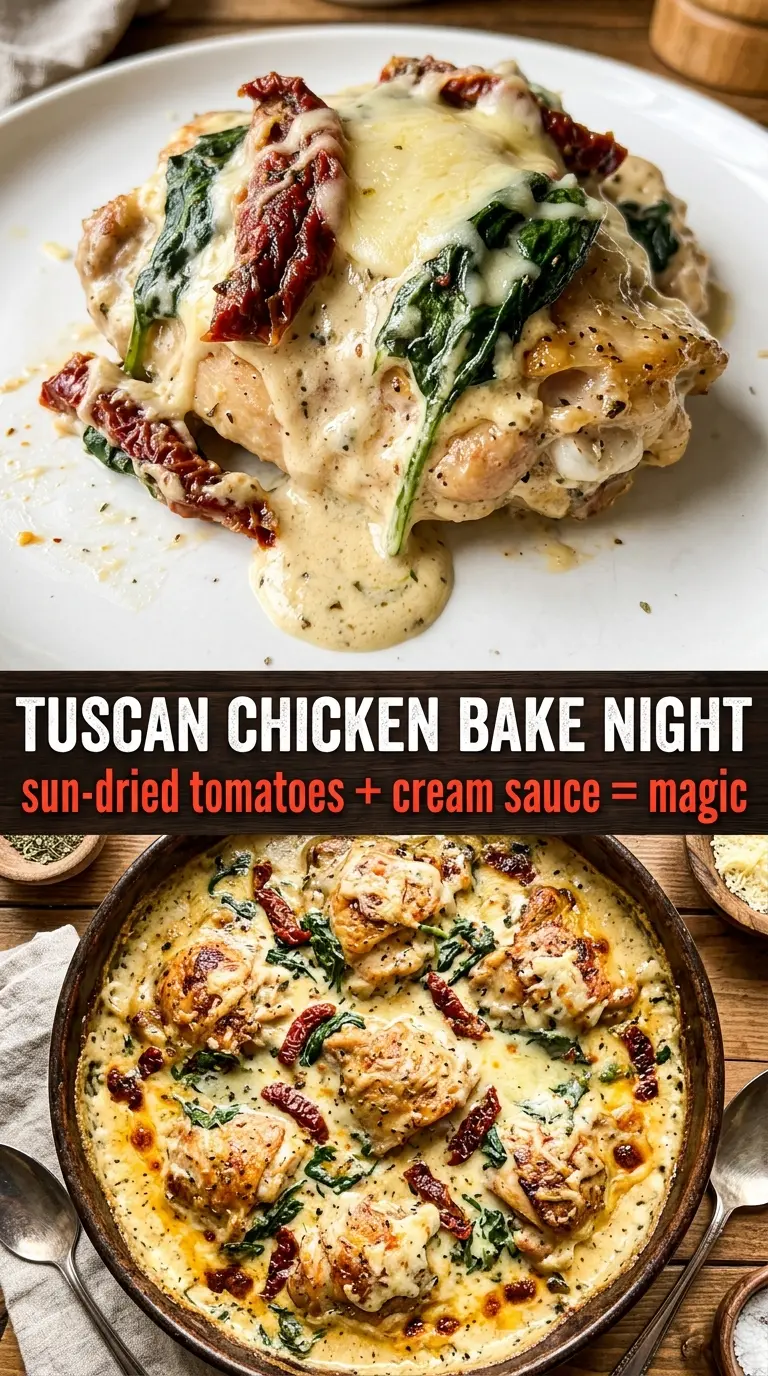
- Bone-in, skin-on chicken thighs — These stay tender in the oven and give the casserole enough fat to keep the sauce rich. Boneless thighs work if that’s what you have, but the skin won’t give you the same crisp finish and the baking time drops a few minutes.
- Sun-dried tomatoes in oil — The oil-packed kind bring a deeper tomato flavor and a softer texture that melts into the sauce. Drain them before slicing, but don’t rinse them; a little of that seasoned oil helps the pan bloom when the garlic hits the skillet.
- Heavy cream — This is what gives the sauce its body and keeps it from splitting in the oven. Half-and-half can work in a pinch, but the sauce will be thinner and a little more fragile, especially once the Parmesan goes in.
- Parmesan cheese — Grate it fresh if you can. Pre-grated cheese often has anti-caking starches that keep it from melting as smoothly, and that matters in a sauce like this where you want a clean, silky finish.
- Baby spinach — Stir it in at the end so it wilts into the sauce without turning swampy. Frozen spinach isn’t the best swap here unless you squeeze it very dry first, because extra water will loosen the sauce fast.
- Italian seasoning and red pepper flakes — These round out the sauce without making it taste like a jarred shortcut. The seasoning blend adds herb notes, while the pepper flakes lift the richness just enough to keep each bite lively.
Building the Sauce So It Stays Silky in the Oven
Season and Sear the Chicken First
Pat the chicken dry before it hits the pan. Wet skin steams, and steamed skin never browns the way you want it to. Season generously, then place the thighs skin-side down in hot olive oil and leave them alone until the skin releases on its own and turns a deep golden color. If the skin sticks when you try to flip it, it’s not ready yet.
Use the Fond in the Pan
Once the chicken comes out, garlic and sun-dried tomatoes go straight into the same skillet. The garlic should smell fragrant in about a minute, not browned and bitter. When you pour in the broth, scrape up every browned bit from the bottom of the pan. That browned layer is what makes the sauce taste cooked instead of assembled.
Bring in the Cream at Low Heat
Stir in the cream, Parmesan, Italian seasoning, and red pepper flakes over gentle heat. If the pan is roaring, the cheese can turn grainy before it melts smoothly. You want the sauce to look slightly loose at this stage because it will tighten in the oven. Once the chicken goes back in skin-side up, the top of the thighs should sit above the sauce so the skin stays exposed and doesn’t go soggy.
How to Adapt This Without Losing the Character of the Dish
Make It with Chicken Breasts
Use bone-in, skin-on breasts if you want to keep some of the richness and reduce the risk of drying out. They’ll need a little less time in the oven than thighs, so start checking early. The sauce still works, but thighs give you a more forgiving texture and a deeper finished flavor.
Dairy-Free Version
Swap the cream for full-fat coconut milk and leave out the Parmesan, then add a little extra salt and a squeeze of lemon at the end to brighten it up. The sauce will be a touch less sharp and more mellow, but it still coats the chicken well. Don’t use a thin milk alternative here; it won’t hold up in the oven.
Gluten-Free Serving Ideas
The casserole itself is naturally gluten-free, so the main thing is what you serve under it. Rice, mashed potatoes, or polenta all catch the sauce well. Skip any thickener unless you truly need one, because the cream and Parmesan already give you a good body.
Storage and Reheating
- Refrigerator: Store leftovers in an airtight container for up to 4 days. The sauce will thicken as it chills, but that’s normal.
- Freezer: It freezes, but the cream sauce can separate a little when thawed. If you freeze it, cool it completely first and reheat gently for the best texture.
- Reheating: Rewarm covered in a 325°F oven until hot, or use low heat on the stove with a splash of broth to loosen the sauce. High heat is the fastest way to make the cream break.