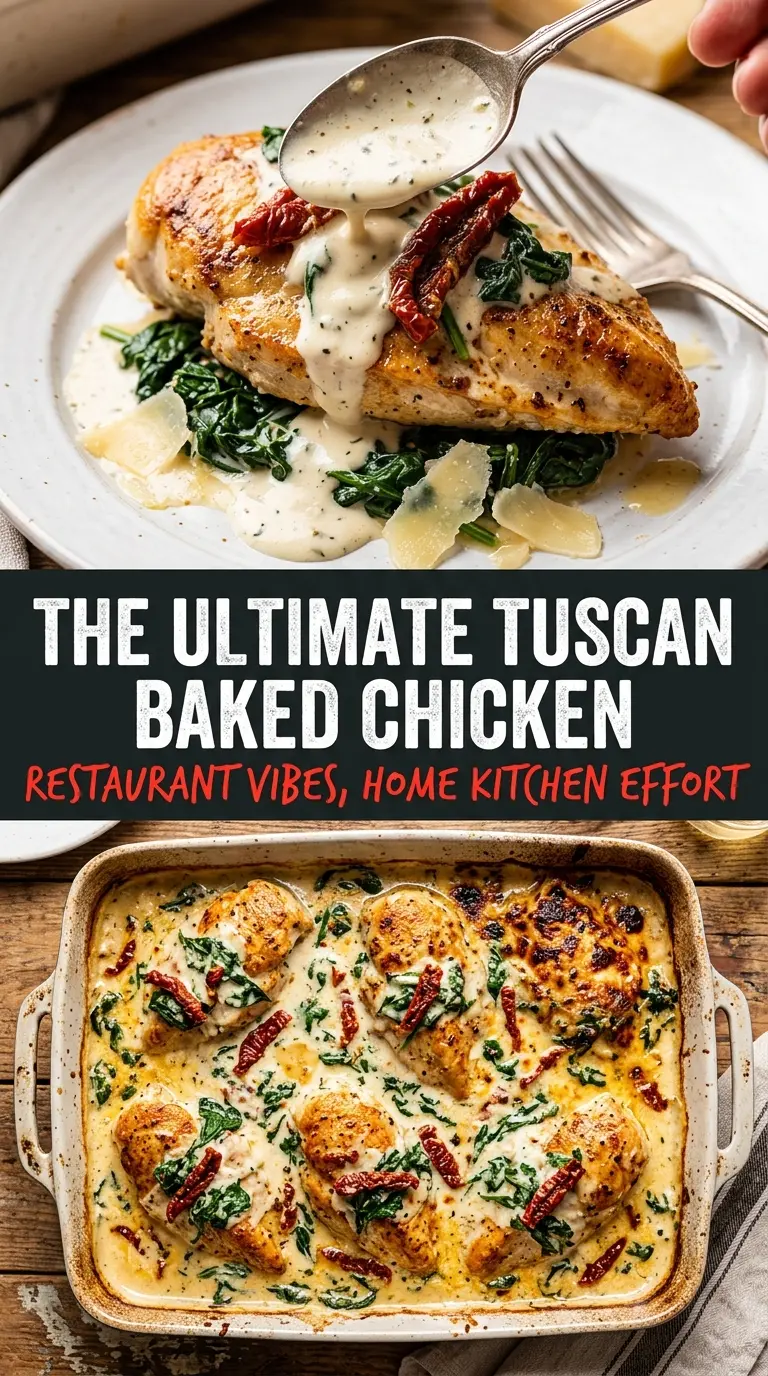
Golden chicken thighs tucked into a creamy Parmesan sauce with sun-dried tomatoes and spinach is the kind of dinner that gets scraped clean from the pan. The skin stays crisp on top while the sauce underneath turns rich, savory, and just a little tangy from the tomatoes. It looks elegant on the table, but it eats like comfort food.
What makes this version work is the sequence. The chicken gets a hard sear first, which builds flavor and helps the skin stay crisp after baking. The sauce starts in the same skillet, so every browned bit from the chicken melts into the cream, garlic, and Parmesan. That’s the difference between a sauce that tastes layered and one that tastes flat.
Below, I’ve included the small details that keep the sauce smooth, the chicken juicy, and the spinach from disappearing into nothing. If you’ve ever had a creamy chicken bake turn watery or greasy, the technique here will help.
The chicken skin stayed crisp even after baking, and the sauce thickened up into that perfect spoon-coating texture. I served it with crusty bread and my husband went back for seconds before I even sat down.
Save this baked Tuscan chicken for the night you want crisp-skinned chicken thighs in a creamy sun-dried tomato Parmesan sauce.
The Chicken Stays Crispy Because the Sauce Comes Second
The biggest mistake with creamy baked chicken is starting the sauce too early and letting the meat stew in it from the beginning. That softens the skin and dilutes the flavor. Here, the thighs are seared first and pulled out of the pan before the cream goes in, which gives you a deep brown crust and a sauce that starts with drippings instead of plain liquid.
Another thing that matters is heat control. Garlic burns fast, Parmesan clumps when the pan is too hot, and cream can split if it boils hard. Keep the simmer gentle once the dairy goes in. You want the sauce to thicken enough to coat a spoon before the chicken goes back into the skillet.
- Bone-in, skin-on chicken thighs — These hold up to the bake and stay juicy while the skin turns crisp. Boneless thighs work, but they won’t give you the same texture or the same rich pan drippings.
- Sun-dried tomatoes in oil — They bring concentrated tomato flavor and a little acidity that cuts through the cream. Drain them, but don’t rinse them; the oil helps carry their flavor into the sauce.
- Heavy cream — This is what gives the sauce its body. Half-and-half can work in a pinch, but it won’t reduce as smoothly and it’s more likely to look thin once the chicken juices hit the pan.
- Parmesan cheese — Grate it fresh if you can. Pre-shredded cheese often has anti-caking starches that can make the sauce grainy instead of silky.
What Each Ingredient Is Actually Doing in This Chicken Dish
- Chicken (cut into uniform pieces or whole) — Pat dry so it browns. Even thickness ensures uniform cooking.
- Oil or butter (the browning medium) — High-heat oil essential for proper searing. Creates pan flavor.
- Seasonings (salt, pepper, spices) — Don’t hold back. Chicken carries the entire flavor profile.
- Aromatics (garlic, onion, herbs) — Cook with fat to bloom flavors. Become the foundation of the dish.
- Sauce or braising liquid (cream, broth, or tomato) — This keeps chicken moist. Balance richness with acid.
- Vegetables (if using) — Layer by cooking time so everything finishes together.
- Acid (lemon, vinegar, or wine) — This brightens and prevents one-dimensional flavor.
- Proper doneness (165°F internal temperature) — Use a thermometer for accuracy. Overcooked is dry.
Building the Sauce Without Breaking It
Season and Sear the Chicken
Pat the thighs dry before they hit the pan, then season them generously. Moisture on the skin is the enemy of browning, and underseasoned chicken makes the whole dish taste flat. Sear skin-side down until the skin is a deep golden brown and releases easily from the skillet; if it sticks, give it another minute. The first side does most of the work here.
Develop the Pan Base
Once the chicken comes out, keep the skillet over medium heat and add the garlic just long enough to smell fragrant. If it turns dark, start over, because burnt garlic will take over the sauce. Stir in the sun-dried tomatoes and pour in the broth to loosen the browned bits from the pan. That fond is where the best flavor sits.
Finish the Cream Sauce Gently
Lower the heat before adding the cream, Parmesan, Italian seasoning, and red pepper flakes. Stir until the Parmesan melts and the sauce looks smooth and slightly glossy, not boiling hard. Toss in the spinach last so it wilts without overcooking. If the sauce starts looking oily, the heat was too high; pull the pan off the burner for a minute and stir until it comes back together.
Bake Until Juicy, Not Dry
Nestle the chicken back into the sauce with the skin facing up so it stays exposed to the oven heat. Bake uncovered until the thighs reach 165°F in the thickest part and the sauce is bubbling around the edges. The chicken should feel firm but still have a little give when pressed. Let it rest for a few minutes before serving so the juices settle instead of running straight into the sauce.
How to Adapt This for a Different Pan, a Lighter Finish, or No Dairy
Use chicken breasts instead of thighs
Chicken breasts work, but they need less time in the oven and less forgiveness. Sear them just until golden, then start checking early so they don’t dry out. The sauce still works the same way, but the final dish will be leaner and a little less rich.
Make it dairy-free
Use full-fat coconut cream in place of the heavy cream and skip the Parmesan, then add a little extra salt and a squeeze of lemon at the end to brighten it up. You’ll lose some of the classic Parmesan sharpness, but the sauce will still be velvety and coat the chicken well.
Keep the sauce thicker for serving over pasta
If you plan to spoon this over pasta, simmer the cream sauce for an extra minute or two before the spinach goes in. It should coat the back of a spoon but still move easily. That gives you enough body to cling to noodles without turning gluey.
Storage and Reheating
- Refrigerator: Store leftovers in an airtight container for up to 3 days. The skin won’t stay crisp, but the flavor deepens overnight.
- Freezer: Freeze the chicken and sauce together for up to 2 months, though the cream sauce may separate slightly when thawed. It’s still usable after a gentle reheat and a good stir.
- Reheating: Warm covered in a 325°F oven or over low heat on the stove with a splash of broth to loosen the sauce. High heat is what breaks cream sauces and dries out the chicken, so keep it gentle.
Questions I Get Asked About This Recipe
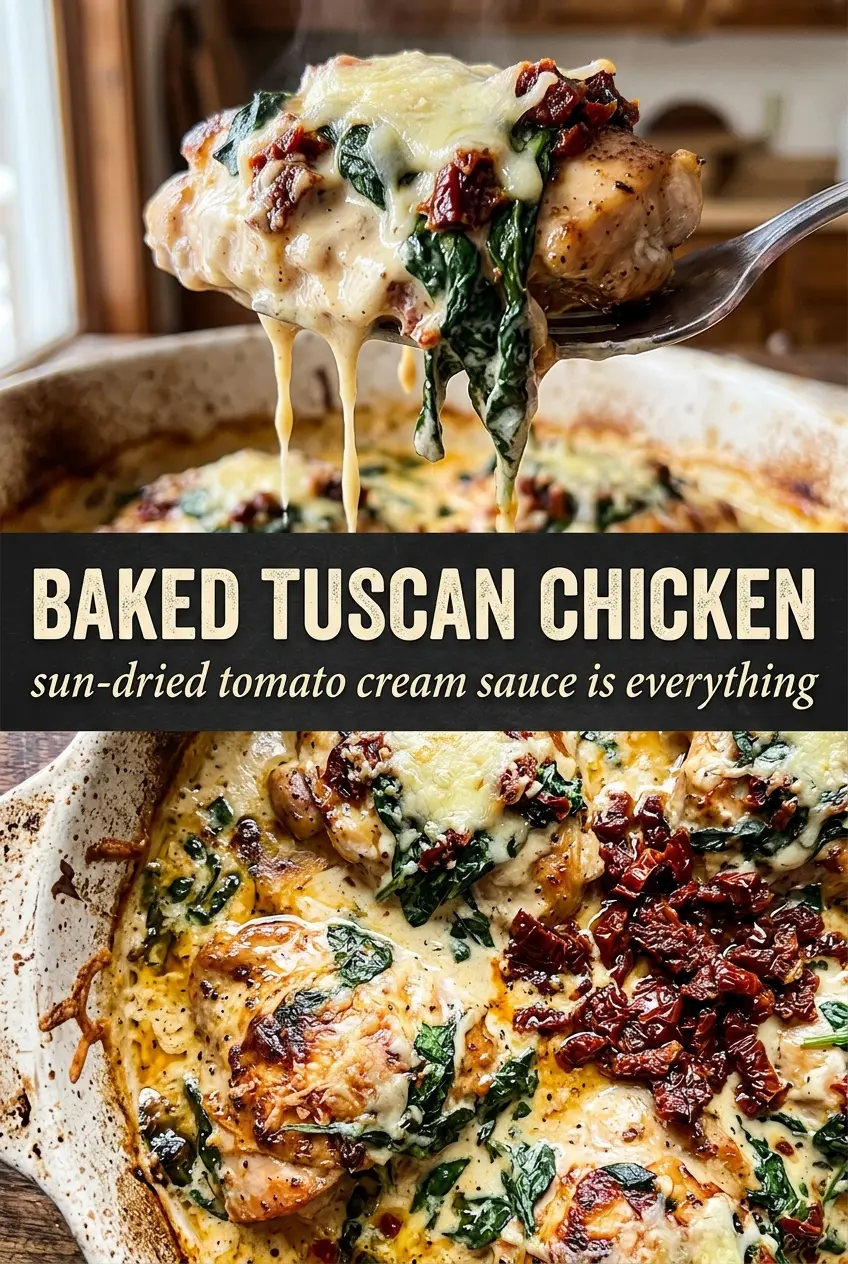
Baked Tuscan Chicken
Ingredients
Equipment
Method
- Preheat the oven to 400°F, then season the chicken thighs generously with salt, pepper, garlic powder, Italian seasoning, and smoked paprika for an even coating and visible speckling.
- Heat the olive oil in an oven-safe skillet over medium-high heat, then sear the chicken skin-side down for 6-7 minutes until the skin is deeply golden.
- Flip the thighs and sear for 3 more minutes, keeping the skin side up as you move them to the plate after browning.
- Reduce to medium heat and cook the minced garlic for 30 seconds until fragrant, scraping up any browned bits.
- Add the sun-dried tomatoes and cook for 1 minute so they soften and distribute their red color through the pan.
- Deglaze with the chicken broth, stirring to lift the flavorful residue from the bottom.
- Stir in the heavy cream, Parmesan cheese, Italian seasoning, and red pepper flakes, then simmer briefly until the sauce turns creamy and slightly thick.
- Stir in the baby spinach until wilted, turning the sauce vibrant green around the tomatoes.
- Nestle the chicken thighs skin-side up into the sauce so the crispy skin stays exposed and the Parmesan sauce pools around them.
- Bake uncovered at 400°F for 18-20 minutes until the internal temperature reaches 165°F, watching for bubbling sauce at the edges.
- Garnish with fresh basil right out of the oven for a fresh green top over the bubbling red-and-green Tuscan sauce.