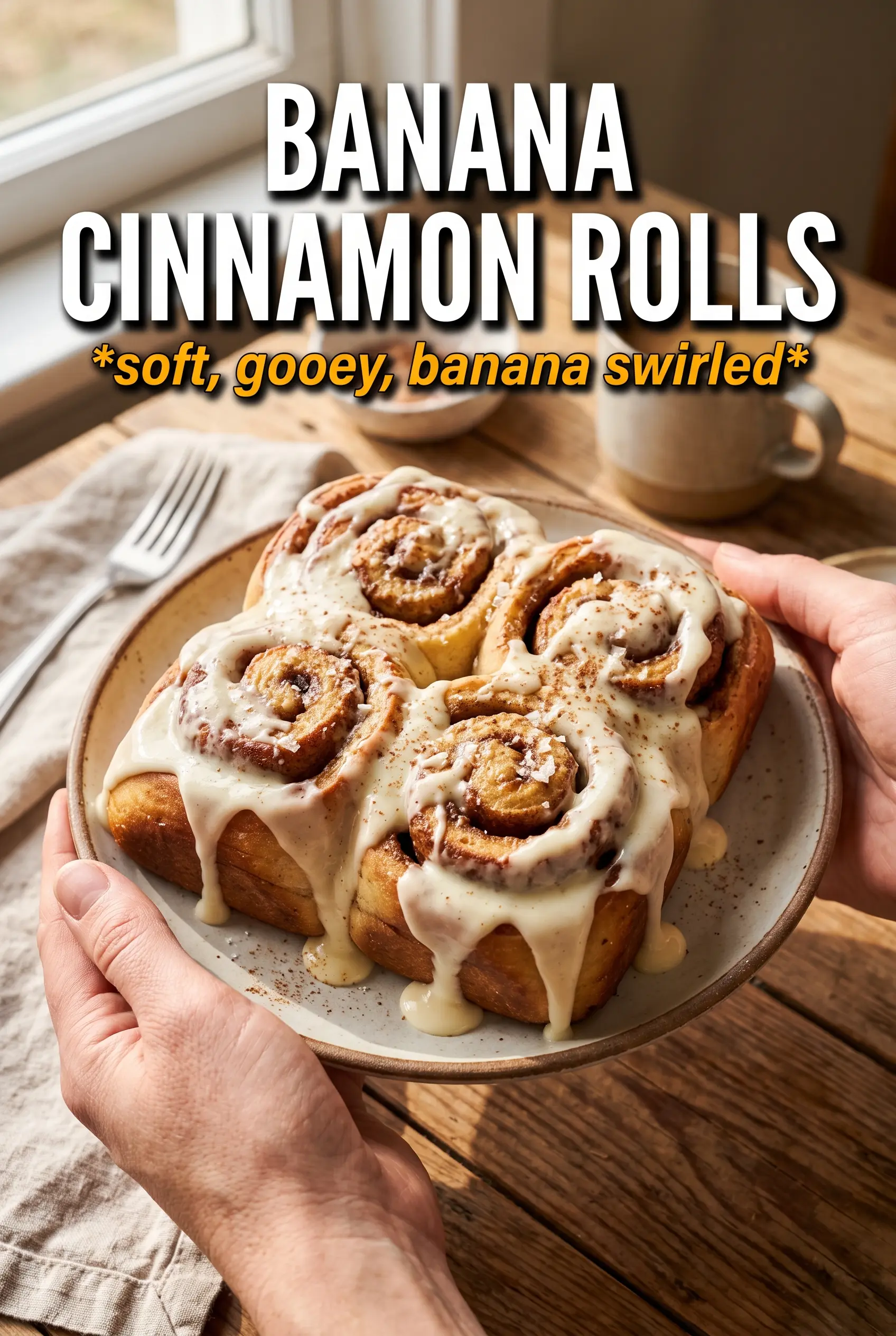
Banana cinnamon rolls bake up soft, pillowy, and fragrant with a swirl that tastes like banana bread and classic cinnamon rolls had the best possible meeting. The dough stays tender from the mashed banana, and the filling melts into the layers so every bite has a little brown sugar, butter, and spice. When they come out of the oven, the edges are just golden and the centers stay plush instead of dry or bready.
What makes this version work is the balance. The banana goes into the dough for moisture and flavor, but the structure still comes from a good amount of flour and a full knead, so the rolls rise tall instead of collapsing. A second banana tucked into the filling adds a soft, jammy layer without making the spiral soggy, and the cream cheese frosting keeps the whole pan from tasting too sweet.
Below, I’ve laid out the parts that matter most: how to keep the dough from getting sticky, why the filling needs a light hand, and the small timing detail that keeps the rolls soft after baking.
The banana stayed right in the dough and the centers baked up soft without turning gummy. I loved that the filling didn’t leak all over the pan, and the cream cheese frosting melted into the warm rolls perfectly.
Save these banana cinnamon rolls for the mornings when you want a soft, bakery-style pan of rolls with banana in every layer.
The Banana Makes the Dough Softer, but It Can Also Weigh It Down
Banana in yeast dough is a little trickier than it looks. Too much mashed banana and the dough turns sticky, slow to rise, and dense in the center after baking. This recipe keeps the banana flavor obvious without letting it take over the structure, which is why the rolls still pull apart in clean, fluffy layers instead of baking up like sweet bread.
The other thing that matters is the knead. Eight minutes sounds like a long time, but the dough needs that development to handle the moisture from the banana and butter. If the dough still clings to your fingers, dust in flour a spoonful at a time rather than dumping in a big handful, because once the dough gets stiff it stops rising as well.
- Bananas — Use ripe bananas with lots of brown speckles. They bring moisture and a deeper banana flavor without needing extra sugar. Under-ripe bananas taste flat here and won’t melt into the dough as well.
- Warm milk — Warm, not hot. It should feel just slightly warm to the touch. If it’s too hot, it can slow or kill the yeast before the dough even gets going.
- Flour — Start with the full amount, then add only if the dough still looks loose after mixing. Banana ripeness changes the final texture, so the dough tells you more than the measuring cup does.
What Each Ingredient Is Actually Doing in the Filling and Frosting
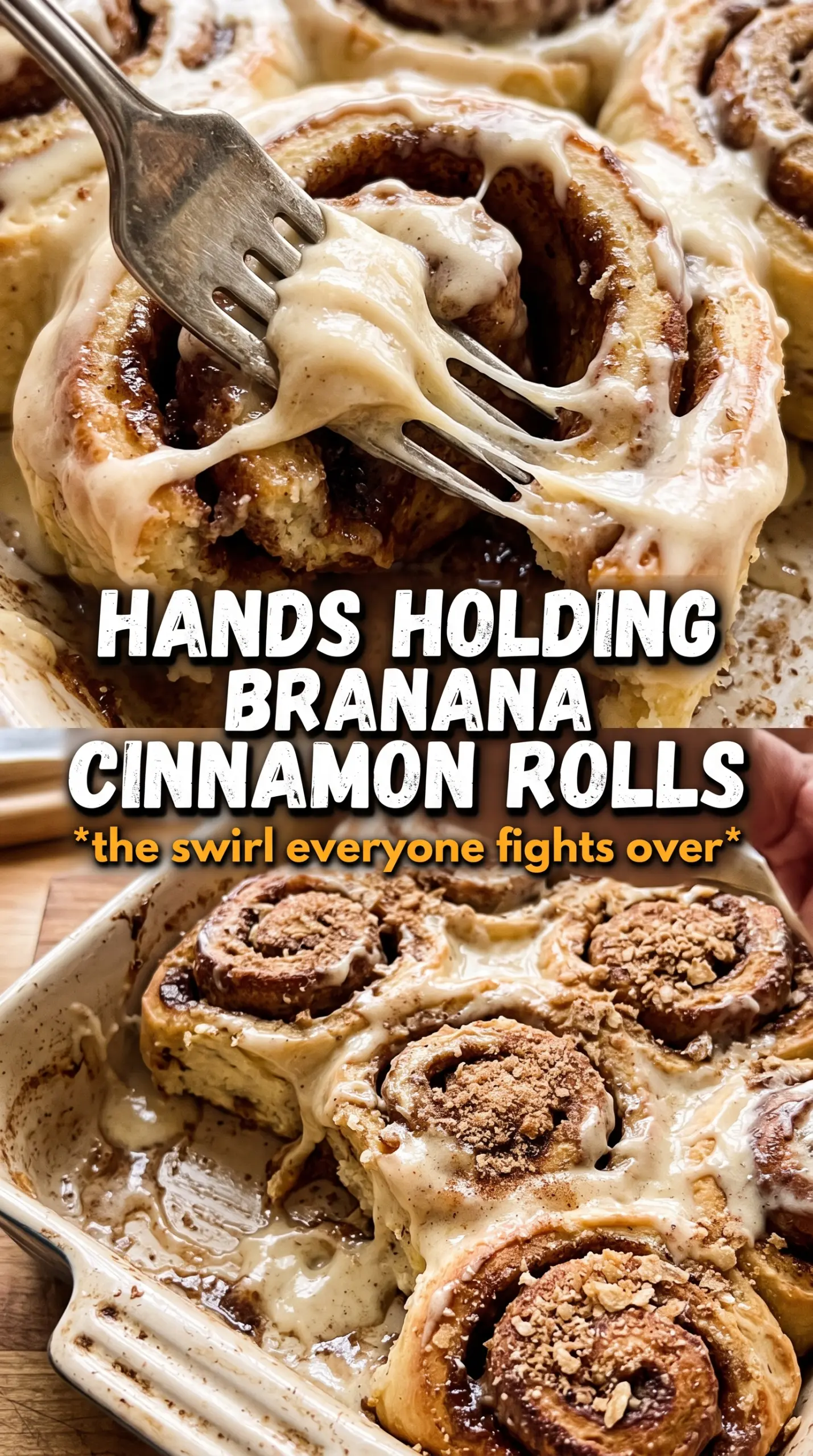
- Butter in the filling — Softened butter spreads without tearing the dough and helps the brown sugar cling in a thin layer. Melted butter would run out of the spiral and pool in the pan.
- Brown sugar — This gives the filling its sticky, almost caramel note. White sugar won’t give the same depth or the same soft gooey pockets between the layers.
- Nutmeg — A small amount makes the banana taste warmer and more bakery-like. Don’t overdo it or it starts to cover up the banana instead of supporting it.
- Banana slices — These soften into little jammy ribbons inside the roll. Slice them thin so they tuck neatly into the spiral and don’t force the rolls open while you roll and cut them.
- Cream cheese frosting — The tang keeps the rolls from turning cloying. If you want it looser, beat in a teaspoon or two of milk until it drizzles cleanly over the warm rolls.
The Part Where the Rolls Rise Tall Instead of Spreading Out
Building the Dough
Start by activating the yeast in warm milk, then add the sugar, mashed banana, melted butter, and egg. The mixture should look smooth and slightly thick before the flour goes in. Once the flour, cinnamon, and salt are mixed in, knead until the dough is elastic and only lightly tacky. If it tears instead of stretching, it needs a few more minutes of kneading before the first rise.
Rolling and Filling
Roll the dough into a neat rectangle so the filling spreads evenly from edge to edge. Keep the butter layer thin and even, then scatter the brown sugar and spices before adding the banana slices. If the banana is piled too thick, the spiral slips and the rolls can bake with gaps. Roll the dough tightly from the long side so the slices rise upward instead of flattening outward.
Baking to the Right Center
After the second rise, bake until the tops are golden and the centers look set, not doughy. The rolls should spring back when touched lightly, and the pan should smell deeply of banana bread and caramelized sugar. Pull them before the tops get too dark, because overbaking is what steals the softness from enriched dough like this. Let them cool for about 10 minutes so the frosting melts into the swirls instead of sliding straight off.
Make Them Dairy-Free
Swap the milk for an unsweetened plant milk and use a good vegan butter in both the dough and filling. The rolls will still be soft, but the frosting will taste a little less rich, so add a tiny pinch of salt to keep it balanced.
Make Them Ahead for a Morning Bake
Shape the rolls, cover the pan tightly, and refrigerate overnight after the cut rolls are in the pan. In the morning, let them sit at room temperature until they look puffy again before baking. This slow rise gives them better flavor and keeps the schedule easy.
Use Pecans Instead of Walnuts
If you want a little crunch on top, add chopped toasted pecans after frosting instead of mixing them into the filling. Pecans stay a little sweeter and softer than walnuts, which works well with the banana and cream cheese.
Make Them Less Sweet
Reduce the frosting slightly and keep the filling thin but even. The banana already brings natural sweetness, so you don’t need a heavy hand with the sugar if you like a more breakfast-style roll.
Storage and Reheating
- Refrigerator: Store covered for up to 4 days. The rolls stay soft, but the banana flavor deepens and the frosting firms up in the fridge.
- Freezer: Freeze baked, unfrosted rolls for up to 2 months. Wrap them tightly and thaw before warming so the texture stays tender instead of wet.
- Reheating: Warm individual rolls in the microwave for 15 to 20 seconds or cover the whole pan with foil and heat in a low oven. Don’t overheat them or the banana dough dries out faster than plain cinnamon rolls.
Questions I Get Asked About This Recipe
Banana Cinnamon Rolls
Ingredients
Equipment
Method
- In a mixing bowl, combine warm milk and yeast, then add sugar, mashed bananas, melted butter, and egg and stir to combine. Let it sit until the mixture looks foamy at the edges, about 5 minutes.
- Add flour, cinnamon, and salt, then knead until the dough is smooth and elastic, about 8 minutes. Cover and let the dough rise until doubled, about 1 hour.
- Roll the dough into a 12x18 rectangle on a lightly floured surface. Spread the softened butter over the dough, leaving a small border at the edges.
- Sprinkle brown sugar, cinnamon, and nutmeg evenly over the butter, then layer the thinly sliced banana slices across the surface. Press lightly so the filling adheres.
- Roll the dough tightly into a log, then cut into 12 rolls. Place rolls in a greased baking dish or on a sheet pan and cover to rise until puffy, about 30 minutes.
- Bake at 375°F for 22–25 minutes, until the tops are golden and the rolls sound hollow when tapped. Remove from the oven and let cool for 10 minutes.
- Mix cream cheese, butter, powdered sugar, and vanilla until smooth, then drizzle over warm rolls. Top with any remaining banana slices if desired.