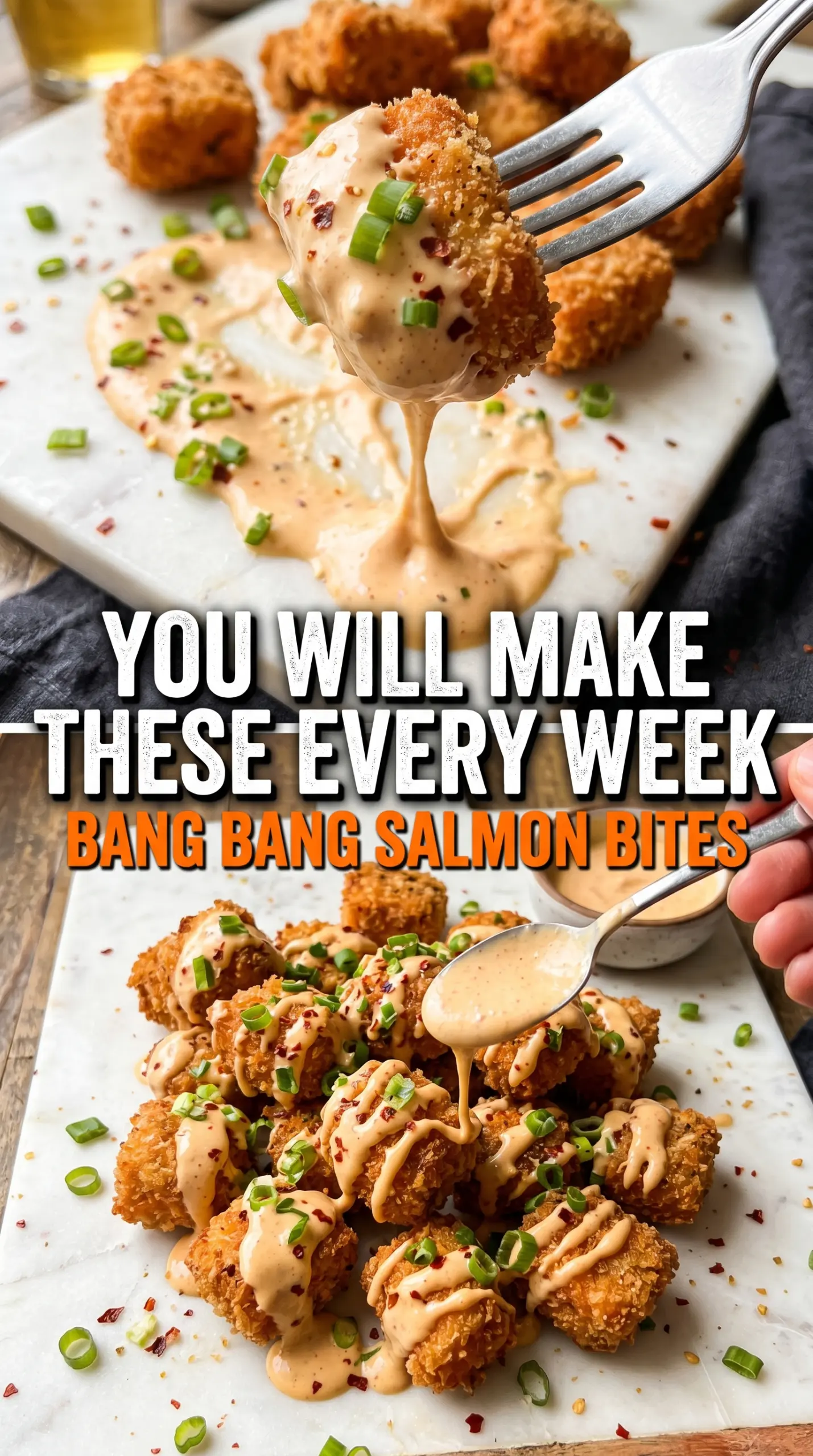
Golden, crispy salmon bites with a creamy sweet-heat sauce disappear fast, and this version earns its place because the coating stays light instead of bready. The salmon gets a quick toss in cornstarch and panko, which gives you a shattering edge in the skillet without hiding the fish underneath. Then the bang bang sauce lands on top at the end, so the crust stays crisp long enough to get a few good bites in before it softens.
The key is treating the salmon gently and keeping the pan hot enough to brown the coating before the fish overcooks. Salmon cubes go from tender to dry quickly, so the cook time stays short and the batches stay small. The sauce pulls its weight too: mayo makes it creamy, sweet chili brings body and gentle heat, and a little lime keeps it from tasting flat.
Below, I’ll walk through the one coating step that keeps the salmon from turning soggy, plus the easiest way to adjust the sauce if you want it sweeter, hotter, or a little brighter.
The salmon got crisp edges in the skillet and the sauce thickened up just enough to cling without drowning the coating. I served it over rice and my husband asked why I haven’t been making this every week.
Save these crispy bang bang salmon bites for the nights when you want fast salmon with a sticky-sweet sauce and a little crunch.
The Coating Falls Off When the Pan Is Too Quiet
The crisp shell on these salmon bites depends on heat and contact. If the pan isn’t hot enough, the panko sits there steaming instead of toasting, and the coating can slide right off when you turn the pieces. A non-stick skillet helps, but it won’t save a cold pan. You want the oil shimmering before the salmon goes in, then enough space between pieces for each cube to brown instead of crowding into a soft pile.
- The cornstarch gives the panko something dry to cling to, which is why this coating stays on better than breadcrumbs alone.
- Panko matters here because its larger flakes fry up crisper than fine breadcrumbs. Regular breadcrumbs work in a pinch, but the crust will be denser.
- Cut the salmon into even cubes so every piece finishes at the same time. Tiny pieces dry out before the bigger ones catch up.
- Work in batches if you need to. Crowding traps steam, and steam is what steals the crunch.
What Each Part of the Sauce Is Doing Here
- Salmon fillet — Use skinless salmon if you can. Skin can work, but the bites cook more evenly and coat better without it. Fresh or thawed frozen salmon both work as long as you pat it dry well before cutting.
- Cornstarch — This is the first layer of crispness and it helps dry the surface so the panko can stick. Arrowroot can substitute, but it browns a little differently and may not get quite as snappy.
- Panko breadcrumbs — They bring the light crunch that makes these bites feel special. If you only have regular breadcrumbs, use them, but expect a tighter, less airy crust.
- Mayonnaise — It gives the sauce body and a creamy finish. Light mayo works, but the sauce will taste thinner and less rich.
- Sweet chili sauce, sriracha, honey, and lime juice — This is the balance point. Sweet chili gives glossy sweetness, sriracha adds heat, honey rounds it out, and lime keeps the sauce from turning cloying. You can dial the sriracha up or down, but don’t skip the lime or the sauce will taste heavy.
Getting Crispy Salmon and Glossy Sauce on the Plate at the Same Time
Coating the Salmon Evenly
Toss the salmon cubes gently so every side gets a thin, even layer of the cornstarch-panko mixture. If you shake too hard, the salmon breaks up and the coating clumps in spots, which leads to uneven browning. The coating should look dry and lightly dusty, not thick or gummy. Let any excess fall away before the salmon hits the pan.
Frying Without Steaming
Add the salmon to the skillet in a single layer and leave space around each piece. The fish should sizzle right away; if it doesn’t, the oil isn’t hot enough yet. Cook just until the edges turn deep golden and the salmon flakes easily when nudged, about 2 to 3 minutes per side. If the coating darkens too fast, lower the heat a touch and keep going, because burnt panko tastes bitter long before the fish is done.
Mixing the Bang Bang Sauce
Whisk the sauce ingredients until smooth and glossy. It should look pourable but cling to a spoon. If you want it thicker, add a little more mayo; if you want more kick, add sriracha in small splashes instead of dumping it in all at once. Taste it before it hits the salmon, because once it’s on the bites there’s no taking heat back out.
Finishing Before the Crust Softens
Arrange the salmon while it’s still hot, then drizzle the sauce over the top right before serving. If you sauce it too early, the crust loses its crunch fast. A sprinkle of sesame seeds and sliced green onion gives the dish a clean finish and keeps the bowl from tasting one-note. Serve it over rice or in lettuce cups while the salmon still has its crisp edges.
How to Adapt These Salmon Bites for Different Nights
Make it dairy-free without changing the texture
This recipe is already naturally dairy-free as written, so there’s nothing to swap. That’s part of why the sauce works so well: mayo gives you the creamy body without any cream or butter.
Make it gluten-free with one ingredient change
Use gluten-free panko and check that your sweet chili sauce is certified gluten-free, since some brands use thickeners that aren’t. The texture stays close to the original, with the same crisp edges and light bite.
Turn it into a lower-carb bowl
Skip the panko and use just the cornstarch for a thinner crust, then serve the salmon over cauliflower rice or shredded cabbage. You’ll lose some crunch, but the salmon stays crisp on the outside and the sauce still does the heavy lifting.
Bake instead of pan-fry when you want less hands-on time
Arrange the coated salmon on a lined baking sheet and bake at 425°F until the coating is crisp and the fish flakes easily, flipping once halfway through. The crust won’t get quite as deep or as crunchy as skillet-fried salmon, but it’s a solid swap when you want fewer batches.
Storage and Reheating
- Refrigerator: Store the salmon and sauce separately for up to 2 days. The coating will soften, but the salmon still reheats well.
- Freezer: Freeze the cooked salmon bites without sauce for up to 1 month. The crust won’t stay as crisp after thawing, but the flavor holds up.
- Reheating: Reheat the salmon on a baking sheet in a 375°F oven or air fryer until hot. Don’t microwave it if you want any crunch left, because the coating turns soggy fast.
Questions I Get Asked About This Recipe
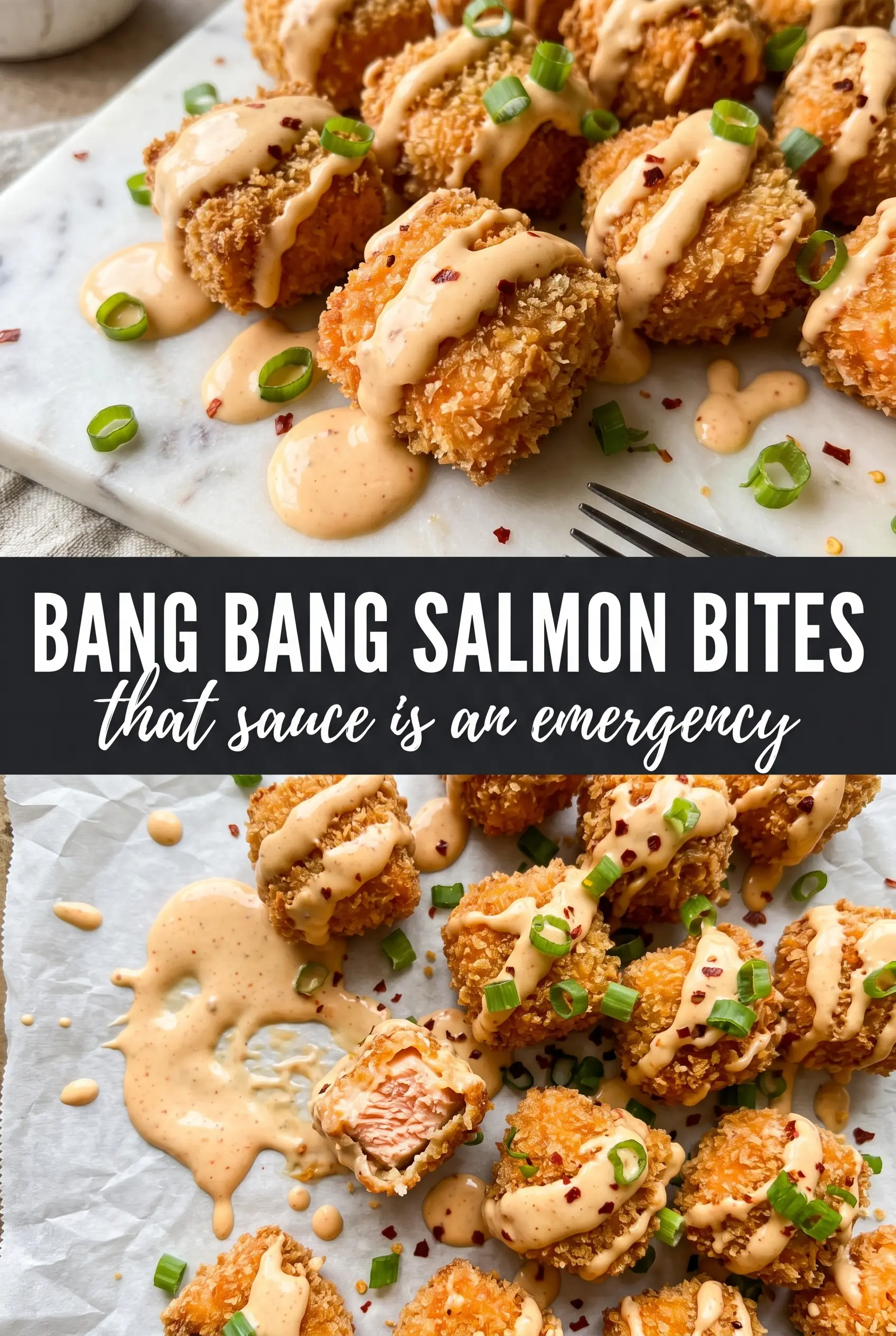
Bang Bang Salmon Bites
Ingredients
Equipment
Method
- Toss the salmon cubes with cornstarch, panko breadcrumbs, garlic powder, salt, and black pepper until evenly coated, with the surface looking dry and breaded.
- Heat the olive oil in a large non-stick skillet over medium-high heat until it shimmers, then add salmon bites in batches so they don’t crowd.
- Cook the salmon bites for 2–3 minutes per side, flipping once, until they are crispy and golden brown all over.
- Whisk mayonnaise, sweet chili sauce, sriracha, honey, and lime juice until smooth and glossy, with no streaks remaining.
- Arrange the crispy salmon bites in a bowl or on a plate and drizzle generously with the bang bang sauce, creating a visible zigzag layer.
- Garnish with sesame seeds and sliced green onions and serve immediately over rice or in lettuce cups for best crunch.