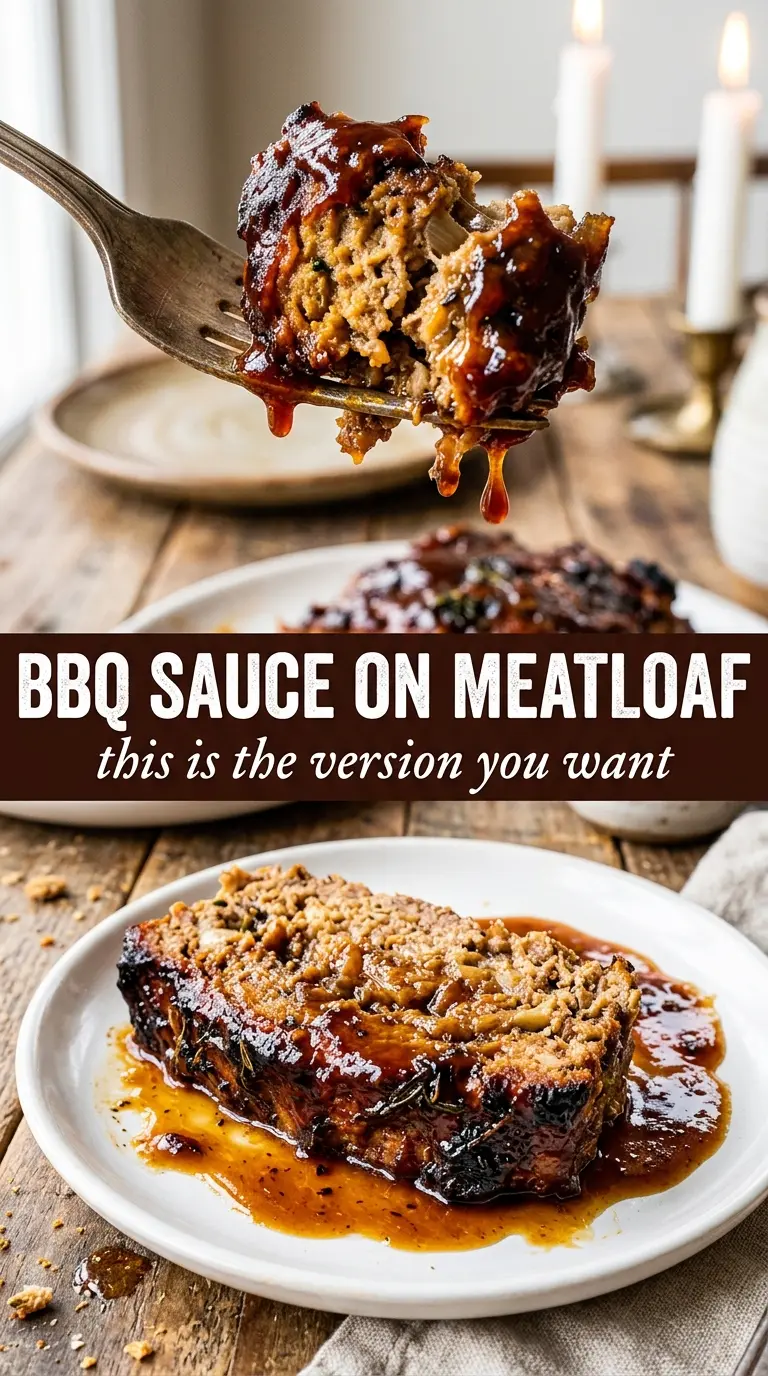
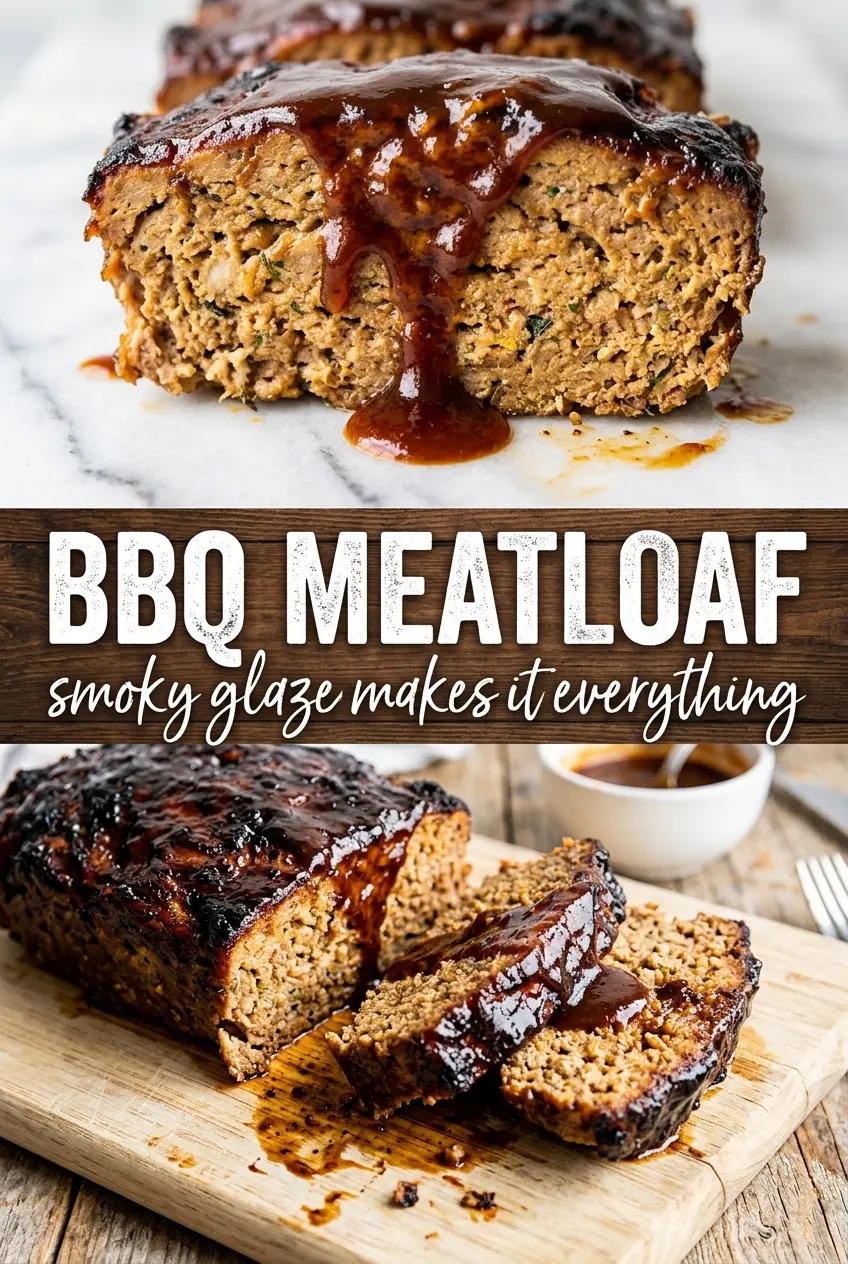
BBQ meatloaf earns its place in the rotation when you want all the sticky, smoky satisfaction of barbecue without firing up a grill. The loaf bakes up tender in the middle, with a deep mahogany glaze that turns tacky and caramelized in the oven. Sliced thick, it has the kind of comfort-food heft that makes dinner feel finished.
What makes this version work is the balance between beef and pork, plus a glaze that gets layered on in two passes. The pork brings a little richness the beef alone can miss, and the grated onion melts right into the mixture instead of leaving chunks that fall apart when you slice. Baking it free-form on a sheet pan gives the glaze more exposure, which means more of that sticky edge around the outside.
Below, I’ll show you the small things that keep meatloaf tender instead of dense, how to get the glaze dark without burning the sugars, and a few ways to adapt it if you’re working with what’s already in the pantry.
The glaze caramelized beautifully and the loaf stayed juicy all the way through. I grated the onion like you suggested, and it sliced clean instead of crumbling.
Save this BBQ meatloaf for a sticky, smoky dinner that comes out lacquered and sliceable every time.
The Reason This Loaf Stays Tender Instead of Dense
Meatloaf goes heavy when it gets overmixed or when the pan shape traps steam. This version avoids both problems by using a light hand with the mixture and shaping it free-form on a foil-lined sheet pan. That exposes more surface area to the heat, so the outside browns instead of just softening in its own juices.
The other thing that keeps it from turning brick-like is the bread-and-milk mixture. Breadcrumbs absorb moisture and hold it in the loaf, while the milk softens them first so they blend in without leaving dry pockets. If your meatloaf has ever been crumbly or tight, the fix is usually right here: mix just until combined, then stop.
- Ground beef — Use an 80/20 blend if you can. Lean beef will still work, but the loaf eats drier and needs the glaze to carry more of the moisture.
- Ground pork — Pork brings fat and softness that beef alone doesn’t give you. If you need a swap, use all beef, but expect a firmer texture and a slightly more aggressive beef flavor.
- Grated onion — Grating matters because it melts into the loaf and seasons it from the inside. Chopped onion can leave gaps and make slicing messier.
- BBQ sauce — Choose one you already like on its own, because the glaze reduces and concentrates it. A thinner sauce is fine; the brown sugar and vinegar will give it the body and tang it needs.
What Each Ingredient Is Actually Doing in This Meatloaf or Meatballs
- Ground meat (the protein foundation) — Use 80/20 so it stays moist. Handle gently to keep texture tender instead of dense.
- Breadcrumbs or fillers (the binder) — These hold the meat together without making it dense. Soak in milk first so they add moisture.
- Egg (the structural binding agent) — This holds everything together during cooking. One egg per pound of meat is the right ratio.
- Onion and aromatics (the base flavor) — Mince finely so they distribute evenly. Raw onion softens as it cooks and becomes part of the texture.
- Seasonings (salt, pepper, Worcestershire, spices) — Build flavor boldly. The meat mixture carries the entire flavor profile.
- Milk or liquid (the moisture keeper) — This keeps the meatloaf tender instead of dense and dry. Don’t skip this step.
- Glaze or sauce (ketchup-based or other) — This adds sweetness, moisture, and flavor to the exterior. Apply strategically so it caramelizes.
- Resting time (the final step) — Let the meatloaf rest 10 minutes so it sets and slices cleanly. Cutting too soon makes it fall apart.
What the Glaze Is Doing Besides Tasting Good
The glaze isn’t just decoration. It protects the top of the loaf from drying out and gives you a sticky crust that tastes more finished than plain baked meatloaf ever does. The brown sugar helps it caramelize, while the vinegar keeps the sweetness from flattening out.
That first half of the glaze goes on early so it can soak in and start setting. The second coat goes on later, when the loaf has already firmed up, and that’s what gives you that dark, lacquered finish without burning the sugars right away. If you brush it on all at once, you’ll get a sweeter top but less of that deep caramel edge.
Using all beef instead of beef and pork
If pork isn’t in the fridge, use 2 1/2 pounds of ground beef instead. The loaf will be a little firmer and less rich, so don’t overbake it or it’ll lose the tenderness the pork would have given you.
Gluten-free version
Swap in certified gluten-free breadcrumbs and check that your Worcestershire and BBQ sauce are gluten-free. The texture stays close to the original, because the breadcrumbs are there for structure, not flavor.
Smokier barbecue finish
Add an extra 1/2 teaspoon smoked paprika or a small splash of liquid smoke to the glaze. Go easy on liquid smoke; it can take over fast and make the loaf taste harsh instead of woodsy.
Make-ahead and leftovers
You can shape the loaf and mix the glaze up to a day ahead, then keep both covered in the fridge until you’re ready to bake. Store leftovers in an airtight container in the refrigerator for up to 4 days. Freeze sliced meatloaf for up to 3 months, wrapped tightly, then reheat covered in a low oven with a spoonful of extra BBQ sauce so the slices don’t dry out.
Questions I Get Asked About This Recipe
BBQ Meatloaf
Ingredients
Equipment
Method
- Preheat the oven to 350°F and line a baking sheet with foil. You want the pan ready so the loaf can go in immediately after mixing.
- Combine ground beef, ground pork, breadcrumbs, eggs, whole milk, grated onion, minced garlic, Worcestershire sauce, smoked paprika, garlic powder, and salt and pepper until just mixed. Stop when no dry bits remain so the loaf stays tender.
- Shape the mixture into a free-form loaf on the foil-lined baking sheet. Free-form gives more surface area for the glaze to caramelize.
- Mix BBQ glaze ingredients—BBQ sauce, brown sugar, apple cider vinegar, and Worcestershire—and spread half over the loaf. Cover the top evenly so it lacquer-bakes into a sticky coating.
- Bake for 45 minutes at 350°F, until the glaze looks set and darker at the edges. Brush the remaining glaze over the loaf during this transition for better char.
- Bake 15–20 more minutes at 350°F until the internal temperature reaches 160°F and the glaze is caramelized. Look for a dark, glossy mahogany top with visible char.
- Rest the meatloaf for 10 minutes before slicing. The glaze firms slightly and the center holds together for cleaner cuts.