Thin slices of beef, crisp-tender vegetables, and a glossy soy-ginger sauce are exactly what make a stir fry worth putting on repeat. The beef stays tender because it hits a smoking-hot pan in a single layer, and the vegetables keep their bite instead of turning soggy in a puddle of sauce. When everything comes together over rice, you get that takeout-style finish without the greasy heaviness or the long wait.
This version works because the sauce is balanced before it ever touches the pan, so there’s no scrambling to season at the end. Cornstarch gets mixed with water first, then added at the moment the sauce needs thickening, which keeps it smooth instead of clumpy. A little brown sugar rounds out the soy sauce, while sesame oil goes in sparingly for depth rather than dominance.
Below, I’ll walk through the sear, the vegetable timing, and the small details that keep the beef juicy and the sauce glossy. If you’ve ever ended up with gray meat or watery vegetables, the fixes are in here.
The sauce thickened up in under a minute and coated every piece of beef without turning the vegetables soft. I followed the high-heat sear like you said, and the steak stayed tender instead of getting chewy.
Save this beef stir fry with vegetables for the nights when you want glossy soy-ginger beef, crisp vegetables, and dinner on the table in 30 minutes.
The Fast Sear That Keeps the Beef Tender
Most stir fry problems start with a pan that isn’t hot enough. If the beef goes into a lukewarm wok, it steams, throws off moisture, and turns gray before it ever browns. Here, the beef needs a real sear first: smoking-hot oil, a single layer, and no stirring for the first minute or two so the surface can actually caramelize.
Cutting the steak thin against the grain matters just as much as the heat. That shortens the muscle fibers and gives you a softer bite even before the sauce goes on. If the beef is still chewy, the usual culprit is either slicing with the grain or crowding the pan so it never had a chance to sear.
- Flank or sirloin steak — Both work well, but flank gives you the most classic stir fry texture if you slice it very thin and across the grain. Sirloin is a little more forgiving if your knife work isn’t perfect.
- Broccoli, bell pepper, snap peas, and mushrooms — This mix gives you crunch, sweetness, and enough surface area to grab the sauce. Use fresh vegetables here; frozen ones release too much water and will dilute the final sauce.
- Garlic and ginger — They go in near the end because they burn fast over high heat. Fresh is worth it for both, since jarred ginger and garlic can taste flat in a dish this quick.
- Cornstarch slurry — This is what gives the sauce that glossy takeout finish. Mixing it with water first keeps it from clumping the second it hits the pan.
What Each Ingredient Is Actually Doing in the Pan
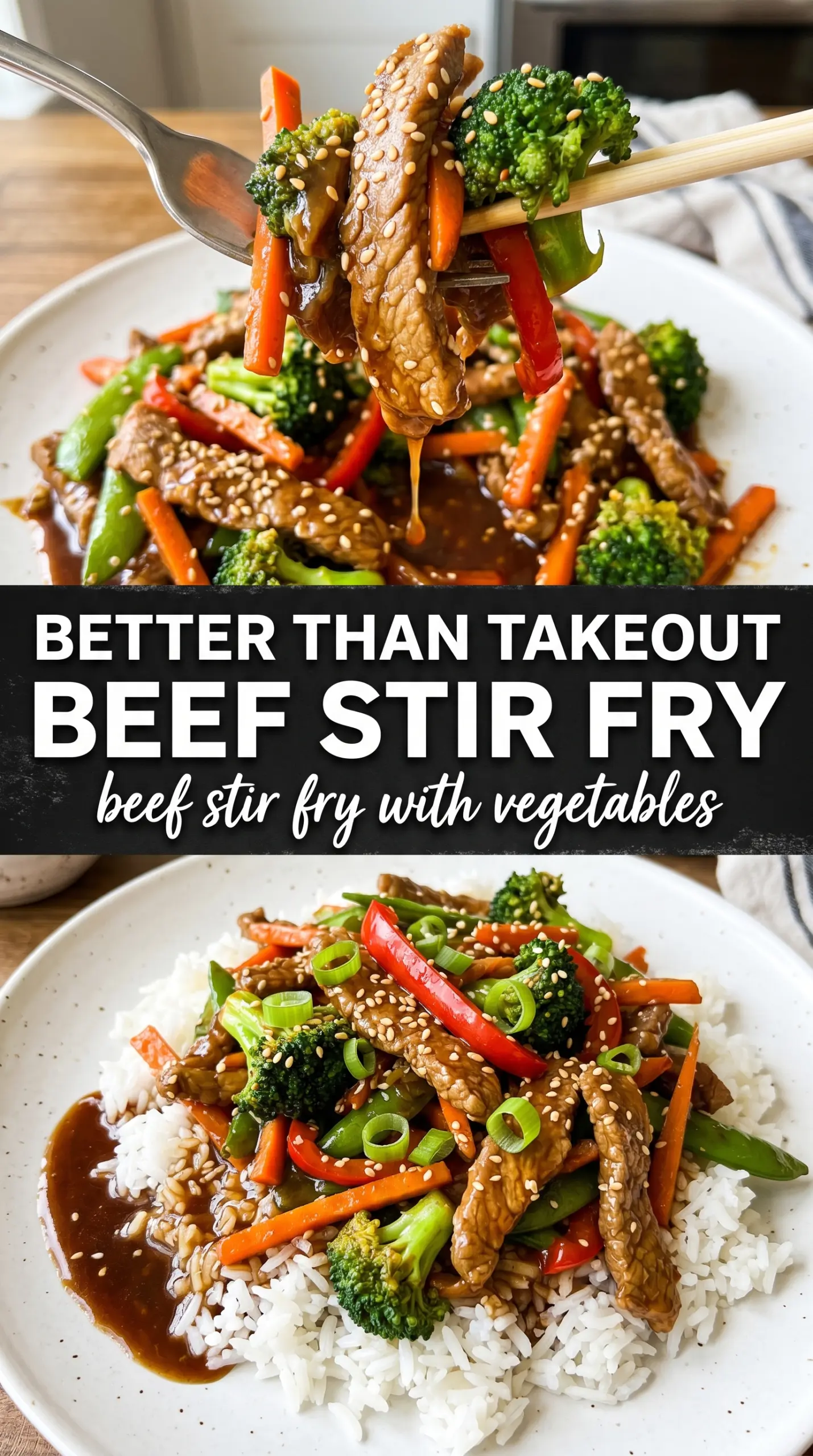
- Soy sauce — This brings the salty backbone and the deep savory note. Use a standard soy sauce, not low-sodium unless you plan to taste and adjust at the end, because the sauce needs enough punch to stand up to the vegetables and rice.
- Oyster sauce — This is the ingredient that makes the sauce taste rounded and restaurant-style instead of thin and one-note. If you need a swap, hoisin can work, but it will read sweeter and a little less clean.
- Brown sugar — A small amount smooths out the salt and helps the sauce cling. It doesn’t make the dish sweet; it just gives the beef glaze a little shine and balance.
- Sesame oil — Use it as a finishing note, not a frying oil. Too much makes the whole dish taste heavy, but the right amount adds that nutty aroma people notice right away.
- Vegetable oil — You need a neutral oil with a high smoke point so the beef can sear hard without the pan smoking out the kitchen for the wrong reason. Olive oil is the wrong tool here.
Keeping the Wok Moving Without Missing the Sear
Whisk the Sauce Before the Heat Goes On
Mix the soy sauce, oyster sauce, brown sugar, sesame oil, and cornstarch slurry before you turn back to the stove. Once the pan is hot, you won’t have time to measure and stir, and stir fry moves too fast for guesswork. The sauce should look smooth and thin at this stage; it thickens in the pan, not in the bowl.
Sear the Beef in a Single Layer
Add the beef to hot oil and leave it alone long enough to brown on one side. If you crowd the wok, the beef releases moisture and starts braising instead of searing. Work in batches if needed, because a little extra time is worth keeping the meat tender and browned.
Cook the Vegetables Until Crisp-Tender
Broccoli, bell pepper, snap peas, and mushrooms need just enough time to lose their raw edge. You want bright color, a little blistering on the peppers, and broccoli that still has bite in the stem. If the mushrooms dump liquid into the pan, the heat is too low or the pan is too crowded.
Finish With Garlic, Ginger, and the Sauce
Garlic and ginger only need about 30 seconds before they go from fragrant to bitter, so add them after the vegetables have a little color. Return the beef, pour in the sauce, and stir until it turns glossy and clings to everything in the pan. If the sauce looks loose for the first few seconds, give it about a minute; the cornstarch needs that time to thicken fully.
How to Adapt This for Different Needs Without Losing the Takeout Finish
Make It Gluten-Free
Swap in gluten-free soy sauce or tamari and check that your oyster sauce is labeled gluten-free. The flavor stays bold and savory, and the sauce still thickens the same way because the cornstarch is doing that work.
Make It Dairy-Free
This recipe is naturally dairy-free as written, which is one reason it’s such an easy weeknight dinner. Just serve it with rice and keep the sauce ingredients as-is.
Swap the Vegetables for What You Have
Asparagus, carrots cut thin on the bias, baby corn, or snow peas all work well here. Keep the total volume about the same and cut harder vegetables smaller so everything finishes at the same time.
Use Chicken Instead of Beef
Thinly sliced chicken breast or thigh can replace the steak, but it won’t need quite as hard a sear. Cook it just until opaque and lightly browned, then pull it out before the vegetables go in so it stays juicy.
Storage and Reheating
- Refrigerator: Store leftovers in an airtight container for up to 4 days. The vegetables soften a little, but the flavor stays strong.
- Freezer: It freezes, but the vegetables lose their crisp texture after thawing. Freeze only if you’re okay with a softer stir fry later.
- Reheating: Warm it in a skillet over medium heat with a splash of water until the sauce loosens and the beef is heated through. The biggest mistake is blasting it in the microwave until the steak turns tough and the sauce separates.
Questions I Get Asked About This Recipe
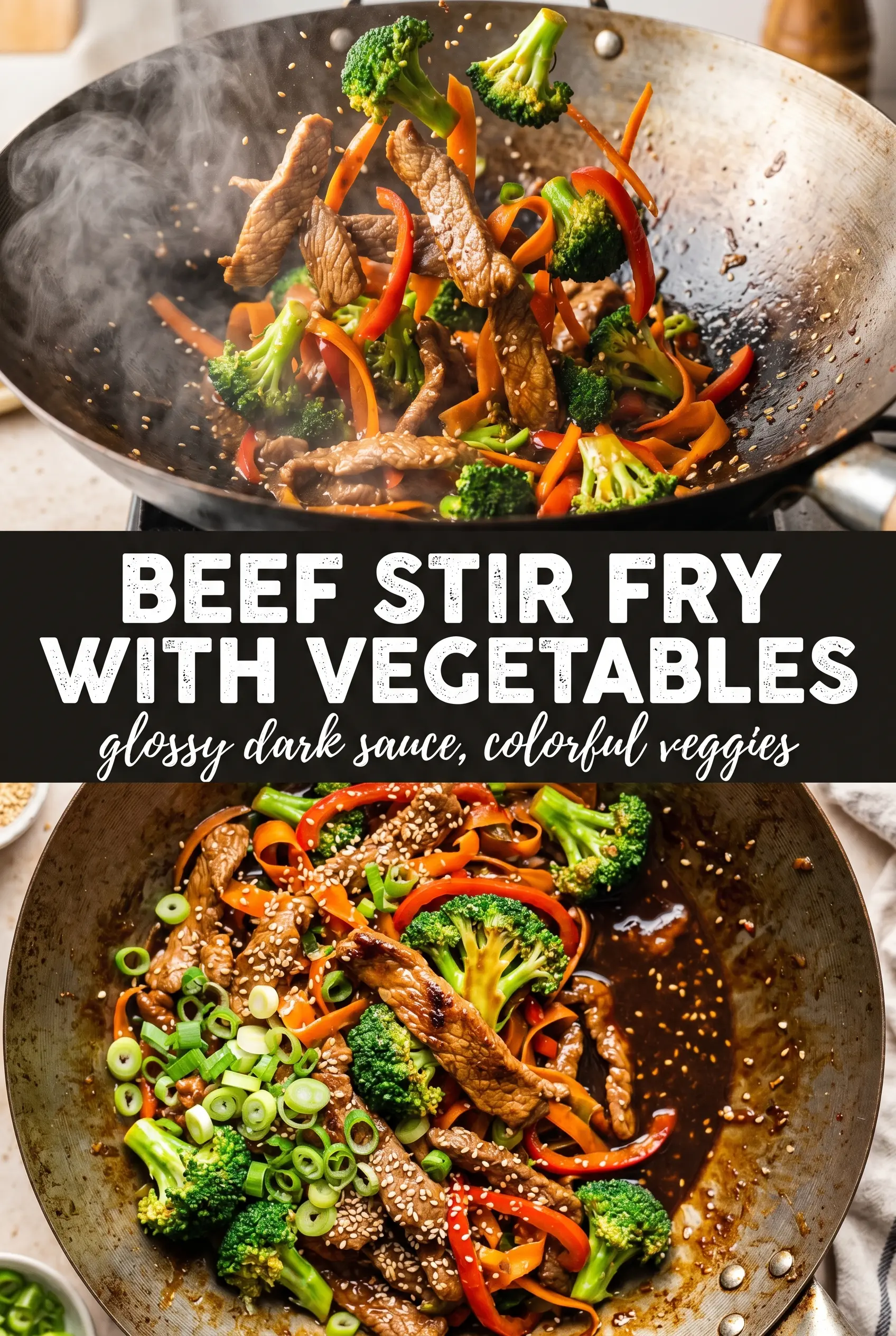
Beef Stir Fry with Vegetables
Ingredients
Equipment
Method
- Whisk soy sauce, oyster sauce, brown sugar, sesame oil, and the cornstarch slurry (cornstarch mixed with water) in a bowl until smooth, then set aside.
- Heat 2 tablespoons vegetable oil in a wok over high heat until smoking, then add the beef in a single layer and sear for 1–2 minutes without stirring until browned, with a visible crust forming.
- Toss the beef briefly, then remove it from the wok to keep it from overcooking.
- Add the remaining 1 tablespoon vegetable oil, then stir-fry broccoli florets, red bell pepper, snap peas, and mushrooms for 3–4 minutes until tender-crisp, with bright color and lightly browned edges.
- Add garlic and ginger and cook for 30 seconds until fragrant, stirring just enough to combine.
- Return the seared beef to the wok so everything is evenly distributed for the sauce coating.
- Pour the sauce over everything and toss to coat, then stir until the sauce thickens to a glossy sheen for about 1 minute.
- Serve immediately over cooked rice and top with sesame seeds.