Blackstone smashed potatoes hit that sweet spot between crisp and creamy that keeps people hovering around the griddle for “just one more.” The edges turn shatteringly golden, the centers stay fluffy, and the garlic-butter finish gives every bite the kind of savory pull that makes this side dish disappear faster than the main course.
The trick is giving the potatoes enough time to dry out after boiling, then smashing them only once they’ve cooled slightly. That little pause helps the skins set, so they hold together on the griddle instead of sticking and tearing. A mix of oil and butter gives you the high-heat browning you want without burning the butter before the potatoes get their crust.
Below, I’m walking through the part that matters most: how to get those edges crisp without overworking the potatoes, plus the small topping changes that turn them from a simple side into loaded griddle potatoes worth making again.
The potatoes got those crackly edges on the Blackstone and stayed creamy inside. I topped them with sour cream and chives, and my husband kept sneaking them off the platter before dinner.
Save these Blackstone smashed potatoes for the nights when you want crispy griddle edges, creamy centers, and a loaded finish in one pan.
The Secret to Crispy Edges Is More Dryness Than Heat
Most smashed potato recipes fail before they ever hit the griddle. If the potatoes are still wet from boiling, they steam instead of sear, and the bottoms turn soft before they get a chance to brown. Let them drain well, then give them a minute or two to release steam in the colander. That tiny bit of patience makes a noticeable difference.
The other trap is smashing too hard or too soon. Warm potatoes collapse; slightly cooled potatoes flatten into sturdy rounds with more surface area for browning. On a hot Blackstone, that surface area is everything. It gives you those crisp, lacy edges without turning the center into a crumbly mess.
- Dry potatoes brown better. Excess moisture is the enemy of a good crust, so drain them thoroughly and let the steam escape before smashing.
- Medium-high heat is enough. You want active sizzling, not smoking oil. Too much heat burns the butter before the potatoes crisp.
- Smash once, then leave them alone. Moving them early breaks the crust before it sets.
What Each Topping Is Actually Doing Here
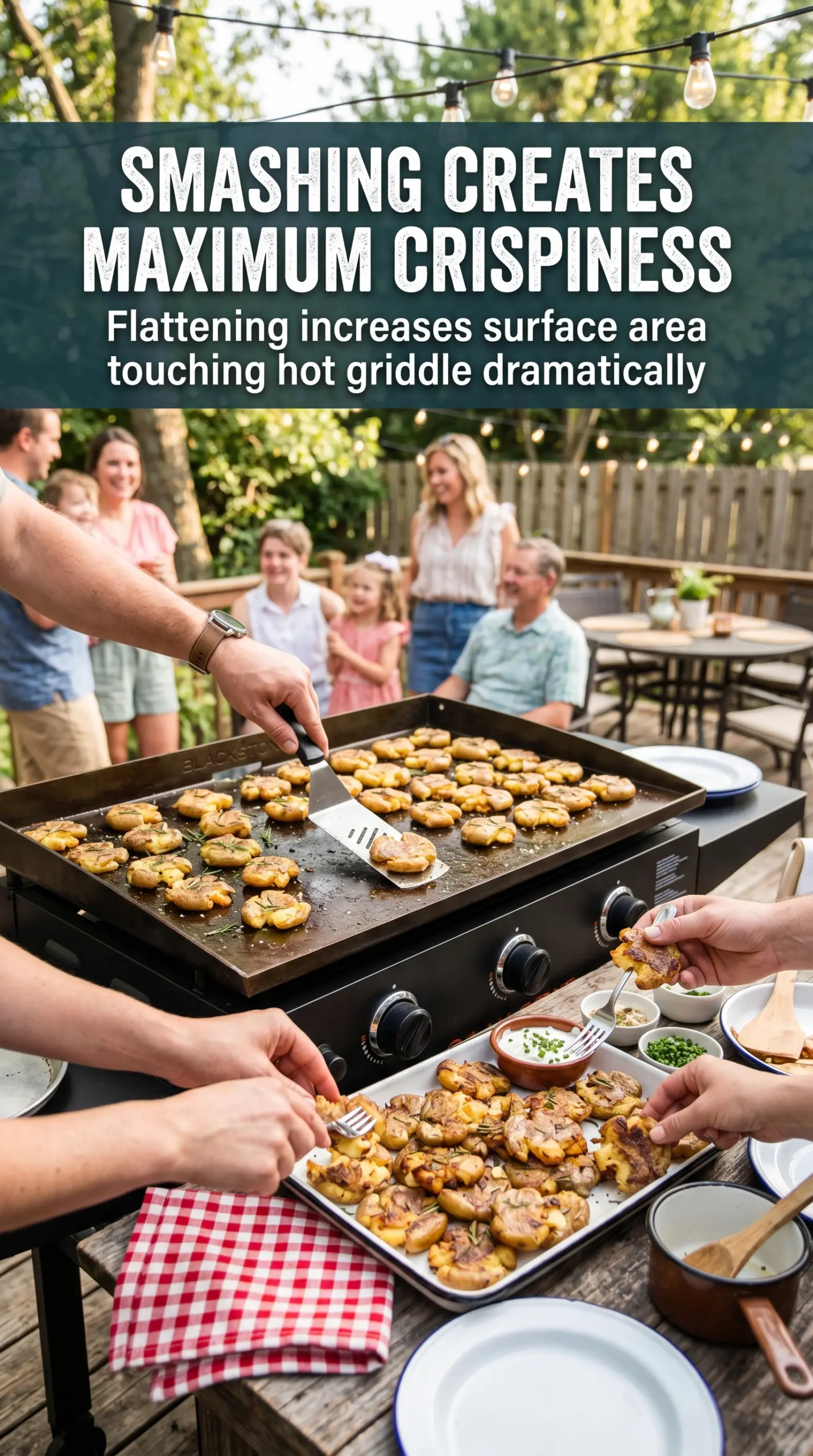
- Baby potatoes — These hold their shape after boiling and give you the best ratio of fluffy center to crisp edge. Yukon Golds are a good substitute if you cut them into even chunks first, but the baby potatoes smash more neatly.
- Olive oil and butter — Oil gives you the high-heat browning. Butter gives you flavor and those browned bits that cling to the bottoms. Using both keeps the crust crisp without losing that rich finish.
- Garlic — Minced garlic cooks fast on the griddle and perfumes the potatoes as they crisp. If it goes on too early, it can burn, so scatter it around the potatoes instead of dumping it directly under them.
- Sour cream, cheddar, chives, and bacon — These turn the potatoes into loaded griddle potatoes. Add them after cooking so the sour cream stays cool and the cheese softens from residual heat instead of turning greasy and clumpy.
Getting the Smash, Sear, and Finish in the Right Order
Boiling Until Just Tender
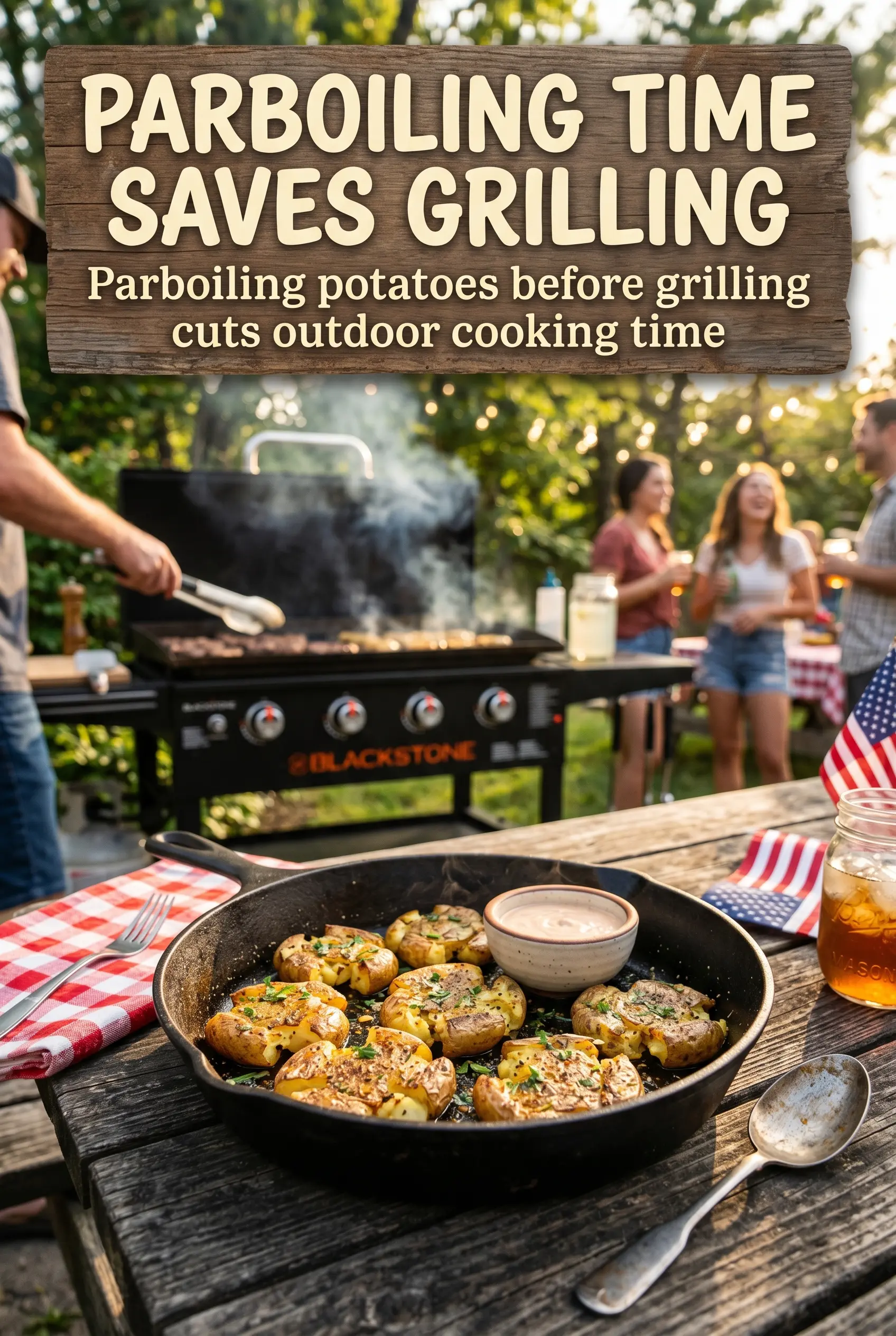
Boil the potatoes until a fork slips in without resistance, then drain them right away. Overboiled potatoes absorb too much water and fall apart when you smash them. You want tender centers that still feel intact, not potatoes that are on the edge of mashing themselves.
Smashing on the Hot Griddle
Heat the griddle first, then add the oil and butter so the fat shimmers before the potatoes go down. Place the potatoes with a little space between them, then press each one firmly with a heavy spatula or masher until it spreads into a thick round. If the potato sticks to your tool, it usually means the griddle wasn’t hot enough or the potatoes were too wet.
Building the Crust Without Burning the Garlic
Once the potatoes are smashed, add the garlic around them so it can toast in the fat without scorching. Let the bottoms cook until they lift cleanly and the edges look deeply golden and crisp. If the garlic starts browning too fast, pull it away from the hottest spot so it doesn’t turn bitter before the potatoes are done.
Flipping and Loading Them Up
Flip carefully and cook the second side until it catches up in color and crunch. Season with salt and pepper while they’re still hot so the seasoning sticks. Add the sour cream, cheddar, chives, and bacon at the end, when the potatoes are off the direct heat, so the toppings melt and settle without sliding off.
How to Adapt These for Different Griddles and Tastes
Dairy-Free Smashed Potatoes
Swap the butter for more olive oil or a plant-based butter that tolerates heat well, and skip the sour cream and cheddar at the end or replace them with dairy-free versions. You’ll lose a little richness, but the crisp edges still come through cleanly.
Bacon-Free but Still Loaded
Leave off the bacon and add extra chives, a pinch of smoked paprika, or thinly sliced green onions. You still get a big savory finish, but the potatoes stay a little cleaner and lighter.
Extra-Crispy, Less Topped
For a more snacky version, skip the sour cream and keep the cheese light so the crust stays exposed. The potatoes reheat better this way, and the texture reads more like a crispy side than a loaded baked potato.
Storage and Reheating
- Refrigerator: Store leftovers in an airtight container for up to 4 days. The crust softens, but the centers stay creamy.
- Freezer: They freeze, but the texture changes enough that I only recommend it if you’re planning to re-crisp them later. Freeze in a single layer, then bag them once solid.
- Reheating: Bring them back on a hot skillet, griddle, or air fryer until the edges crisp again. The biggest mistake is microwaving them straight from the fridge, which turns the outside soft and the inside gummy.
Answers to the Questions Worth Asking
Blackstone Smashed Potatoes
Ingredients
Equipment
Method
- Boil baby potatoes in a pot of water until fork-tender, about 15-20 minutes, then drain and let cool slightly.
- Let the potatoes cool just until they’re easy to handle so they smash without falling apart.
- Heat a Blackstone griddle to medium-high and add olive oil and butter.
- Place potatoes on the hot griddle and smash flat with a heavy spatula or masher.
- Add minced garlic around the potatoes and cook for 6-7 minutes until bottoms are crispy and golden.
- Flip the potatoes and cook another 5-6 minutes until both sides are crispy.
- Season the smashed potatoes with salt and pepper to taste.
- Top with sour cream, shredded cheddar cheese, chopped chives, and bacon bits and serve while hot.