Brown Butter Pumpkin Oatmeal Latte Cookies bake up with crisp edges, chewy centers, and that warm, bakery-style aroma that makes people hover by the oven. The brown butter brings a nutty depth that keeps the pumpkin from tasting flat, while the espresso powder gives the cookies a subtle latte note instead of turning them into full-on coffee cookies. You still get the comfort of pumpkin spice, but with more complexity and a much better finish.
The trick here is that the pumpkin has to be blotted dry and the brown butter has to be solidified before you cream it with the sugars. That keeps the dough from spreading too much and stops the cookies from turning cakey. The oats add structure and chew, and the toffee bits melt just enough to leave little pockets of caramelized sweetness without making the cookies greasy.
Below, I’ve broken down the part that matters most: how to keep the brown butter flavor strong without ruining the dough, plus the small changes that make these cookies bake up evenly every time.
The cookies baked up thick instead of spreading, and the brown butter flavor came through in every bite. My husband said they tasted like a pumpkin latte with toasted oats and asked me to pack the rest for his lunches.
Save these Brown Butter Pumpkin Oatmeal Latte Cookies for the days when you want chewy oats, warm pumpkin spice, and a coffee-shop finish in one batch.
The Brown Butter and Pumpkin Balance That Keeps These Cookies Chewy
Pumpkin cookies go wrong fast when the dough is too wet. The usual result is a puffy, soft cookie that tastes fine but eats like cake. Here, the brown butter does two jobs at once: it adds nuttiness and also gives you a fat base that can handle the pumpkin without turning the dough loose.
The other thing that matters is the espresso powder. It doesn’t make these taste like a mocha cookie; it sharpens the pumpkin spice and makes the brown butter taste deeper. If you’ve ever baked pumpkin cookies that came out one-note, that missing layer is usually the reason.
- Brown butter — This is the backbone of the recipe. Once it’s browned, it needs to cool and solidify before mixing so the dough can cream properly and hold shape in the oven.
- Pumpkin puree — Blot it until it looks dry and compact. Freshly opened pumpkin puree can carry a lot of water, and that extra moisture is what makes cookies spread too much or bake up cakey.
- Espresso powder — Use the powder, not brewed coffee. You need concentrated flavor without extra liquid, or the dough gets softer than it should.
- Toffee bits — They melt into little caramel pockets and give the cookies a butterscotch edge. If you swap them for chocolate chips, the cookies lose some of that latte-caramel vibe but still bake well.
What Each Ingredient Is Actually Doing in This Recipe
- Primary ingredient (the star) — Quality matters most. Choose the best you can find.
- Cooking medium (oil, butter, or broth) — This carries flavors and prevents dryness.
- Seasonings (salt, pepper, spices, herbs) — Layer flavors so nothing overpowers. Build depth gradually.
- Aromatics (garlic, onion, herbs) — Cook with fat to bloom flavors. Become the foundation.
- Supporting ingredients — Complement the main ingredient without overpowering it.
- Sauce or liquid (if applicable) — Brings flavors together. Balance richness with acid.
- Acid (lemon, vinegar, wine, or other) — Brightens and prevents flat-tasting results.
- Final finish (garnish, glaze, or sauce) — Prevents one-dimensional taste and adds visual appeal.
Building the Dough So the Cookies Bake Thick Instead of Puffy
Brown the butter first and let it set back up. Cook it until it smells nutty and the milk solids turn amber, then chill it until it’s solid again. If you use it while it’s still liquid, the dough will be greasy and the cookies will spread before the oats have a chance to hold them up.
Mix the sugars into the solid brown butter until creamy. That step traps air and gives the cookies a little lift without making them fluffy. Add the pumpkin, eggs, and vanilla only after the butter and sugar look smooth, because if the pumpkin goes in too early, the mixture can look broken and won’t incorporate as evenly.
Fold in the dry ingredients just until the flour disappears. Once the oats and toffee bits go in, stop as soon as everything looks evenly distributed. Overmixing here tightens the dough and makes the cookies tougher instead of chewy.
Watch the edges, not the clock alone. These cookies are done when the edges are golden and the centers still look a little soft. They finish setting on the pan, and that short rest is what keeps them thick and chewy instead of dry.
What to Swap When You Need a Different Batch
Gluten-Free Version with Oats That Still Hold Together
Swap the all-purpose flour for a cup-for-cup gluten-free baking blend and use certified gluten-free oats. The texture stays chewy, though the cookies may spread a touch less evenly, so keep the dough mounded when you scoop it.
Dairy-Free Cookies with the Same Brown Butter Depth
Use a plant-based butter that browns well and solidifies firmly in the fridge. You’ll lose a little of the classic dairy nuttiness, but the browned bits and espresso powder still give the cookies plenty of depth.
No Toffee Bits, Same Chewy Finish
Replace the toffee bits with chopped pecans or walnuts if that’s what you have. You’ll get more crunch and less caramel sweetness, but the nutty note fits the brown butter beautifully.
Storage and Reheating
- Refrigerator: Store baked cookies in an airtight container for up to 5 days. They stay chewy, though the oats soften a bit after the first day.
- Freezer: These freeze well. Freeze baked cookies in a single layer, then move them to a freezer bag for up to 2 months, or freeze scooped dough balls and bake from frozen with 1 to 2 extra minutes.
- Reheating: Warm a cookie in the microwave for 8 to 10 seconds or in a 300F oven for a few minutes. Don’t overheat them or the edges dry out before the center softens.
Questions I Get Asked About This Recipe
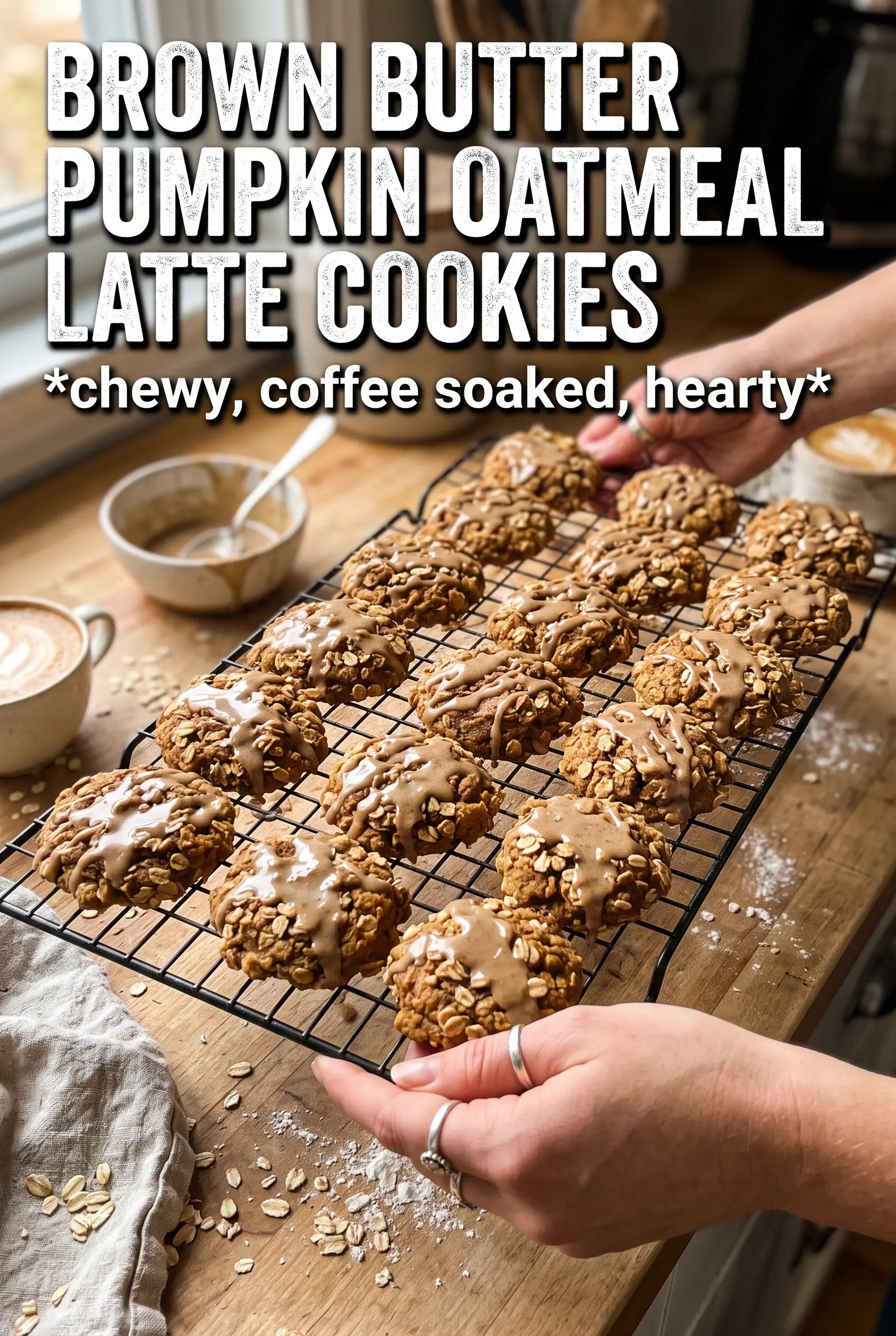
Brown Butter Pumpkin Oatmeal Latte Cookies
Ingredients
Equipment
Method
- Brown the unsalted butter until golden and nutty, then refrigerate until solid, about 1 hour, until it is firm and scoopable.
- Preheat the oven to 375F and line baking sheets with parchment, so the cookies release easily.
- Whisk the all-purpose flour, baking soda, pumpkin pie spice, espresso powder, cinnamon, and salt until evenly combined and uniform in color.
- Beat the solidified brown butter with the brown sugar and granulated sugar until creamy, then scrape the bowl as needed for a smooth mixture.
- Mix in the pumpkin puree, then beat in the eggs and vanilla extract until the batter looks cohesive and glossy.
- Fold the flour mixture into the wet mixture until just combined, with no dry streaks remaining.
- Fold in the old-fashioned rolled oats and toffee bits until evenly distributed throughout the dough.
- Scoop the dough into 2-tablespoon rounds and bake for 10-12 minutes at 375F until the edges are golden.
- Sprinkle the tops with flaky salt, then cool on the pan for 5 minutes to set before transferring.