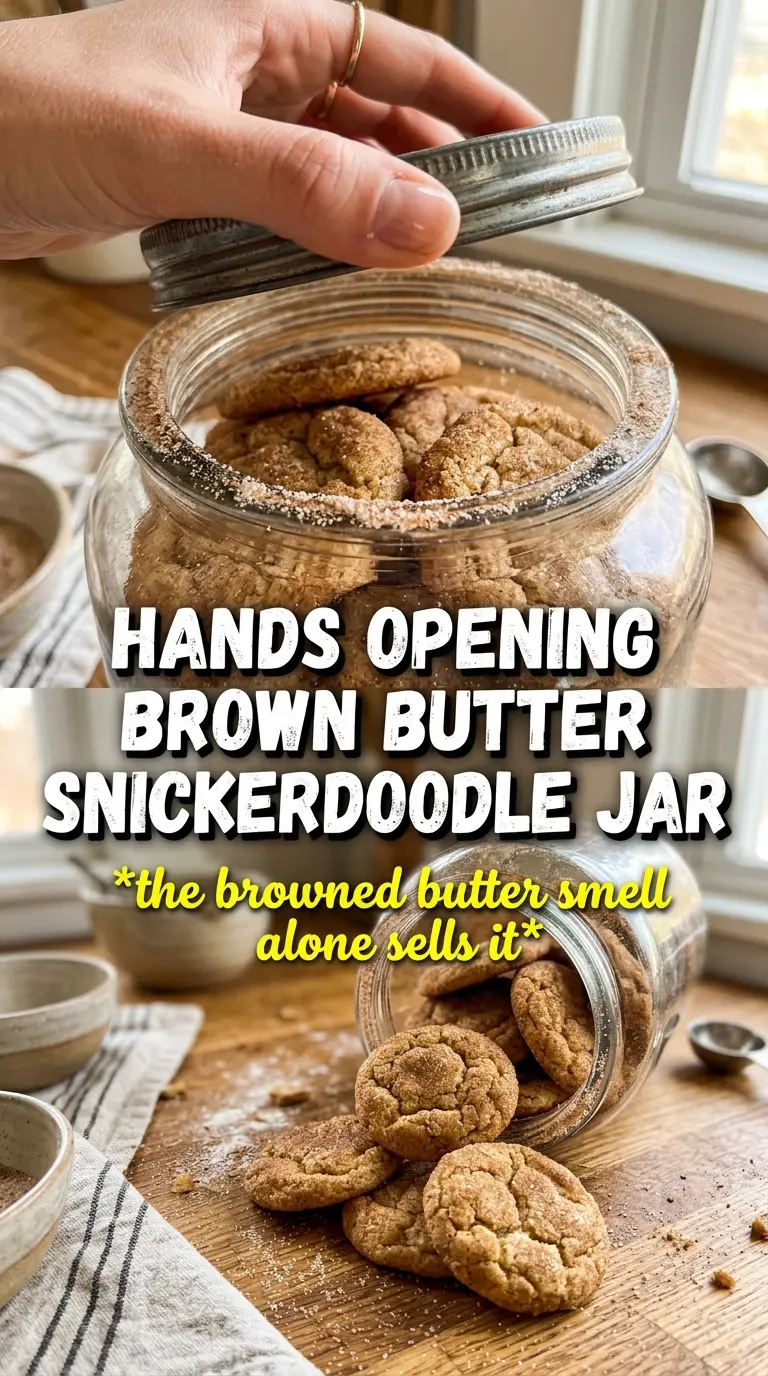
Brown butter snickerdoodles bake up with crackly tops, chewy centers, and that familiar cinnamon-sugar shell, but the brown butter takes them somewhere deeper. The flavor lands between toasted caramel and warm vanilla, with a little nuttiness in the back of each bite. They still taste like a snickerdoodle at first glance, only richer and more layered once you get to the middle.
The part that matters most is giving the butter time to brown and then time to firm back up before mixing. If it stays melted, the dough spreads too much and you lose that thick, crinkled look. Cream of tartar keeps the cookies tangy and soft, while the cinnamon in the dough and the cinnamon sugar on the outside build flavor in layers instead of all at once.
Below, I’ll walk through the step that keeps the texture right, the ingredient that adds the most payoff, and the few small changes that help these cookies bake evenly every time.
The cinnamon coating stayed put, the centers were soft, and the browned butter gave them this toasted caramel note I never get from regular snickerdoodles.
Brown butter snickerdoodles with that crinkled cinnamon-sugar top are the ones to pin for cookie swaps and easy dessert nights.
The Browning Step That Decides the Whole Cookie
Brown butter is where these cookies get their edge, but it also changes the texture of the dough. Once the milk solids toast and the butter turns golden, it has to cool and firm up again before you beat it with the sugar. If you rush that part, the dough turns greasy and the cookies spread into thin, fragile rounds instead of staying thick and crinkled.
The other thing that matters is the cinnamon balance. There’s enough in the dough to give the cookie its own warmth, then the rolling sugar adds a brighter cinnamon hit on the outside. That layered approach keeps the flavor from tasting flat or dusty.
- Browned butter — This is the flavor engine. Let it go until it smells nutty and the bits at the bottom are amber, not black. If you use plain melted butter instead, the cookies will still work, but they’ll taste more ordinary and spread more.
- Cream of tartar — This is what gives snickerdoodles their signature tang and helps the cookies stay soft in the center. There isn’t a true substitute if you want the classic texture, though baking powder can work in a pinch at the cost of flavor and chew.
- All-purpose flour — The amount here keeps the dough sturdy enough to hold the cinnamon coating without turning dry. Spoon and level it if you can; packing in too much flour makes the cookies bready.
What Each Ingredient Is Actually Doing in These Cookies
- Unsalted butter — Browning the butter gives you the deep, toasty note that separates these from standard snickerdoodles. Use unsalted so you control the salt level after the butter reduces slightly during browning.
- Granulated sugar — Sugar sweetens the dough and helps create those crisp, sparkly edges. It also helps beat air into the browned butter once it has solidified, which improves the final texture.
- Eggs — Eggs bind the dough and add enough moisture to keep the centers soft. Add them one at a time if the butter-sugar mixture looks a little stiff; that helps it emulsify evenly.
- Vanilla extract — Vanilla rounds out the browned butter and cinnamon so the cookies taste balanced instead of sharp. Use a good one here because there isn’t much else in the dough to hide behind.
- Cinnamon, nutmeg, and sugar for rolling — This outer layer gives you the classic snickerdoodle finish. The pinch of nutmeg is subtle, but it adds a little warmth that makes the coating taste more homemade and less one-note.
How to Keep the Centers Soft and the Edges Set
Browning the Butter Without Burning It
Cook the butter over medium heat until the foam settles and the solids sink, then keep watching for the color shift from pale gold to amber. The pan will smell nutty and toasty when it’s ready. Pull it off the heat as soon as the brown bits are fragrant, because they go from toasted to bitter fast. Chill it until solid before mixing the dough, or the cookies will bake thin.
Building the Dough Base
Beat the solidified brown butter with the sugar until it looks creamy and a little fluffy. That step helps the cookies bake up with a better crumb instead of dense, heavy centers. Add the eggs and vanilla only after the butter mixture loosens; if the butter is still too hard, it will clump and the dough won’t come together smoothly.
Rolling, Scooping, and Baking
Scoop the dough into 1 1/2-tablespoon balls and roll them generously in the cinnamon sugar. Don’t flatten them. The cookies spread on their own, and starting with a round mound helps them bake into thick, crinkled domes. Bake until the edges are set and the centers still look a little soft; they’ll finish on the hot pan during the resting time.
Pump Up the Spice
If you like a stronger cinnamon bite, add another 1/2 teaspoon to the dough or a little extra cinnamon in the rolling sugar. That pushes the cookies closer to a classic bakery-style snickerdoodle, while the brown butter still keeps them from tasting one-note.
Gluten-Free Version
Use a cup-for-cup gluten-free flour blend that already contains xanthan gum. The cookies will be a touch more delicate, but the brown butter and cinnamon still carry the flavor, and the texture stays close if you chill the dough well before baking.
Dairy-Free Adjustment
A plant-based butter can stand in, but you’ll lose the nutty depth that comes from browning real butter. If you go that route, use a version with a high fat content and chill it completely before mixing so the cookies don’t spread too fast.
Make-Ahead Dough
The dough can be portioned and chilled overnight, or frozen as dough balls for later baking. If you bake from frozen, add a minute or two and watch for the edges to set before the tops lose their glossy look.
Storage and Reheating
- Refrigerator: Store in an airtight container for up to 5 days. The cinnamon sugar softens a bit, but the cookies stay chewy.
- Freezer: Freeze baked cookies for up to 2 months, or freeze the dough balls and bake from frozen. Layer parchment between baked cookies so the coating doesn’t rub off.
- Reheating: Warm baked cookies in a 300F oven for 3 to 4 minutes. The mistake to avoid is microwaving too long, which turns the centers tough and melts the sugar coating into a sticky layer.
Questions I Get Asked About This Recipe
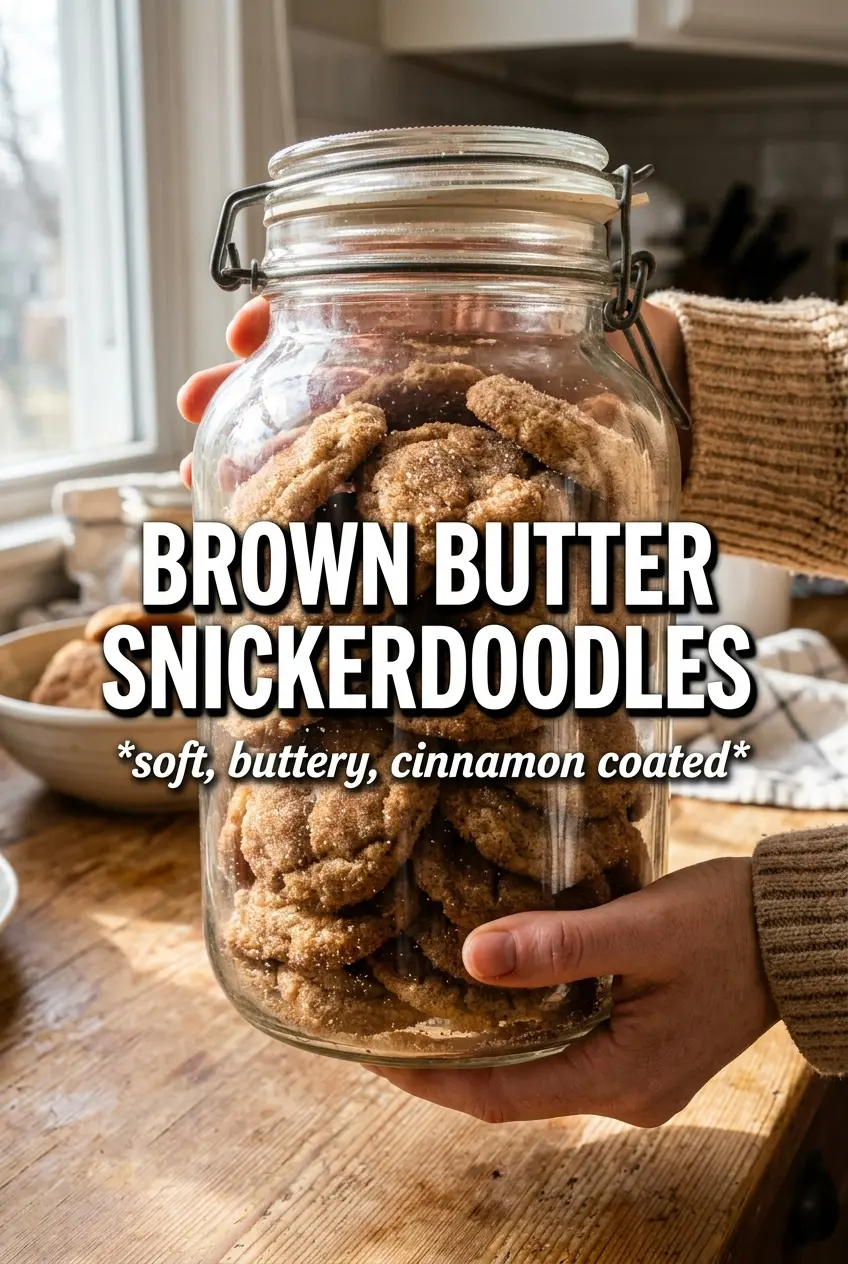
Brown Butter Snickerdoodles
Ingredients
Equipment
Method
- Brown the unsalted butter until golden, then let it cool and solidify. Refrigerate until firm, about 1 hour, until it is scoopable.
- Preheat the oven to 375°F and line baking sheets with parchment. Set the pans aside for quick loading.
- Whisk the all-purpose flour, cream of tartar, baking soda, cinnamon, and salt in a bowl. Whisk until the dry ingredients are evenly combined.
- Beat the solidified brown butter with the granulated sugar until creamy. Beat until the mixture looks smooth and lighter in color.
- Add the eggs and vanilla extract to the bowl and beat to combine. Mix just until no egg streaks remain.
- Fold in the flour mixture until the dough comes together. Stop mixing as soon as you no longer see dry flour.
- Mix the rolling spices—granulated sugar, cinnamon, and nutmeg—in a shallow bowl. Stir until the coating is speckled and uniform.
- Scoop the dough into 1-1/2 tablespoon balls and roll generously in the cinnamon sugar mixture. Press lightly so the coating adheres thickly.
- Bake for 10–12 minutes at 375°F until crinkled and the edges are set. Look for deep golden tops with slightly soft centers.
- Cool the cookies on the pan for 5 minutes after baking. Move them to a rack after they firm up at the edges.