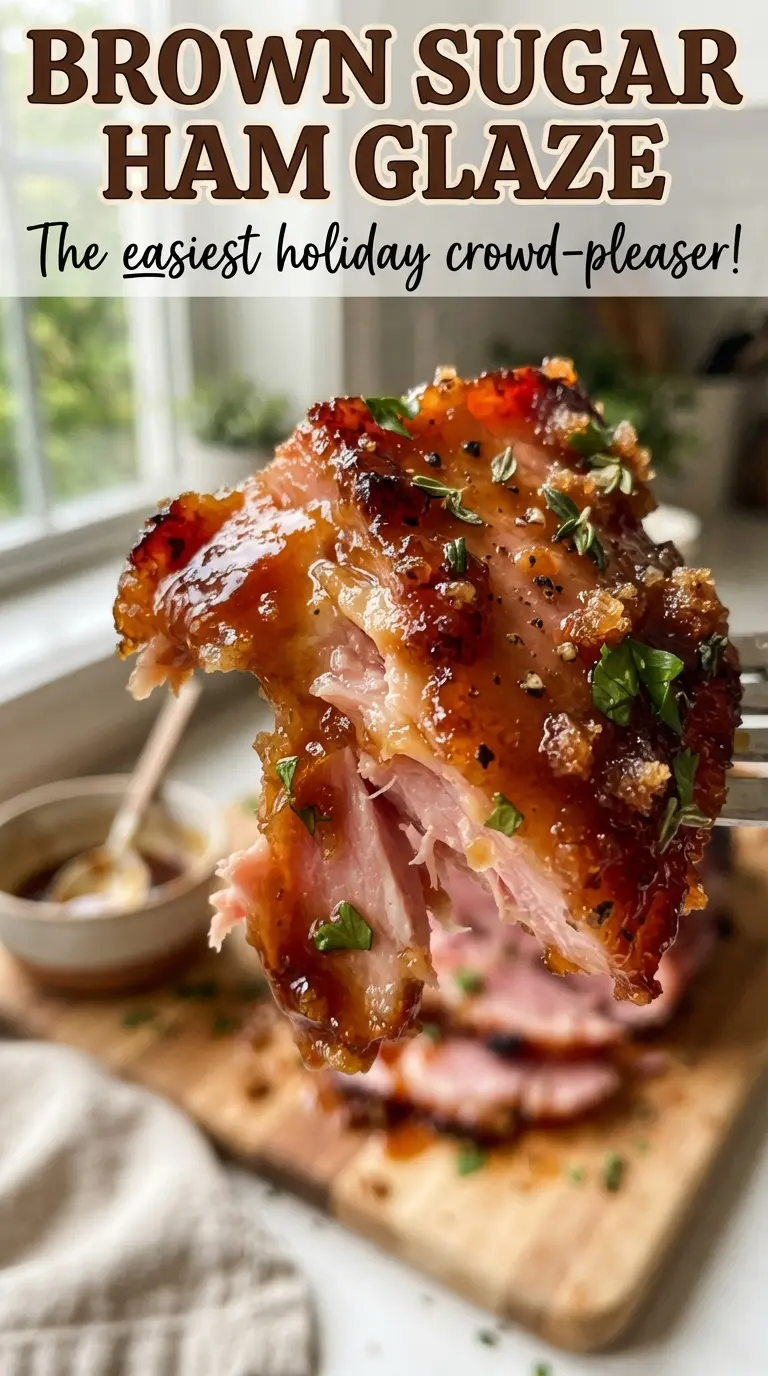
Sticky, glossy, and just tangy enough to keep each slice from tasting one-note, brown sugar ham glaze is the kind of finish that turns a good ham into the one people remember. It clings to the scored edges, sinks into the cut lines, and bakes into an amber sheen that tastes like caramel, spice, and a little citrus in every bite.
This version works because it balances sweetness with acid and mustard instead of leaning on sugar alone. Honey gives the glaze body, brown sugar brings that deep molasses note, and Dijon keeps it from getting cloying. The fruit juice thins everything just enough to brush on cleanly, while butter helps it gloss over the ham instead of drying into a sticky shell.
Below, I’ll show you why the glaze thickens the way it does, how to keep it smooth, and what to do if you want to swap the juice or make it ahead. It’s a small recipe, but the timing matters, and that’s what gives you those beautiful lacquered slices at the table.
The glaze brushed on smoothly and set into that shiny amber coating I was hoping for. I used orange juice, and the sweet-tangy balance was perfect with the ham.
Save this brown sugar ham glaze for a shiny, sweet-tangy finish on your next holiday ham.
The Part Most Ham Glazes Get Wrong: Keeping It Glossy Instead of Burnt
The biggest mistake with ham glaze is pushing it too hot, too fast. Brown sugar and honey can go from shiny to scorched in a hurry, especially once the ham is already in the oven and the edges are exposed. This glaze works because it gets just thick enough on the stove to coat a spoon, then finishes on the ham where the heat can set it without turning bitter.
- The sugar needs enough heat to dissolve completely, but not a hard boil. Once the grains disappear, you’re after a gentle simmer that leaves the glaze smooth instead of grainy.
- Dijon does more than add flavor. Its sharpness keeps the glaze from tasting flat and helps cut through the saltiness of the ham.
- The butter is there for shine and body. If you skip it, the glaze still works, but it won’t brush on as evenly or bake into that lacquered finish.
- Cloves are strong, so measure carefully. A little gives the glaze depth; too much makes the whole thing taste medicinal.
What Each Ingredient Is Doing in the Glaze
- Packed brown sugar — This is the backbone of the glaze. Light or dark brown sugar both work, but dark brown sugar gives you a deeper molasses note and a darker finish.
- Honey — Honey adds stickiness and helps the glaze cling to the ham. If you use a strongly flavored honey, it will show up in the final taste, so keep that in mind.
- Pineapple or orange juice — Either one gives the glaze the acidity it needs to balance the sweetness. Orange tastes a little brighter and softer; pineapple brings sharper fruitiness.
- Dijon mustard — This is the ingredient that keeps the glaze from tasting like candy. Whole-grain mustard can work in a pinch, but the texture won’t be as smooth.
- Butter — Use real butter here if you can. It helps the glaze emulsify and gives the finished ham a glossy look.
- Apple cider vinegar — Just a tablespoon wakes everything up. It’s a small amount, but it matters more than you’d think once the glaze hits the salty ham.
- Cinnamon and cloves — These are the warm background notes. Don’t overdo them; they should support the glaze, not take it over.
How to Cook the Glaze So It Brushes On Cleanly
Melting the Sugar Base
Start everything in a small saucepan and stir over medium heat until the sugar disappears into the liquid. The mixture will look loose at first, then turn smoother and a little darker as the butter melts and the honey loosens up. If you rush this part with heat that’s too high, the edges can catch before the sugar fully dissolves, and you’ll end up with a gritty glaze. Keep stirring and watch for the first gentle bubbles around the edge of the pan.
Cooking to the Right Thickness
Once the glaze begins to simmer, let it go for 3 to 4 minutes. It should look slightly thicker, glossy, and able to coat the back of a spoon without running off like juice. Pull it off the heat before it gets sticky and heavy, because it thickens again as it sits. If it turns too thick, stir in a spoonful of warm juice to loosen it.
Brushing the Ham at the End
Brush the glaze over a fully cooked ham during the last 30 minutes of baking, then repeat every 10 minutes. That layered application builds color and flavor without letting the sugar burn. If your ham is already deeply browned, tent the exposed edges with foil so the glaze can keep setting while the surface stays glossy. Save the last bit for the table so every slice gets a little extra shine.
Three Ways to Adapt This Glaze Without Losing the Shine
Orange juice instead of pineapple
Orange juice gives the glaze a rounder citrus note and a softer finish. It’s the better choice if you want the brown sugar and honey to stay front and center without the sharper edge pineapple can bring.
Dairy-free version
Swap the butter for a neutral oil-based vegan butter or leave it out entirely. The glaze won’t be quite as glossy, but it will still thicken and cling well because the sugar, honey, and mustard do most of the work.
Less sweet, more savory
Cut the brown sugar by 1/4 cup and add another teaspoon of Dijon. The glaze will be a little thinner and less candy-like, which works well if your ham is already heavily cured or you prefer a sharper finish.
Storage and Reheating
- Refrigerator: Store leftover glaze in an airtight container for up to 1 week. It will thicken as it chills.
- Freezer: It freezes well for up to 2 months. Thaw overnight in the refrigerator before reheating.
- Reheating: Warm it in a small saucepan over low heat with a splash of juice or water. Don’t boil it again, or it can turn overly sticky and lose its smooth texture.
Questions I Get Asked About This Recipe
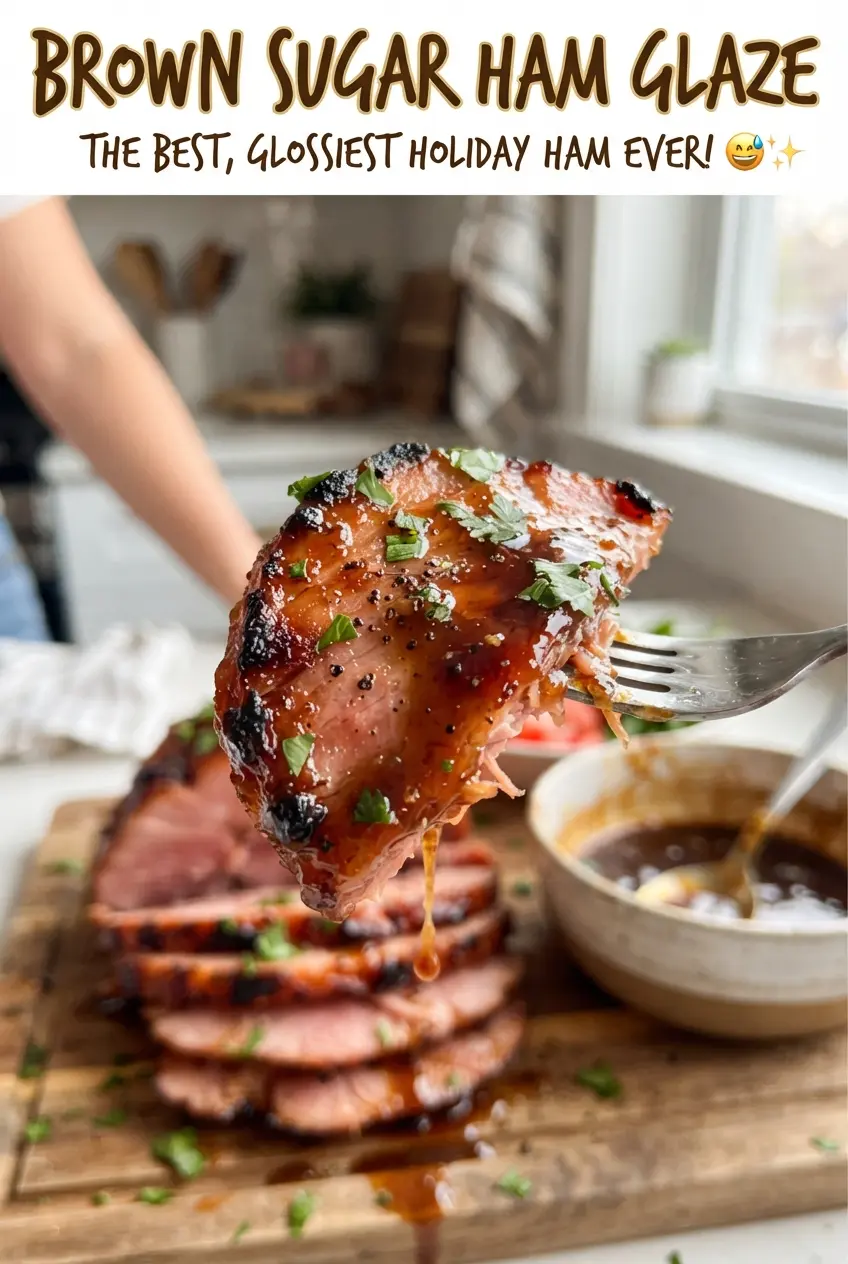
Brown Sugar Ham Glaze
Ingredients
Equipment
Method
- Combine brown sugar, honey, pineapple or orange juice, Dijon mustard, butter, apple cider vinegar, ground cinnamon, and ground cloves in a saucepan. Stir until the mixture looks evenly combined.
- Bring the saucepan to a simmer over medium heat, stirring continuously, until the sugar dissolves. Visual cue: the mixture should look smooth and glossy as steam rises.
- Simmer for 3-4 minutes, stirring often, until slightly thickened and glossy. Visual cue: the glaze should coat the back of a spoon.
- Brush the glaze over a fully cooked ham during the last 30 minutes of baking. Visual cue: the surface should appear shiny where the glaze lands.
- Brush again every 10 minutes during those last 30 minutes. Visual cue: each layer looks darker and more caramelized.
- Spoon the remaining warm glaze over sliced ham at the table. Visual cue: thick amber glaze pools slightly on the ham slices.