Butternut squash casserole comes out with a soft, spoonable center and a crunchy pecan topping that cracks under your fork. The sweet squash base stays creamy instead of watery, and the browned streusel on top gives every bite a little texture contrast. It’s the kind of side dish that quietly disappears first at the table.
What makes this version work is the balance between moisture and structure. The squash is boiled until tender, then drained well before it’s mashed with butter, eggs, milk, and a little brown sugar for richness. That extra draining step matters more than people think; if the squash is even a little wet, the casserole turns loose instead of settling into that smooth, custardy slice.
The topping is just as important as the filling. Flour, pecans, butter, and brown sugar bake into a crisp layer that stays a little sandy and nubby instead of melting into the casserole. Below, I’ve included the small details that keep the filling smooth, the topping crunchy, and the whole dish easy to serve cleanly.
The filling was smooth and set up beautifully, and the pecan topping stayed crisp all the way through dinner. I drained the squash like you said, and it made a huge difference.
Love the creamy butternut squash base and crunchy pecan streusel? Save this casserole for the next holiday table or Sunday supper.
The Secret to Keeping the Squash Base Creamy Instead of Soupy
The biggest mistake with squash casseroles happens before the dish even goes in the oven: too much water left in the squash. Boiling gets the squash tender fast, but it also loads it with moisture, and that moisture has to be gone before you mash. Let it drain thoroughly in a colander, then give it a minute to steam off a little more before mixing. That’s what keeps the casserole from puddling at the edges.
The eggs help the filling set into a soft, sliceable custard, while the butter and brown sugar give it the round, almost dessert-like flavor that makes this dish such a classic Southern side. If the squash is mashed while still chunky, the texture turns rustic instead of smooth. For this casserole, smooth wins.
What Each Ingredient Is Actually Doing in This Casserole
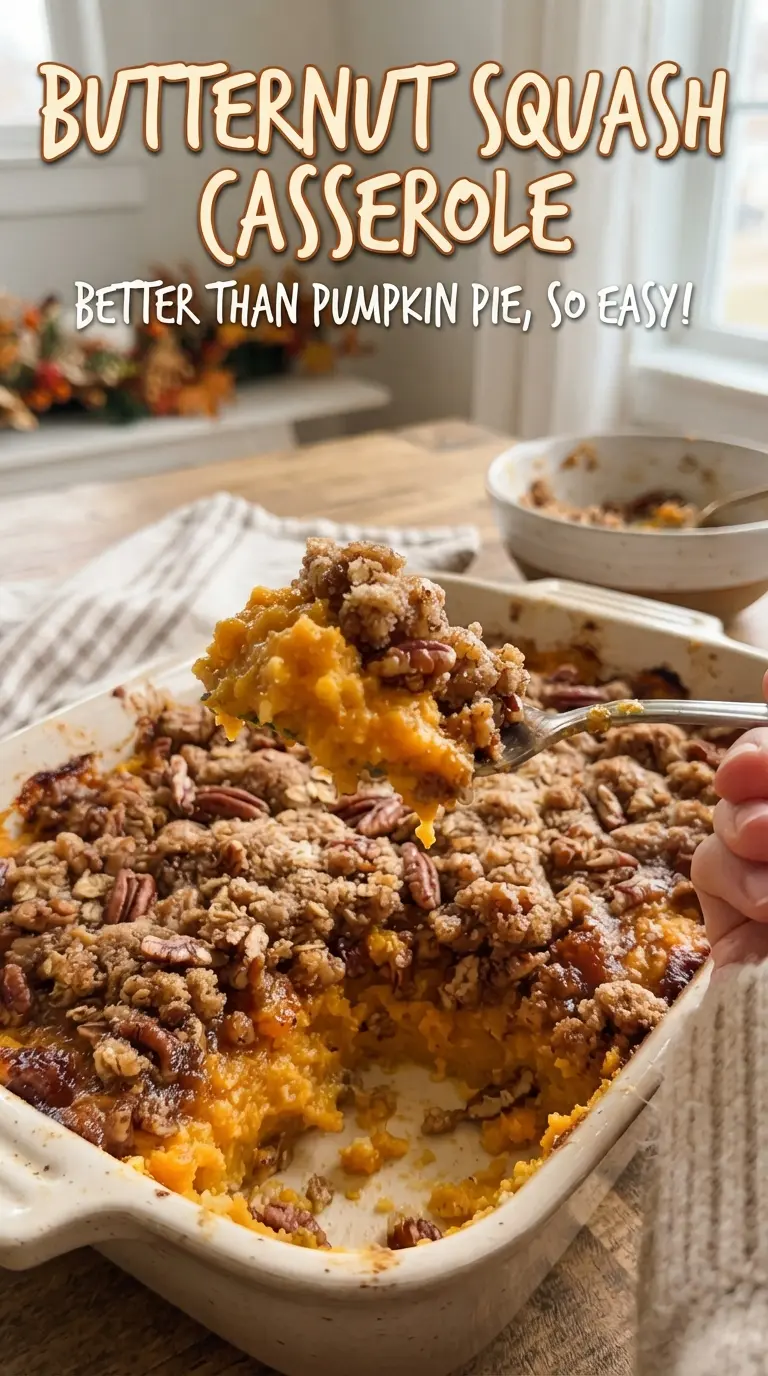
- Butternut squash — This is the backbone of the dish. Fresh squash gives the best texture and flavor here because it mashes into a smooth, naturally sweet base. Frozen squash puree can work in a pinch, but it’s often wetter, so you’ll need to cook off extra moisture before baking.
- Butter — Half goes into the filling for richness and half goes into the topping so the streusel bakes up crisp and golden. Melted butter coats the flour and pecans evenly, which is what creates those clumpy, crunchy bits on top.
- Brown sugar — It deepens the sweetness and brings a little molasses note that white sugar can’t match. You can cut it slightly if you want a less sweet casserole, but don’t replace it with a sugar substitute and expect the same browning or topping texture.
- Eggs — These are what set the casserole. Without them, the filling stays loose and spoonable rather than creamy and structured.
- Pecans — They give the topping its snap and nutty flavor. Chop them evenly so the topping bakes at the same pace and doesn’t leave a few oversized pieces underdone.
- Milk and vanilla — Milk loosens the mash just enough to make it silky, and vanilla rounds out the sweetness. Whole milk gives the richest result, but 2% works if that’s what you’ve got.
Building the Casserole So the Topping Stays Crunchy
Cooking and Draining the Squash
Boil the cubed squash until it’s very tender and a fork slides through with no resistance, then drain it well. If there’s water pooling in the bottom of the colander, keep draining. Wet squash is the fastest way to end up with a casserole that tastes fine but serves like soup.
Mashing the Base Until It’s Smooth
Mash the squash with the butter, brown sugar, eggs, milk, vanilla, cinnamon, and salt until the mixture looks glossy and even. A few tiny lumps won’t ruin it, but big chunks make the casserole bake unevenly. The filling should spread in thick ribbons rather than sit in stiff clumps.
Mixing the Pecan Streusel
Stir the flour, pecans, remaining butter, and remaining brown sugar together until the mixture looks crumbly and damp. You want pieces that hold together when squeezed, not a paste. If the topping looks greasy, add a little more flour; if it looks dusty, add a touch more butter.
Baking Until the Edges Bubble
Spread the filling into a greased 9×13-inch dish and scatter the topping evenly over the surface. Bake until the top is golden and the edges are bubbling, which tells you the custard has set underneath. If the topping darkens too fast, lay a loose piece of foil over the dish for the last 10 minutes.
Three Ways to Adjust This Casserole Without Losing the Good Part
Make It Gluten-Free
Swap the all-purpose flour in the topping with a 1:1 gluten-free baking blend. The topping will still bake up crumbly and crisp, but some blends brown a little faster, so watch the last 10 minutes in the oven.
Make It Dairy-Free
Use a plant-based butter that bakes well and replace the milk with unsweetened oat milk or almond milk. The casserole will still be creamy, but the filling will taste a little lighter and less rich than the original.
Cut the Sweetness Back
Reduce the brown sugar in the filling slightly and leave the topping as written. You’ll still get the classic casserole feel, but the squash flavor will come forward more and the dish will lean less dessert-like.
Make It Ahead
You can assemble the filling a day in advance and keep the topping separate until just before baking. That keeps the streusel crisp and prevents the flour from soaking up moisture from the squash overnight.
Storage and Reheating
- Refrigerator: Store leftovers covered for up to 4 days. The topping softens a little, but the filling stays creamy.
- Freezer: It freezes well for up to 2 months if wrapped tightly and stored in a freezer-safe container. The topping loses some crunch after thawing, but the flavor holds up.
- Reheating: Warm individual portions in the oven at 325F until heated through. The microwave works in a pinch, but it softens the topping and can make the filling weep a little at the edges.
Answers to the Questions Worth Asking
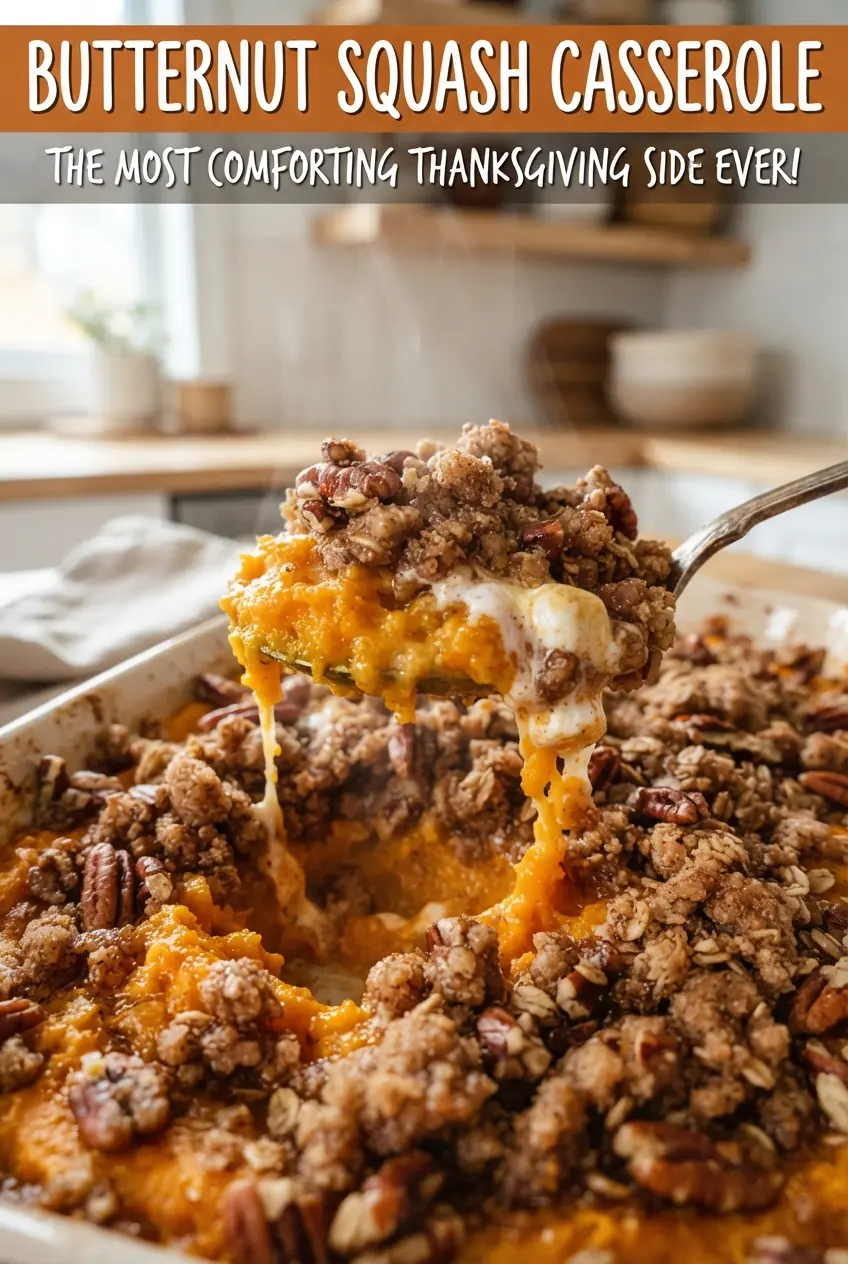
Butternut Squash Casserole
Ingredients
Equipment
Method
- Bring a pot of water to a boil, add the butternut squash, and boil for 15 minutes until very tender. Drain well so the casserole turns creamy instead of watery.
- Preheat the oven to 350F and grease a 9x13-inch baking dish. Set it aside while you mash the squash.
- Mash the drained butternut squash with 1/4 cup butter, 1/4 cup brown sugar, eggs, milk, vanilla extract, ground cinnamon, and salt until smooth. Work until no big lumps remain for an even, spoonable texture.
- Spread the smooth squash mixture into the greased baking dish in an even layer. Tap the dish gently to level the top.
- Mix all-purpose flour, chopped pecans, remaining butter, and remaining brown sugar into a crumbly topping. The mixture should clump slightly when pressed, signaling it will crisp as it bakes.
- Bake at 350F for 35 to 40 minutes until the topping is golden and the edges bubble. Let it cool briefly so the filling sets for clean scoops.