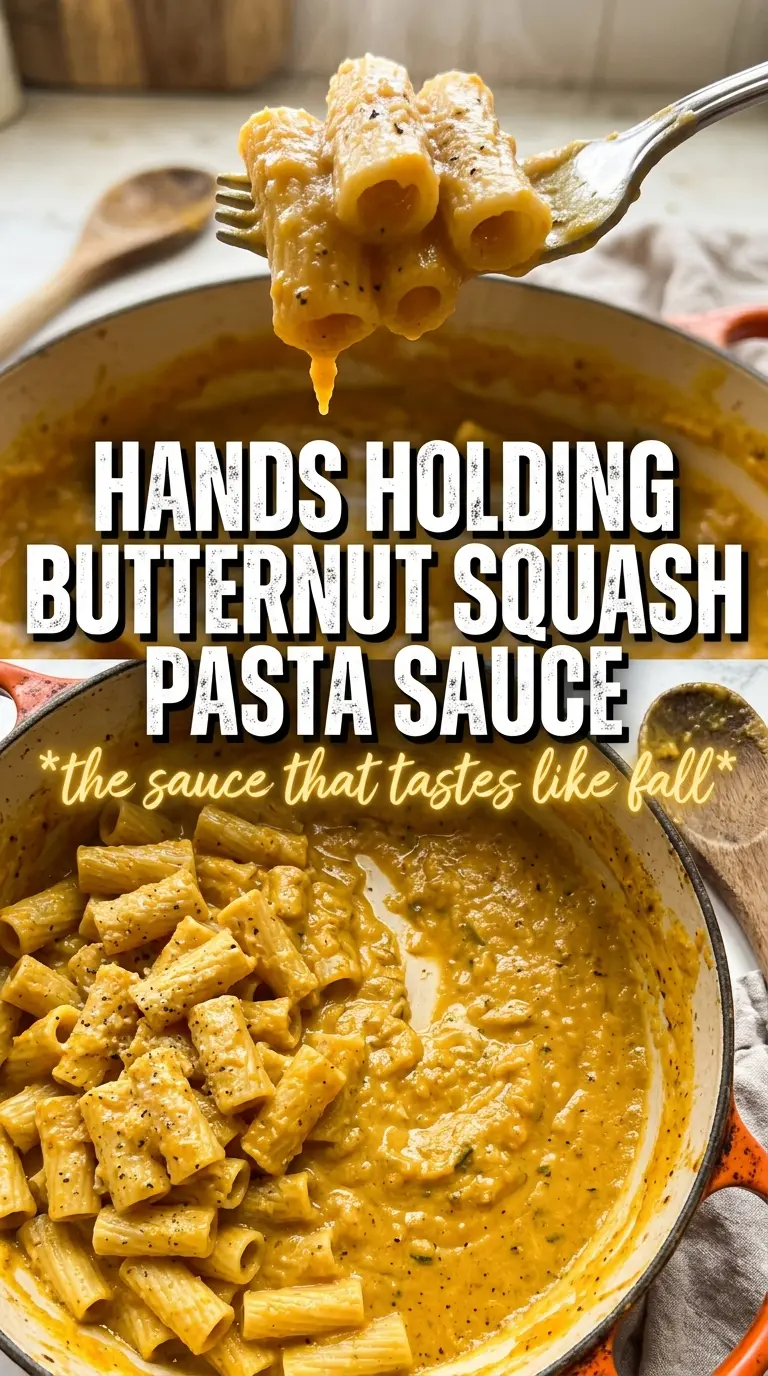
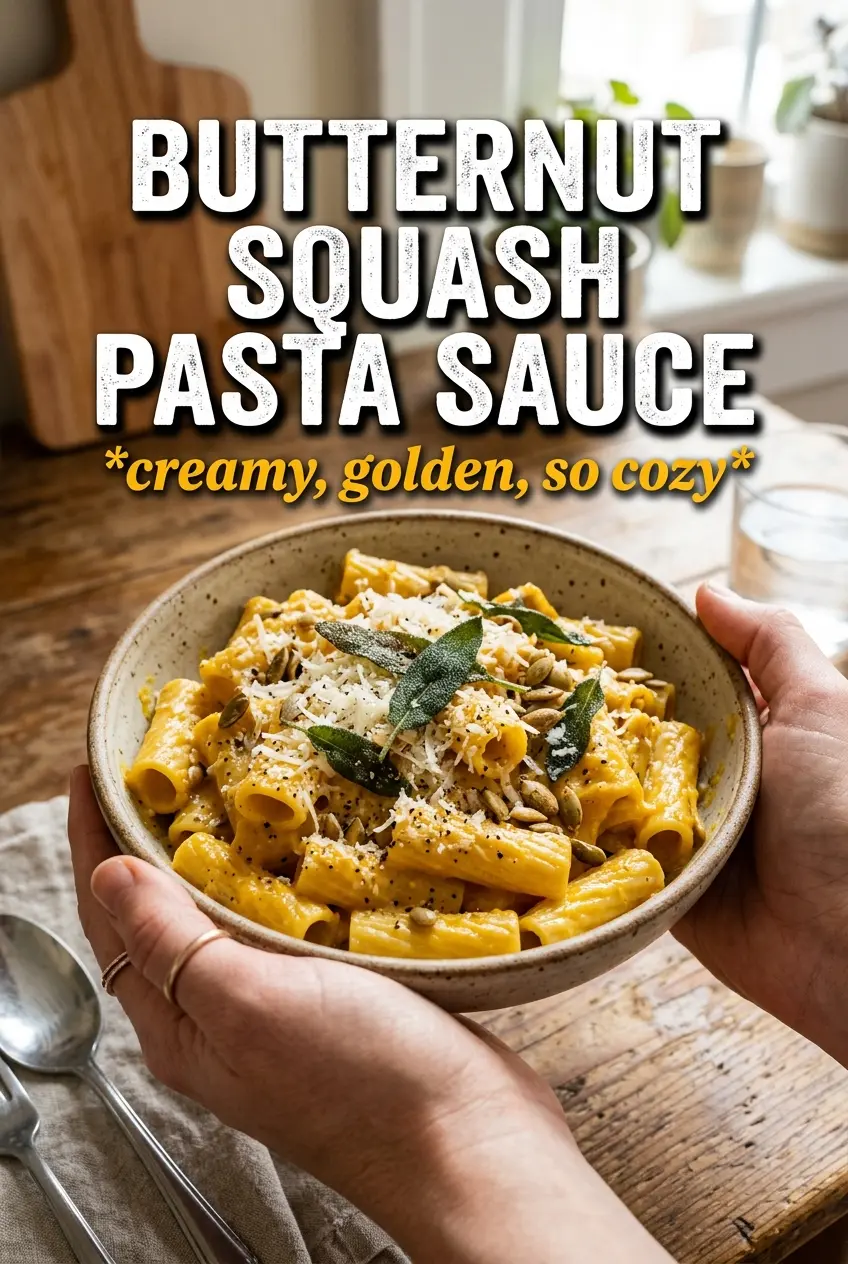
Silky butternut squash pasta sauce wraps around rigatoni with the kind of cling that makes every bite taste finished. The squash brings a gentle sweetness, the parmesan sharpens it, and the sage gives the whole pot a savory edge that keeps the sauce from turning flat or one-note. It eats like a creamy pasta dinner, but the body of the sauce comes from vegetables instead of relying on a heavy handful of dairy.
The trick is cooking the squash until it’s falling-apart tender before blending. If it’s even a little underdone, you’ll chase tiny grains through the sauce instead of getting that smooth, velvety texture you want. I also like to add the cream and parmesan after blending, over a gentle simmer, so the sauce stays glossy instead of splitting. A little pasta water at the end finishes the emulsion and helps the sauce coat the noodles instead of pooling at the bottom of the bowl.
The sauce blended out silky and coated the rigatoni beautifully. I loved that the sage and nutmeg came through without overpowering the squash, and the parmesan gave it just enough saltiness.
Save this butternut squash pasta sauce for the nights when you want a creamy rigatoni dinner with a smooth, savory-sweet sauce.
The Mistake That Makes Butternut Squash Sauce Grainy
Most grainy squash sauces start with impatience. The squash needs enough time in the broth to soften all the way through, not just at the edges, because the blender can only make the texture as smooth as the vegetables allow. If the cubes still hold their shape easily when you press them with a spoon, keep simmering. They should collapse without resistance.
The other common failure is adding cheese to a sauce that’s too hot. Parmesan behaves best when the heat is low enough to melt it in without turning stringy or sandy. Once the squash is blended, move the pot to gentle heat, stir in the cream first, then the parmesan. That order gives you a sauce that stays glossy instead of turning tight or greasy.
What Each Ingredient Is Doing In This Sauce
- Butternut squash — This is the base, so quality matters. Fresh squash gives the cleanest flavor and the smoothest body once cooked, while frozen cubes can work in a pinch if you simmer them until they’re completely soft. If you use pre-cut squash, check that the pieces are even so they cook at the same rate.
- Onion and garlic — These build the savory foundation that keeps the sauce from tasting like baby food. Cook the onion until it’s soft and translucent, not browned; deep browning pushes the sauce toward sweetness and can bury the squash. Garlic and sage only need a short cook, just long enough to smell fragrant.
- Vegetable or chicken broth — Broth does the work of softening the squash and seasoning it from the inside out. Use a good-tasting broth here, since it becomes part of the final sauce rather than disappearing behind other ingredients. If your broth is salty, hold back on extra salt until the very end.
- Heavy cream — Cream rounds out the sauce and gives it that satin finish. Half-and-half will work, but the sauce will be a little lighter and less luxurious. Add it after blending so it doesn’t reduce too aggressively while the squash is still cooking.
- Parmesan — This adds salt, depth, and a little nutty sharpness that makes the sauce taste complete. Grate it finely so it melts in without leaving little clumps behind. Pre-grated parmesan doesn’t melt as smoothly, so a block is worth it here.
- Fresh sage and nutmeg — Sage gives the sauce its savory, earthy edge, and nutmeg makes the squash taste fuller without screaming “spice.” Dried sage can stand in, but use less because it’s stronger and less delicate. Nutmeg should stay in the background; too much and the sauce turns perfume-y.
Building the Sauce So It Stays Silky
Softening the Onion and Blooming the Sage
Warm the olive oil in a large pot over medium heat, then cook the onion until it turns soft and sweet, about five minutes. Add the garlic and sage and stir just until fragrant. If the garlic browns, it will taste sharp and bitter in the finished sauce, so keep it moving and don’t let the pan run too hot.
Cooking the Squash Until It Collapses
Add the squash and broth, bring the pot to a boil, then drop it to a steady simmer. Cook until the squash falls apart with almost no pressure from a spoon, about 20 minutes. This is the stage that decides whether the sauce turns plush or slightly gritty, so don’t rush it just because the liquid looks hot.
Blending and Finishing the Cream Sauce
Blend the pot until it’s completely smooth, then stir in the cream, parmesan, nutmeg, and red pepper flakes. Keep the heat low and give the cheese time to melt fully. If the sauce feels too thick, loosen it with a splash of pasta water; if it feels too thin, let it simmer a few minutes longer until it lightly coats the back of a spoon.
Tossing the Pasta the Right Way
Cook the rigatoni or penne until just al dente, then add it straight into the sauce. A little pasta water helps the sauce cling to the ridges and tubes, and the starch in that water gives you a better finish than plain broth would. Toss until every piece looks lacquered and the sauce sits in the pasta instead of underneath it.
How to Adapt This for a Bigger Crowd, Lighter Dairy, or Gluten-Free Pasta
Make it dairy-free without losing body
Swap the heavy cream for full-fat coconut milk or an unsweetened oat-based cooking cream, and use nutritional yeast or a dairy-free parmesan alternative in place of the cheese. Coconut milk gives the sauce the most body, but it adds a faint sweetness, so the nutmeg and pepper flakes help balance it. The result is still silky, just a little softer in flavor.
Use gluten-free pasta without losing the cling
Choose a sturdy gluten-free rigatoni or penne made from rice or corn, and cook it just to al dente because it softens fast once it hits the sauce. Reserve extra pasta water, since some gluten-free shapes need a little more help to bind with the sauce. If the pasta starts to break, toss more gently and serve it right away.
Stretch it for six instead of four
Cook a full pound of pasta and add an extra splash of broth or pasta water to keep the sauce loose enough to coat everything. The flavor will still be rich, but each serving will feel a little lighter and the sauce won’t disappear into the pasta. A little extra parmesan at the table helps wake it back up.
Storage and Reheating
- Refrigerator: Store the sauce and pasta together or separately for up to 4 days. The sauce thickens as it cools, so expect it to look much denser straight from the fridge.
- Freezer: The sauce freezes well for up to 2 months, though cream sauces can look a little separated after thawing. Freeze it without the pasta for the best texture, then reblend or whisk while reheating if needed.
- Reheating: Warm it slowly on the stove with a splash of broth, milk, or water. High heat is the mistake that breaks a creamy sauce, so keep it at a low simmer and stir often until it loosens again.
Answers to the Questions Worth Asking
Butternut Squash Pasta Sauce
Ingredients
Equipment
Method
- Heat 2 tablespoons olive oil in a large pot, then sauté diced onion for 5 minutes.
- Add minced garlic and chopped sage and cook for 2 minutes.
- Add peeled and cubed butternut squash and broth, bring to a boil, then simmer for 20 minutes until the squash is very tender.
- Blend completely smooth with an immersion blender, scraping down as needed for a silky texture.
- Stir in heavy cream, grated parmesan, nutmeg, and red pepper flakes, then simmer for 5 minutes.
- Cook rigatoni or penne, then toss it into the sauce and use pasta water as needed to loosen and coat.
- Season with salt and pepper to taste, then serve hot.


