Blackened Cajun chicken thighs over creamy orzo hit the table with the kind of heat and comfort that keeps this dish in regular rotation. The chicken brings a smoky, peppery crust, while the orzo cooks down into a glossy, spoonable base that picks up every bit of seasoning from the pan. Bell peppers and onion keep it from feeling heavy, and the lemon at the end sharpens everything just enough to make the whole skillet taste alive.
The trick here is building the dish in stages and not rushing the pan. Searing the chicken first leaves behind browned bits that season the orzo from the bottom up, and toasting the dry pasta for a minute gives it a nuttier flavor before the broth goes in. The cream and Parmesan go in at the end, once the orzo is tender, so the sauce stays smooth instead of turning grainy or overly thick.
Below, you’ll find the one point that keeps this dish from going muddy, plus the small ingredient choices that make the Cajun flavor taste bold instead of flat. I also included a few smart swaps and storage notes, because this is the kind of dinner you may want to make ahead or stretch a little further.
The chicken got that dark Cajun crust I was hoping for, and the orzo stayed creamy without turning into mush. I added the lemon at the end like suggested and it pulled the whole skillet together.
Save this Cajun Chicken Orzo for a one-pan dinner with blackened chicken, creamy orzo, and a bright lemon finish.
The Pan Sauce Gets Its Best Flavor Before the Cream Ever Shows Up
Orzo can turn bland fast if you treat it like plain pasta and dump everything in together. The flavor in this dish comes from the browning step: the chicken seasons the oil, the vegetables soften in the drippings, and the Cajun seasoning gets a quick wake-up in the hot pan before the broth is added. That small pause matters. It keeps the spices from tasting dusty and gives the whole skillet a deeper, more rounded heat.
The other thing that matters is stirring often once the broth goes in. Orzo sits low in the pan and wants to settle, which means it can stick and scorch if you leave it alone. A gentle simmer is enough. If the liquid disappears before the pasta is tender, add a splash of broth or water and keep going until the grains are plump and just soft at the center.
What Each Ingredient Is Actually Doing in This Skillet

- Boneless skinless chicken thighs — Thighs stay juicy under high heat and take on that blackened crust better than breast meat. If you swap in chicken breasts, cut them a little thicker and pull them as soon as they hit 165°F so they don’t dry out.
- Cajun seasoning — This is the backbone of the dish, so use one you already like on its own. Some blends run saltier than others; if yours is heavy on salt, start with a little less and adjust at the end.
- Orzo — Orzo gives you that creamy, risotto-like texture without constant stirring. It needs enough liquid to move freely in the pan, so don’t reduce the broth or it will tighten up before the pasta is tender.
- Heavy cream and Parmesan — These finish the skillet into a true sauce. Add them after the orzo is cooked; if they go in too early and boil hard, the sauce can turn grainy or split.
- Bell peppers, onion, and garlic — These build sweetness and keep the Cajun heat from feeling one-note. Dice the vegetables evenly so they soften at the same pace and disappear into the sauce instead of staying crunchy.
- Smoked paprika — This reinforces the blackened edge on the chicken and deepens the color of the sauce. If your Cajun seasoning is already smoky, you can use a little less here without losing much.
Building the Skillet in the Right Order
Blackening the Chicken First
Rub the chicken thighs with the first tablespoon of Cajun seasoning, then lay them in hot oil and leave them alone long enough to form a crust. You’re looking for deep browning at the edges and a pan that smells smoky and peppery, not burnt. If the heat is too high, the seasoning will scorch before the chicken cooks through, so keep the burner at medium-high and flip when the first side releases cleanly.
Cooking the Vegetables in the Drippings
Once the chicken comes out, the pan should still have enough oil and browned bits to flavor the vegetables. Add the peppers and onion and cook until they soften and start to take on color around the edges, then stir in the garlic and the rest of the Cajun seasoning for just a minute. Garlic burns fast in a dry skillet, so this stage is brief; you want it fragrant, not browned.
Letting the Orzo Drink in the Broth
Toast the dry orzo for a minute before you add the broth. That gives it a little nuttiness and helps it hold its shape better in the cream sauce later. Once the broth goes in, keep the mixture at a steady simmer and stir often, scraping the bottom of the pan so nothing catches. If the orzo still feels firm but the liquid is gone, add a small splash of broth and keep cooking until it’s tender with just a tiny bite left.
Finishing With Cream and Cheese
Stir in the cream and Parmesan only after the orzo is cooked. The sauce should turn glossy and cling to the pasta instead of looking thin or broken. If it seems too loose at first, give it a minute or two; orzo keeps thickening as it sits. Slice the chicken and set it on top so the crust stays intact, then finish with green onions and a squeeze of lemon right before serving.
Three Ways to Adjust the Heat, Richness, or Dairy
Make it milder without losing the Cajun character
Use a mild Cajun blend and cut the seasoning on the chicken back by about a third. The dish will still taste smoky and savory, but the finish will be more peppery than hot. A little extra lemon at the end helps replace the brightness you lose when the heat comes down.
Make it dairy-free
Swap the cream for unsweetened coconut cream or a thick oat-based cooking cream, and skip the Parmesan or use a dairy-free hard cheese. Coconut cream gives the sauce more richness and a faint sweetness, while oat cream stays closer to the original savory profile. Either way, add it at the end so it doesn’t split under heat.
Use chicken breast instead of thighs
Chicken breast works, but it needs a shorter sear and a little more attention so it doesn’t turn dry while the orzo finishes. Pound the pieces to an even thickness and slice them after resting. You’ll lose a bit of richness, but the creamy sauce brings most of it back.
Storage and Reheating
- Refrigerator: Store in an airtight container for up to 3 days. The orzo will thicken as it sits and soak up some of the sauce.
- Freezer: It freezes, but the cream sauce loses a little of its smoothness after thawing. If you plan to freeze it, stop before adding the cream and Parmesan, then finish those after reheating.
- Reheating: Warm it gently on the stovetop over low heat with a splash of broth or cream. The common mistake is blasting it in the microwave until the sauce separates and the chicken dries out.
Answers to the Questions Worth Asking
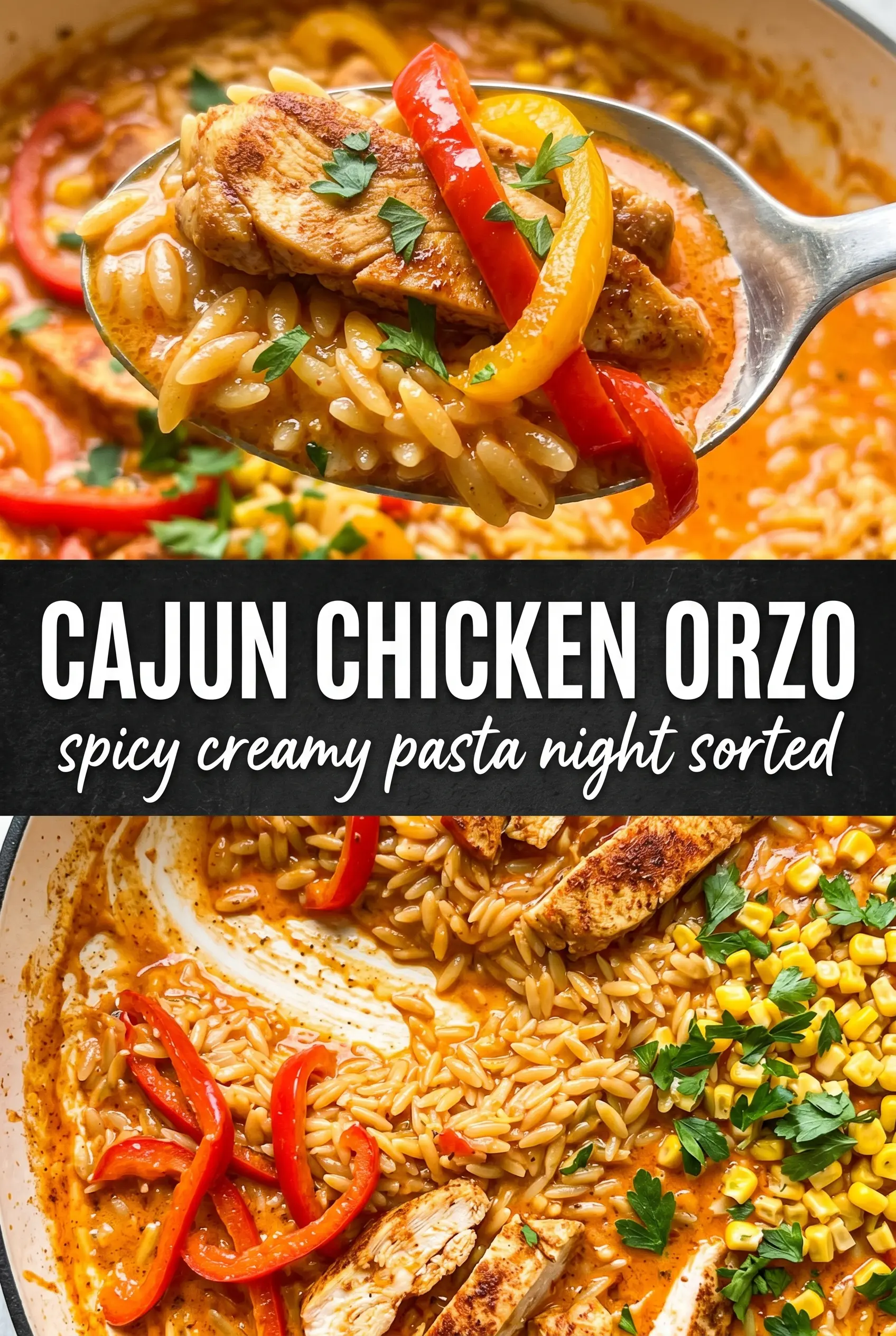
Cajun Chicken Orzo
Ingredients
Equipment
Method
- Rub chicken thighs with 1 tablespoon Cajun seasoning, then sear in olive oil in a large deep skillet over medium-high heat for 4-5 minutes per side until blackened and cooked through to 165°F; remove and slice.
- In the same skillet, cook bell peppers and onion over medium heat for 4 minutes; add garlic and remaining Cajun seasoning and cook 1 minute, stirring until fragrant and glossy.
- Add orzo and toast for 1 minute, stirring to coat; pour in chicken broth and bring to a simmer, then cook uncovered for 10-12 minutes, stirring often, until the orzo is tender.
- Stir in heavy cream and Parmesan, then simmer for 2 minutes until creamy and lightly thickened, bubbling steadily around the edges.
- Top the creamy orzo with the sliced Cajun chicken, then garnish with sliced green onions and serve with lemon wedges.