Spice-crusted Cajun meatballs in brown gravy hit that sweet spot between comfort food and bold, peppery dinner. The meatballs stay tender, the gravy turns glossy and dark, and every bite carries a little heat backed by the sweetness of onion, bell pepper, and celery. Poured over rice, it’s the kind of meal that disappears fast and doesn’t need much else on the table.
What makes this version work is the way the gravy starts in the same pan as the meatballs. Those browned bits stuck to the skillet give the sauce its depth, and cooking the flour until it turns a deep golden color keeps the gravy from tasting pasty. The Cajun seasoning is split between the meatballs and the gravy, so the flavor runs all the way through instead of sitting on the surface.
Below, I’ll walk through the small details that keep the meatballs juicy and the gravy smooth, plus the swaps that still hold up if you need to adjust the heat or make it a little lighter.
The gravy got beautifully dark and thick, and the meatballs stayed tender even after simmering. I served it over rice and my husband went back for seconds before I’d even sat down.
Save these Cajun meatballs in brown gravy for the nights when you want a smoky, peppery skillet dinner over rice with almost no cleanup.
The Secret to Keeping Cajun Meatballs Tender While the Gravy Gets Deep and Dark
Meatballs like these can go dry fast if they’re mixed too long or cooked too hard. The breadcrumbs and egg are doing more than binding; they’re holding on to moisture while the Cajun seasoning seasons the beef from the inside out. Roll them just until the mixture comes together, then stop. Overworking ground beef tightens it up, and that’s how you end up with meatballs that feel dense instead of juicy.
The sear matters here, but only up to a point. You want a browned crust on the outside, not a fully cooked meatball, because the simmer in the gravy finishes the job gently. If the skillet is crowded, the meatballs steam and lose that flavor-building browning, so cook them in batches if needed.
- Ground beef — An 80/20 blend gives you the best balance of flavor and tenderness. Leaner beef works, but the meatballs won’t stay as juicy once they simmer in the gravy.
- Cajun seasoning — This is the backbone of the dish, so use a blend you like eating on its own. If yours is salt-heavy, cut back a little on added salt in the meat mixture and taste the gravy before seasoning again.
- Breadcrumbs and egg — These keep the meatballs from turning tight and crumbly. If you need a gluten-free swap, use gluten-free breadcrumbs or crushed rice crackers in the same amount.
- Beef broth — Use a broth with some body and actual beef flavor, since it becomes the gravy. Water won’t give you the same depth, and a weak broth makes the whole dish taste thin.
What Each Ingredient Is Actually Doing in This Recipe

- Primary ingredient (the star) — Quality matters most. Choose the best you can find.
- Cooking medium (oil, butter, or broth) — This carries flavors and prevents dryness.
- Seasonings (salt, pepper, spices, herbs) — Layer flavors so nothing overpowers. Build depth gradually.
- Aromatics (garlic, onion, herbs) — Cook with fat to bloom flavors. Become the foundation.
- Supporting ingredients — Complement the main ingredient without overpowering it.
- Sauce or liquid (if applicable) — Brings flavors together. Balance richness with acid.
- Acid (lemon, vinegar, wine, or other) — Brightens and prevents flat-tasting results.
- Final finish (garnish, glaze, or sauce) — Prevents one-dimensional taste and adds visual appeal.
Building the Gravy in the Same Skillet Without Losing the Browning
Forming and Searing the Meatballs
Mix the meatball ingredients just until the seasonings disappear into the beef, then roll them into even 1.5-inch balls so they cook at the same pace. Set them in a hot skillet and let them brown on multiple sides without moving them constantly. If they stick at first, give them another minute; they’ll release once a crust forms. Pull them out when they’re browned outside but still raw in the center, because they’ll finish in the gravy.
Cooking the Holy Trinity
Butter goes into the same pan, and the onion, bell pepper, and celery should soften into a fragrant base that smells sweet and savory at the same time. Scrape up the browned bits as the vegetables cook; that’s where the flavor is hiding. If the pan looks dry, add a small splash of broth rather than more butter. You want the vegetables tender, not browned.
Making the Brown Gravy
Once the garlic goes in for just 30 seconds, sprinkle the flour over the vegetables and stir until it turns a dark golden color. That short toasting step keeps the gravy from tasting like raw flour. Whisk in the broth slowly so the mixture stays smooth, then add the Cajun seasoning and Worcestershire sauce. If you dump in the liquid all at once, the flour can clump before it has a chance to dissolve evenly.
Finishing the Simmer
Return the meatballs to the skillet, nestle them into the gravy, and cover the pan so the heat stays steady. A low simmer is enough to cook them through without toughening the beef. After about 10 minutes, the gravy should coat the back of a spoon and the meatballs should be firm but still springy when pressed. If the gravy gets too thick, loosen it with a splash of broth.
Make it less spicy without losing the Cajun character
Use a mild Cajun seasoning and start with 1 tablespoon in the meatballs, then add more to the gravy only after tasting. You’ll still get that smoky, peppery backbone, but the heat won’t dominate the dish.
Gluten-free Cajun meatballs and gravy
Swap the breadcrumbs for gluten-free breadcrumbs and use a 1:1 gluten-free flour blend for the gravy. The texture stays close to the original, though the gravy may need another minute or two to fully thicken.
Use ground turkey for a lighter version
Ground turkey works, but it needs a little extra care because it’s leaner. Keep the sear gentle and don’t overcook during the final simmer, or the meatballs can turn dry. The gravy helps a lot here, so serve it generously over rice.
Storage and Reheating
- Refrigerator: Store in an airtight container for up to 4 days. The gravy will thicken as it chills.
- Freezer: Freezes well for up to 2 months. Cool completely first, then pack the meatballs and gravy together so they don’t dry out.
- Reheating: Warm gently on the stovetop over low heat with a splash of broth to loosen the gravy. The common mistake is blasting it in the microwave, which can make the meatballs tough and the gravy greasy.
Questions I Get Asked About This Recipe
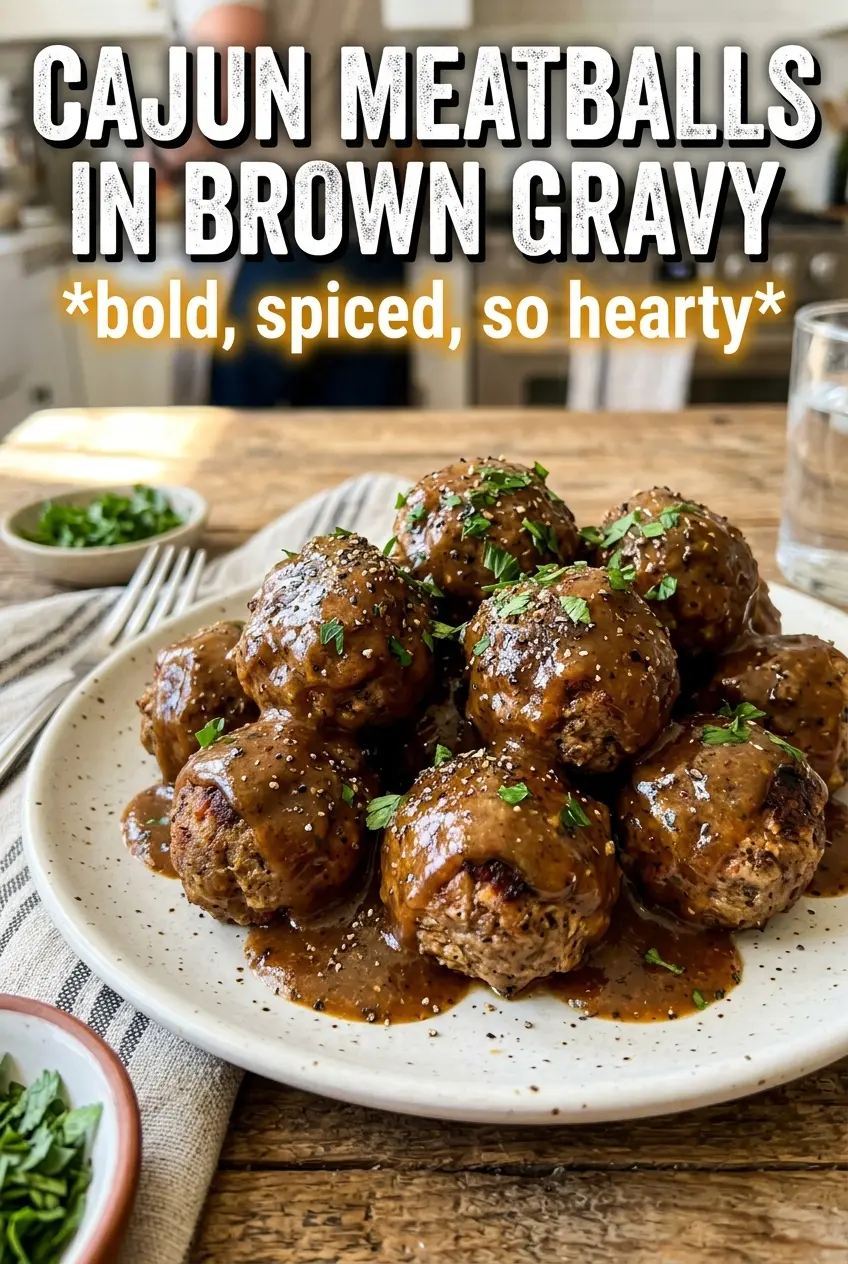
Cajun Meatballs in Brown Gravy
Ingredients
Equipment
Method
- In a bowl, mix ground beef, breadcrumbs, egg, Cajun seasoning, minced garlic, chopped parsley, and salt and pepper until evenly combined (the mixture should look speckled with seasoning).
- Roll the mixture into 1.5-inch balls and set them aside while you heat the skillet (aim for even sizing so they cook through at the same rate).
- Sear the meatballs in a cast iron skillet over medium-high heat on all sides until browned, about 6–8 minutes total, then remove and set aside (look for a dark crust).
- Melt butter in the same pan over medium heat and cook onion, bell pepper, and celery for 5 minutes until softened (the vegetables should look glossy and slightly translucent).
- Add garlic and cook for 30 seconds, stirring constantly (it should smell fragrant without browning).
- Sprinkle flour over the vegetables and cook for 1–2 minutes until dark golden (watch closely for a deeper brown color).
- Whisk in beef broth, Cajun seasoning, and Worcestershire, then simmer for 3–4 minutes until the gravy thickens (it should coat the back of a spoon and look dark and smoky).
- Return the browned meatballs to the gravy, cover, and simmer over medium heat for 10 minutes until cooked through (the sauce should stay gently bubbling and cling to the meatballs).
- Serve the Cajun meatballs and gravy hot over white rice (the gravy should appear glossy and spice-flecked on the surface).