Caramel apple cake earns its place because it stays tender for days and tastes like it was built for people who want a cake that’s moist, spiced, and unapologetically generous with frosting. The apples melt into the crumb just enough to keep every bite soft, while the brown sugar and cinnamon give the cake a deeper, warmer sweetness than a plain vanilla layer cake ever could. Add the caramel cream cheese frosting and it turns into the kind of dessert people cut clean slices of, then go back for a second sliver when no one’s looking.
The trick here is using sour cream for moisture and structure at the same time. It keeps the crumb rich without making the cake heavy, and it plays especially well with the diced apples because the fruit adds little pockets of juiciness instead of turning the batter wet. The frosting also matters: cream cheese gives it enough tang to keep the caramel from tasting flat, and beating it until smooth before layering keeps the finished cake from sliding around.
If you’ve baked apple cakes before and had them come out dense or gummy, the notes below will help. There’s a specific reason this batter works, plus a few smart swaps if you need them.
The cake stayed incredibly moist, and the caramel cream cheese frosting set up just enough that the layers didn’t squish out when I sliced it. My kitchen smelled amazing for hours.
Love a cake with soft apple-speckled layers and caramel cream cheese frosting? Save this caramel apple cake for your next dessert table.
The Small Choices That Keep This Cake Soft Instead of Heavy
Apple cakes go wrong when the batter gets overworked or the fruit is too large. This version avoids both problems by using finely diced apples and alternating the dry ingredients with sour cream. That keeps the batter from tightening up before it hits the oven, and it helps the crumb bake up tender instead of bready.
The other place people run into trouble is structure. The butter and brown sugar need to be beaten until genuinely fluffy so the cake has enough lift to hold the apples and frosting. If the mixture still looks dense and grainy before the eggs go in, keep mixing. That step matters more than rushing to the flour.
- Brown sugar — This brings moisture and a deeper caramel note that white sugar can’t match. Packed brown sugar also helps the cake stay soft after chilling.
- Sour cream — It adds richness and acidity, which keeps the crumb delicate. Plain Greek yogurt works in a pinch, but the cake will be a touch tangier and slightly less plush.
- Finely diced apples — Smaller pieces distribute evenly and soften into the batter instead of sinking. Peel them for a smoother texture; leave the peel on only if you want a more rustic bite.
- Cream cheese — This is what keeps the frosting from becoming one-note sweet. Full-fat cream cheese gives the best texture; low-fat versions tend to loosen and turn soft faster.
- Caramel sauce — Use a thick sauce here, not a thin ice cream topping. A loose caramel can make the frosting run, especially once the cake warms up.
Building the Batter So the Apples Stay Suspended
Getting the Butter and Sugar Light
Beat the softened butter and brown sugar until the mixture looks pale and fluffy, not just combined. You’re trapping air here, and that air is part of what keeps the cake from turning tight. If the butter is too cold, the mixture stays paste-like; if it’s melted, the cake loses structure before it even bakes.
Adding the Eggs and Vanilla
Add the eggs one at a time so the batter stays smooth and doesn’t curdle. It may look a little broken between additions, but it should come back together as you mix. Stir in the vanilla right after the last egg so it disperses evenly instead of sitting in one spot and disappearing into the batter.
Alternating the Dry Ingredients and Sour Cream
Add the flour mixture in portions, alternating with the sour cream. Start and end with dry ingredients so the batter keeps its body. Stop mixing as soon as the flour disappears; if you keep going, the gluten tightens and the cake bakes up tougher than it should.
Folding in the Apples and Baking
Fold in the diced apples by hand so they stay evenly distributed. Divide the batter right away between the pans and bake until a toothpick comes out clean from the center, with just a few moist crumbs. If the tops brown before the middle is set, tent loosely with foil for the last stretch of baking instead of lowering the heat too much.
Making the Frosting and Finishing the Cake
Beat the cream cheese and butter until completely smooth before adding the caramel sauce and powdered sugar. Any small lumps will show up in the finished frosting. Chill the layers only if they feel fragile, then frost between the cakes and over the top, letting the caramel drip naturally down the sides.
How to Adapt This Cake for Different Kitchens and Different Crowds
Make it gluten-free without losing the tender crumb
Use a cup-for-cup gluten-free flour blend that includes xanthan gum. The cake will still bake up soft, but the crumb may be a little more delicate when sliced, so let it cool completely before frosting.
Swap in Greek yogurt for a brighter, lighter result
Plain full-fat Greek yogurt can replace the sour cream in the same amount. It adds the same moisture, though the cake will taste a little tangier and the crumb may bake up a bit tighter than with sour cream.
Turn it into a single-layer snack cake
Bake the batter in a 9×13-inch pan and start checking a little earlier, since the thinner layer cooks faster. Skip the stacked frosting look and spread the caramel cream cheese frosting over the top in thick swirls for a more casual dessert.
Storage and Reheating
- Refrigerator: Store covered for 4 to 5 days. The frosting firms up in the fridge, but the cake stays moist.
- Freezer: Freeze unfrosted layers tightly wrapped for up to 2 months, or freeze individual frosted slices if you’re okay with a softer frosting after thawing.
- Reheating: Bring slices to room temperature before serving. Warming them in the microwave makes the frosting loose and the caramel runny, so room-temp thawing gives the best texture.
Answers to the Questions Worth Asking
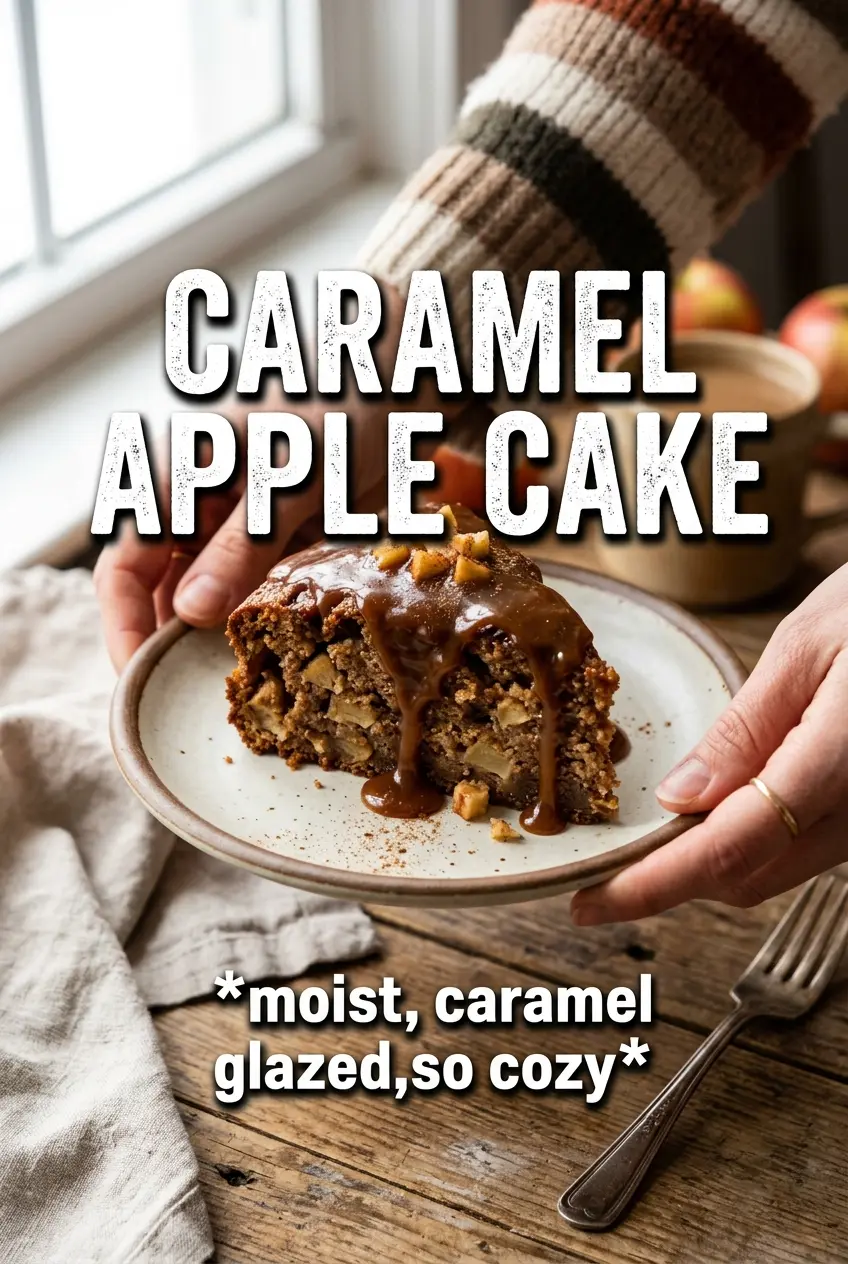
Caramel Apple Cake
Ingredients
Equipment
Method
- Preheat oven to 350F and grease two 9-inch round pans.
- Whisk all-purpose flour, baking powder, baking soda, cinnamon, nutmeg, and salt together.
- Beat butter and brown sugar until very fluffy, then beat in eggs and vanilla.
- Alternate adding the flour mixture and sour cream, then fold in finely diced apples.
- Divide batter between the two pans and bake 50-55 minutes, until a toothpick comes out clean.
- Cool the cakes completely.
- Beat the cream cheese frosting ingredients until smooth.
- Frost between the layers and over the top, then drizzle with extra caramel.