Caribbean jerk smoked pork lands with a dark, crackly bark, a deep smoke ring, and meat that pulls apart in juicy strands after a long, steady cook. The marinade punches through the richness of the pork shoulder with Scotch bonnet heat, thyme, allspice, lime, and garlic, then the smoker turns all of that into something layered instead of one-note. It’s the kind of pork that tastes bold at the edge and mellow in the center.
The trick is giving the marinade time to work overnight and keeping the smoker in that 225-250°F range so the shoulder has time to render without drying out. Pork shoulder needs patience; if you rush it, you get chewy pockets instead of tender meat. The sugar in the jerk paste helps build bark, while the oil and lime juice carry the spices across the surface and into the scored cuts.
Below, I’ll walk through the parts that matter most: how to get the jerk paste smooth enough to coat evenly, how to smoke it without burning the exterior, and what to change if you want a milder heat level or need to cook it a day ahead.
The bark set up beautifully and the pork stayed juicy all the way through. I was worried the Scotch bonnet would be too much, but after the overnight marinade and long smoke it had the perfect heat with that great earthy jerk flavor.
Love that smoky jerk crust and juicy pulled pork? Save this Caribbean Jerk Smoked Pork for your next smoker day.
The Reason the Bark Stays Bold Instead of Burning
Jerk pork can go wrong in one of two ways: the exterior scorches before the shoulder has time to tenderize, or the spice paste never quite turns into that dark, seasoned bark people expect. The fix is a steady smoker and a paste with enough fat and sugar to cling. Vegetable oil keeps the rub spreadable, brown sugar helps the surface caramelize, and the scored cuts give the marinade somewhere to lodge instead of sliding off.
The other detail that matters is heat management. Scotch bonnet peppers bring real fire, but their flavor reads best when the pork has time to absorb it slowly. If the smoker runs hot, the outside can turn bitter before the inside reaches that pull-apart stage. Keep the temperature steady, and don’t start judging doneness by the clock alone; pork shoulder is ready when the probe slides in easily and the interior reaches that soft, shreddable zone around 195-203°F.
What Each Ingredient Is Actually Doing in This Marinade
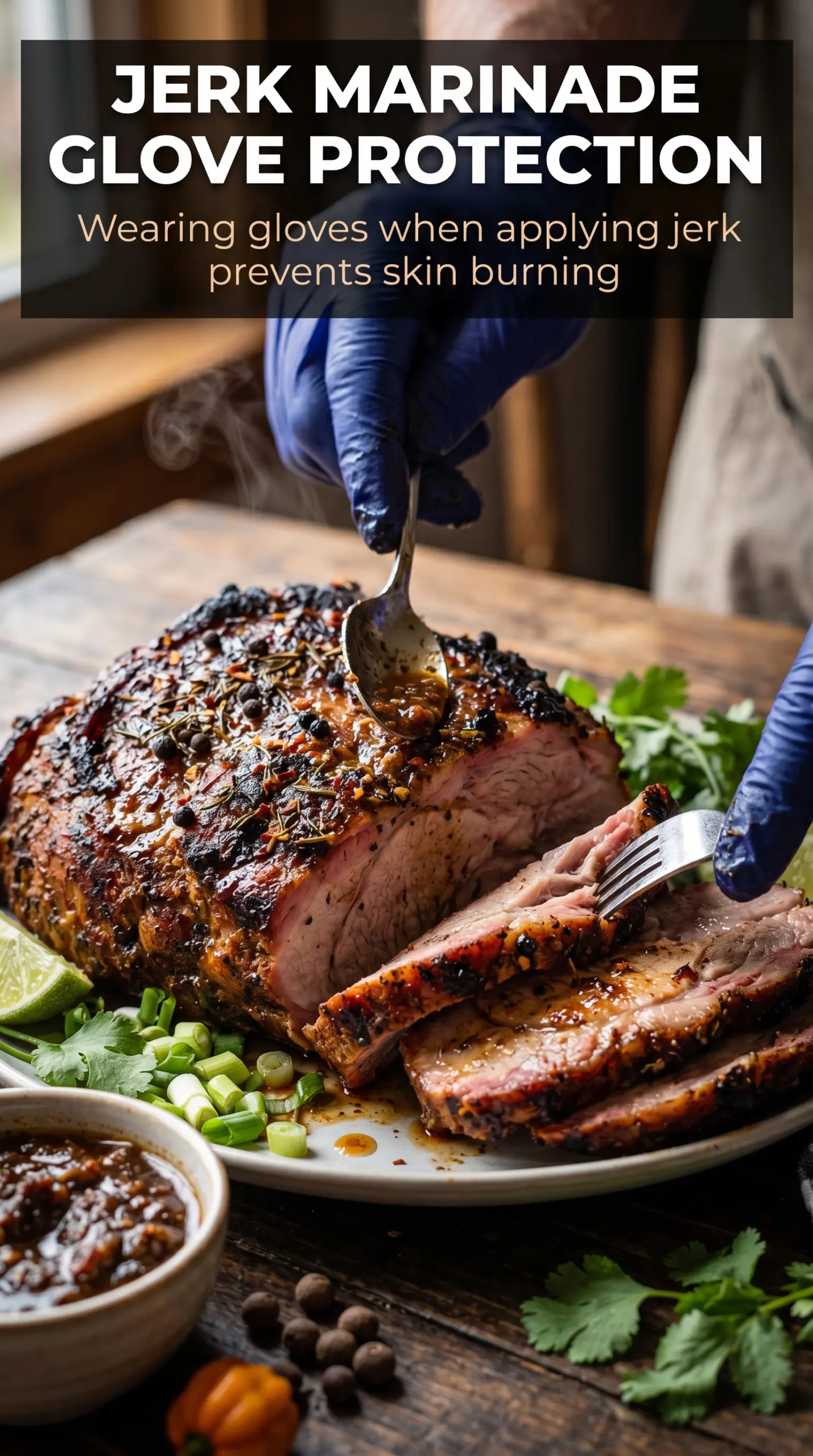
- Pork shoulder — This cut is built for low-and-slow cooking because it has enough fat and connective tissue to turn tender over a long smoke. A leaner cut won’t give you the same pull-apart texture or rich bark.
- Scotch bonnet peppers — They’re the heat source and one of the signature flavors here. If you need less fire, seed them carefully and use fewer peppers, but don’t swap in a bland hot sauce if you want the same fresh, fruity heat.
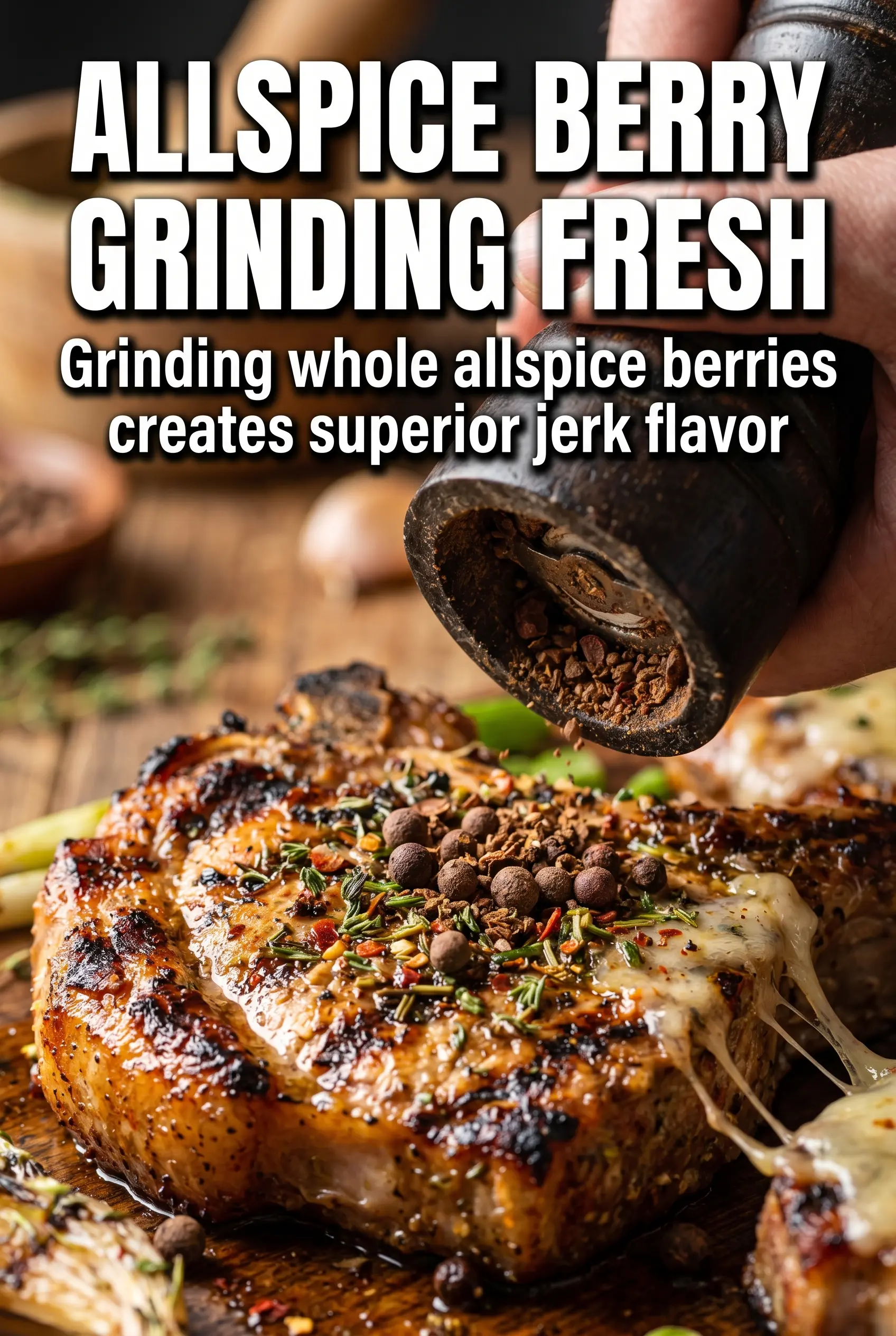
- Fresh thyme, allspice, cinnamon, and nutmeg — These are the backbone of jerk seasoning. Ground spices are fine here, but fresh thyme matters because it brings a greener, woodier note that dried thyme can’t match on its own.
- Brown sugar — It helps the paste cling and encourages that dark, sticky bark. You can reduce it a little for a less sweet finish, but don’t leave it out or the surface will cook up drier and less glazed.
- Soy sauce and lime juice — Soy adds salt and depth, while lime brightens the marinade and keeps the flavor from tasting flat. Tamari works if you need the dish gluten-free, and it behaves almost the same in the marinade.
- Vegetable oil — This is what helps the marinade coat evenly and spread into the scored cuts. Any neutral oil works, but don’t use a strongly flavored oil that competes with the spices.
The Smoke Time That Turns Pork Shoulder Tender
Building the Jerk Paste
Blend the green onions, Scotch bonnets, garlic, thyme, brown sugar, allspice, black pepper, cinnamon, nutmeg, soy sauce, lime juice, and oil until the mixture looks smooth and thick. You want a paste that clings to a spoon, not a thin green sauce that runs off the meat. If the blender stalls, add the liquids first and pulse before scraping down the sides, because a smoother paste coats more evenly and gives you a better bark.
Coating and Marinating the Shoulder
Score the pork shoulder in shallow cuts, then rub the jerk paste into every surface and down into the slits. The scoring isn’t just for looks; it gives the seasoning a path into the meat and helps the edges of the shoulder cook more evenly. Cover it and refrigerate overnight. If you only marinate for a few hours, the flavor will still be good, but the seasoning won’t have the same depth in the center.
Smoking Until It Pulls Cleanly
Set the smoker to 225-250°F with fruit wood and lay the pork on once the smoker is holding steady. Resist the urge to crank the heat when things feel slow; high heat toughens the exterior before the collagen inside has time to break down. Start checking for tenderness as it approaches the 6-hour mark, but trust the texture over the clock. The pork is ready when it reaches 195-203°F and a probe or skewer slides in without resistance.
Resting Before You Pull It
Let the pork rest for 30 minutes before shredding. That pause keeps the juices in the meat instead of spilling onto the cutting board the second you pull it apart. If the shoulder seems a little stiff after resting, leave it covered a bit longer rather than forcing it; the best pulled pork comes apart in big tender strands, not dry crumbs.
How to Tweak This for Heat, Diet, or a Smaller Crowd
Milder jerk pork without losing the flavor
Use one Scotch bonnet instead of four and keep the seeds out. You’ll still get that fruity, unmistakable jerk heat, just with less burn on the back end. Don’t replace the peppers with a milder chili that tastes grassy; the point is to soften the fire, not lose the jerk character.
Gluten-free version
Swap the soy sauce for tamari or coconut aminos. Tamari gives you the closest saltiness and depth, while coconut aminos read a little sweeter and lighter. The rest of the recipe stays the same, and the smoke still does the heavy lifting.
Cooking a smaller shoulder
A smaller pork shoulder will finish earlier, sometimes a couple of hours sooner, but the method doesn’t change. Start checking tenderness sooner and use the same temperature target, because the feel of the meat matters more than the size of the roast. If the bark darkens before the center softens, keep the smoker closed and let the low heat keep working.
Storage and Reheating
- Refrigerator: Store pulled pork in an airtight container for up to 4 days. It stays juicy if you keep a little of the cooking juices with it.
- Freezer: It freezes well for up to 3 months. Pack it in portions with a spoonful of juices so it doesn’t dry out when thawed.
- Reheating: Reheat covered in a low oven or on the stovetop over gentle heat with a splash of liquid. The mistake people make is blasting it on high heat, which dries out the pulled strands and hardens the bark.
Answers to the Questions Worth Asking
Caribbean Jerk Smoked Pork
Ingredients
Equipment
Method
- Blend the green onions, scotch bonnet peppers, garlic, fresh thyme, brown sugar, allspice, black pepper, cinnamon, nutmeg, soy sauce, lime juice, and vegetable oil until smooth.
- Score the pork shoulder deeply across the surface, then rub the jerk marinade all over, pressing it into the cuts.
- Cover and refrigerate the pork overnight to marinate.
- Prepare the smoker for 225-250°F using fruit wood for smoke.
- Place the pork on the smoker and smoke for 6-8 hours until the internal temperature reaches 195-203°F, watching for a dark, set bark as it cooks.
- When done, remove the pork and let it rest for 30 minutes before pulling.
- Pull the pork and serve, keeping the charred bark and visible spice crust.