Carne guisada earns its place in the dinner rotation because it doesn’t just get tender — it turns into a spoon-coating, chile-spiced gravy that tastes like it simmered all day. The beef breaks down into soft chunks, the onions melt into the sauce, and the whole pot lands somewhere between stew and taco filling in the best possible way. Pile it into warm flour tortillas and it stops being a weeknight dinner and starts feeling like the meal everyone reaches for first.
The trick here is building flavor in layers instead of throwing everything into the pot at once. Browning the beef in batches matters because those crusty bits on the bottom are what give the gravy its depth, and the flour cooked with the vegetables helps the sauce thicken without tasting raw. The tomatoes add body and a little brightness, while cumin and oregano keep the gravy grounded in that Tex-Mex lane.
Below, I’m walking through the parts that matter most: how to get a dark sear without steaming the beef, how to avoid a thin or floury gravy, and the small serving details that make carne guisada feel right at home wrapped in a tortilla.
The gravy thickened up beautifully and the beef was fall-apart tender after about 2 hours. I served it in flour tortillas with lime, and even the leftovers tasted better the next day.
Like this carne guisada? Save it to Pinterest for the nights when you want tender beef, rich gravy, and warm flour tortillas without a lot of fuss.
The Sear Is What Gives Carne Guisada Its Deep Gravy
If the beef goes into the pot pale and crowded, the gravy never gets the kind of depth carne guisada is known for. You want a hard, hot sear in batches so the cubes pick up real browning on the outside before they braise. That crust doesn’t stay on the meat, but it leaves behind browned bits that melt into the broth and tomatoes later.
The other place people lose flavor is rushing the simmer. Once the liquid goes in, the pot should settle into a low, lazy bubble, not a rolling boil. A hard boil tightens the beef and can make the sauce greasy instead of glossy. Low heat gives the chuck time to relax and the flour time to disappear into the gravy.
- Beef chuck — This is the cut that turns tender after a long simmer. Leaner beef won’t give you the same silky texture.
- Flour — It thickens the gravy in a way that feels old-school and right for carne guisada. If you skip it, the sauce stays thin and doesn’t cling to the tortillas.
- Diced tomatoes — They add moisture, acidity, and body. Crushed tomatoes can work, but the sauce will be smoother and a little less rustic.
- Broth — Use a broth you like the taste of, because it becomes the base of the gravy. If yours is salty, hold back on the final seasoning until the end.
What the Seasoning Is Doing in the Pot
The cumin and chili powder are there for warmth, not heat. They should support the beef and gravy, not cover them up. The oregano brings that familiar Tex-Mex finish, and the garlic powder helps season the meat all the way through before the braise starts.
Fresh garlic still matters because it gives the sauce a sweeter, more savory edge once it softens with the onions and peppers. If you want a stronger chile note, add a pinch more chili powder at the end instead of piling it on early. That keeps the flavor clean instead of dusty.
- Beef chuck — Look for well-marbled pieces. The fat melts into the gravy during the long simmer and keeps the meat juicy.
- Onion and green bell pepper — This base softens into the sauce and gives carne guisada its familiar savory backbone. Dice them evenly so they disappear into the gravy instead of staying chunky.
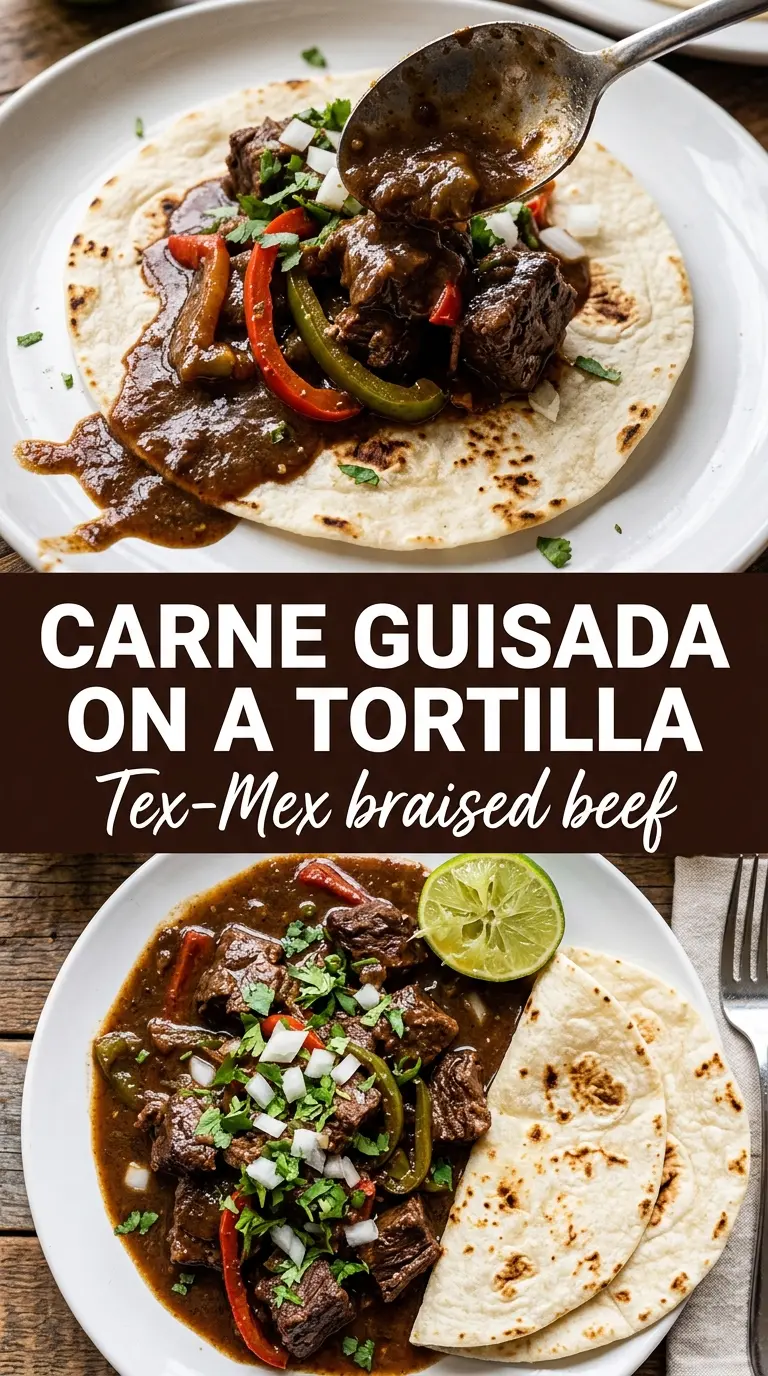
- Flour tortillas — Warm tortillas matter here. They catch the gravy and keep the whole dish casual, soft, and easy to eat.
- Lime and cilantro — These are finishing ingredients, not garnish for show. The lime cuts the richness, and the cilantro lifts the whole bowl.
How to Build the Pot So the Gravy Thickens Naturally
Browning the Beef in Batches
Heat the oil until it shimmers, then add the beef in a single layer with space around each piece. You want a deep brown crust, not a gray exterior, so resist the urge to stir constantly. If the pan looks crowded, the beef will steam and you’ll lose the fond that gives the gravy its backbone. Pull each batch out once it has color on at least two sides.
Softening the Vegetables and Cooking Out the Flour
Once the beef is out, add the onion and bell pepper to the same pot and let them pick up the browned bits as they soften. After they lose their raw crunch, stir in the garlic for just a minute so it stays fragrant. Sprinkle the flour over the vegetables and cook it for a full minute; that short step keeps the final sauce from tasting pasty.
Letting the Braise Do Its Work
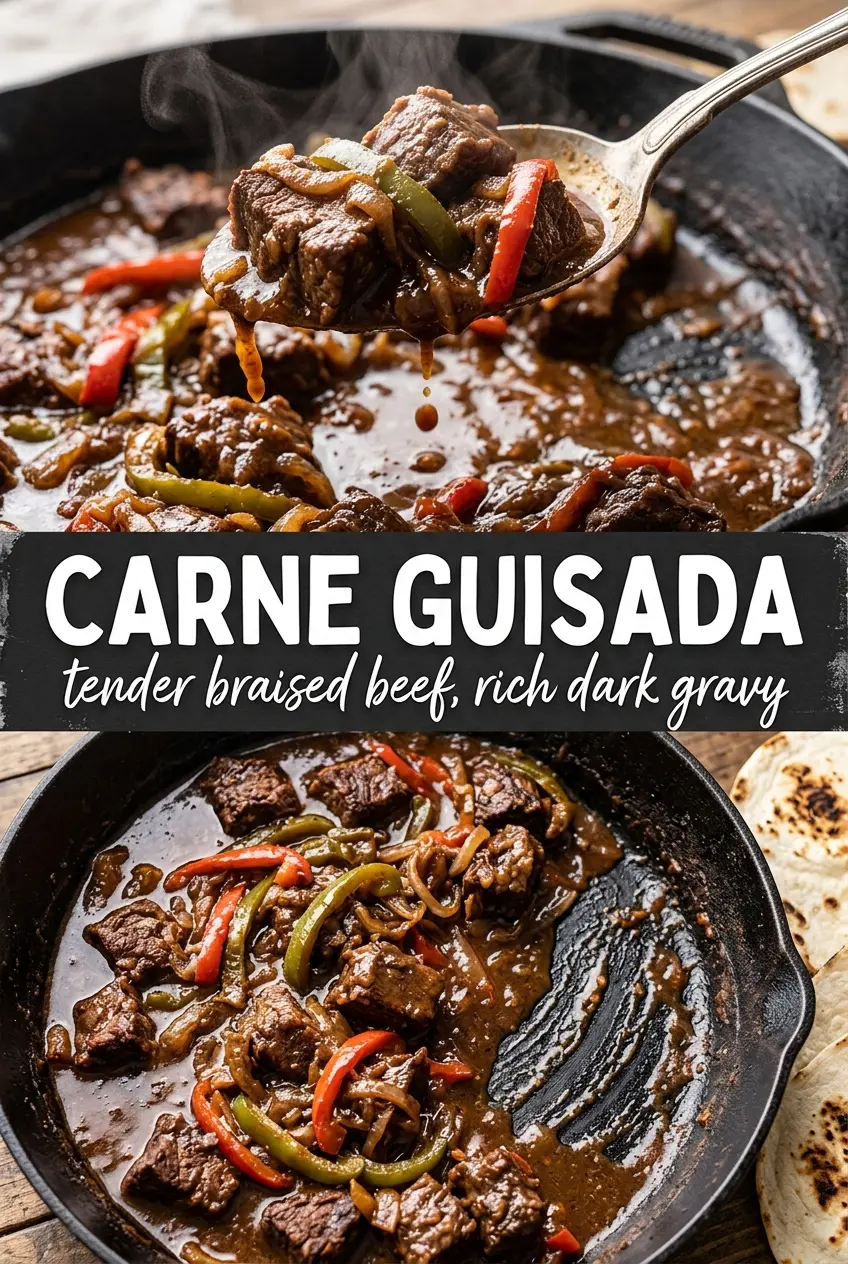
After the broth and tomatoes go in, scrape the bottom of the pot until every browned bit is released into the liquid. Return the beef, add the oregano, cover the pot, and let it simmer gently until the meat falls apart at the edges and the gravy has turned dark and glossy. If the sauce looks thin near the end, uncover the pot for the last 15 to 20 minutes so it reduces without overcooking the beef.
Make It Spicier Without Losing the Gravy
Add a pinch of cayenne or a diced jalapeño with the onions if you want more heat. Keep it modest unless you want the chile to take over the beef. The gravy should still taste rich and savory first, with the heat coming in on the finish.
Gluten-Free Carne Guisada
Swap the flour for a gluten-free all-purpose blend that thickens on the stovetop, or reduce the liquid a little longer and skip the flour entirely. The texture will be a touch less old-school, but the beef and seasoning still carry the dish.
Tomato-Forward Version
Use a full extra half can of diced tomatoes if you want a brighter, saucier stew for spooning over rice. It softens the beef flavor a little and makes the gravy looser, which is great if you’re not serving tortillas.
Make-Ahead for Even Better Flavor
Carne guisada tastes even deeper the next day after the gravy has had time to settle. Cook it a day ahead, chill it, then reheat slowly so the beef stays tender and the sauce doesn’t split.
Storage and Reheating
- Refrigerator: Store in an airtight container for up to 4 days. The gravy thickens as it chills, which is normal.
- Freezer: It freezes well for up to 3 months. Cool it completely first and freeze in portions for easier reheating.
- Reheating: Warm it gently on the stove over low heat with a splash of broth if needed. A fast boil can make the beef stringy and the gravy oily.
Questions I Get Asked About This Recipe
Carne Guisada (Tex-Mex Beef Stew)
Ingredients
Equipment
Method
- Season the beef cubes generously with salt, pepper, cumin, chili powder, and garlic powder; let the coating sit for 1 minute while you heat the pot. Aim for an even, dark spice layer on all sides (no bare spots).
- Heat vegetable oil in a heavy pot over high heat, then brown the beef in batches without crowding for 2–4 minutes per batch, turning as needed. Cook until deep brown crust forms and juices look mostly reduced, then remove and set aside.
- In the same pot, sauté the onion and green bell pepper for 5 minutes over medium-high heat. Stir until the vegetables soften and turn glossy.
- Add the garlic and cook for 1 minute over medium-high heat, stirring to prevent scorching. It should smell fragrant but not dark.
- Sprinkle the flour over the vegetables and stir for 1 minute. The mixture should look slightly thickened and smell toasty.
- Add the beef broth and diced tomatoes, scraping up the browned bits from the bottom of the pot. Stir until smooth and bubbling.
- Return the browned beef to the pot, add oregano, cover, and simmer on low for 1.5–2 hours until the beef is extremely tender and the gravy thickens. Keep the lid on and stir once or twice so the bottom doesn’t stick.
- Warm the flour tortillas just before serving, then ladle the carne guisada into tortillas. The beef should look pull-apart tender and the gravy should cling to the chunks.
- Top with cilantro and serve with fresh lime. Finish with bright lime over the top for a fresh, citrusy edge.