Golden sourdough, sharp cheddar, crispy bacon, and sliced turkey make this melt hit the table with the kind of crunch and stretch that turns an ordinary lunch into something people remember. The bread gets deeply toasted in the skillet while the cheese melts down into the turkey and bacon, so every bite has contrast: crisp outside, savory middle, and a cool bite of tomato and greens at the end.
What makes this one work is the layering. Dijon goes on one side for sharpness and a little bite, mayonnaise goes on the other for a softer, richer finish, and the butter on the outside gives the bread that even, bronzed crust. Thin deli turkey warms through quickly without drying out, and thick-cut bacon brings enough salt and texture to stand up to the cheddar. The greens and tomato go in after the sandwich is cooked so they stay fresh instead of turning limp in the pan.
Below, I’ve included the little details that keep the bread from scorching before the cheese melts, plus a few smart swaps if you want to change the cheese, bread, or make it fit what’s already in your kitchen.
The Dijon and mayo combo was spot on, and the cheddar melted through the turkey before the sourdough overbrowned. I used a pan and a lid for the last minute and the sandwiches came out crisp, not greasy.
Save this cheddar and bacon turkey melt for the days when you want a crisp, melty sandwich with zero fuss and a diner-style finish.
The Trick to Melting the Cheese Before the Sourdough Burns
The biggest mistake with a sandwich like this is pushing the heat too high because you want that golden crust fast. Sourdough can take heat better than soft sandwich bread, but buttered bread still goes from bronzed to scorched in a hurry if the pan is hot enough to shout at. Medium heat gives the cheddar time to melt through the turkey and bacon while the outside slowly turns crisp.
Another small detail matters: the cheese should sit directly against the warm turkey and bacon, not separated by tomato or greens. That little bit of structure keeps the melt intact and helps the filling heat evenly. If your cheddar is thick-cut, cover the pan for the last minute so the trapped steam finishes the melt without overcooking the bread.
What Each Layer Is Doing in This Melt
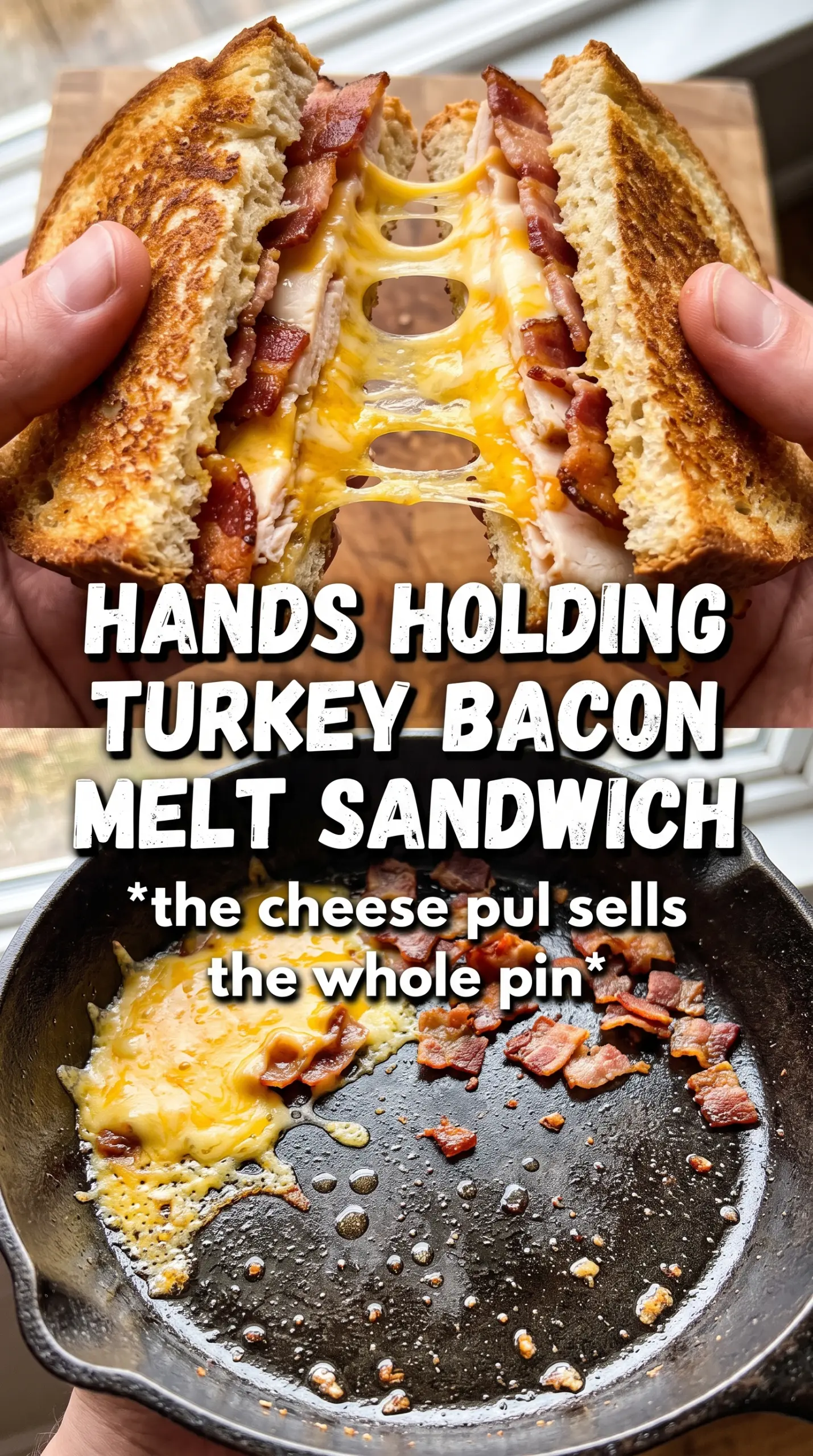
- Sourdough bread — Its sturdy crumb and tangy flavor hold up to the bacon, turkey, and cheese without turning soggy. Regular sandwich bread softens too quickly here; sourdough gives you the crunch this sandwich needs.
- Sharp cheddar — Sharp cheddar brings enough flavor to cut through the butter and mayo. Mild cheddar melts too, but the sandwich tastes flatter; if you swap cheeses, pick one that still has some bite.
- Dijon mustard — Dijon wakes up the turkey and keeps the melt from tasting heavy. Yellow mustard works in a pinch, but it’s softer and less complex.
- Mayonnaise — Mayo adds richness and helps the other half of the sandwich brown evenly. It doesn’t taste greasy once it’s cooked; it just gives the bread a deeper, more even toast.
- Thick-cut bacon — Thin bacon disappears under the cheese. Thick-cut pieces stay crisp and give the sandwich the salty crunch that makes each bite feel complete.
- Arugula or mixed greens — Add these after cooking so they stay fresh and peppery. They’re there for contrast, not heat.
- Tomato — Use ripe slices with some give, not watery under-ripe rounds. If the tomato is bland, salt it lightly before adding it to the sandwich.
Building the Melt So the Bread Stays Crisp and the Center Stays Hot
Starting with the buttered shell
Spread the softened butter on one side of each bread slice first, then flip and add Dijon to half the slices and mayonnaise to the other half. That order keeps the condiments from tearing the bread and gives you an even outer crust once the sandwich hits the pan. If the butter is too cold, it drags and clumps; let it soften until it spreads cleanly without smashing the bread.
Layering the filling with intent
Build the sandwich on the Dijon side with turkey, bacon, and cheddar in that order. The turkey catches the cheese and keeps it from sliding, while the bacon sits where it can stay crisp inside the melted center. Don’t pile the filling too high or the bread won’t meet the skillet evenly and one side will toast before the cheese softens.
Cooking until the cheese gives up its shape
Set the sandwiches butter-side down in a skillet or on a griddle over medium heat and cook for 3 to 4 minutes per side. You’re looking for deep golden bread and cheese that looks soft at the edges, not still stiff in the middle. If the bread is browning too fast, lower the heat; if the cheese hasn’t melted by the time the second side is ready, cover the pan for a minute to trap heat.
Finishing with the fresh layer
Open the cooked sandwiches and add the arugula and tomato right before serving. This keeps the greens bright and the tomato from steaming inside the bread. Press the sandwich closed gently, not hard, or you’ll squeeze out the melted cheese and lose the layered texture you just built.
How to Adjust This Sandwich Without Losing the Crunch
Make it gluten-free with sturdy sandwich bread
Use a gluten-free sliced bread that can stand up to pan-frying, not a very soft or airy loaf. Gluten-free bread often browns faster and can dry out, so keep the heat at medium-low and watch it closely.
Swap the cheddar for provolone or pepper jack
Provolone melts a little smoother and gives a milder, deli-style finish. Pepper jack adds heat and a softer melt, but it loses some of the sharp edge that cheddar brings.
Use ham instead of turkey
Ham makes this more like a hot deli melt and gives the sandwich a saltier finish. Cut back slightly on the bacon or cheese if your ham is especially smoky or salty.
Storage and Reheating
- Refrigerator: Store the cooked sandwiches wrapped tightly for up to 2 days. The bread loses some crunch, and the greens are best added fresh after reheating.
- Freezer: Freeze only the cooked turkey, bacon, and cheese portion without tomato or greens. Wrap well and freeze for up to 1 month; add fresh toppings after reheating.
- Reheating: Reheat in a skillet over medium-low heat or in a 350°F oven until warmed through. A microwave will soften the bread and make the bacon rubbery before the cheese fully loosens.
Questions I Get Asked About This Recipe
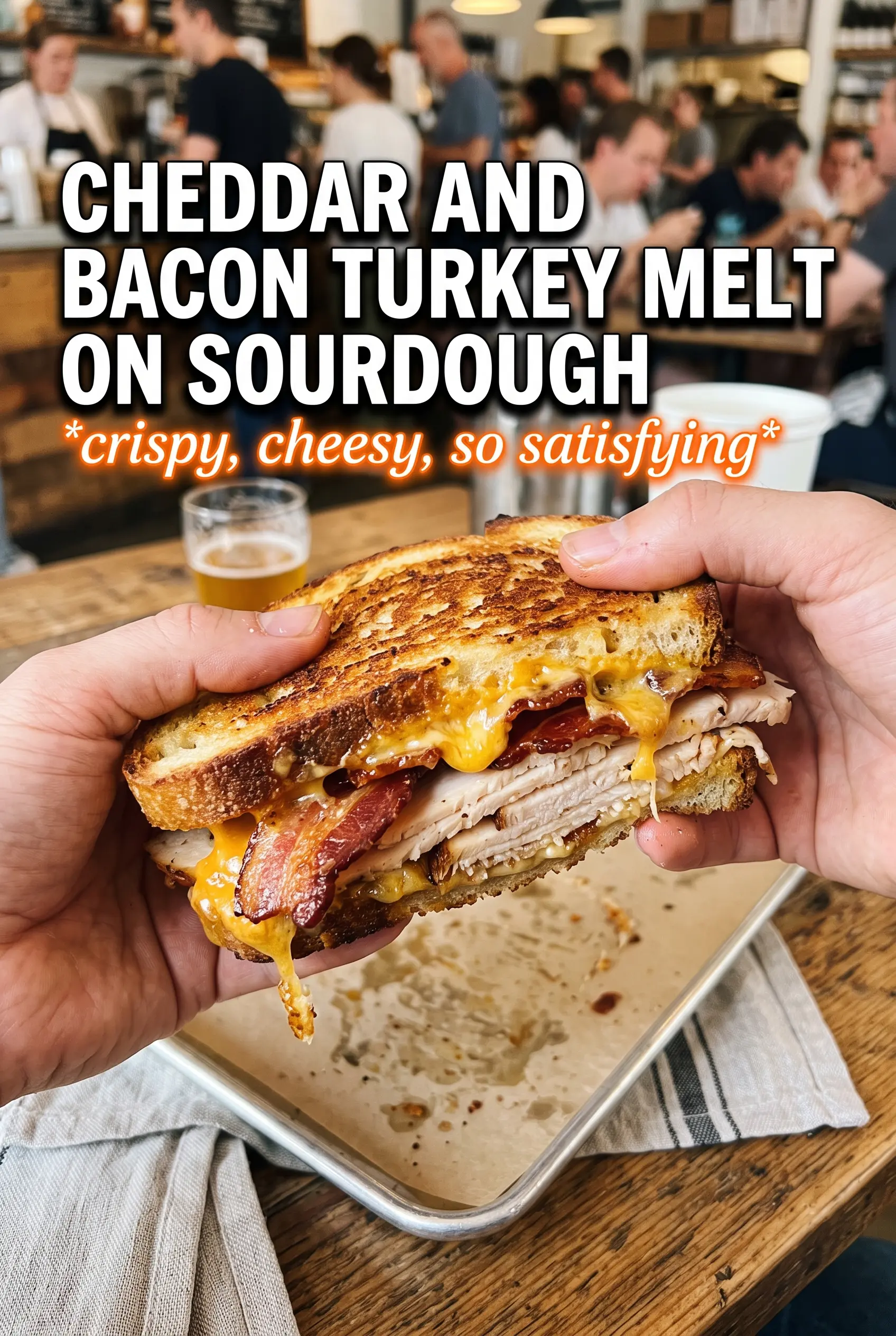
Cheddar and Bacon Turkey Melt on Sourdough
Ingredients
Equipment
Method
- Cook the thick-cut bacon until crispy, then drain and set aside.
- Spread softened unsalted butter on one side of each sourdough bread slice.
- Flip the bread over and spread Dijon mustard on half the slices and mayonnaise on the other half.
- Layer sliced deli turkey breast, crispy thick-cut bacon, and sharp cheddar cheese on the Dijon mustard side.
- Heat a skillet or griddle over medium heat, then place sandwiches butter-side down.
- Top with the mayonnaise-spread slices butter-side up.
- Cook 3-4 minutes per side until the bread turns golden and the cheddar is fully melted.
- Open each sandwich and add arugula or mixed greens and ripe tomato slices.
- Press the sandwiches closed and serve hot.