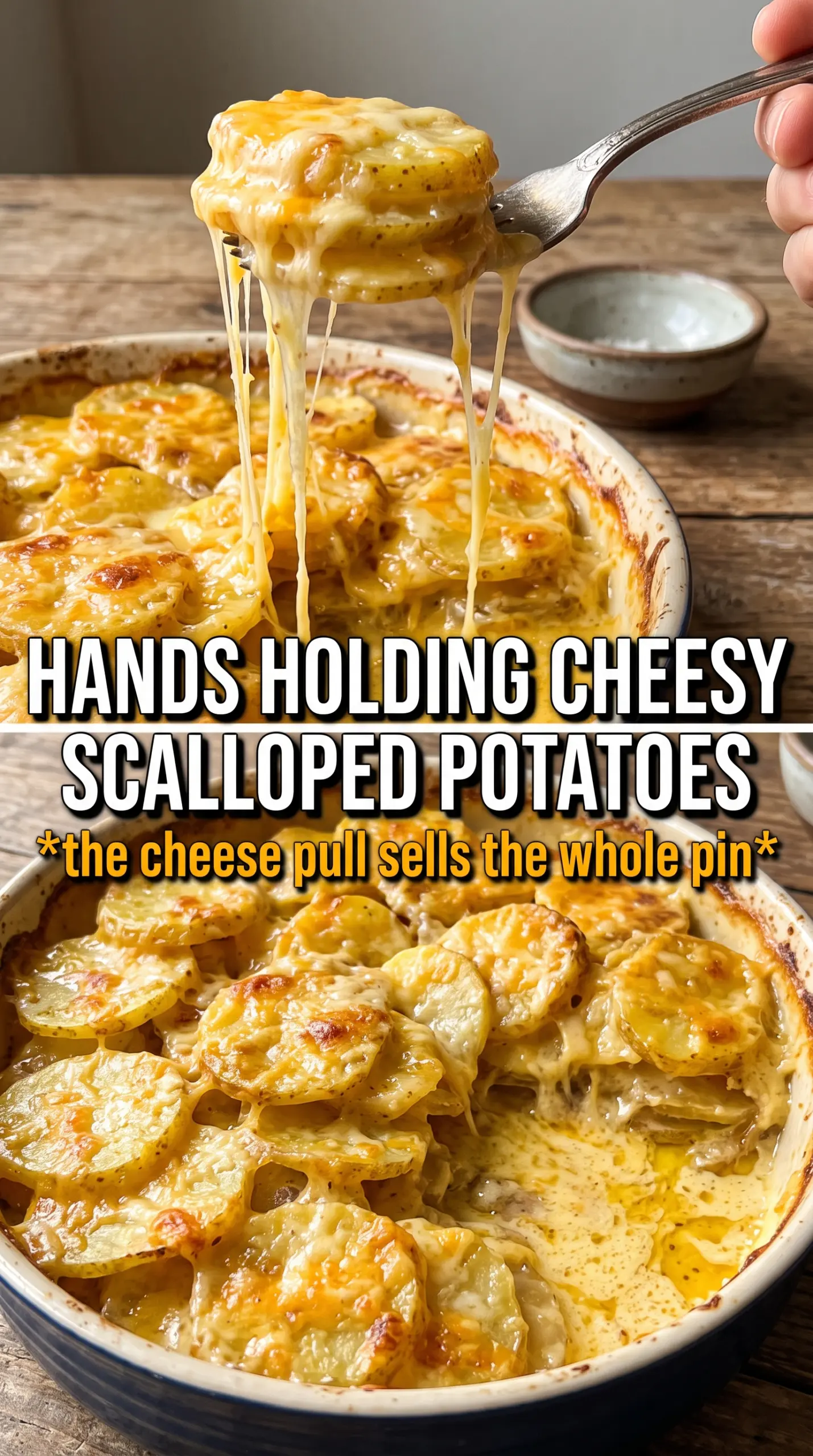
Cheesy scalloped potatoes earn their place on the table because the best version isn’t just creamy on top and soft underneath — it holds its layers, slices cleanly after a short rest, and still tastes rich all the way through. The thin potatoes soak up the seasoned cream as they bake, then the Gruyere and cheddar finish the dish with a browned, bubbling lid that cracks just enough when you spoon into it.
The trick here is balance. Yukon gold potatoes have enough structure to stay intact, but they’re still tender and buttery once baked. A mix of heavy cream and milk keeps the sauce plush without turning heavy or greasy, and the Dijon, thyme, and nutmeg give the dish enough backbone that it tastes seasoned instead of merely rich.
Below, I’ve included the one texture cue that matters most before you pull the pan from the oven, plus a few smart swaps if you need to adapt the dish for a different cheese or a smaller pantry.
The potatoes turned out perfectly tender and the cream thickened into the layers instead of pooling at the bottom. That Gruyere and cheddar top was browned and bubbling just like the photo.
Save these cheesy scalloped potatoes for the kind of dinner where you want a golden Gruyere crust and tender layers in every scoop.
The Slice Thickness That Keeps the Sauce Creamy Instead of Watery
Scalloped potatoes fall apart when the slices are uneven. Thick pieces stay firm while thin ones go mushy, and that mismatch is what leaves you with a pan that looks done on top but still fights you in the middle. The goal is very thin, even slices so every potato absorbs the cream at the same pace and softens at the same rate.
Yukon golds are the right potato here because they’re waxy enough to hold shape, but they still give you that velvety bite once baked. The other thing that matters is pressing the layers down before the foil goes on. If the potatoes sit above the liquid, they steam unevenly; when they’re mostly submerged, the sauce thickens as it bakes and settles between every layer.
What the Cream, Cheese, and Seasoning Are Doing Here
- Yukon gold potatoes — These hold their shape better than russets and give the finished dish a richer, almost buttery texture. If you use russets, the sauce will be a little looser and the layers more likely to collapse.
- Heavy cream and whole milk — This combination gives you enough fat for a silky sauce without making the dish feel overly dense. You can swap in half-and-half in a pinch, but the sauce will be lighter and less plush.
- Gruyere — This is the cheese that brings the nutty, savory depth. It melts smoothly and browns beautifully, which is why the top tastes more complex than cheddar alone.
- Sharp cheddar — Cheddar gives you that familiar, punchy cheese flavor and helps the top brown with a little extra edge. Mild cheddar works, but the finished dish won’t have as much contrast.
- Dijon mustard, thyme, and nutmeg — These don’t make the dish taste like mustard or spice; they keep the cream sauce from tasting flat. If you leave them out, the potatoes still work, but the sauce loses definition.
- Garlic — Fresh garlic infuses the cream directly, so every layer picks up flavor. Powder won’t give the same clean, round background note.
Building the Layers So the Middle Cooks Before the Top Browns
Mixing the Cream Base
Whisk the cream, milk, garlic, Dijon, thyme, nutmeg, salt, and pepper until the seasoning is evenly dispersed. You want the mixture to smell savory and fragrant before it hits the potatoes, because once it’s in the dish there isn’t much chance to correct the seasoning evenly. If the garlic is clumpy or the salt settles at the bottom, some bites will be bland and others will taste sharp.
Arranging the Potatoes
Layer the slices in overlapping rows in a buttered 9×13 dish, working steadily so the thickness stays consistent. Overlap matters because loose piles leave gaps that dry out during the long bake. Pour the cream mixture over the top and press the potatoes down with the back of a spoon so the liquid reaches into the layers instead of sitting around the edges.
Baking Under Foil First
Cover the dish tightly with foil and bake until the potatoes are almost tender. This covered phase is where the magic happens: the potatoes soften, the cream heats through, and the sauce starts to thicken without scorching. If the foil is loose, too much steam escapes and the top can brown before the middle is ready.
Finishing with the Cheese
Uncover the dish, scatter the Gruyere and cheddar over the top, and return it to the oven until the surface is bubbling and deeply golden. The cheese should melt into the top layer rather than sit in a dry blanket, so don’t add it too early. When a knife slides through the center with no hard resistance, the potatoes are done. Let the pan rest for 10 minutes so the sauce sets enough to serve cleanly.
How to Adapt This Pan for Different Tables
Dairy-Free Version
Use unsweetened oat milk or a full-fat dairy-free cream substitute and swap in a good melting plant-based cheese. The result will be a little less rich and the top won’t brown quite the same way, but the layers still bake up tender if you keep the foil tightly sealed for the first part of cooking.
Gluten-Free by Default
This recipe is naturally gluten-free as written, as long as your Dijon and shredded cheeses are labeled gluten-free if that matters for your kitchen. The texture doesn’t change at all, which is one reason this dish works so well for mixed-diet gatherings.
Different Cheese Mixes
If you don’t have Gruyere, use Swiss, fontina, or even provolone for the melting layer and keep the cheddar for sharpness. Skip very oily pre-shredded blends if you can; they melt less smoothly and can leave the sauce looking a little grainy on top.
Making It Ahead
You can assemble the dish a few hours ahead and refrigerate it before baking, but let it sit at room temperature while the oven preheats so the center isn’t ice-cold. If it goes in straight from the fridge, the outside can overbake before the middle is tender.
Storage and Reheating
- Refrigerator: Store covered for up to 4 days. The sauce will thicken as it chills, so the leftovers slice even more cleanly than the first serving.
- Freezer: It freezes, but the cream sauce can turn a little grainy after thawing. If you do freeze it, wrap individual portions tightly and thaw overnight in the fridge before reheating.
- Reheating: Reheat covered in a 325F oven until hot in the center, or use the microwave in short bursts for single servings. Don’t blast it on high heat or the sauce can split and the potatoes at the edges will dry out before the middle warms through.
Answers to the Questions Worth Asking

Cheesy Scalloped Potatoes
Ingredients
Equipment
Method
- Preheat oven to 375F. Butter a 9x13 baking dish.
- Whisk heavy cream, whole milk, garlic, Dijon mustard, fresh thyme, nutmeg, and salt and pepper to taste until smooth. Pour the mixture into the prepared baking dish.
- Layer Yukon gold potatoes in overlapping rows in the dish. Pour the cream mixture over the potatoes.
- Press potatoes down to submerge. Cover tightly with foil.
- Bake for 50 minutes at 375F. Uncover and scatter Gruyere and sharp cheddar over the top.
- Bake for 18-22 more minutes at 375F until the top is golden, bubbling, and the potatoes are completely tender. Rest for 10 minutes before serving.