Chicken casserole earns its place in the rotation when you want something creamy, comforting, and sturdy enough to feed eight without a lot of fuss. The best versions come out bubbling at the edges with a buttery Ritz topping that stays crisp long enough to matter, and a filling that holds together without turning dry or gluey.
This one leans on cooked rice, shredded chicken, and two soups for a base that bakes up rich but not heavy. Sour cream keeps the filling from tasting flat, while a little chicken broth loosens everything just enough so the rice can finish absorbing flavor in the oven. The cracker and cheddar topping does more than add crunch; it protects the top from drying out and gives you that salty, golden finish people always go back for.
Below, I’ve included the little details that make this casserole work the way it should, plus the swaps I’d use when I’m working with what’s already in the kitchen.
The cracker topping stayed crisp all the way through dinner, and the filling set up beautifully instead of turning soupy. I used leftover rotisserie chicken and it tasted like something I planned ahead for.
Save this chicken casserole for nights when you want a creamy rice bake with a crisp Ritz-cheddar crust and almost no cleanup.
The One Thing That Keeps This Casserole Creamy Instead of Heavy
The mistake that turns a chicken casserole dense is piling on too much dry filler before the oven gets a chance to work. Rice keeps this dish substantial, but it needs enough sauce around it to hydrate and soften in the bake. That’s why the sour cream and broth matter as much as the canned soups: they loosen the mixture into something that bakes creamy instead of pasty.
Another thing worth respecting here is the order of the topping. Cheese goes directly on the filling, then the buttery crackers on top. That layered approach lets the cheese melt into the casserole while the crackers stay crisp and bronzed instead of disappearing into the sauce.
What Each Ingredient Is Doing in the Pan
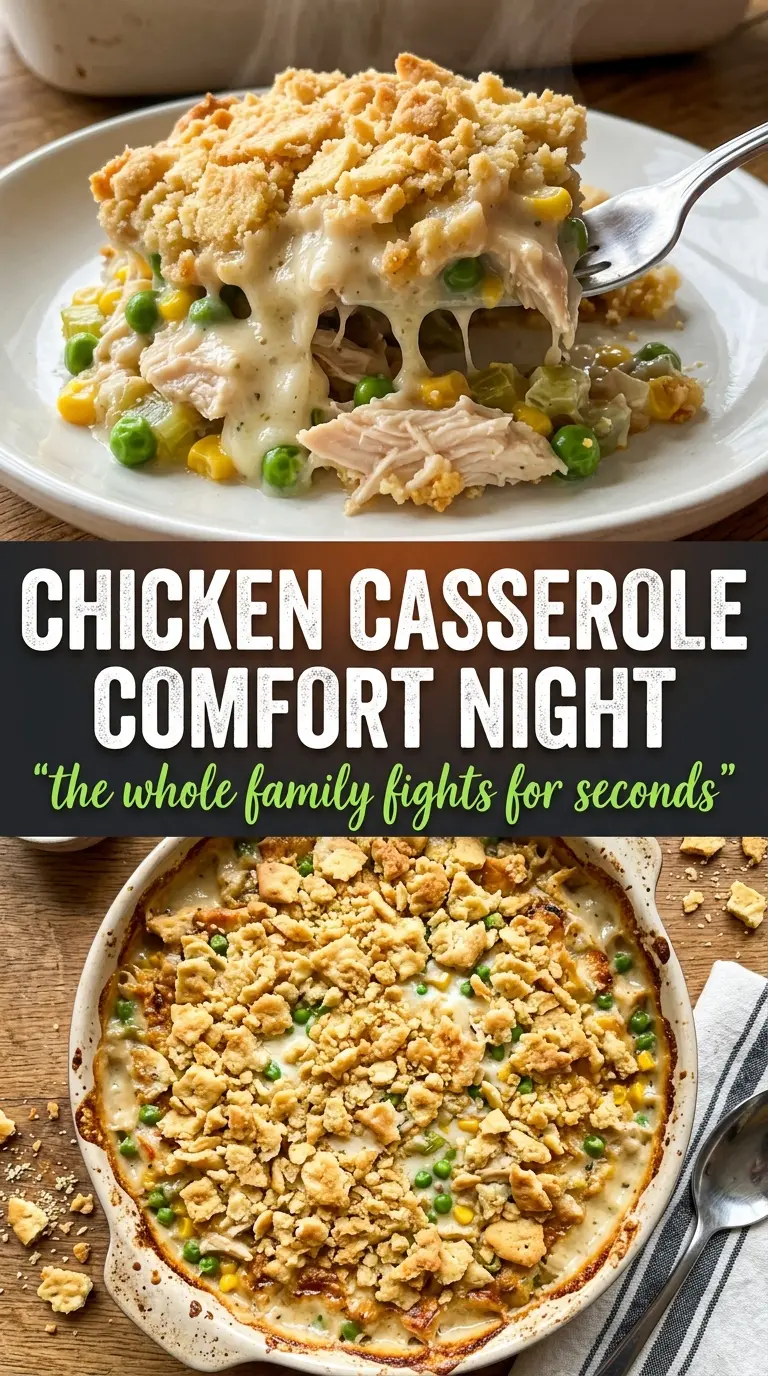
- Cooked chicken — Rotisserie chicken works well here because it’s already seasoned and stays tender after baking. If you cook your own, pull it before it dries out; this casserole won’t rescue overcooked chicken.
- Cooked long-grain rice — Long-grain rice holds its shape better than short-grain, which can turn mushy under a creamy sauce. Day-old rice is ideal because it absorbs the casserole base without collapsing.
- Cream of chicken and cream of mushroom soup — These build the body of the casserole and give you that familiar comfort-food flavor. Using both gives more depth than either one alone, but if mushroom is a hard no, swap in a second can of cream of chicken.
- Sour cream — This is what keeps the filling tasting round and tangy instead of canned. Full-fat sour cream gives the best texture; low-fat works, but it can loosen a little more during baking.
- Chicken broth — The broth lightens the mixture just enough so the rice can finish cooking in the oven without the casserole turning stodgy. If your chicken is especially salty, use a low-sodium broth and season at the end.
- Frozen peas and carrots — No need to thaw them first. They bake through in the casserole and keep their shape better than canned vegetables, which tend to go soft.
- Cheddar cheese and Ritz crackers — Cheddar melts into the top layer for richness, while the cracker topping brings the crunch and buttery salt. The crackers need to be crushed, not powdered, so you get actual texture instead of crumbs that disappear.
- Butter — Melted butter coats the cracker pieces so they brown evenly and taste toasted, not dry. Don’t skip it if you want that classic casserole crust.
Building the Layers So the Top Stays Crisp
Mixing the Filling Without Overworking It
Combine the chicken, rice, soups, sour cream, broth, vegetables, and seasonings until everything looks evenly coated, but stop once the mixture comes together. If you stir aggressively, the rice starts breaking apart and the casserole loses its texture before it even hits the oven. The filling should look loose and creamy in the bowl; it thickens as it bakes.
Layering the Cheese Before the Cracker Topping
Spread the mixture into a greased 9×13 dish, then cover it with the shredded cheddar. That layer melts into the surface and helps bind the topping to the casserole instead of letting the crackers sink. If you put the crackers on first, they can absorb too much moisture and turn soft by the time dinner hits the table.
Getting the Crust Golden and Bubbly
Mix the crushed crackers with melted butter and scatter them over the cheese in an even layer. Bake until the edges are bubbling and the top is deeply golden, not pale tan. If the topping looks done before the center is hot, let it keep baking; the casserole should come out steamy throughout, with the cracker crust crackling when you spoon into it.
Make it with broccoli instead of peas and carrots
Use small, thawed broccoli florets in place of the vegetable mix if you want a stronger savory note. Chop them small so they soften in the bake, because large pieces stay a little firm and can make the casserole harder to scoop neatly.
Gluten-free version with a few careful swaps
Use gluten-free cream soups and gluten-free crackers for the topping. The texture stays close to the original, but check the soup label carefully because some brands thicken with wheat-based ingredients.
Dairy-free adjustment
Use a dairy-free sour cream and shredded cheese substitute, then brush the cracker topping with melted plant-based butter. The casserole will still be creamy, but the top won’t brown quite as deeply, so watch the oven a little earlier.
Make-ahead assembly for a busy night
Assemble the casserole without the cracker topping, cover, and refrigerate for up to 24 hours. Add the buttery crackers right before baking so they stay crisp; if you put them on too early, they’ll soften in the fridge and never fully recover.
Storage and Reheating
- Refrigerator: Store covered for up to 4 days. The topping softens a bit, but the casserole stays creamy and scoops well.
- Freezer: Freeze the baked casserole without the cracker topping for up to 2 months. Thaw overnight in the fridge, add fresh cracker topping, then bake until hot through.
- Reheating: Reheat covered at 325°F until warmed through, then uncover for the last few minutes to bring back some texture on top. Microwaving works for a single serving, but the crackers won’t stay crisp.
Answers to the Questions Worth Asking
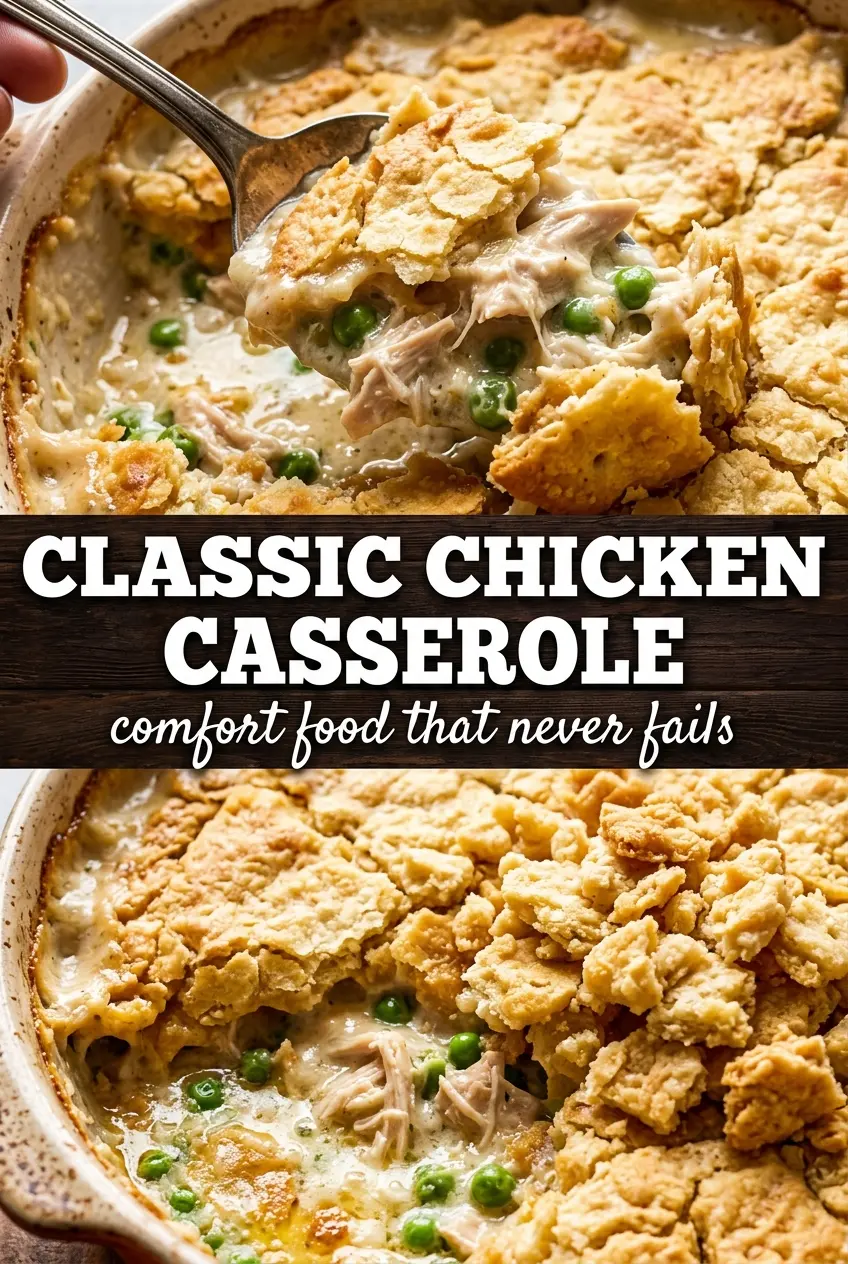
Chicken Casserole
Ingredients
Equipment
Method
- Preheat the oven to 350°F and grease a 9x13 baking dish. The oven should be fully heated before baking for even browning.
- Combine cooked chicken, cooked white rice, both soups, sour cream, chicken broth, peas and carrots, garlic powder, onion powder, salt, and pepper. Stir until well mixed and the chicken and rice are evenly coated.
- Spread the chicken mixture into the prepared baking dish. Press it into an even layer so it bakes through at the same rate.
- Top with shredded cheddar cheese. Cover the surface completely so the bake turns bubbly and golden.
- Mix crushed Ritz crackers with melted butter and sprinkle over the cheese. Aim for an even layer for a cracker topping that caramelizes and crackles.
- Bake at 350°F for 35-40 minutes until bubbly and the cracker topping is golden brown. Look for bubbling around the edges and a browned, crunch-crackled top.