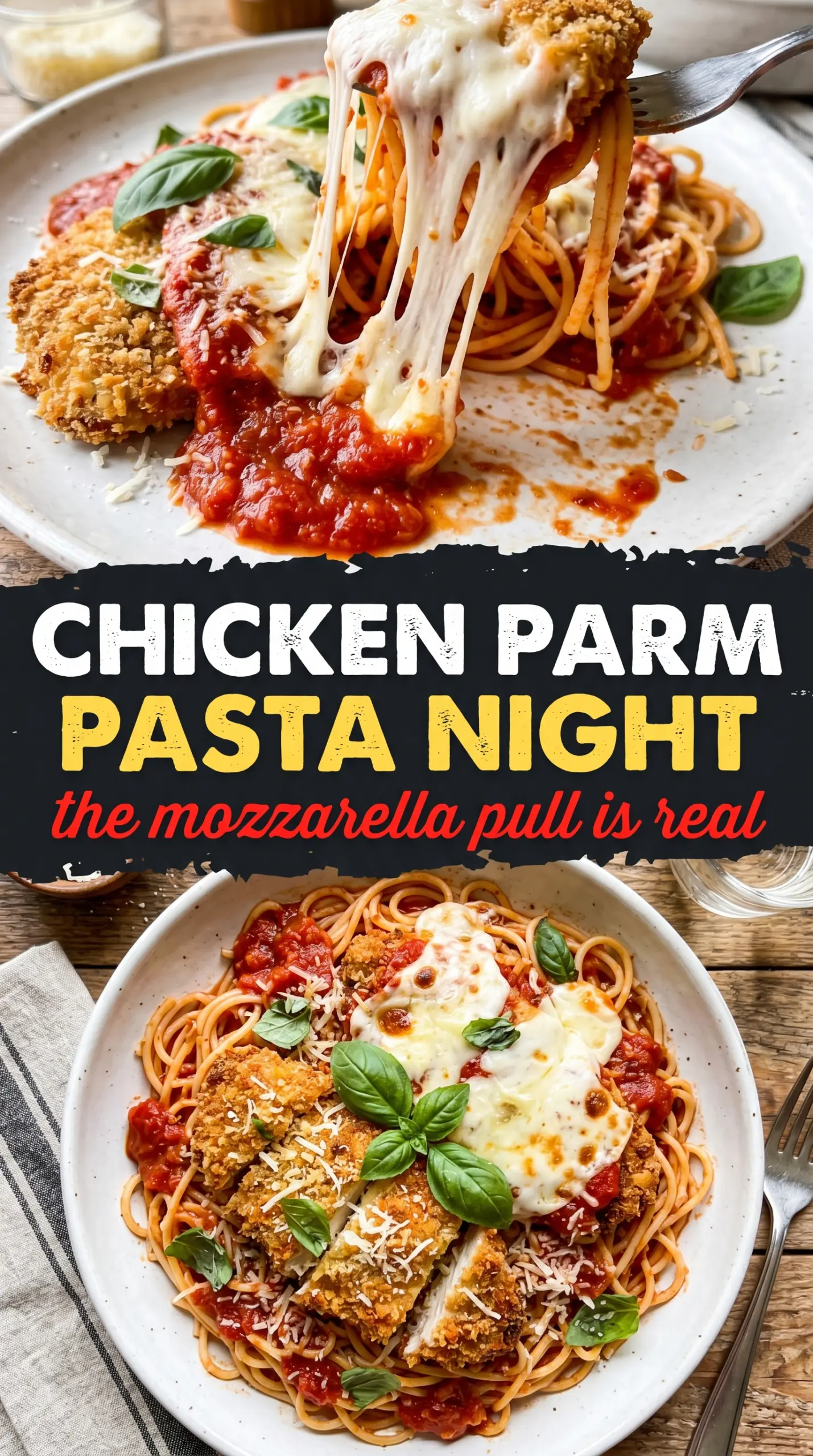
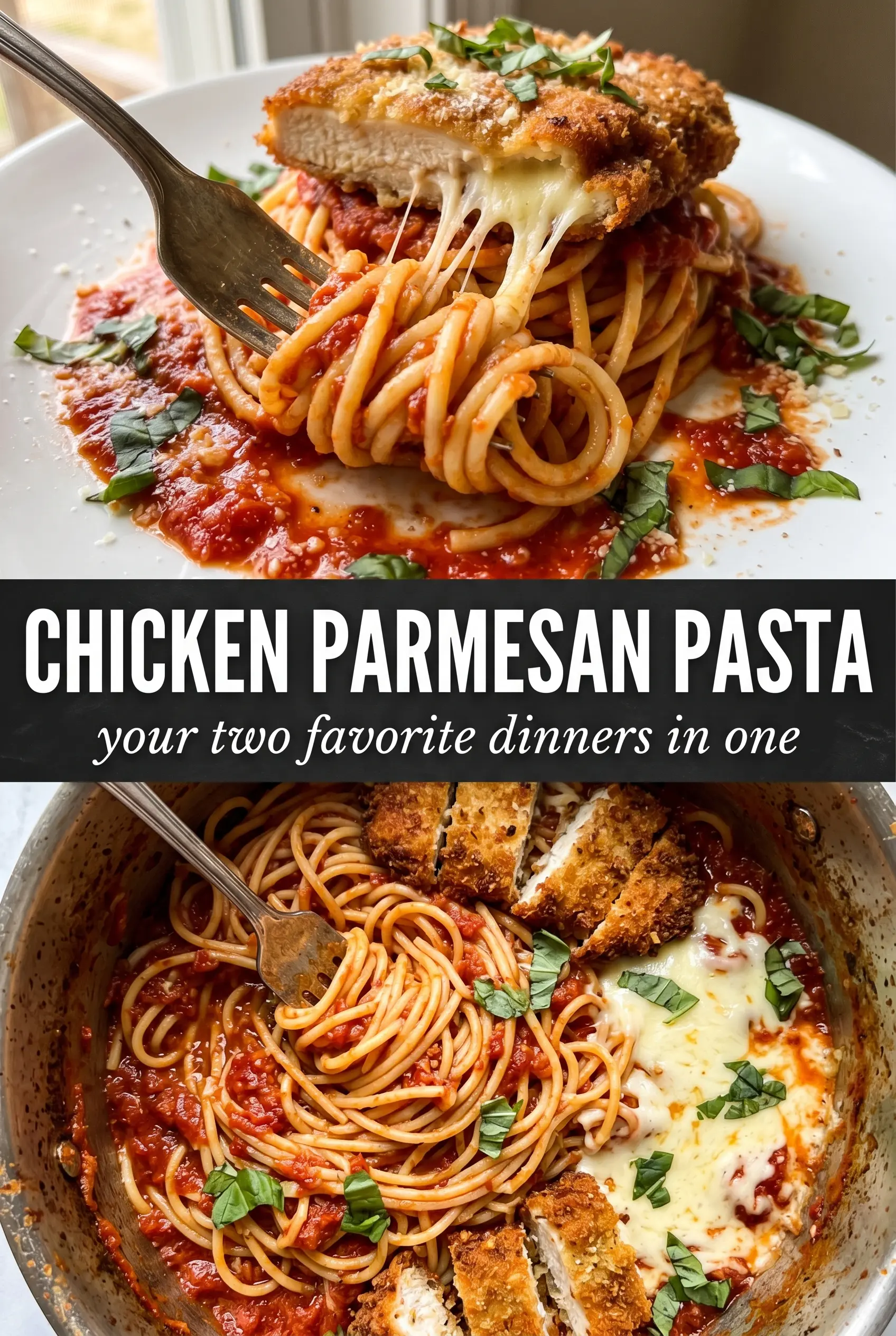
Golden breaded chicken, bubbling mozzarella, and penne coated in marinara turn this chicken Parmesan pasta into the kind of dinner that disappears fast. It keeps the crispy edges on the chicken while still giving you a baked, saucy pasta base underneath, so every bite has a little crunch, a little cheese pull, and plenty of tomato-rich comfort.
What makes this version work is the order of the cooking. The chicken gets browned first, then finished in the oven on top of the pasta instead of being stirred in too early, which keeps the coating from turning soft. The pasta is cooked before it goes into the baking dish, so the sauce can cling to it without turning the whole pan gummy. That balance is what makes it taste like chicken Parmesan, not just pasta with chicken and cheese.
Below, I’ve included the detail that matters most for keeping the chicken crisp, plus a few smart swaps if you need to change the pasta, the cheese, or the breading.
The chicken stayed crisp on top even after baking, and the marinara soaked into the penne without making it mushy. I used a little extra basil at the end and the whole pan tasted like restaurant chicken parm.
Like this chicken Parmesan pasta? Save it to Pinterest for the nights when you want crispy chicken, melty mozzarella, and a baked pasta dinner that feels like classic chicken parm without the extra fuss.
The Reason the Chicken Stays Crispy After Baking
The biggest mistake in baked chicken Parmesan pasta is treating the chicken like it’s part of the sauce too early. Once breaded chicken sits directly in marinara for long enough, the crust gives up and turns soft. This version avoids that by browning the chicken first, then letting the oven finish the job while it rests on top of the pasta instead of underneath it.
The other detail that matters is moisture control. The pasta should be cooked before it goes into the baking dish, but not drowned in extra sauce. You want enough marinara to coat every noodle and leave a little extra for baking, not so much that the cheese melts into a loose puddle. The top should come out with browned spots and the edges should be bubbling, not soupy.
- Browning the chicken first — builds the crust before any sauce touches it, which is the only way to keep the breading from going limp.
- Using cooked penne — keeps the texture sturdy after baking. Undercooked pasta stays firm; overcooked pasta gets heavy and soft.
- Baking uncovered — lets the mozzarella melt and brown instead of steaming under a lid or tight foil.
What Each Ingredient Is Doing in the Pan
- Boneless skinless chicken breasts — cut into bite-sized pieces, they cook fast and give you more crispy surface area than whole cutlets. Thighs can work too if you want a juicier bite, but they’ll need a little more time in the pan.
- Italian breadcrumbs and Parmesan — this is where the chicken parm flavor starts. The Parmesan seasons the crust from the inside, while the breadcrumbs bring the crunch. Plain breadcrumbs work in a pinch, but the coating won’t taste as full.
- Marinara sauce — use one you already like eating from the jar, because it carries the whole dish. A thin or overly sweet sauce makes the pasta taste flat, while a thicker sauce clings to the penne and helps the casserole hold together.
- Mozzarella — shredded mozzarella gives you the melt and stretch that makes this feel like chicken Parmesan. Low-moisture mozzarella is the best choice here because fresh mozzarella can release too much liquid in the oven.
- Penne pasta — the tubes catch sauce inside and out, and the shape stands up well under a heavy layer of cheese and chicken. If you swap in a smaller pasta, the dish gets denser and a little harder to serve cleanly.
Building the Crunch Before the Bake
Coating the Chicken Evenly
Start with three shallow bowls: flour, beaten eggs, and breadcrumbs mixed with Parmesan. The flour gives the egg something to grip, and that layer is what keeps the breading from sliding off in the pan. Shake off the excess at each stage; thick, clumpy coating looks good for a second, then turns gummy. If the chicken is wet when it hits the breadcrumb mixture, the crust will patch up unevenly and fall off in spots.
Frying Until the Coating Sets
Use enough olive oil to coat the bottom of the skillet and heat it over medium-high until it shimmers. The chicken should sizzle the moment it touches the pan. Cook it in a single layer so the pieces brown instead of steam, and turn them once the first side is deep golden. If the pan looks crowded, work in batches; crowding traps moisture and softens the crust before it can set.
Assembling the Pasta Base
Toss the cooked penne with marinara while it’s still warm, then spread it into a greased 9×13 baking dish. The sauce should coat every piece without pooling at the bottom. Add the chicken on top instead of stirring it through, because that keeps the breading out of the sauce until the last possible minute. The chicken will still flavor the pasta as it bakes, but it won’t lose its texture.
Baking Until the Cheese Bubbles
Top the dish with mozzarella and the remaining Parmesan, then bake at 375°F until the cheese is melted and the edges are bubbling hard. You’re looking for a few browned spots on top, not a pale blanket of cheese. Let it sit for a few minutes before serving so the sauce settles and the pasta scoops cleanly. If you cut into it straight from the oven, the cheese slides and the pan looks looser than it really is.
How to Adapt This Chicken Parmesan Pasta Without Losing the Point
Gluten-Free Version
Use gluten-free flour and gluten-free breadcrumbs, then cook the pasta from a trusted gluten-free brand that holds its shape well. The coating will still crisp, but it may brown a little faster, so keep an eye on the pan. Toss the pasta gently after it’s cooked because gluten-free noodles can break down if stirred too aggressively.
Chicken Thigh Swap
Boneless skinless thighs give you a juicier result and a richer bite. Cut them into even pieces and add another minute or two to the skillet if needed, since thighs take a touch longer to cook through. The flavor gets deeper, but the final dish is a little less neat when served.
Dairy-Free Approach
Use a dairy-free Parmesan-style topping and a melting plant-based mozzarella that browns well. The dish will still bake up creamy and satisfying, though the cheese pull won’t be quite as elastic as the classic version. Choose a marinara with no added cream or butter so the sauce stays fully dairy-free.
Make-Ahead Assembly
You can fry the chicken and cook the pasta ahead, then store them separately until you’re ready to bake. Assemble just before baking so the breading stays crisp and the pasta doesn’t absorb too much sauce. If the components are cold from the fridge, add a few extra minutes in the oven.
Storage and Reheating
- Refrigerator: Store leftovers covered for up to 4 days. The chicken coating softens a bit, but the flavor holds up well.
- Freezer: It freezes best in portions, wrapped tightly and stored in airtight containers for up to 2 months. The pasta will be softer after thawing, but it still reheats well.
- Reheating: Warm in a 350°F oven, covered loosely with foil for the first half so the center heats through, then uncover to bring back a little texture on top. The microwave works for a quick lunch, but it softens the crust more than the oven does.
Answers to the Questions Worth Asking
Chicken Parmesan Pasta
Ingredients
Equipment
Method
- Dredge the chicken pieces in all-purpose flour, then dip them into beaten eggs, and coat in Italian breadcrumbs mixed with the grated Parmesan cheese. Make sure each piece is evenly covered for a crisp, golden crust.
- Heat olive oil in a sheet pan over medium-high heat, then pan-fry the breaded chicken for 3-4 minutes per side until golden brown and cooked through. Drain on paper towels so the pasta stays from getting watery.
- Toss the cooked penne with marinara sauce, then pour into a greased 9x13 baking dish. Spread into an even layer so the cheese bakes uniformly.
- Arrange the crispy chicken pieces over the pasta, then top with shredded mozzarella cheese and the additional grated Parmesan cheese. Cover the surface so every inch gets that baked cheese pull.
- Bake at 375°F for 20-22 minutes until the mozzarella is melted and golden. Garnish with fresh basil right after baking while the topping is still bubbly.