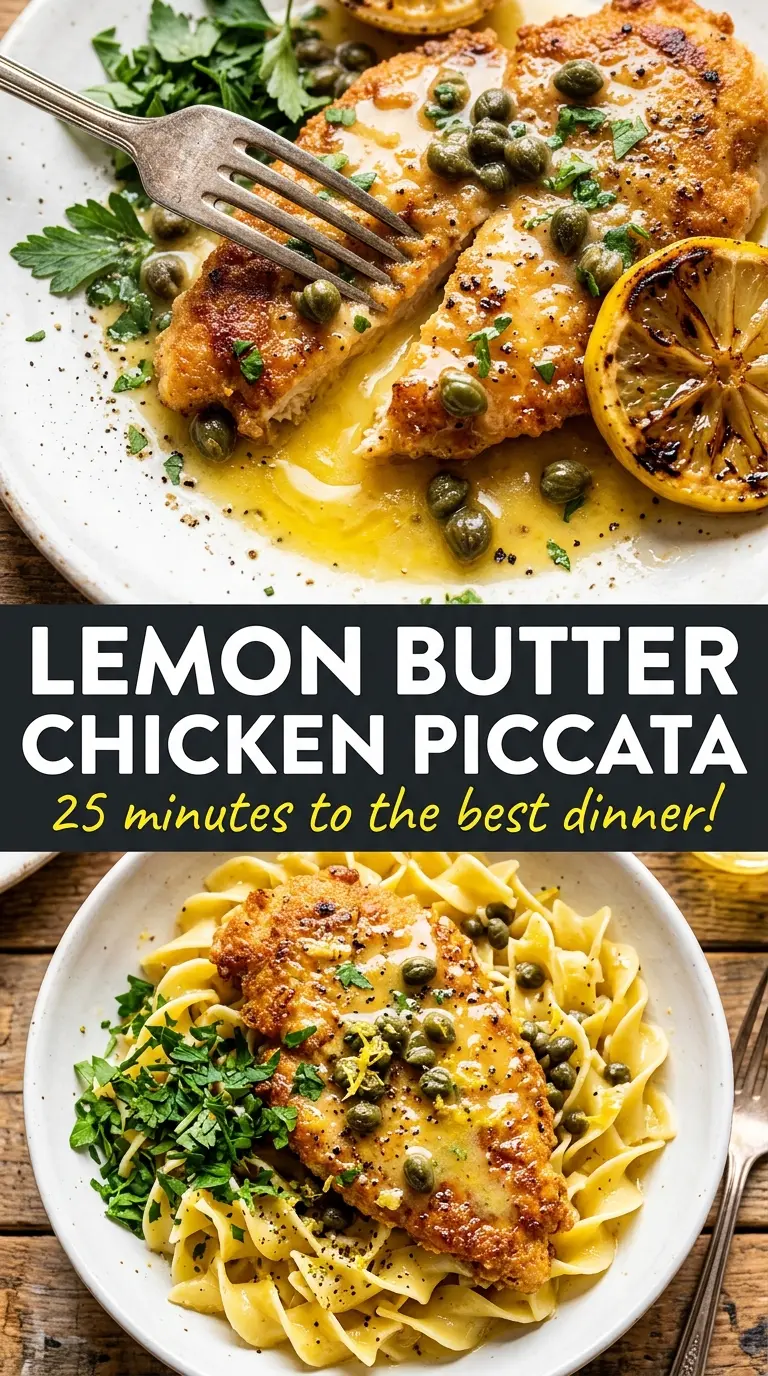
Chicken piccata lands on the plate with crisp-edged cutlets and a lemon-butter sauce that stays bright instead of heavy. The best versions do two things at once: the chicken gets a quick golden crust, and the sauce turns silky in the same pan without losing that sharp, briny pop from the capers. That contrast is what keeps this dish worth making again.
The trick is keeping the cutlets thin and even so they cook fast before the flour coating gets dense or gummy. After the chicken comes out, the browned bits left in the pan do the work for the sauce, and a final swirl of cold butter pulls everything together without making it greasy. Wine adds depth, lemon keeps it lively, and capers cut through the richness just enough.
Below, you’ll find the part that matters most: how to keep the sauce glossy, how to avoid tough chicken, and a few smart swaps for when you need to work around what’s in your kitchen.
The sauce turned out glossy and balanced, and the chicken stayed tender even after I added it back to the pan at the end. My husband kept spooning extra sauce over the pasta.
Save this chicken piccata for the nights when you want crisp cutlets and a lemon-caper pan sauce that comes together in one skillet.
The Pan Sauce Breaks When You Rush the Finish
Chicken piccata looks simple, but the sauce can turn flat or oily if the heat stays too high after the broth and lemon go in. This recipe works because the chicken is removed before the sauce starts to reduce, which keeps the crust crisp and gives the liquid room to concentrate instead of steaming the coating off the cutlets.
The other point that matters is the butter finish. Cold butter whisked in off the heat thickens the sauce just enough to make it glossy and clingy, while still tasting bright. If you stir it in over a hot burner, the emulsion can split and the sauce will look thin and broken instead of smooth.
- Thin chicken cutlets — These cook fast and stay tender. If your chicken breasts are thick, slice them in half horizontally and pound the pieces lightly so they’re even. Uneven cutlets leave you with dry edges and undercooked centers.
- Dry white wine — This adds depth that water or extra broth can’t match. Use something you’d drink, not anything sweet, because sweet wine makes the sauce taste muddy.
- Fresh lemon juice — Bottled juice tastes dull here. Fresh lemon gives the sauce its sharpness and keeps the butter from tasting heavy.
- Capers — Drain them, but don’t rinse them unless they’re packed in a very salty brine. That briny punch is part of what makes piccata taste like piccata.
What Each Ingredient Is Actually Doing in This Recipe
- Primary ingredient (the star) — Quality matters most. Choose the best you can find.
- Cooking medium (oil, butter, or broth) — This carries flavors and prevents dryness.
- Seasonings (salt, pepper, spices, herbs) — Layer flavors so nothing overpowers. Build depth gradually.
- Aromatics (garlic, onion, herbs) — Cook with fat to bloom flavors. Become the foundation.
- Supporting ingredients — Complement the main ingredient without overpowering it.
- Sauce or liquid (if applicable) — Brings flavors together. Balance richness with acid.
- Acid (lemon, vinegar, wine, or other) — Brightens and prevents flat-tasting results.
- Final finish (garnish, glaze, or sauce) — Prevents one-dimensional taste and adds visual appeal.
Building the Cutlets and Sauce in the Right Order
Seasoning and Dredging the Chicken
Season the cutlets first, then dust them lightly in flour and shake off the excess. You want a whisper-thin coating, not a thick shell, because too much flour turns pasty in the pan and muddies the sauce later. The flour should look dry and barely visible once the chicken is dredged.
Getting a Deep Golden Sear
Heat the oil and butter until the butter foams, then lay the chicken in without crowding the skillet. If the pan is packed, the cutlets steam instead of browning. Cook them until the edges are deep golden and the centers are just cooked through, then move them out of the pan right away so they don’t overcook while the sauce is building.
Reducing the Lemon-Caper Sauce
Add the garlic for just a short burst, then pour in the wine and scrape the bottom of the pan well. Those browned bits hold most of the flavor. After the broth, lemon, capers, and lemon slices go in, simmer until the liquid shrinks by about a third and tastes sharp but rounded. If it still tastes watery, keep going; if it gets too concentrated, the butter at the end will smooth it back out.
Finishing for a Glossy Pan Sauce
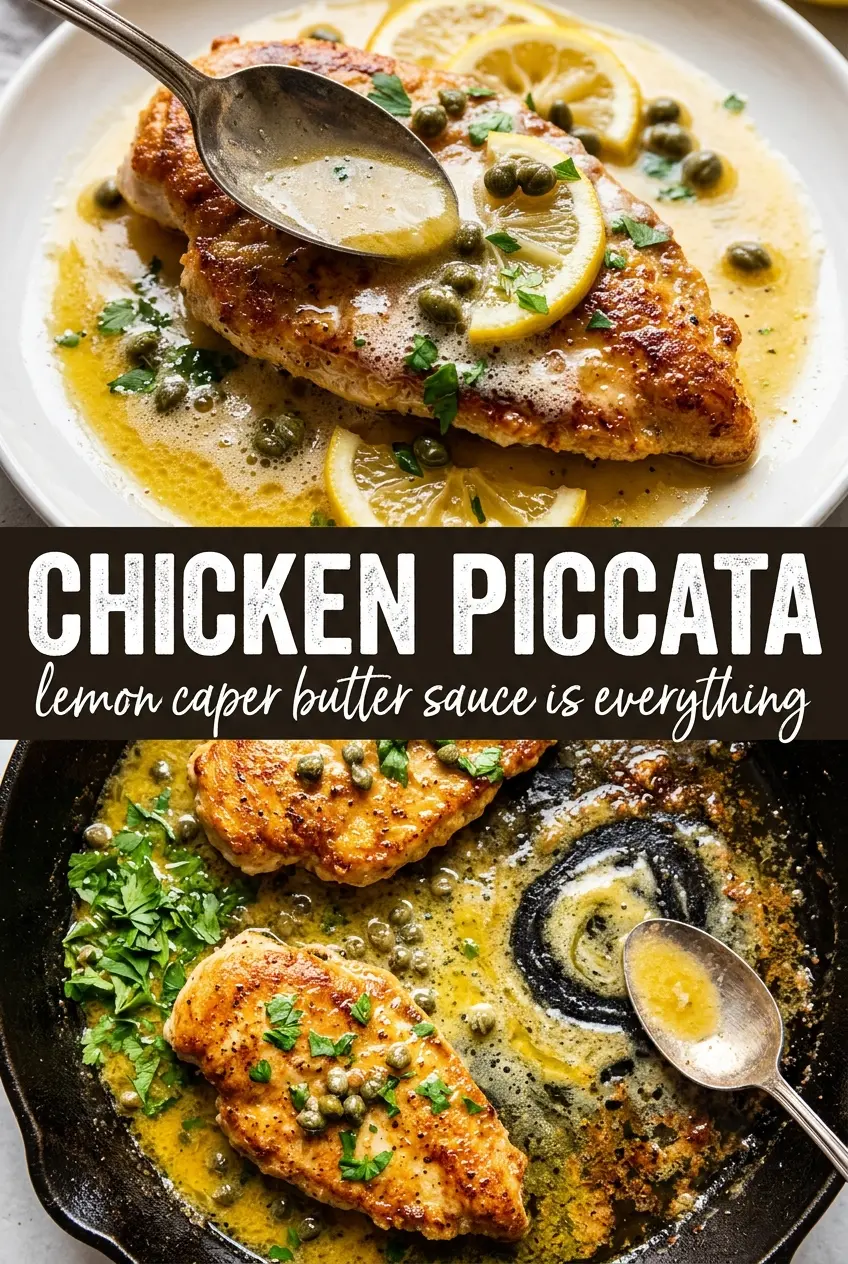
Take the pan off the heat before stirring in the last butter. Swirl it in until the sauce turns shiny and lightly thickened, then return the chicken and spoon the sauce over the top. This last step is what gives piccata that restaurant-style sheen without turning it into a greasy skillet sauce.
How to Adapt Chicken Piccata Without Losing Its Character
Gluten-Free Piccata
Swap the all-purpose flour for a gluten-free flour blend or even a light dusting of cornstarch. You’ll still get browning, but the coating will be a little more delicate, so handle the cutlets gently when you flip them.
Dairy-Free Version
Replace the butter with a good olive oil, added in two small portions instead of one finish at the end. The sauce won’t be quite as silky, but it will stay bright and clean, and the lemon will stand out more sharply.
No Wine in the Pan
Use extra chicken broth plus a teaspoon of white wine vinegar or a little more lemon juice. You lose some depth, but the sauce still tastes balanced if you let it reduce enough to concentrate.
Serving It Over Pasta or Rice
This sauce loves linguine, angel hair, or plain rice because they catch the lemon butter and capers. If you’re serving it with pasta, undercook the pasta slightly and toss it with a spoonful of sauce before plating so it doesn’t go dry.
Storage and Reheating
- Refrigerator: Store leftovers in an airtight container for up to 3 days. The coating softens, but the flavor holds well.
- Freezer: It freezes, but the sauce and coating both lose a little texture. Freeze the chicken and sauce together only if you need to; thaw overnight in the fridge before reheating.
- Reheating: Warm gently in a covered skillet over low heat with a splash of broth. High heat dries out the chicken and can make the sauce separate, so keep the burner low and stop as soon as everything is hot.
Questions I Get Asked About This Recipe
Chicken Piccata
Ingredients
Equipment
Method
- Season the chicken cutlets with salt and pepper, then dredge lightly in all-purpose flour, shaking off the excess so it’s thinly coated.
- Heat olive oil and 2 tablespoons butter in a large skillet over medium-high heat until hot, then cook the chicken in batches for 3-4 minutes per side until golden and cooked through; transfer to a plate as each batch finishes.
- Add minced garlic to the skillet and cook for 30 seconds, stirring until fragrant and just beginning to color.
- Pour in the dry white wine and scrape up the browned bits, then simmer for 2 minutes so the liquid reduces slightly.
- Add chicken broth, fresh lemon juice, capers, and lemon slices, then simmer for 4-5 minutes until the sauce reduces by about one third and looks slightly thicker.
- Remove the skillet from heat and swirl in the remaining 2 tablespoons cold butter until the sauce turns glossy and smooth.
- Return the chicken cutlets to the skillet, spoon the sauce over each, and garnish with chopped fresh parsley for a bright, fresh finish.