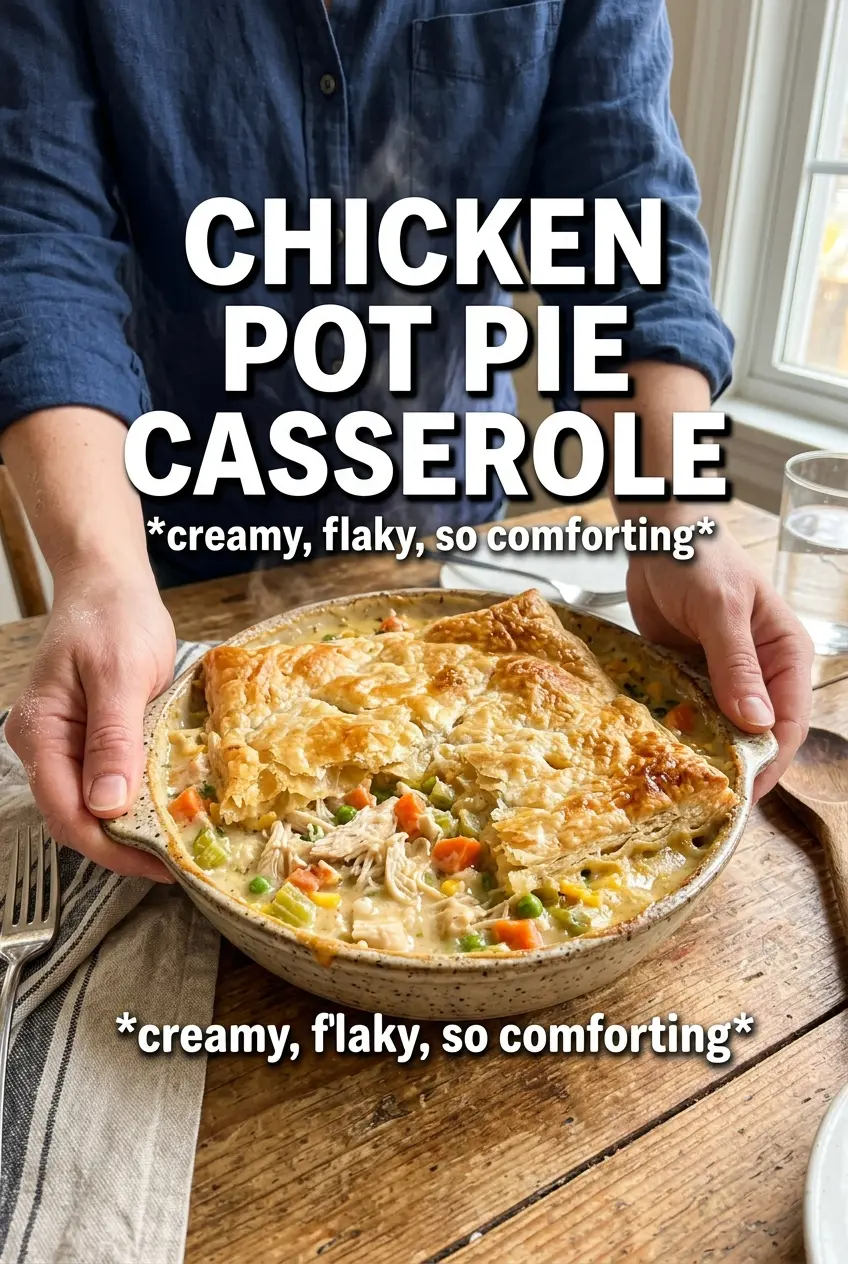
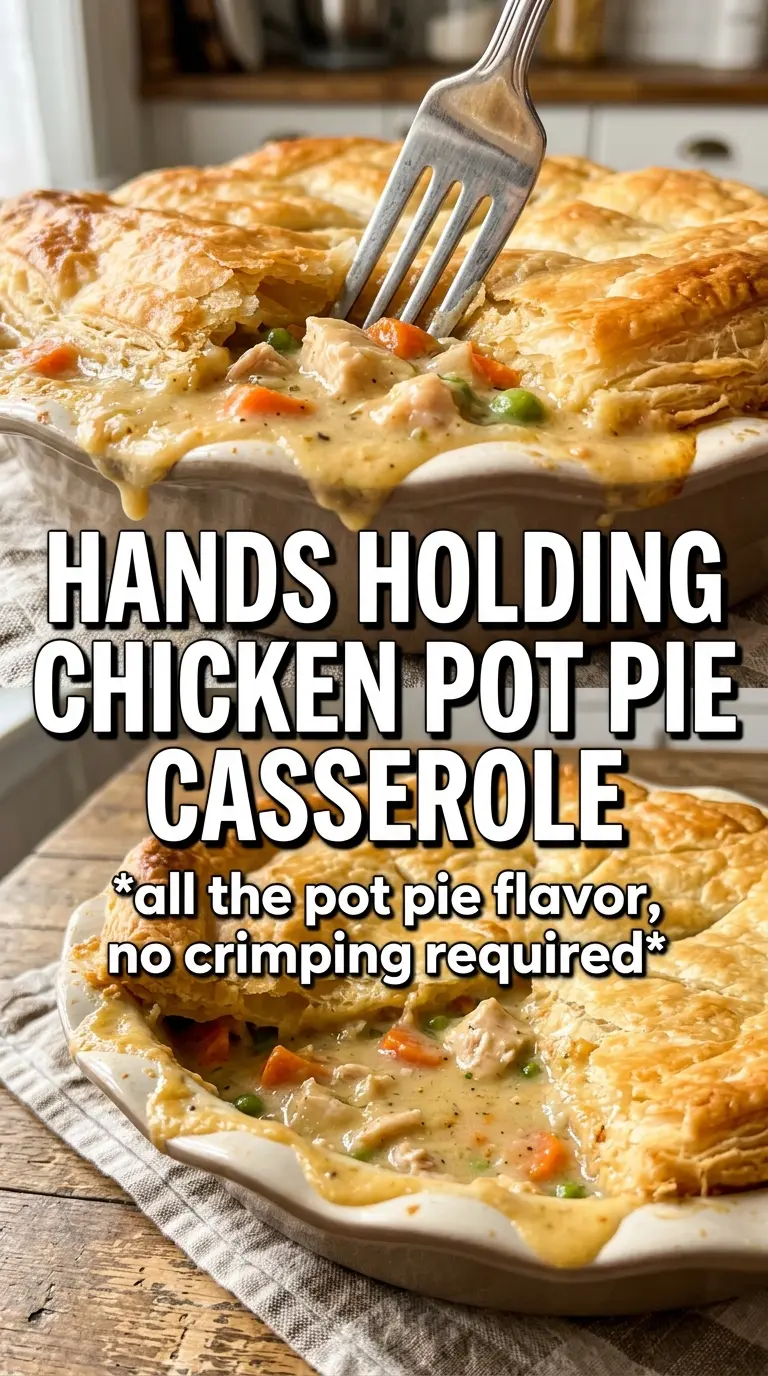
Chicken pot pie casserole hits all the same cozy notes as the classic pie, but it bakes faster and skips the fussy bottom crust. You still get a creamy, savory filling loaded with chicken and vegetables, plus a golden topping that soaks up just enough sauce at the edges without turning soggy. That contrast is what makes this version worth keeping on repeat.
The filling starts on the stove so the flour has time to cook out before the broth goes in. That step keeps the sauce from tasting pasty and helps it thicken into something that coats the back of a spoon instead of sliding around in the baking dish. Heavy cream gives the sauce body, while the biscuits or puff pastry on top bring the crisp finish that makes each scoop feel complete.
Below, I’m walking through the little details that keep the sauce smooth, the vegetables balanced, and the topping cooked through without overbaking the filling underneath.
The filling was thick and creamy without being gluey, and the biscuit topping stayed crisp on top while the edges soaked up just enough sauce. My kids went back for seconds, which never happens with casserole night.
Save this chicken pot pie casserole for the nights when you want creamy filling, golden biscuits, and one pan that feeds a crowd.
The Reason the Sauce Needs to Thicken Before It Goes in the Oven
If the filling goes into the baking dish thin, the biscuits or puff pastry steam instead of topping a rich casserole. That’s the mistake that leaves you with soup under bread. Cooking the flour for a full minute before adding the broth matters because it removes the raw flour taste and gives the sauce a little head start before it ever sees the oven.
You want the sauce to simmer until it looks glossy and lightly coats a spoon. It will still loosen a bit in the oven once the vegetables release their moisture and the top bakes, so stopping at a true gravy consistency is the right move. If it feels too thin on the stove, it won’t magically fix itself later.
What Each Ingredient Is Actually Doing in This Casserole
- Cooked chicken — Leftover roast chicken or rotisserie chicken both work well here. Rotisserie gives you seasoned meat with almost no effort, while freshly cooked chicken stays a little cleaner in flavor. Shred it into bite-size pieces so it distributes evenly through the filling instead of clumping.
- Butter — This is the base of the sauce and the place where the onion, celery, and carrots pick up flavor. You can use salted butter if that’s what you have, but unsalted gives you better control over the final seasoning.
- Flour — This is what turns broth and cream into a true casserole filling. There isn’t a swap that behaves exactly the same, so if you use a gluten-free flour blend, pick one meant for thickening and cook it briefly the same way.
- Chicken broth and heavy cream — Broth brings the savory backbone; cream gives the filling its round, velvety finish. Half-and-half will work in a pinch, but the sauce will be a little lighter and less luxurious. Don’t rush the simmer or the sauce can stay loose.
- Biscuits or puff pastry — Biscuits give you a hearty, slightly rustic top, while puff pastry bakes into a flakier, more delicate crust. Biscuits are the sturdier option if you want a more casual casserole; puff pastry feels a little more elegant and bakes up lighter.
Building the Filling So the Top Bakes, Instead of Sogging Out
Softening the vegetables first
Cook the onion, carrots, and celery in butter until the onion turns translucent and the carrots start to lose their raw edge. This takes the sharpness out of the vegetables and keeps them from tasting underdone in the finished casserole. If you skip this and just bake everything together, the filling can taste flat and the carrots can stay firm in the wrong way.
Making the gravy in the pan
Once the flour goes in, stir constantly for a minute so it coats the vegetables and cooks out the raw taste. Gradually whisk in the broth, then the cream, and keep stirring until the mixture turns smooth and thick. If you dump in the liquid all at once, the flour can clump and you’ll spend the rest of the time chasing lumps instead of building a silky sauce.
Adding the chicken and vegetables at the end
Stir in the chicken, peas, corn, thyme, and garlic powder after the sauce has thickened. Frozen peas and corn can go straight in; they’ll warm through in the oven without turning mushy. Taste the filling before it goes into the baking dish, because the biscuits or pastry won’t add any seasoning, and underseasoned filling is the most common reason this kind of casserole falls flat.
Baking until the filling is bubbling
Once the topping is in place, bake until it’s deeply golden and you can see the filling bubbling at the edges. That bubbling matters more than the clock, because it tells you the center is hot enough and the sauce has finished setting. If the top browns before the filling bubbles, lay foil loosely over it and keep baking until the edges are active.
How to Adapt This for Different Toppings and Diets
Gluten-Free Version
Use a gluten-free flour blend that thickens like all-purpose flour, then top the casserole with gluten-free biscuits or a gluten-free pastry if you can find one. The sauce will still turn creamy, but you may need an extra minute or two on the stove for it to reach the same spoon-coating thickness.
Dairy-Light Swap
Replace the heavy cream with evaporated milk or half-and-half for a lighter filling. The texture won’t be quite as rich, but the sauce will still thicken well if you keep the simmer gentle and give it a little extra time before adding the chicken.
Vegetable-Forward Version
Skip the chicken and add more vegetables like mushrooms, diced potatoes, or green beans. Mushrooms bring a deeper savory note, while potatoes make the casserole feel heartier. If you go this route, season more aggressively because chicken usually carries some of the salt and richness.
Storage and Reheating
- Refrigerator: Store leftovers covered for up to 4 days. The topping softens as it sits, but the filling stays creamy.
- Freezer: Freeze the filling without the topping for best results, then add fresh biscuits or pastry before baking. Fully assembled leftovers can be frozen, but the crust won’t stay crisp.
- Reheating: Reheat in a 350F oven, covered loosely with foil, until the center is hot. The microwave will warm it faster, but it softens the topping and can make the filling separate around the edges.