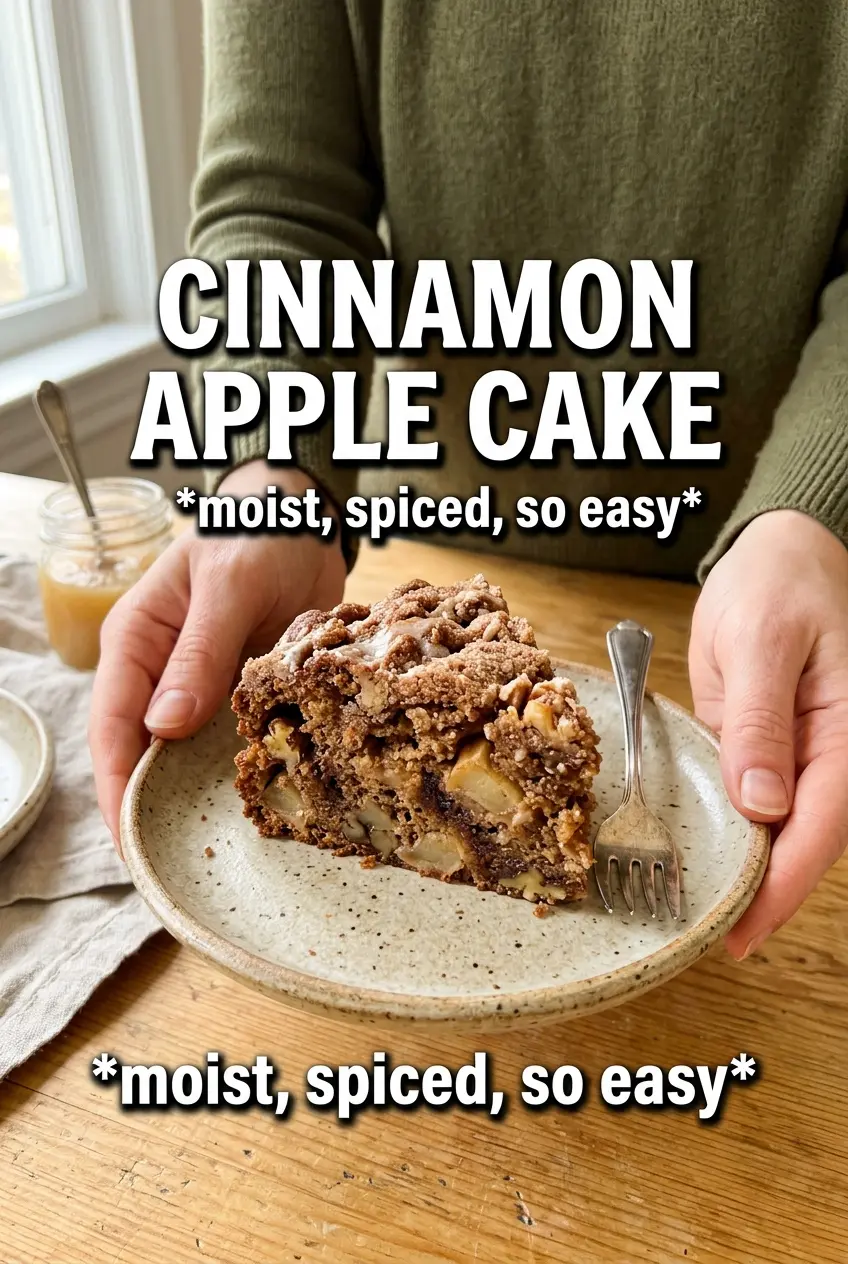
Soft, tender cinnamon apple cake has a way of disappearing faster than almost any dessert on the table. The crumb stays moist for days, the apples melt into little pockets of sweetness, and the cinnamon cream cheese frosting ties everything together with just enough tang to keep each bite from feeling heavy. It’s the kind of layer cake that looks special when you bring it out, but still tastes homey in the best possible way.
What makes this version work is the balance. Sour cream keeps the cake plush, brown sugar gives the crumb a deeper caramel note, and finely diced apples distribute evenly so every slice gets some fruit instead of a few random chunks sinking to the bottom. The frosting is whipped until fluffy before it goes on, which keeps it easy to spread and gives the finished cake that soft, bakery-style look.
Below, I’ll walk through the few details that matter most: how to keep the layers from turning dense, why the apples should be diced small, and the trick for getting a frosting that spreads smoothly without tearing the cake.
The cake stayed incredibly moist even on day two, and the cinnamon cream cheese frosting set up fluffy instead of sliding off the layers. I diced the apples small like you suggested, and every slice baked up even and neat.
Save this cinnamon apple cake for the next time you want a tender layer cake with spiced apples and fluffy cream cheese frosting.
The Part Most Apple Cakes Get Wrong: Too Much Fruit in Big Pieces
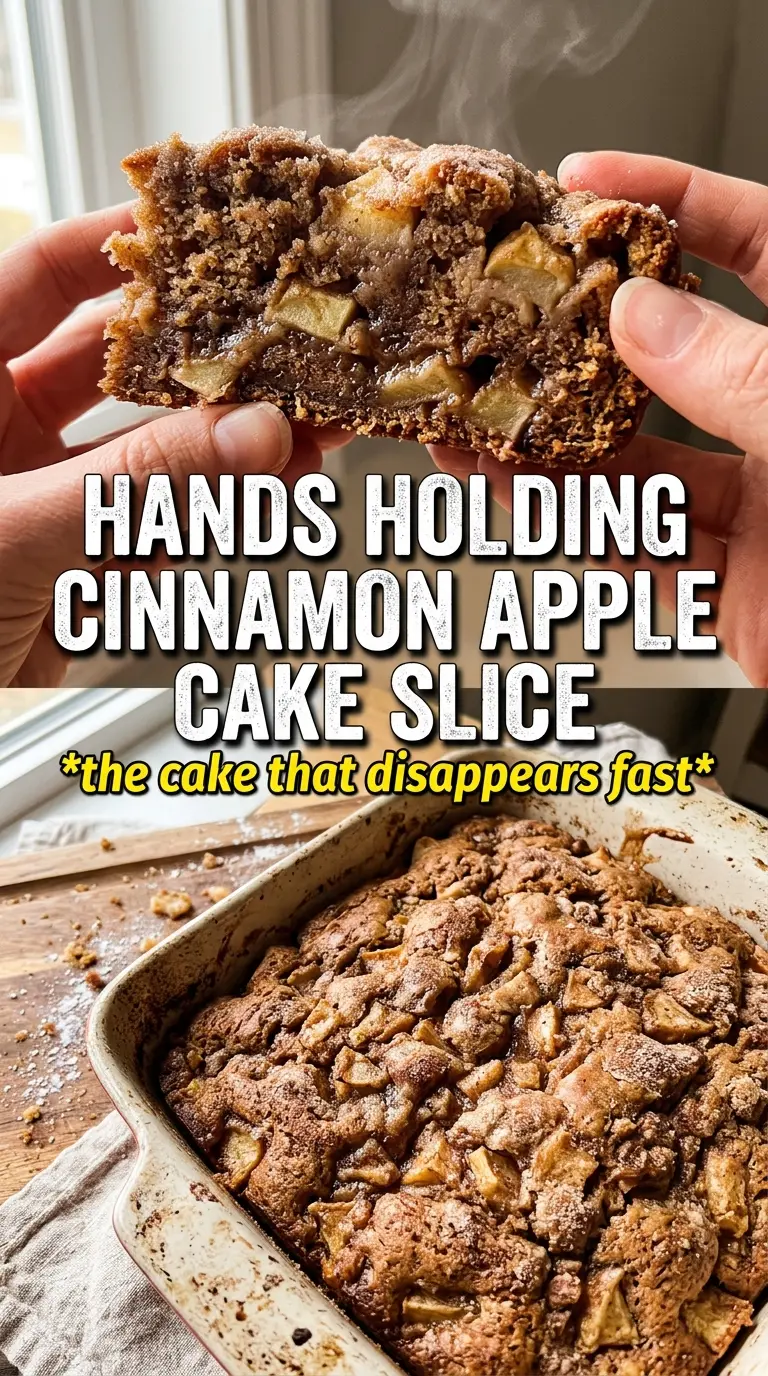
Apple cake can go heavy fast when the batter gets overloaded with fruit or the apples are cut too large. Big chunks create wet pockets that sink and leave the cake uneven, while too much flour gets added to compensate and the crumb turns dry. Finely diced apples solve both problems because they distribute through the batter instead of fighting it.
The other thing that matters here is the batter texture before the apples go in. It should be thick, but still soft enough to fold easily. If it looks stiff and paste-like, the cake will bake up dense. Sour cream loosens the batter just enough while also adding richness, and that combination is what keeps the layers tender after a full 55 minutes in the oven.
- Apples — Use a firm, baking-friendly apple so the pieces hold their shape instead of turning to applesauce. Dice them small, about the size of peas, for the cleanest slice.
- Sour cream — This is what keeps the crumb plush. Plain Greek yogurt works in a pinch, but the cake will be a touch less rich and a little tangier.
- Brown sugar — White sugar won’t give the same depth. Brown sugar carries the molasses note that makes the cinnamon taste warmer and fuller.
- Cinnamon cream cheese frosting — The frosting isn’t just decoration here; it balances the spice and fruit. Full-fat cream cheese gives the best texture and stability.
What Each Ingredient Is Actually Doing in This Recipe
- Primary ingredient (the star) — Quality matters most. Choose the best you can find.
- Cooking medium (oil, butter, or broth) — This carries flavors and prevents dryness.
- Seasonings (salt, pepper, spices, herbs) — Layer flavors so nothing overpowers. Build depth gradually.
- Aromatics (garlic, onion, herbs) — Cook with fat to bloom flavors. Become the foundation.
- Supporting ingredients — Complement the main ingredient without overpowering it.
- Sauce or liquid (if applicable) — Brings flavors together. Balance richness with acid.
- Acid (lemon, vinegar, wine, or other) — Brightens and prevents flat-tasting results.
- Final finish (garnish, glaze, or sauce) — Prevents one-dimensional taste and adds visual appeal.
Building the Batter Without Overmixing the Cake
Whipping the Butter and Sugar First
Start by beating the butter and brown sugar until the mixture looks pale and a little fluffy. That step traps air, which helps the layers rise without turning dry. If the butter is too cold, the mixture will stay grainy and won’t cream properly, so let it soften at room temperature before you begin.
Adding the Eggs and Vanilla
Add the eggs one at a time and beat just until each one disappears. If the batter looks curdled at this stage, it usually means the eggs were cold or the butter was too firm, but it usually comes back together once the dry ingredients go in. Vanilla goes in here so it spreads evenly through the fat before the flour tightens the batter.
Alternating the Dry Ingredients and Sour Cream
Add the dry mixture in batches, alternating with the sour cream, and stop mixing as soon as the flour streaks disappear. Overbeating at this point develops too much gluten and the cake turns tight. The batter should look thick and smooth, not glossy or stretched.
Folding in the Apples and Baking
Fold the diced apples in by hand so they stay evenly distributed. Divide the batter between the pans and bake until the tops spring back lightly and a toothpick comes out with a few moist crumbs, not wet batter. If the center still dips when you touch it, give it more time; pulling it too early is the fastest way to end up with a gummy middle.
What to Change When You Need a Different Finish
Make It Gluten-Free
Use a 1:1 gluten-free baking flour that includes xanthan gum. The texture will be a touch more delicate, so let the cakes cool completely before turning them out of the pans. If you rush that part, the layers are more likely to break.
Make It Dairy-Free
Swap in plant-based butter, dairy-free sour cream, and a dairy-free cream cheese-style frosting. The cake still works, but the frosting won’t have quite the same tang or body, so chill it a bit before spreading if it feels loose.
Turn It Into a Single-Layer Snack Cake
Bake the batter in a 9×13-inch pan and shorten the frosting to a thin layer or a simple swirl on top. You’ll lose the dramatic stacked look, but you gain an easier-to-serve cake that holds up well for potlucks and weekday desserts.
Storage and Reheating
- Refrigerator: Store covered for 4 to 5 days. The cake actually gets a little more flavorful by day two, though the frosting will firm up when cold.
- Freezer: Freeze unfrosted layers wrapped tightly for up to 2 months. Frosted slices can be frozen, but the cream cheese frosting will soften a bit after thawing.
- Reheating: Let chilled slices sit at room temperature for 20 to 30 minutes before serving. If you warm it too much, the frosting can slide and the crumb can turn greasy.
Answers to the Questions Worth Asking
Cinnamon Apple Cake
Ingredients
Equipment
Method
- Preheat the oven to 350F and grease two 9-inch round pans.
- Beat the butter and brown sugar until combined, then add the eggs one at a time and beat in the vanilla.
- Whisk together the flour, baking powder, baking soda, cinnamon, nutmeg, allspice, and salt.
- Alternate adding the dry ingredients and sour cream to the batter, mixing until just combined.
- Fold in the finely diced apples until evenly distributed.
- Divide the batter between the two pans and bake for 50-55 minutes, until a toothpick inserted in the center comes out clean.
- Cool the cakes completely before frosting, so the frosting stays thick and spreadable.
- Beat the cream cheese and butter until smooth, then beat in the powdered sugar until very fluffy.
- Beat in the cinnamon and vanilla for a fragrant frosting.
- Frost between the cake layers and spread frosting over the top and sides until evenly coated.