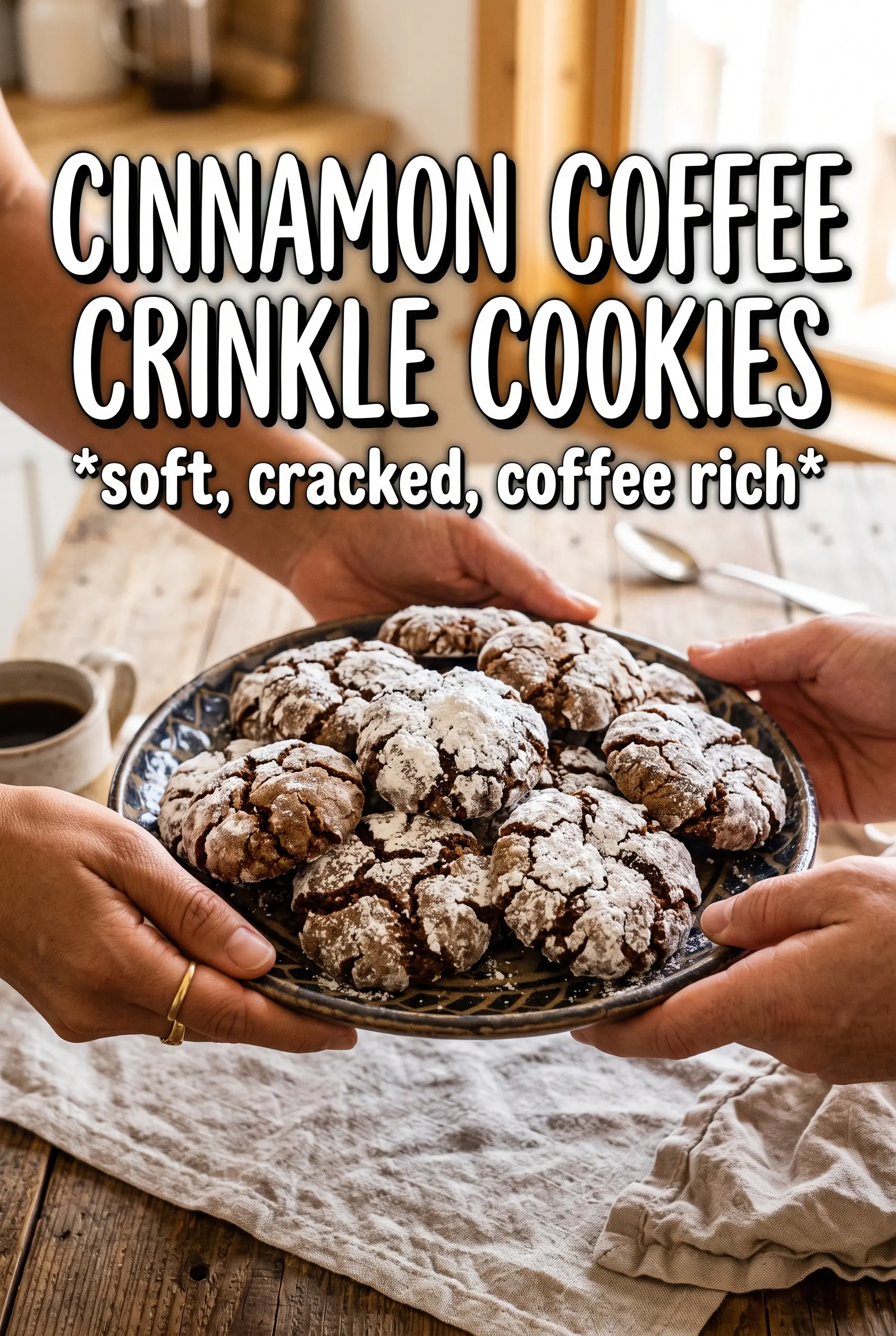
Cinnamon coffee crinkle cookies bake up with crackled tops, soft centers, and a deep cocoa-like color from the espresso and cinnamon working together. The outside gets that classic powdered sugar finish, but the flavor underneath is warm, bold, and just a little grown-up, which is why these disappear faster than the usual spice cookie.
What makes this version stand out is the balance. Melted butter gives the dough a dense, chewy base, while the brown sugar keeps the centers tender instead of dry. The short chill matters here, too — it firms up the sticky dough enough to roll cleanly and helps the cookies hold those dramatic cracks instead of spreading into flat rounds.
Below, you’ll find the little details that matter most: how to get the coating to cling, why the espresso should be cooled before it goes in, and what to watch for in the oven so the centers stay soft.
The powdered sugar stayed put, the cracks stayed dramatic, and the center had that soft coffee-cinnamon chew I was hoping for. I chilled the dough for exactly an hour and the cookies baked up perfectly puffed instead of spreading too much.
Cinnamon Coffee Crinkle Cookies are the kind of crackly, sugar-dusted cookies worth keeping on hand for coffee breaks and holiday trays.
Why the Cracks Stay Bold Instead of Baking Flat
The crackle comes from a specific sequence, not luck. Rolling the dough in granulated sugar first gives the powdered sugar something to grip, and the chill time keeps the cookies from melting too quickly in the oven. If the dough goes in warm, the coating dissolves and the tops lose that dramatic split.
These cookies also need a strong contrast between the outer shell and the tender center. The espresso deepens the color and sharpens the cinnamon without turning the cookie bitter, while the brown sugar adds enough moisture to keep the middle soft after baking. Pull them when the edges are set and the centers still look slightly underdone; they finish on the sheet.
- Chilled dough — This is what keeps the cookies thick enough to crinkle instead of spread. One hour is enough, but longer is fine if the dough is still sticky when you go to shape it.
- Granulated sugar first — It acts like a dry primer for the powdered sugar coating. Skip it and the exterior can look patchy after baking.
- Espresso powder — This is the ingredient that gives the cookies their deep coffee note without adding extra liquid. Instant coffee works in a pinch, but use a fine grind and expect a milder result.
What Each Ingredient Is Actually Doing in These Cookies

- All-purpose flour — Gives the cookies structure without making them cakey. Spoon and level it if you can; too much flour makes the dough dry enough to resist crinkling.
- Espresso powder — This is the backbone of the coffee flavor. Use the full amount for a bold cookie, or cut it slightly if you want the cinnamon to lead.
- Cinnamon — It rounds out the coffee and makes the sugar coating smell like a bakery as soon as the cookies hit the oven. Fresh cinnamon matters more here than in many bakes because it’s one of the main flavors, not background noise.
- Melted butter — Melted butter gives a denser, chewier texture than creamed butter. Let it cool a bit before mixing so it doesn’t scramble the eggs or turn the dough greasy.
- Brown sugar — Keeps the centers soft and gives the cookies a deeper, caramel note. Light or dark both work; dark brown sugar just pushes the molasses flavor a little further.
- Powdered sugar coating — This is what gives the cookie its classic snowy cracks. Don’t skimp on the coating; a generous roll is what creates the high-contrast finish.
Rolling, Chilling, and Baking for the Best Crinkle
Mix the Dough Without Beating Air Into It
Whisk the dry ingredients first so the espresso powder and cinnamon disperse evenly, then stir the wet ingredients until the sugars are dissolved and glossy. Once the flour goes in, fold just until no dry streaks remain. Overmixing makes the cookies tougher and can dull the crinkle because the dough tightens up.
Let the Dough Firm Up Before You Shape It
The dough should be sticky but scoopable after chilling. If it still clings to your hands too much, give it another 15 to 20 minutes in the refrigerator. The goal is a dough that rolls into balls without collapsing, because loose dough spreads before the top has time to split.
Build the Sugar Shell Before the Oven Does
Roll each dough ball in granulated sugar first, then in the cinnamon-powdered sugar mixture until it looks heavily coated. That double layer is what keeps the white finish bright after baking. If the coating looks thin going in, it will bake into the dough instead of sitting on top.
Bake Until Set at the Edges and Soft in the Center
Ten to twelve minutes is the sweet spot. The cookies should look puffed, cracked, and just set around the edges, with the centers still soft and slightly domed. If you wait until they look fully dry, they’ll cool into dry cookies instead of chewy ones.
Three Ways to Adjust the Coffee and Spice Balance
Make Them More Coffee-Forward
Use the full tablespoon of brewed espresso and keep the espresso powder at the listed amount. The cookies will taste deeper and a little bolder, with the cinnamon moving into the background instead of leading the flavor.
Gluten-Free Version
Swap in a cup-for-cup gluten-free flour blend that includes xanthan gum. The texture will be a little more delicate, but the chill time and sugar coating still give you a good crinkle.
Extra Cinnamon Finish
Add an extra 1/2 teaspoon cinnamon to the coating if you want a warmer, spicier edge on the outside. This doesn’t change the texture, but it does make the cookie smell a little more like cinnamon toast the moment it comes out of the oven.
Storage and Reheating
- Refrigerator: Store baked cookies in an airtight container for up to 5 days. The powdered sugar coating softens a bit, but the centers stay chewy.
- Freezer: Freeze the baked cookies for up to 2 months, or freeze the rolled dough balls before coating for fresher baking later. If freezing dough, thaw just enough for the coating to stick, then roll and bake as directed.
- Reheating: Warm baked cookies for 5 to 8 seconds in the microwave if you want them softer. Don’t overheat them or the sugar coating will turn sticky and the centers will dry out.
Questions I Get Asked About This Recipe
Cinnamon Coffee Crinkle Cookies
Ingredients
Equipment
Method
- In a mixing bowl, whisk together all-purpose flour, espresso powder, cinnamon, baking powder, and salt until evenly combined.
- Continue whisking just until the mixture looks uniform in color, with no visible cinnamon or espresso clumps.
- In a second bowl, whisk the melted unsalted butter with granulated sugar and brown sugar until glossy and smooth.
- Whisk in the eggs one at a time, then add the cooled espresso and vanilla extract and mix until thick and cohesive.
- Fold the flour mixture into the wet ingredients until no dry streaks remain, forming a sticky dough.
- Stop mixing as soon as the dough comes together because it should be sticky for crinkle texture.
- Refrigerate the dough for 1 hour to firm it up before portioning.
- Keep the dough covered while chilling so it doesn’t dry out on the surface.
- Preheat the oven to 350F and line baking sheets with parchment.
- In a bowl, mix cinnamon into the powdered sugar coating until the powder looks speckled brown.
- Scoop dough into 1-1/2 tablespoon balls and roll each first in granulated sugar to coat lightly.
- Roll the granulated-sugar-coated balls generously in the powdered sugar-cinnamon mixture so the surface is well covered.
- Bake at 350F for 10-12 minutes until the cookies are crinkled and set at the edges, but still soft in the center.
- Do not overbake; the tops should look cracked rather than darkly dry.