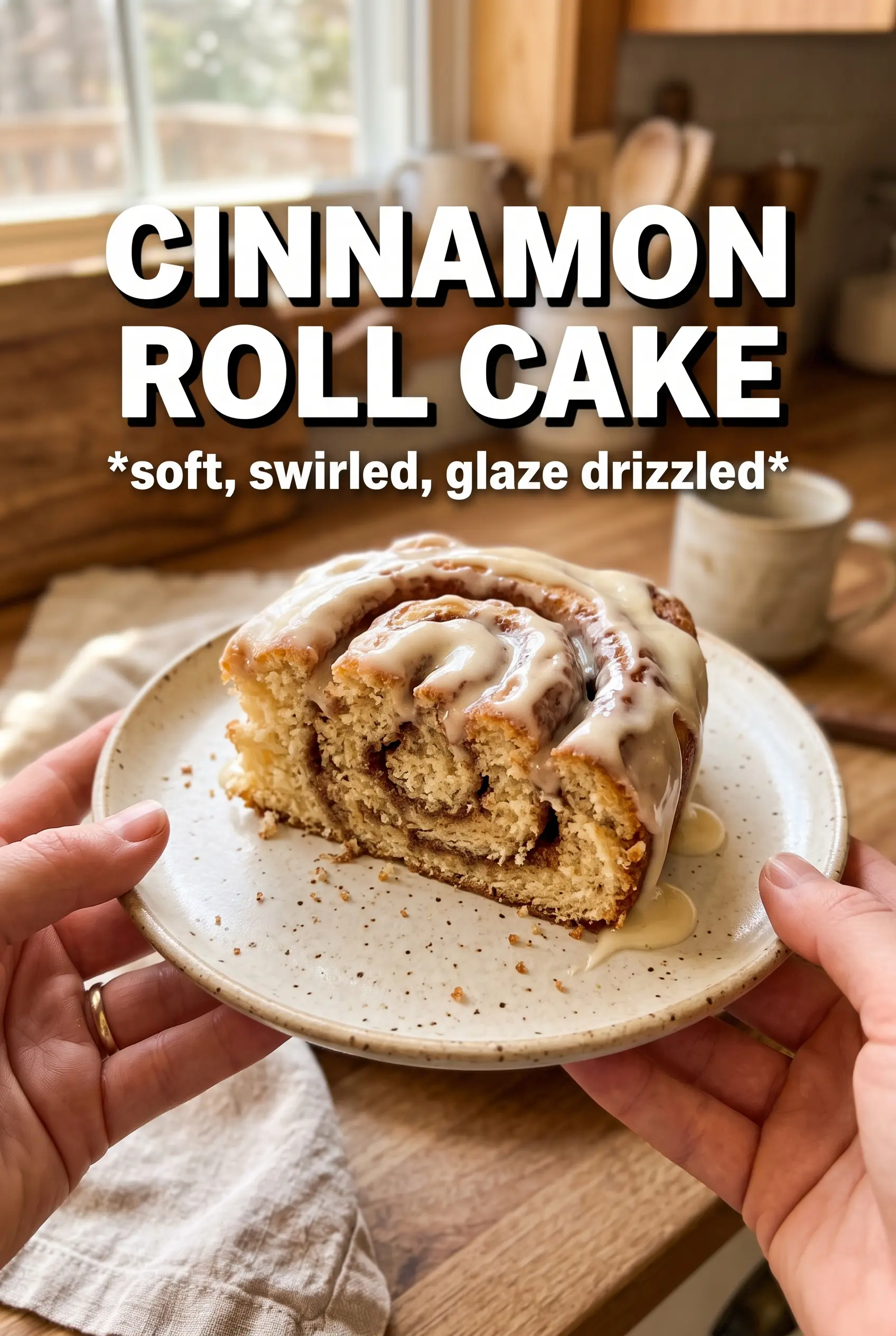
Cinnamon Roll Cake bakes up with the best parts of a bakery-style cinnamon roll: a tender vanilla cake, a brown sugar swirl that melts into every bite, and a cream cheese glaze that runs into the warm cracks on top. It cuts cleanly, serves a crowd, and still gives you that gooey, cinnamon-heavy center people go after first.
What makes this version work is the balance between a pourable cake batter and a thick filling that’s spooned on instead of spread. That filling sinks and ribbons instead of disappearing, and the extra flour in the cinnamon mixture helps it stay in distinct swirls instead of turning greasy at the bottom of the pan. The glaze goes on while the cake is still warm, which is the difference between a pretty drizzle and one that settles into the surface just enough to matter.
Below, I’ve included the little details that keep the swirl from blending out and the cake from baking up dense. If you’ve ever wanted cinnamon roll flavor without yeast, kneading, or waiting around for dough to rise, this is the one to keep nearby.
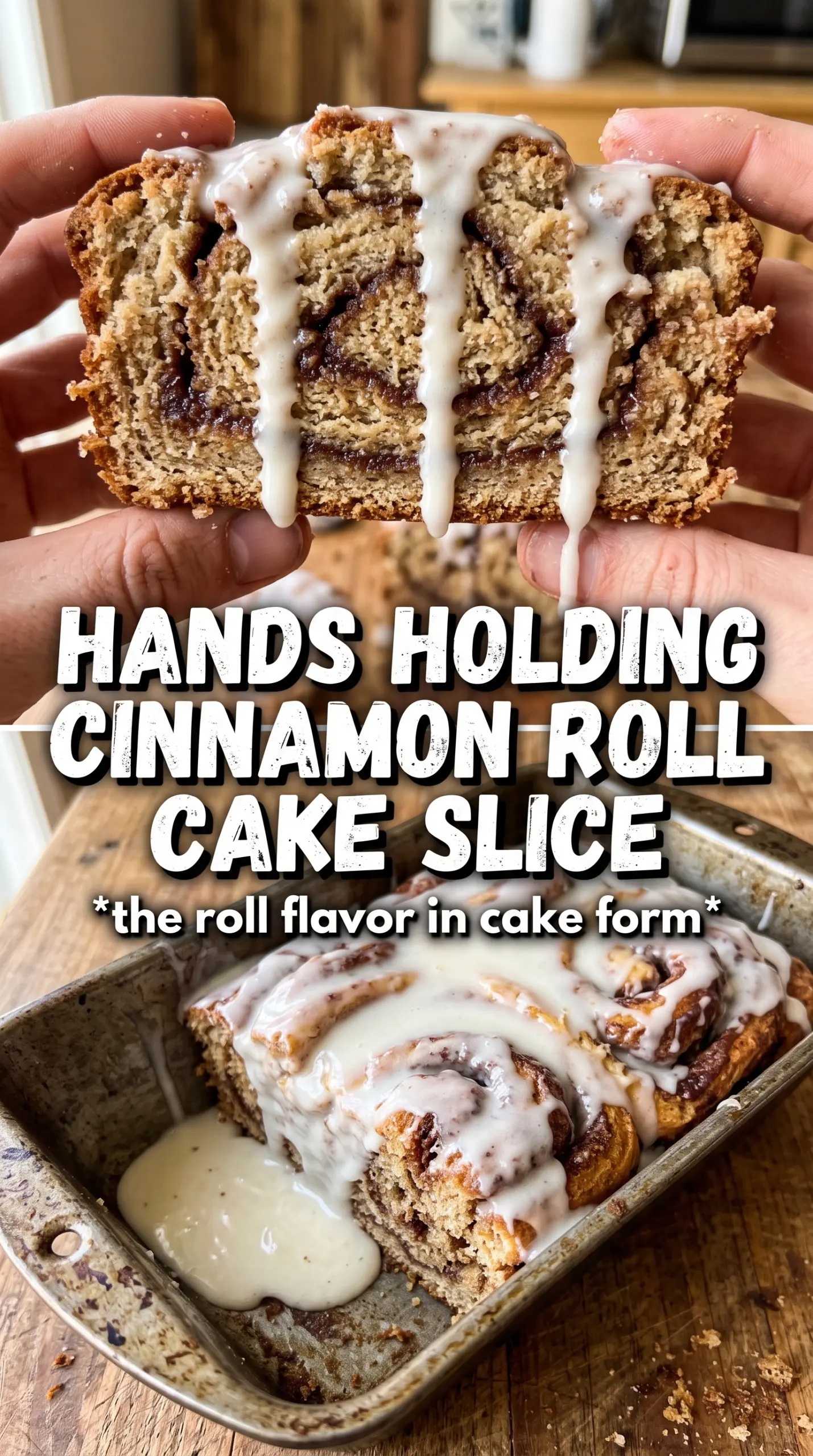
The cinnamon layer stayed swirled instead of sinking, and the glaze soaked into the warm cake just enough to taste like a real cinnamon roll without being soggy. I cut it after 20 minutes and it held together perfectly.
Like this cinnamon roll cake? Save it to Pinterest for the days when you want cinnamon roll flavor with a simple pour-and-swirl batter.
The Swirl That Stays on Top Instead of Melting Away
Cinnamon roll cake can turn flat in two ways: the batter can get too thick and bake up bready, or the filling can disappear into the cake and leave you with a brown sugar layer at the bottom. The fix here is a loose, pourable batter and a cinnamon filling that’s thick enough to sit in spoonfuls. You’re not trying to spread it evenly. You’re trying to create pockets that can sink just enough to marble through the cake without fully blending.
The other mistake happens when the pan goes into the oven with a swirl that’s been overworked. One or two slow passes with a knife are enough. If you chase the filling all through the batter, it turns muddy and you lose the contrast that makes this cake taste like cinnamon rolls instead of plain spice cake.
What the Butter, Brown Sugar, and Cream Cheese Are Each Doing
- All-purpose flour — This gives the cake its structure and gives the filling enough body to hold the swirl. Cake flour would make the crumb softer, but it also makes the cake less sturdy under that heavy cinnamon layer.
- Whole milk — The fat matters here. Whole milk keeps the batter smooth and tender, while lower-fat milk makes the cake a little less rich and more prone to drying at the edges.
- Melted butter in the cake — Melted butter helps this batter come together fast and bakes into a tender crumb. Don’t swap in oil unless you’re okay losing some of the flavor that makes this taste like a cinnamon roll base.
- Softened butter in the filling — This is what makes the cinnamon mixture spoonable and swirly instead of sandy. If it’s too cold, you’ll get clumps; if it’s melted, the filling runs straight through the batter.
- Brown sugar — This is the deep caramel note in the middle. Light or dark brown sugar both work, but dark brown sugar gives a richer, more molasses-heavy finish.
- Cream cheese glaze — The tang balances the sweetness and makes the whole cake taste more like a real cinnamon roll. If you substitute a plain powdered sugar glaze, the cake will still be good, but it won’t have that classic bakery finish.
How to Build the Cake So the Swirl Bakes in Cleanly
Mix the batter just until smooth
Whisk the dry ingredients first so the baking powder is evenly distributed, then add the milk, eggs, vanilla, and melted butter. Stop as soon as the batter is smooth and there are no flour streaks left. Overmixing here tightens the crumb and makes the cake feel more like quick bread than a soft layer cake. The batter should pour easily into the pan without needing to be spread aggressively.
Drop the filling, don’t smear it
Beat the filling until it looks like a thick, glossy paste, then dollop it over the batter in spoonfuls. That uneven placement matters. It gives you pockets of cinnamon sugar instead of a flat layer, and those pockets are what create the ribboned top and middle. If you try to spread the filling with a spatula, it drags the batter and starts blending before it hits the oven.
Swirl once, then stop
Use a knife and make broad figure-eight or S-shaped passes through the pan. You want visible trails of cinnamon running through the top, not a fully mixed batter. Bake until the center is set and a toothpick comes out clean or with a few moist crumbs, usually 30 to 35 minutes. If the top browns before the center is done, tent it loosely with foil for the last few minutes.
Glaze while the cake is still warm
Beat the cream cheese glaze until it’s smooth and drizzly, then spoon or pour it over the warm cake. The heat softens the glaze just enough to settle into the surface without disappearing completely. If the cake is fully cool, the glaze sits on top in thick streaks instead of melting into that bakery-style finish. Let the cake sit for a few minutes before slicing so the glaze can settle and the crumb can firm up.
How to Make It Fit Your Pantry, Diet, or Schedule
Dairy-Free Version
Use a plain unsweetened non-dairy milk and swap in a good plant-based butter for both the cake and filling. The cake will still bake up tender, though the filling won’t have quite the same rich melt as one made with real butter. For the glaze, use a dairy-free cream cheese that’s meant for baking so it whips smooth instead of turning grainy.
Make the Swirl Extra Deep
If you want a stronger cinnamon roll effect, add an extra tablespoon of cinnamon to the filling and use dark brown sugar. That gives you a darker ribbon and a little more caramel flavor, but it also makes the topping sweeter, so the cream cheese glaze matters even more.
Gluten-Free Adaptation
Use a 1:1 gluten-free baking flour that already contains xanthan gum. The texture will be a touch more delicate, but the cake still holds the swirl well as long as you don’t overmix the batter. Let it cool for 10 to 15 minutes before slicing so the crumb can set.
Storage and Reheating
- Refrigerator: Store covered for up to 4 days. The glaze will firm up and the crumb gets a little denser, but the cake stays moist.
- Freezer: Freeze slices tightly wrapped for up to 2 months. Freeze before glazing if you want the best texture, then thaw and glaze after warming.
- Reheating: Warm individual slices in the microwave for 15 to 20 seconds. Too much heat melts the glaze into the cake and dries out the edges.
Questions I Get Asked About This Recipe
Cinnamon Roll Cake
Ingredients
Equipment
Method
- Preheat the oven to 350F, then grease a 9x13 baking dish so the cake releases easily.
- Whisk together all-purpose flour, granulated sugar, baking powder, and salt until evenly distributed.
- Mix in whole milk, eggs, vanilla extract, and melted butter until the batter is smooth and no dry flour remains.
- Pour the batter into the prepared 9x13 baking dish and spread it evenly.
- Beat the cinnamon filling ingredients (unsalted butter, brown sugar, all-purpose flour, and cinnamon) until smooth.
- Drop the cinnamon filling by spoonfuls over the batter in scattered dots so it can be swirled throughout.
- Use a knife to swirl the filling through the batter in a pattern for visible ribbons from top to center.
- Bake for 30-35 minutes, until a toothpick inserted in the center comes out clean and the top looks set.
- Beat the cream cheese glaze ingredients until smooth, then drizzle it over the warm cake in stripes so it forms a thick layer.


