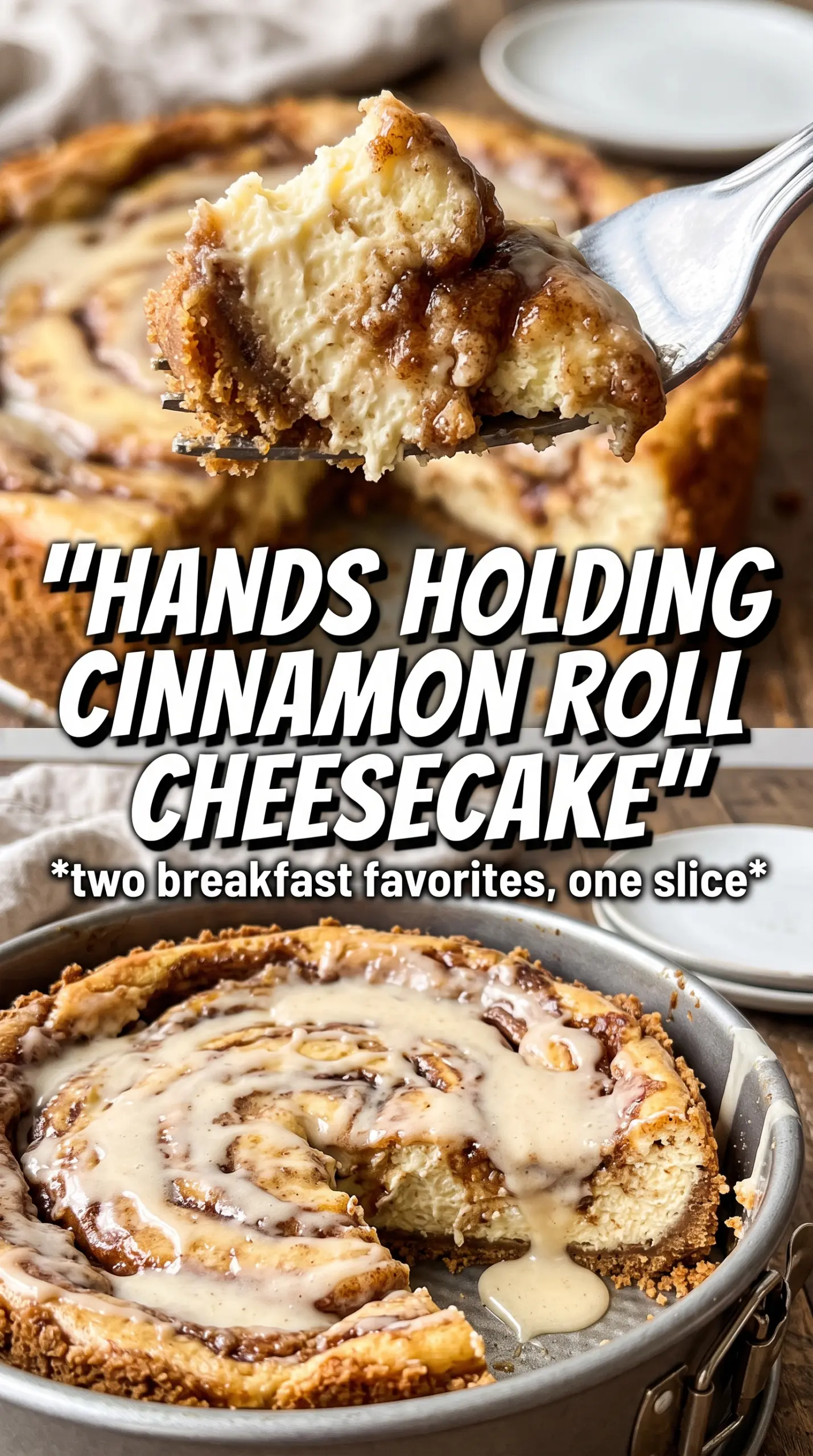
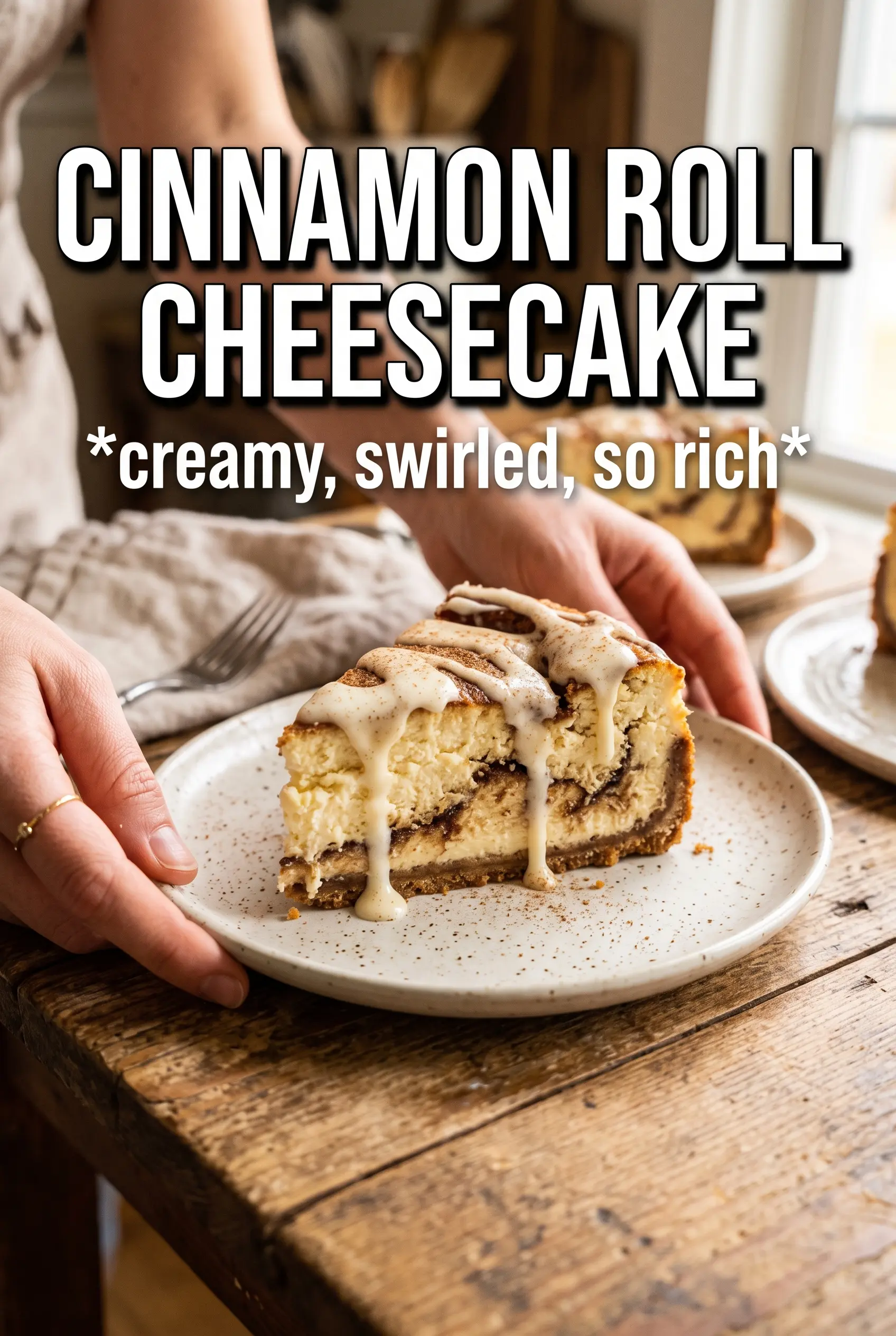
Cinnamon Roll Cheesecake lands in that sweet spot between bakery-style comfort and a dessert that actually slices cleanly. You get a crisp cinnamon graham crust, a dense but creamy cheesecake layer, and those ribbons of brown sugar cinnamon running through the middle. The glaze on top finishes it with the same nostalgic hit you expect from a fresh cinnamon roll, but in a richer, more polished slice.
What makes this version work is the balance. The crust is baked first so it stays firm under the filling, and the cheesecake batter stays plain enough to let the cinnamon swirl stand out instead of turning the whole cake muddy. The water bath matters here, too. It keeps the edges from setting too fast, which is the easiest way to end up with cracks or a dry band around the rim.
Below you’ll find the details that matter most: how to keep the swirl distinct, why the cheesecake needs its full chill time, and the one glazing trick that makes each slice look like it came from a bakery case.
The swirl stayed defined and the cheesecake set up with that silky middle I always hope for. I baked it the night before, chilled it overnight, and the slices came out perfectly clean the next day.
Save this Cinnamon Roll Cheesecake for the moment you want a bakery-style slice with a cinnamon swirl and cream cheese glaze.
The Part That Keeps the Swirl From Disappearing Into the Cheesecake
The cinnamon swirl has to stay thick enough to ribbon through the batter, not melt into it. If it gets too loose, the brown sugar dissolves into the filling and you lose those defined streaks that make each slice look special. The other place people go wrong is overmixing after the eggs go in. That adds air, and air is what causes a cheesecake to puff, crack, and fall.
Use the cinnamon swirl as a layer, not a full mixing component. Add most of the cheesecake batter first, then spoon the swirl over top and drag a knife through in a few deliberate passes. Stop while you can still see distinct ribbons. You want marbling, not a fully blended filling.
What Each Layer Is Actually Doing Here
- Graham crumbs — These give you a sturdier crust than a soft cookie base, and the cinnamon in the crumbs keeps the first bite from tasting flat. A fine crumb helps the crust pack tightly, so pulse or crush until it looks like wet sand.
- Cream cheese — Use full-fat blocks, not tub-style cream cheese. The block form bakes into a denser, smoother filling, while the softer spreadable kind can make the batter loose and grainy.
- Sour cream — This is what keeps the cheesecake from tasting heavy. It adds tang and a softer texture, and swapping it for plain yogurt works in a pinch, but the filling will be a little less rich and a little more tart.
- Brown sugar in the swirl — Brown sugar brings the molasses note that makes this taste like cinnamon roll filling instead of just cinnamon cake. Pack it lightly when you measure it so the swirl stays sweet enough against the plain cheesecake.
- Cream cheese glaze — The glaze should be pourable, not thick like frosting. If it looks too tight, add milk a teaspoon at a time until it ribbons off the spoon and settles over the top in visible drips.
Building the Cheesecake So It Bakes Evenly
Press and Par-Bake the Crust
Mix the crumbs, sugar, cinnamon, and melted butter until every crumb looks evenly moistened, then press the mixture firmly into the springform pan. You want a packed layer with no loose sandy patches at the edges. The 10-minute bake sets the crust so it doesn’t turn soggy once the filling goes in. If the crust seems crumbly after baking, it wasn’t packed tightly enough before it went into the oven.
Mix the Filling Without Whipping Air Into It
Beat the cream cheese and sugar until the mixture looks smooth and glossy, then add the eggs one at a time. Stop as soon as each egg disappears. Overbeating after the eggs go in is the fastest way to get a cheesecake that rises too much in the oven and sinks in the center as it cools. Add the sour cream, vanilla, and cinnamon at the end and mix just until combined.
Layer, Swirl, and Keep the Ribbons Clean
Pour most of the batter into the crust, then add the cinnamon swirl in spoonfuls over the surface. Add the remaining batter in small dollops so the swirl stays trapped between layers instead of sinking straight to the bottom. Drag a knife through the top in wide, shallow sweeps. If you keep stirring, the swirl fades into the filling and you lose the contrast.
Bake With Gentle Heat and Give It Time to Chill
Bake the cheesecake in a water bath until the edges are set and the center still has a slight wobble when you nudge the pan. That gentle jiggle is what you want; a fully firm center usually means the cake is already overbaked. Cool it gradually, then chill for the full 6 hours so the texture tightens and the flavors settle. If you cut it early, the slices will slump and the swirl will smear.
How to Adapt It When You Need a Different Finish
Gluten-Free Crust
Swap the graham crumbs for a gluten-free graham-style crumb or gluten-free cookie crumbs in the same volume. Keep the butter amount the same and press the crust a little more firmly, since gluten-free crumbs can be looser. The filling doesn’t need any changes.
Lighter Tang With Greek Yogurt
Replace the sour cream with full-fat plain Greek yogurt for a slightly brighter, tangier cheesecake. The texture will still set well, but it won’t taste quite as plush as the sour cream version. Use thick yogurt so the batter doesn’t thin out.
Extra Cinnamon Roll Flavor
Add a thin cinnamon sugar layer over the crust before the filling goes in if you want a sweeter, more obvious cinnamon roll note. It adds a little crunch on the bottom and makes the first bite taste closer to the center of an actual roll. Keep the layer thin so it doesn’t make the crust gritty.
Storage and Reheating
- Refrigerator: Store covered for up to 5 days. The crust softens a little by day two, but the filling stays creamy.
- Freezer: Cheesecake freezes well. Chill until firm, slice if you want portions ready to grab, then wrap tightly and freeze for up to 2 months. Thaw in the refrigerator overnight.
- Reheating: This dessert is best served cold or just slightly cool, not warmed. If you want a softer slice, let it sit at room temperature for 15 to 20 minutes; microwaving will melt the glaze and damage the texture.
Answers to the Questions Worth Asking
Cinnamon Roll Cheesecake
Ingredients
Equipment
Method
- Preheat the oven to 325°F. Press the graham crust mixture into a 9-inch springform pan, then bake for 10 minutes.
- Beat the cheesecake batter until smooth, then pour most of it over the baked crust.
- Drizzle the cinnamon swirl over the top, then drop the remaining batter on top. Swirl the surface with a knife for ribboned cinnamon streaks.
- Place the springform into a water bath setup and bake at 325°F for 60–65 minutes, until the center is just set. Cool completely, then refrigerate for 6 hours.
- Beat the glaze until smooth, then drizzle it over the chilled cheesecake right before serving.


