Classic glazed meatloaf earns its place on the table because it slices cleanly, stays moist in the center, and carries that sweet-savory ketchup glaze all the way through dinner without turning dry or bland. The best versions don’t taste like a loaf of seasoned beef; they taste balanced, with enough richness from the meat, enough softness from the panade, and enough tang in the glaze to keep each bite lively.
The trick is in how the mixture is handled. Grated onion melts into the beef instead of leaving crunchy bits behind, breadcrumbs and milk keep the texture tender, and the egg binds everything without making it heavy. Mix just until the ingredients come together and the loaf holds its shape. Overmixing packs it tight, and that’s when meatloaf starts eating like a dense brick instead of a comfort-food main.
Below, I’ve included the small details that matter most: how to keep the glaze from sliding off, why the rest time matters, and what to change if you need to adapt the recipe for a different crowd or pantry.
The glaze set up beautifully and the meatloaf sliced without falling apart. I used the loaf pan method and it stayed moist all the way through, even the next day.
Classic glazed meatloaf with that sticky ketchup topping belongs in your dinner rotation for cozy slices, clean cuts, and leftovers that reheat without drying out.
The Reason This Loaf Stays Tender Instead of Tight
The most common meatloaf mistake is packing the mixture too hard or stirring it until the beef looks paste-like. That’s what turns the finished loaf dense and springy. Here, the breadcrumbs and milk work as a softener, but they can only do their job if the meat is mixed gently and stopped the moment everything is evenly distributed.
The other thing that changes the outcome is the grated onion. It disappears into the loaf and gives you moisture and flavor without leaving raw chunks that can pull apart slices. Worcestershire adds depth in the background, not a loud sauce flavor, and the thyme keeps the loaf tasting like dinner, not just seasoned ground beef.
- Ground beef 80/20 — This fat level keeps the loaf juicy without turning greasy. Leaner beef can work, but the texture will be drier unless you add extra moisture.
- Breadcrumbs and milk — Together they form the panade that holds onto moisture during baking. If you only have plain breadcrumbs, use them; if you only have panko, crush it a bit finer so the texture stays even.
- Grated onion — Grating matters because it melts into the meat and seasons it from the inside. Chopped onion works in a pinch, but you’ll get firmer bits and a less cohesive slice.
- Worcestershire sauce — This gives the loaf its savory backbone. There isn’t a true stand-in for the same depth, but soy sauce can cover part of the gap if that’s what you have.
Building the Glaze So It Bakes On, Not Off
The glaze should taste sharp before it goes on the meatloaf. That’s why the vinegar matters. Ketchup and brown sugar can go flat and sticky-sweet on their own, but the vinegar keeps the topping bright so it caramelizes instead of just clinging in a sugary layer.
Spread half the glaze early, then add the rest near the end. That timing gives the top a chance to set without burning the sugar in the first bake. If you put all of it on at once, the sugars darken too quickly and the top can look scorched before the center reaches temperature.
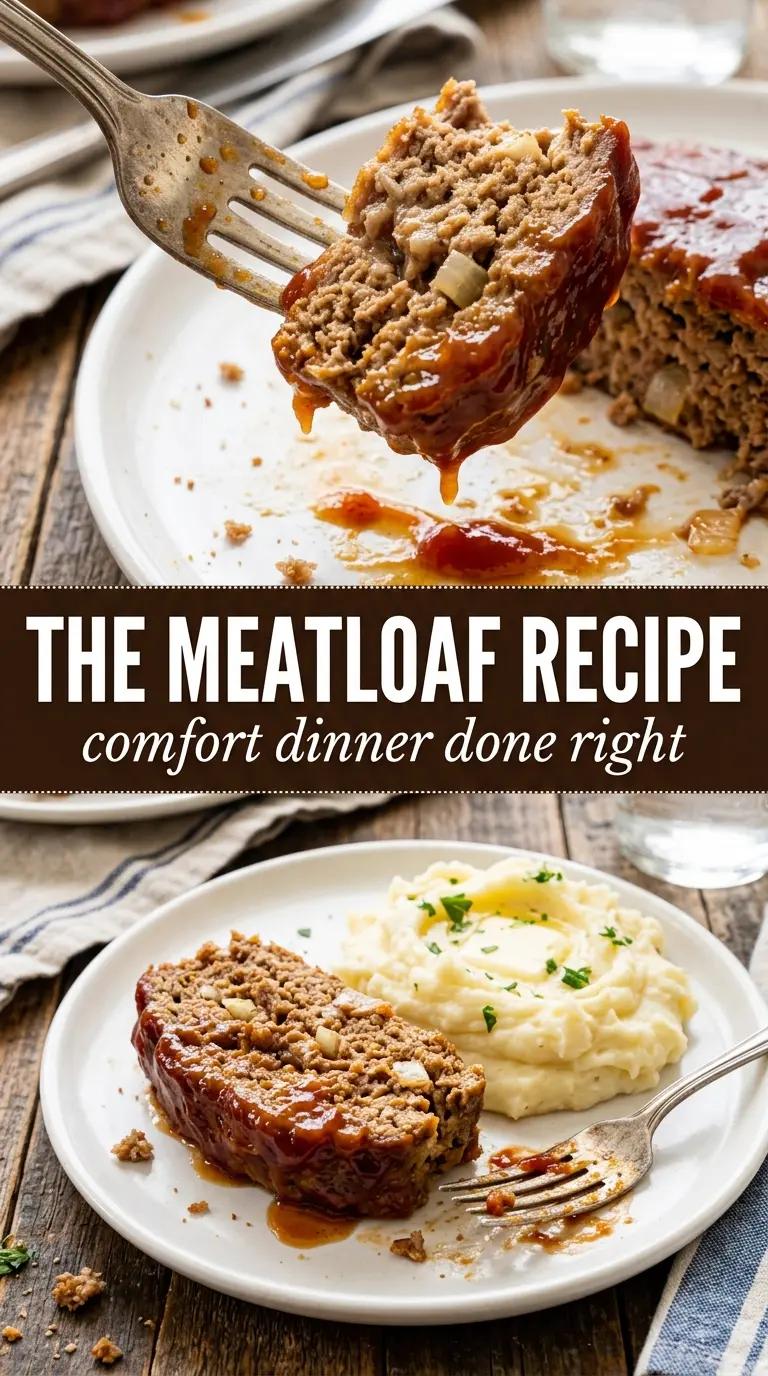
- Ketchup — This is the base of the glaze and the finish that defines the recipe. Use a brand you like the taste of, because it will taste exactly like itself after baking.
- Brown sugar — It helps the glaze caramelize and cling. You need enough for shine and color, but not so much that it turns candy-sweet.
- Apple cider vinegar — This keeps the glaze from tasting heavy. If you don’t have it, white vinegar works, though the flavor will be a little less rounded.
- Worcestershire sauce — A small amount deepens the glaze and ties it back to the meat mixture. Leave it out and the topping will still work, but it won’t taste as layered.
The Part of the Bake That Decides Whether It Slices Cleanly
Mixing the Meat Gently
Combine the beef, breadcrumbs, eggs, milk, grated onion, garlic, Worcestershire, thyme, garlic powder, salt, and pepper just until the mixture looks evenly moistened. Stop as soon as you can press it together and it holds. If you keep mixing after that point, the proteins tighten and the loaf turns tough. A light hand is what gives you that moist, dense interior without gumminess.
Shaping for Even Cooking
Form the loaf on a foil-lined baking sheet if you want more caramelized edges, or use a loaf pan for a tighter, more uniform shape. The baking sheet version cooks a little more evenly and lets some fat drain away, while the pan keeps the loaf neat and tall. Either way, avoid pressing it down too hard. The loaf should look compact, not compressed.
Glazing in Two Layers
Spread half the glaze over the loaf before it goes into the oven, then add the rest after about 45 minutes. That second layer lands on a surface that has already started to set, so it stays glossy instead of disappearing into the meat. Bake until the center reaches 160°F. If the top starts to darken before the inside is done, tent it loosely with foil for the last part of the bake.
Resting Before You Slice
Give the meatloaf 10 minutes after it comes out of the oven. That rest lets the juices settle and keeps them from pouring out the second you cut into it. If you slice too soon, even a perfectly cooked loaf can look dry because the moisture ends up on the board instead of in the meat.
How to Adapt This Meatloaf Without Losing the Texture
Gluten-Free Version
Swap the breadcrumbs for certified gluten-free breadcrumbs or crushed gluten-free crackers. You still need that dry ingredient to absorb the milk and keep the loaf tender; leaving it out makes the texture too loose. Use the same amount by volume and mix until just combined.
Dairy-Free Meatloaf
Replace the milk with unsweetened plain oat milk or another neutral non-dairy milk. The role here is moisture, not flavor, so you don’t need anything fancy. Just avoid strongly flavored plant milks, since they can show up in the final taste.
Make It a Little Richer
If you want a softer, more classic diner-style loaf, swap half the beef for ground pork. Pork adds a little sweetness and tenderness, but too much can make the loaf feel heavy. Keeping it at a 50/50 blend gives you a richer bite without losing structure.
Storage and Reheating
- Refrigerator: Store sliced or whole for up to 4 days. The glaze may thicken slightly, but the loaf stays moist.
- Freezer: Meatloaf freezes well. Wrap individual slices tightly and freeze for up to 3 months for the easiest reheating.
- Reheating: Reheat covered in the oven at 325°F with a splash of water or broth in the pan. The biggest mistake is blasting it in the microwave until the edges get dry and the center turns rubbery.
Questions I Get Asked About This Recipe
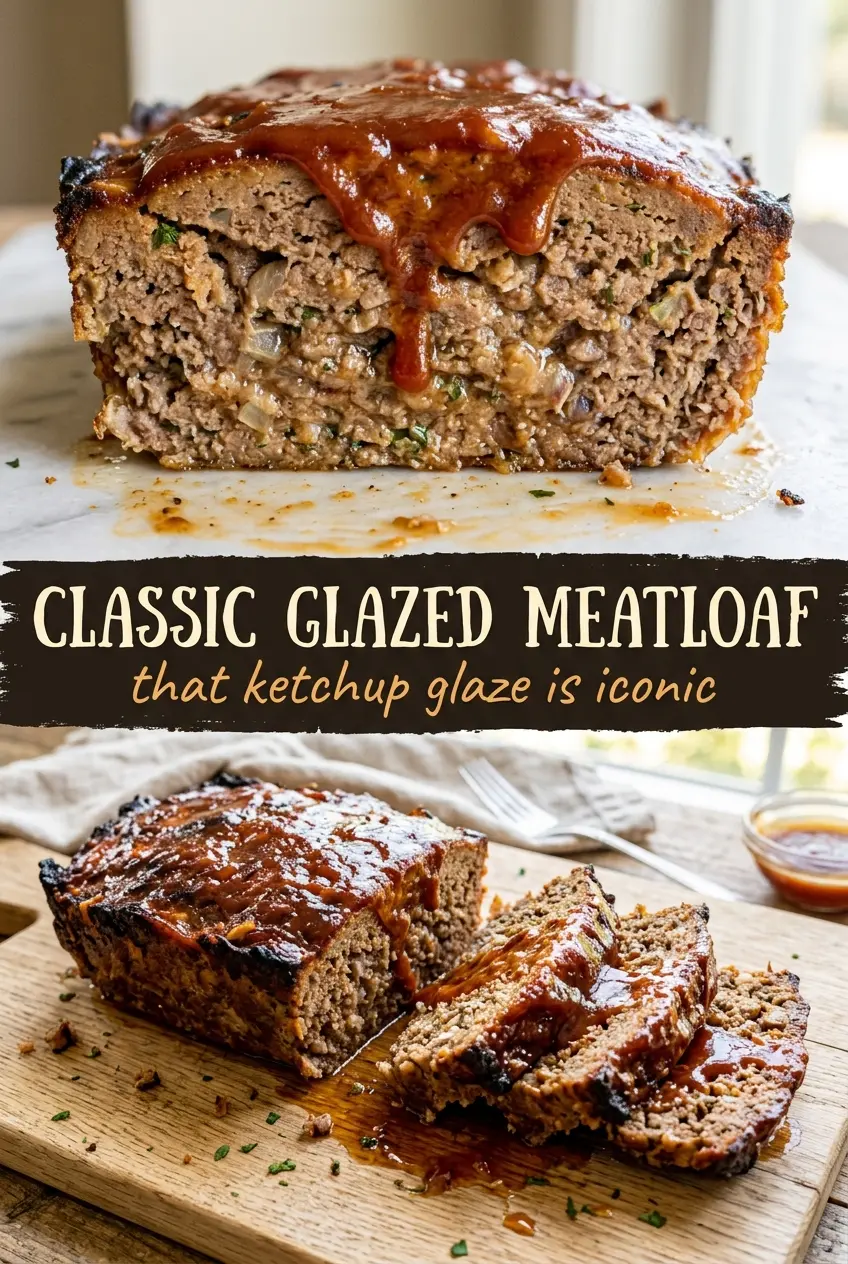
Classic Glazed Meatloaf
Ingredients
Equipment
Method
- Preheat the oven to 350°F and line a loaf pan or baking sheet with foil so the meatloaf releases easily.
- In a large bowl, combine ground beef, breadcrumbs, beaten eggs, whole milk, grated onion, minced garlic, Worcestershire sauce, dried thyme, garlic powder, salt, and black pepper and mix until just combined.
- Shape the mixture into a loaf on the baking sheet or press into a loaf pan, keeping the surface fairly even for even glazing.
- Mix the glaze ingredients (ketchup, brown sugar, apple cider vinegar, and Worcestershire sauce) and spread half over the top of the meatloaf for a first caramelizing layer.
- Bake for 45 minutes at 350°F, then spread the remaining glaze over the top and continue baking.
- Bake 15–20 more minutes at 350°F until the internal temperature reaches 160°F, with the glaze turned shiny and caramelized.
- Rest the meatloaf for 10 minutes before slicing so the juices set and the loaf stays moist instead of crumbling.