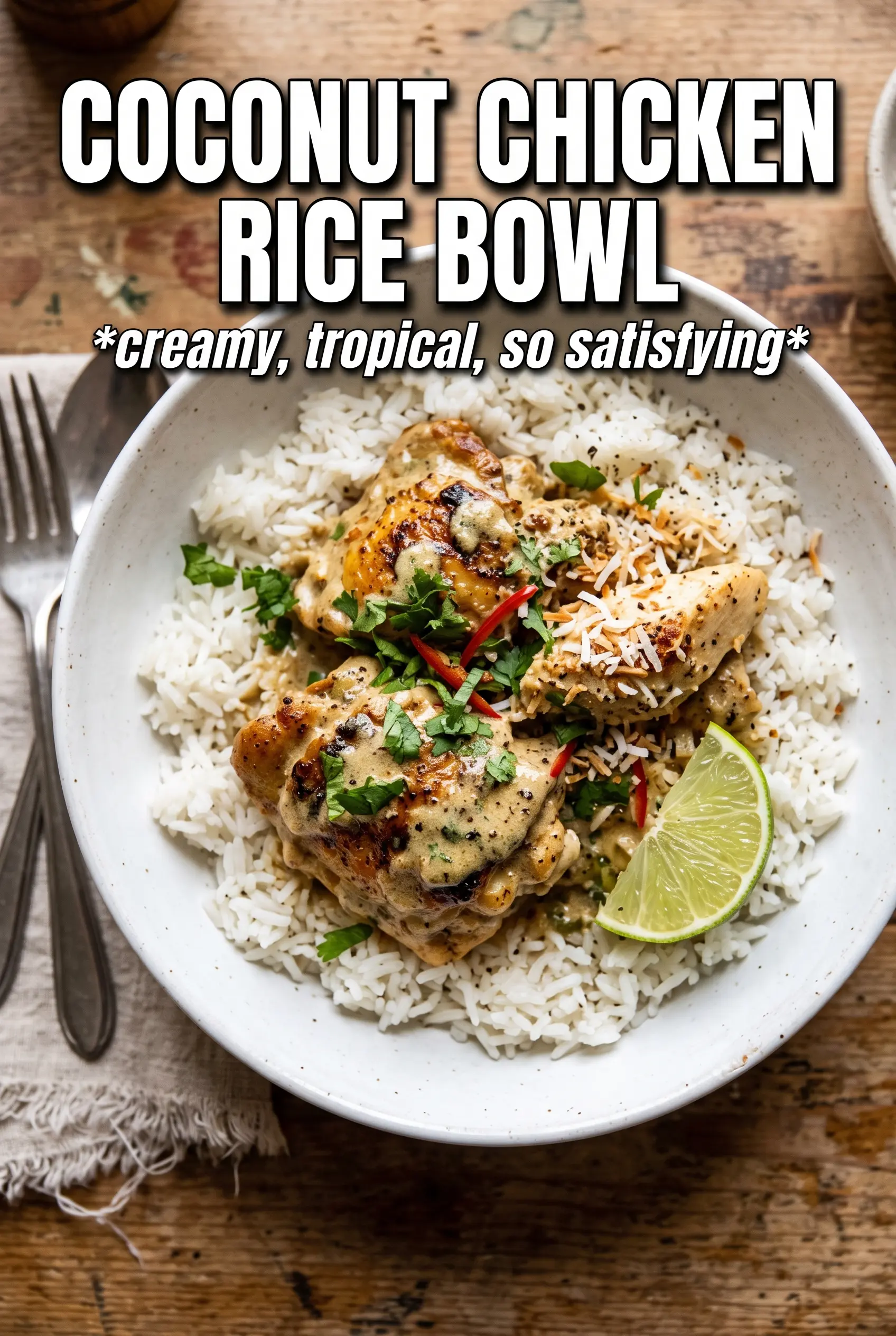
Coconut chicken rice bowls land in that sweet spot between fast and satisfying: tender chicken, a silky coconut sauce, and bright toppings that keep every bite from feeling heavy. The sauce clings to the rice instead of soaking straight through it, and the mango salsa cuts through the richness with a fresh, juicy finish. It’s the kind of bowl that feels pulled together without asking much from you.
What makes this version work is the order of operations. The chicken gets a hard sear first, which gives you browned bits in the pan and keeps the meat from tasting pale or boiled. Then the garlic, ginger, coconut milk, soy sauce, lime, honey, turmeric, and curry paste build a quick sauce that reduces just enough to coat the chicken without turning gluey. Jasmine rice matters here too — its fragrance and soft texture are exactly what the coconut sauce wants underneath.
Below, I’ll show you how to keep the sauce smooth, what to do if you want to swap proteins, and the small finishing steps that make this bowl taste like something you’d happily order again.
The coconut sauce turned glossy and thick after the simmer, and the lime at the end kept it from tasting flat. I used the mango salsa on top like you suggested, and it made the whole bowl taste bright instead of heavy.
Save this coconut chicken rice bowl for the nights when you want a creamy, one-pan chicken dinner with jasmine rice and a fresh mango finish.
The Trick to Keeping Coconut Sauce Creamy Instead of Watery
The biggest mistake with coconut chicken bowls is rushing the simmer. Coconut milk needs a few minutes for the sauce to reduce and thicken slightly, and if the heat is too high, it can separate before it ever gets a chance to coat the chicken. The other thing that helps is searing the chicken before the sauce goes in. That gives you a little color and leaves behind browned bits that deepen the whole pan.
Keep the simmer gentle once the coconut milk goes in. You want small bubbles around the edges, not a hard boil. A hard boil can make the sauce look broken and can tighten the chicken before it’s fully juicy. The sauce is ready when it looks glossy and lightly coats the back of a spoon.
What Each Ingredient Is Actually Doing in This Bowl

- Chicken breast — Bite-sized pieces cook quickly and pick up the sauce well. Thighs work too if you want a richer result, but breasts stay lighter and are easier to keep on a fast weeknight timeline.
- Coconut milk — Full-fat coconut milk gives the sauce body and that soft, rich finish. Light coconut milk will work in a pinch, but the sauce won’t cling the same way and it reduces less luxuriously.
- Ginger and garlic — These are not background notes here; they keep the coconut milk from tasting flat. Fresh ginger matters more than dried in this recipe because it adds brightness that survives the simmer.
- Red curry paste and turmeric — The curry paste adds depth and a little warmth, while turmeric brings color and a subtle earthy note. Don’t add a lot more curry paste unless you know the brand runs mild; some are saltier and stronger than others.
- Lime juice and honey — Lime wakes up the sauce at the end, and honey rounds out the heat and salt so the bowl tastes balanced. Add the lime after the simmer so it stays fresh instead of dull.
- Mango salsa — This is the piece that turns the bowl from creamy to bright. If you don’t have it, diced mango with cilantro and lime still gives you the same sweet-sharp contrast.
Building the Bowl So Every Bite Stays Balanced
Searing the Chicken First
Season the chicken with salt and pepper, then cook it in hot oil until the pieces are golden on the outside and just cooked through. You’re not trying to brown every surface perfectly; you’re trying to build flavor and keep the chicken from overcooking later in the sauce. If the pan is crowded, the chicken will steam instead of sear, so work in batches if needed. Pull it out as soon as it’s done so it doesn’t go dry.
Pulling Flavor from the Pan
Use the same pan for the garlic and ginger. That’s where the flavor lives after the chicken comes out. Stir them just until fragrant, about a minute, because garlic burns fast and turns bitter if you get distracted. Once the coconut milk and seasonings go in, scrape up any browned bits from the bottom; they melt right into the sauce.
Letting the Sauce Reduce at the Right Pace
Return the chicken to the pan and simmer gently for 10 to 12 minutes. The sauce should thicken a little and coat the chicken, not turn into paste. If it looks thin near the end, give it a couple more minutes uncovered. If it gets too thick, splash in a spoonful of water or coconut milk and stir until it loosens back up.
Finishing the Bowl
Spoon the coconut chicken over warm jasmine rice, then add mango salsa, cilantro, and lime wedges. The rice should be hot enough to absorb some sauce, but not so wet that the bowl turns muddy. A final squeeze of lime right before eating sharpens the whole dish and keeps the coconut from feeling heavy.
How to Adapt This Coconut Chicken Rice Bowl Without Losing What Makes It Good
Dairy-Free by Design
This recipe is already dairy-free as written, which is part of why the coconut milk works so well here. If you’re checking labels, just confirm your curry paste doesn’t contain dairy additives. The bowl still feels rich without needing cream or butter.
Swap the Chicken for Shrimp
Shrimp works if you want an even faster dinner, but add it near the end so it doesn’t overcook in the sauce. It only needs a few minutes until pink and opaque. The result is lighter and a little sweeter, with less of the hearty bite you get from chicken.
Make It Gluten-Free
Use tamari or a certified gluten-free soy sauce in place of regular soy sauce. Everything else in the bowl fits naturally, including the rice and coconut milk. The flavor stays the same, but you keep the dish fully gluten-free without any extra effort.
Make It Spicier or Milder
Add a little more red curry paste if you want sharper heat and a deeper savory edge. For a milder bowl, use less curry paste and lean harder on the lime and mango salsa for brightness. The sauce will still taste complete either way, but the balance shifts depending on how much heat you build in early.
Storage and Reheating
- Refrigerator: Store leftovers in an airtight container for up to 4 days. The sauce will thicken as it chills, and the rice may dry out a little.
- Freezer: The chicken and sauce freeze well for up to 2 months. Freeze the rice separately if you can, and keep the mango salsa fresh instead of freezing it.
- Reheating: Reheat gently on the stove or in the microwave with a splash of water or coconut milk to loosen the sauce. High heat can make the chicken tough and can break the coconut sauce, so go low and slow.
Answers to the Questions Worth Asking
Coconut Chicken Rice Bowl
Ingredients
Equipment
Method
- Season the chicken breast pieces with salt and pepper, then heat oil in a pan over high heat and sear for 4–5 minutes until golden; set the chicken aside.
- In the same pan, sauté the minced garlic and grated ginger for 1 minute over heat until fragrant, then stir in the coconut milk, soy sauce, lime juice, honey, turmeric, and red curry paste.
- Stir until the mixture is smooth and bring it to a simmer with visible bubbling around the edges, then return the seared chicken to the pan.
- Simmer for 10–12 minutes until the sauce reduces and thickens slightly and the chicken is cooked through, indicated by no pink in the center and a glossy coating on the chicken.
- Serve the coconut-sauced chicken over cooked jasmine rice and top with mango salsa, fresh cilantro, and lime wedges.