Tender chicken thighs tucked into fragrant coconut lime rice make this the kind of one-pan dinner that disappears fast. The rice turns creamy at the edges without going mushy, the chicken stays juicy, and the lime keeps everything bright enough to keep you going back for another forkful. It’s comfort food, but it doesn’t sit heavy.
What makes this version work is the balance in the pot. Coconut milk brings richness, but it needs broth and lime to keep the rice from tasting flat. Searing the chicken first adds the golden flavor that a simmer alone can’t build, and toasting the rice for a couple of minutes before adding liquid gives the finished dish a better texture and helps each grain stay distinct.
Below, I’ll walk through the one part that matters most if you want the rice to cook evenly under the chicken, plus a few smart swaps if you need to work with what’s already in your kitchen.
The rice came out perfectly creamy without getting sticky, and the lime at the end kept the coconut from feeling too rich. I loved that the chicken stayed juicy even after the full simmer time.
Save this coconut lime chicken and rice for the night you want one skillet, juicy chicken, and bright coconut rice without a pile of dishes.
The Part That Keeps the Rice Creamy Instead of Gummy
Rice in coconut milk can go wrong fast if the liquid ratio is off or the pan runs too hot. Coconut milk is rich, but it doesn’t behave like plain broth; it needs enough water-based liquid to hydrate the grains fully, and it needs a low simmer once the chicken goes back in. If the heat is too high, the bottom layer tightens before the top finishes cooking, and you end up with a pan that looks done but still tastes chalky in the center.
The other thing that matters here is the rest time. Once the rice is tender and the chicken is cooked through, pull the pan off the heat and give it five minutes with the lid on. That pause lets the steam settle through the grains and finishes the texture without stirring the rice into a paste.
- Long-grain white rice — This is the rice that stays fluffy enough to soak up the coconut broth without collapsing. Short-grain rice will turn much softer and more pudding-like.
- Boneless chicken thighs — Thighs stay tender during the simmer and hold up better than breasts here. Chicken breast can work, but it cooks faster and dries out sooner.
- Coconut milk — Use full-fat coconut milk for the best body and the richest sauce around the rice. Light coconut milk will taste thinner and won’t give you that same creamy finish.
- Lime juice and zest — The zest carries the lime aroma, while the juice cuts through the richness at the end. Fresh lime matters here; bottled juice tastes flat against coconut.
- Fish sauce or soy sauce — Either one adds salt and depth. Fish sauce gives a little more savory complexity, while soy sauce makes the dish easier to keep vegetarian-adjacent if you swap the chicken for tofu later.
What Each Ingredient Is Actually Doing in This Recipe

- Primary ingredient (the star) — Quality matters most. Choose the best you can find.
- Cooking medium (oil, butter, or broth) — This carries flavors and prevents dryness.
- Seasonings (salt, pepper, spices, herbs) — Layer flavors so nothing overpowers. Build depth gradually.
- Aromatics (garlic, onion, herbs) — Cook with fat to bloom flavors. Become the foundation.
- Supporting ingredients — Complement the main ingredient without overpowering it.
- Sauce or liquid (if applicable) — Brings flavors together. Balance richness with acid.
- Acid (lemon, vinegar, wine, or other) — Brightens and prevents flat-tasting results.
- Final finish (garnish, glaze, or sauce) — Prevents one-dimensional taste and adds visual appeal.
Building the Flavor Before the Lid Goes On
Getting the Chicken Golden
Season the chicken well, then sear it in hot oil until the surface turns a deep golden brown. You’re not cooking it through at this point; you’re building the flavor that will season the rice later. If the pan is crowded, the chicken steams instead of browns, so work in batches if your skillet is small.
Waking Up the Garlic and Ginger
Once the chicken is out, the garlic and ginger go into the same pan for just a minute. They should smell fragrant right away, not dark or bitter. If they start to brown hard, the heat is too high and they’ll taste sharp in the finished dish.
Letting the Rice Soak Up the Broth
Stir the rice through the aromatic oil before adding the liquids. That quick toast helps the grains keep their shape and gives the finished dish a better texture. Add the coconut milk, broth, lime, fish sauce, and sugar, then stir well so nothing is stuck to the bottom before the chicken goes back in.
Finishing Under a Tight Lid
Nestle the chicken thighs into the rice, cover the pan, and keep the heat low enough for a gentle simmer. You want small bubbles, not an aggressive boil. If the liquid boils too hard, the rice on the bottom can catch while the top stays undercooked, and the chicken can tighten up before the rice is ready.
Coconut Chicken with Jasmine Rice
Jasmine rice gives the dish a softer, more perfumed finish and leans into the coconut flavor, but it can go a little more delicate than long-grain white rice. If you use it, keep a close eye on the liquid level and start checking a few minutes early.
Dairy-Free and Naturally Creamy
This recipe is already dairy-free as written, so you don’t need to change anything to keep it that way. The full-fat coconut milk handles the creaminess on its own, which is what makes the sauce feel rich without needing butter or cream.
Soy Sauce Instead of Fish Sauce
Soy sauce works well if fish sauce isn’t in your pantry. The dish will taste a little less layered and a touch more familiar, but you’ll still get the salty backbone that keeps the coconut from tasting one-note.
How to Stretch It for More People
You can scale this up, but use a wider pan instead of a deeper pot if you can. Wide surface area helps the rice cook evenly and keeps the chicken from piling up in the center, where the steam gets trapped.
Storage and Reheating
- Refrigerator: Store in an airtight container for up to 4 days. The rice will firm up as it chills, but the flavor actually gets deeper overnight.
- Freezer: It freezes well for up to 2 months. Cool it completely first, then freeze in portions so the rice reheats more evenly.
- Reheating: Reheat gently on the stove or in the microwave with a splash of broth or water. The common mistake is blasting it on high heat, which dries out the chicken and turns the rice gluey before the center is hot.
Answers to the Questions Worth Asking
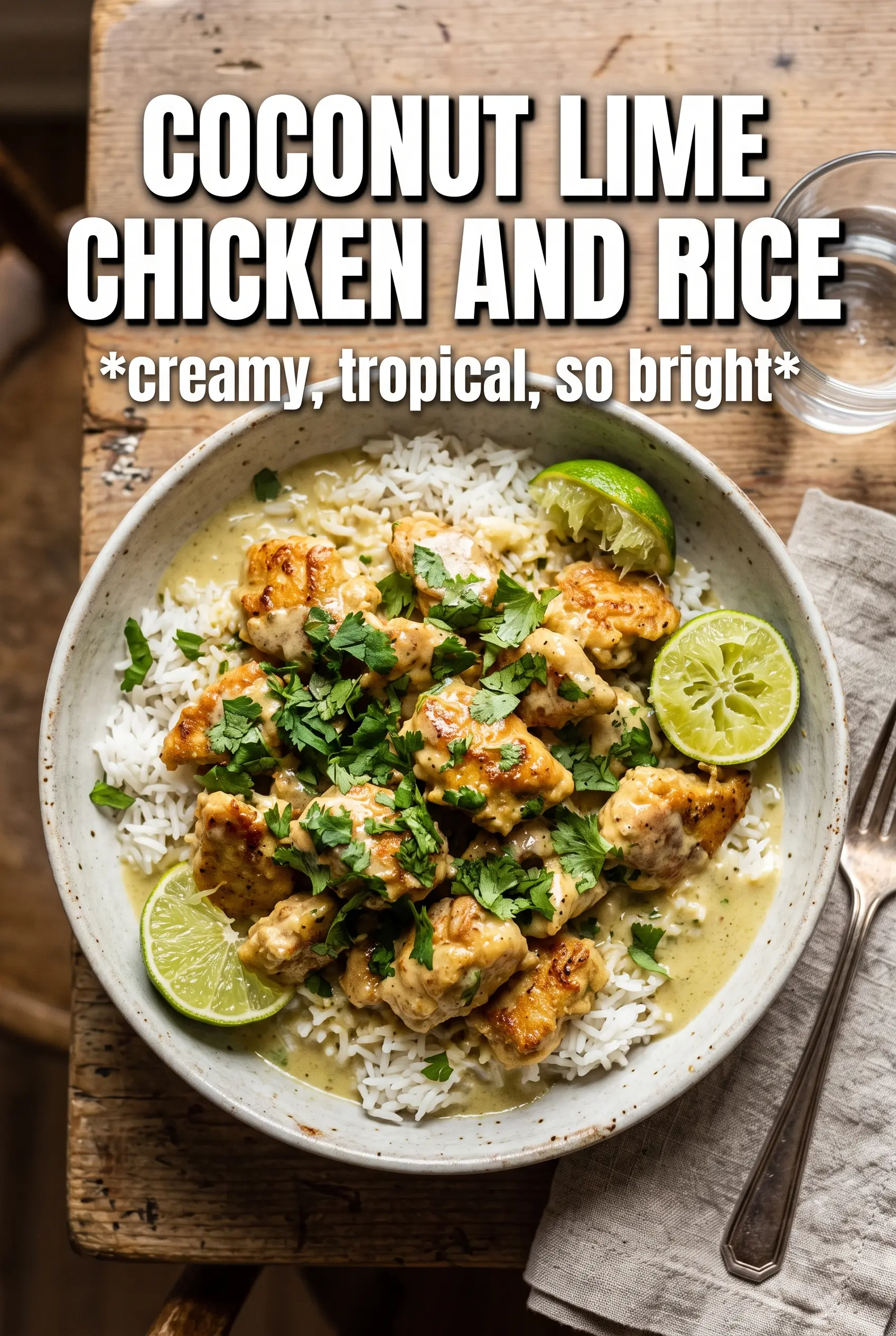
Coconut Lime Chicken and Rice
Ingredients
Equipment
Method
- Season the boneless chicken thighs with salt and black pepper to taste. Heat oil in a large skillet over high heat and sear the thighs for 4–5 minutes per side until golden, then remove and set aside (visual cue: browned edges).
- In the same pan, sauté garlic cloves, minced and fresh ginger, grated for 1 minute. Add long-grain white rice and toast for 2 minutes while stirring (visual cue: lightly dry-roasted rice smell).
- Add coconut milk, chicken broth, lime juice, lime zest, fish sauce or soy sauce, and sugar to the pan. Stir and bring to a simmer over medium-high heat (visual cue: small bubbling across the surface).
- Nestle the boneless chicken thighs into the rice, reduce heat to low, and cover. Cook for 18–20 minutes until the rice is tender and the chicken is cooked through (visual cue: liquid is mostly absorbed and the rice grains are soft).
- Rest the pot for 5 minutes with the lid on. Fluff the rice gently (visual cue: grains separate and look fluffy).
- Serve with fresh cilantro and lime wedges for serving (visual cue: cilantro scattered on top and lime wedges placed at the ready).