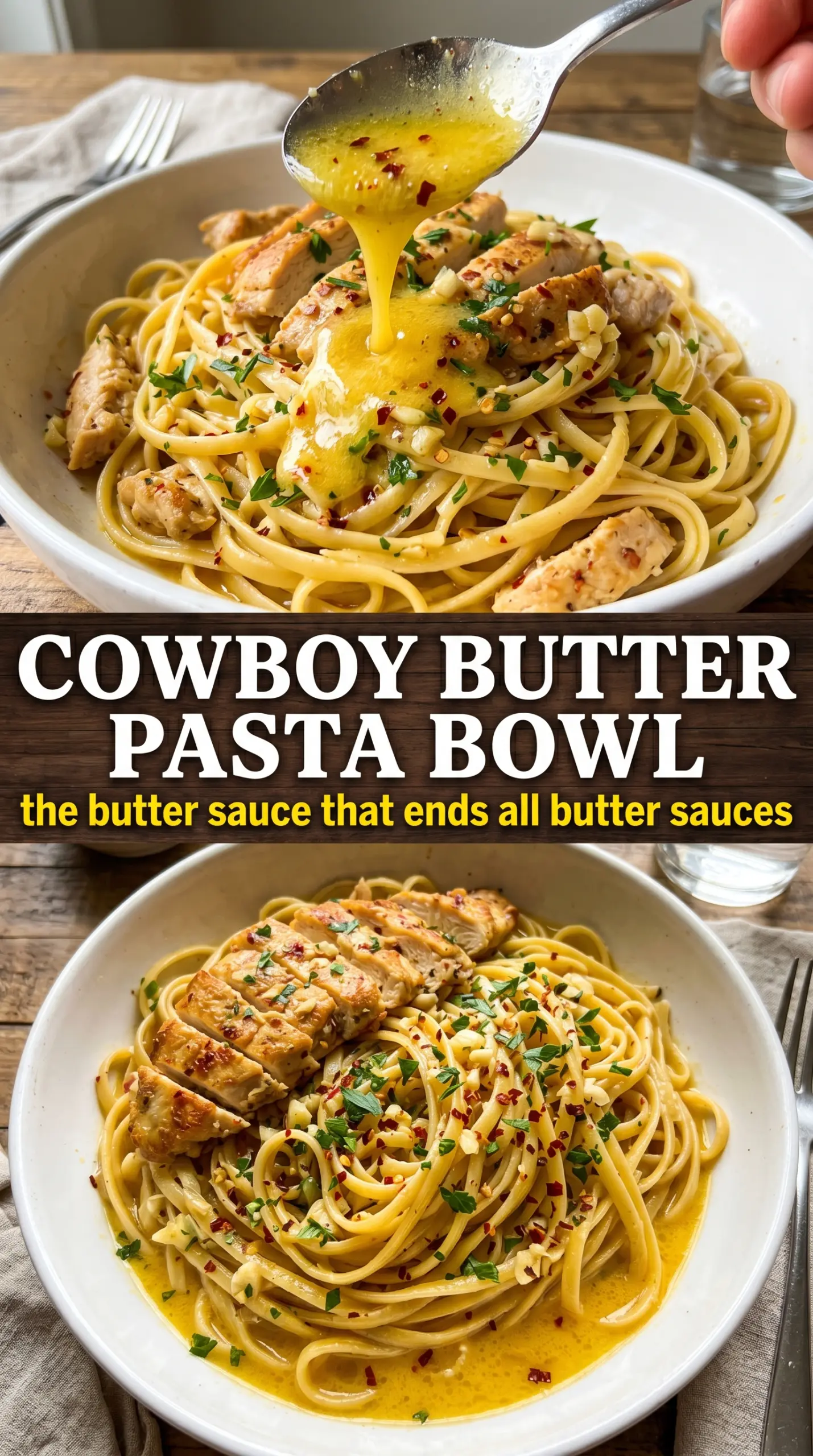
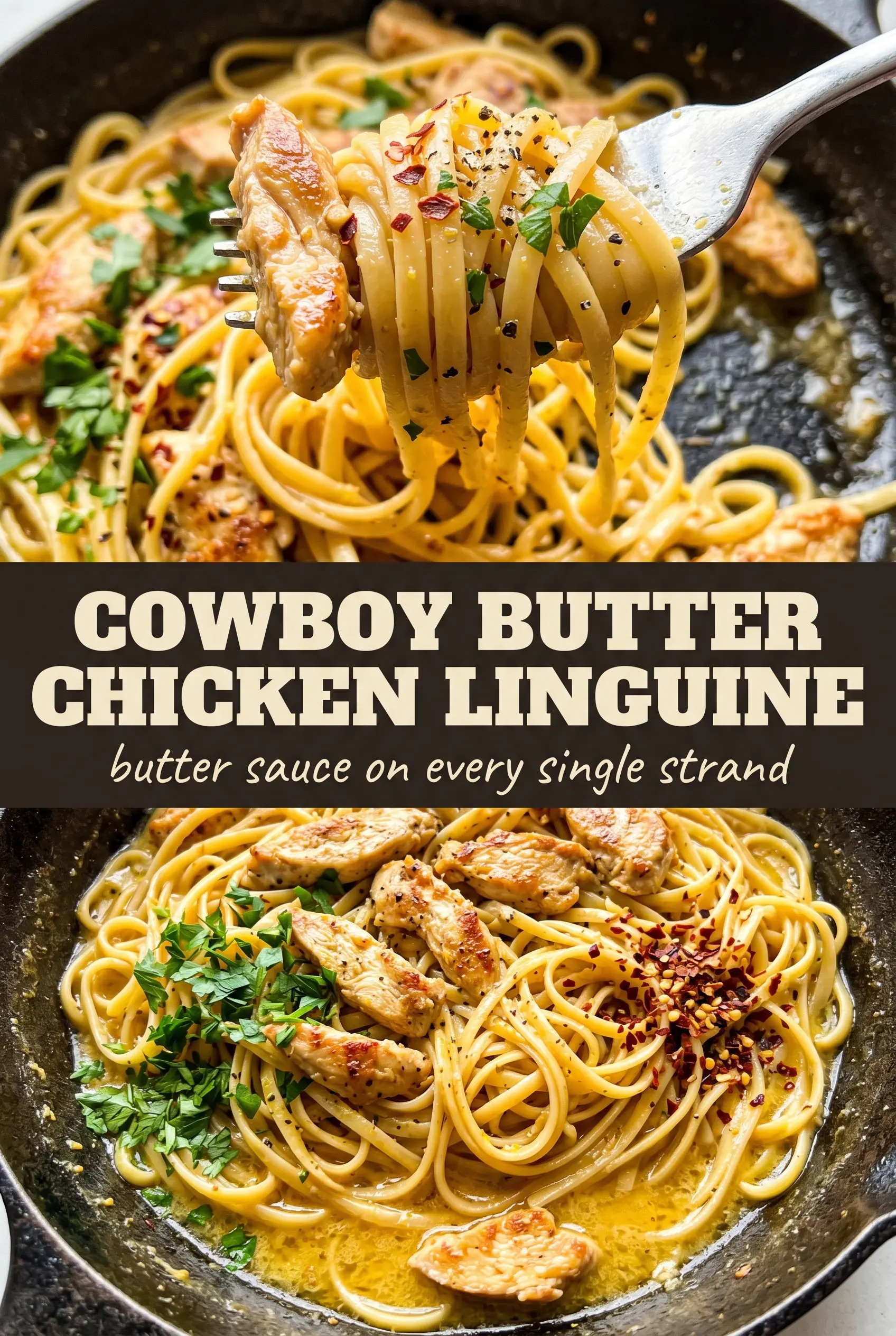
Linguine coated in cowboy butter has a way of making an ordinary chicken pasta feel louder, brighter, and a little addictive. The sauce clings to every strand, the chicken stays seared and savory, and the lemon, garlic, and herbs keep the whole dish from feeling heavy. It lands right in that sweet spot between weeknight easy and dinner-that-gets-noticed.
What makes this version work is timing. The chicken gets a hard sear first so it brings browning into the final bowl, then the sauce is built in the same skillet so all those browned bits stay in play. The butter goes in after the garlic has had a minute to wake up, and the pasta water helps the sauce turn glossy instead of greasy.
Below, I’ll show you how to keep the sauce smooth, how to judge the chicken so it stays juicy, and which swaps still keep the cowboy butter character intact.
The sauce clung to the linguine perfectly and the little bit of pasta water made it silky instead of oily. My husband said the chicken tasted like it came from a restaurant.
Save this cowboy butter chicken linguine for a bold pasta night with seared chicken, lemony butter sauce, and just enough heat.
The Secret Is Keeping the Butter Sauce Loose Until the Very End
The biggest mistake with cowboy butter pasta is letting the sauce sit and thicken before the noodles go in. Butter-based sauces tighten fast, and if the pan is too hot or the pasta water is added too late, you end up with a slick coating instead of a sauce that actually hugs the linguine. The fix is simple: build the flavor in the skillet, then loosen it with starchy pasta water while the pasta is still hot.
Another thing worth respecting here is the chicken. A crowded pan will steam the strips instead of giving them those dark edges that make the final dish taste cooked on purpose. Work in a single layer if you need to, because browned chicken adds more to this dish than any extra seasoning ever could.
- Cajun seasoning — This does the heavy lifting on the chicken, but brands vary a lot in saltiness. Start lighter than you think, then adjust after the pasta is mixed so the whole dish doesn’t tip too salty.
- Dijon mustard — It doesn’t make the sauce taste mustardy; it helps emulsify the butter so the sauce stays smooth. Yellow mustard won’t give the same depth or stability.
- Lemon juice — Fresh lemon is worth using here. Bottled juice can taste flat and dull the brightness that keeps cowboy butter from feeling heavy.
- Fresh parsley and chives — These need to be fresh. Dried herbs won’t give you the same green, sharp finish, and that finish is a big part of what makes the sauce taste balanced.
What Each Ingredient Is Actually Doing in This Chicken Pasta
- Pasta (cooked to al dente) — Reserve cooking water for sauce. Starchy water is essential for silky sauce.
- Chicken (cut into uniform pieces) — Cook until just done. Overcooking makes it dry and stringy.
- Butter or oil (the cooking medium) — This browns the chicken and carries flavors. Don’t skip proper searing.
- Cream or sauce base (the richness) — This brings everything together and coats pasta. Balance with acid.
- Cheese (optional umami and binding) — This adds depth and helps sauce cling. Add off heat so it melts smoothly.
- Garlic and herbs (the flavor layers) — Cook with oil first to bloom. These define the dish’s personality.
- Acid (lemon, wine, or vinegar) — This prevents heavy sauces from tasting flat. Add at the end.
- Final toss (the emulsification) — Toss gently so pasta stays al dente and every piece gets coated.
How to Build the Sauce So It Stays Glossy Instead of Greasy
Season and Sear the Chicken First
Pat the chicken strips dry, then season them well with salt, pepper, and Cajun seasoning. Get the skillet hot before the chicken goes in, because you want quick browning, not slow cooking. If the pan looks crowded, cook the strips in two batches so the meat can actually sear. Pull the chicken as soon as it’s cooked through and the edges have color; overcooked chicken gets stringy fast in a pasta dish like this.
Wake Up the Garlic in Butter
Use the same skillet without wiping it clean. That browned chicken fond is part of the flavor, and the butter will pull it off the pan as it melts. Add the garlic and stir for about a minute, just until it smells fragrant and loses its raw bite. If the garlic starts to brown, the heat is too high and the sauce will turn bitter before the spices even go in.
Finish with Pasta Water and the Herbs
Stir in the Dijon, paprika, red pepper flakes, and cayenne briefly, then add the lemon juice, parsley, and chives. Toss in the hot linguine and splash in pasta water a little at a time until the sauce looks silky and coats the noodles instead of pooling underneath them. If the sauce seems broken, don’t panic; a few tablespoons of pasta water and a minute of tossing usually bring it back together. Return the chicken to the pan at the end so it stays tender and doesn’t dry out while the pasta finishes.
How to Adapt Cowboy Butter Chicken Linguine Without Losing the Point
Make it gluten-free with a better noodle choice
Use a sturdy gluten-free linguine or spaghetti that can hold up to tossing in sauce. Gluten-free pasta tends to tighten as it sits, so undercook it by about a minute and move quickly once it hits the skillet.
Swap the chicken for shrimp
Shrimp works well if you want a faster version, but it cooks in a fraction of the time. Season and sear it just until pink and opaque, then pull it off the heat before building the sauce so it doesn’t turn rubbery.
Tone down the heat without losing the cowboy butter feel
Cut the cayenne and red pepper flakes in half, then lean on smoked paprika and lemon for character. You’ll still get the savory, buttery backbone, just with a gentler finish.
Store and reheat it the right way
Refrigerator: Store in an airtight container for up to 3 days. The pasta will absorb some of the sauce, so it will look a little tighter the next day.
Freezer: I don’t recommend freezing this one. Butter sauces and pasta both lose texture after thawing, and the chicken is better fresh.
Reheating: Reheat gently in a skillet over low heat with a splash of water or chicken broth. The common mistake is blasting it in the microwave until the sauce separates and the chicken dries out.
Questions I Get Asked About This Recipe
Cowboy Butter Chicken Linguine
Ingredients
Equipment
Method
- Season chicken strips with salt, pepper, and Cajun seasoning. Pat so spices cling, then preheat a large skillet over high heat with olive oil.
- Add chicken to the skillet and cook for 4-5 minutes until charred and cooked through. Spread strips in a single layer and flip once for even browning, then remove.
- Melt butter in the same skillet over medium heat. Swirl until fully melted and starting to foam.
- Add minced garlic and cook for 1 minute. Stir constantly until fragrant, without browning.
- Stir in Dijon mustard, smoked paprika, red pepper flakes, and cayenne. Cook for 30 seconds to bloom the spices.
- Add fresh lemon juice, parsley, and chives. Toss until herbs are bright and the sauce looks glossy.
- Add cooked linguine to the skillet and toss with cowboy butter sauce. Loosen with reserved pasta water as needed until every strand is lightly coated.
- Top with seared chicken strips. Arrange them over the pasta so the charred edges stay visible.
- Serve immediately. Plate while the sauce is hot and glistening.