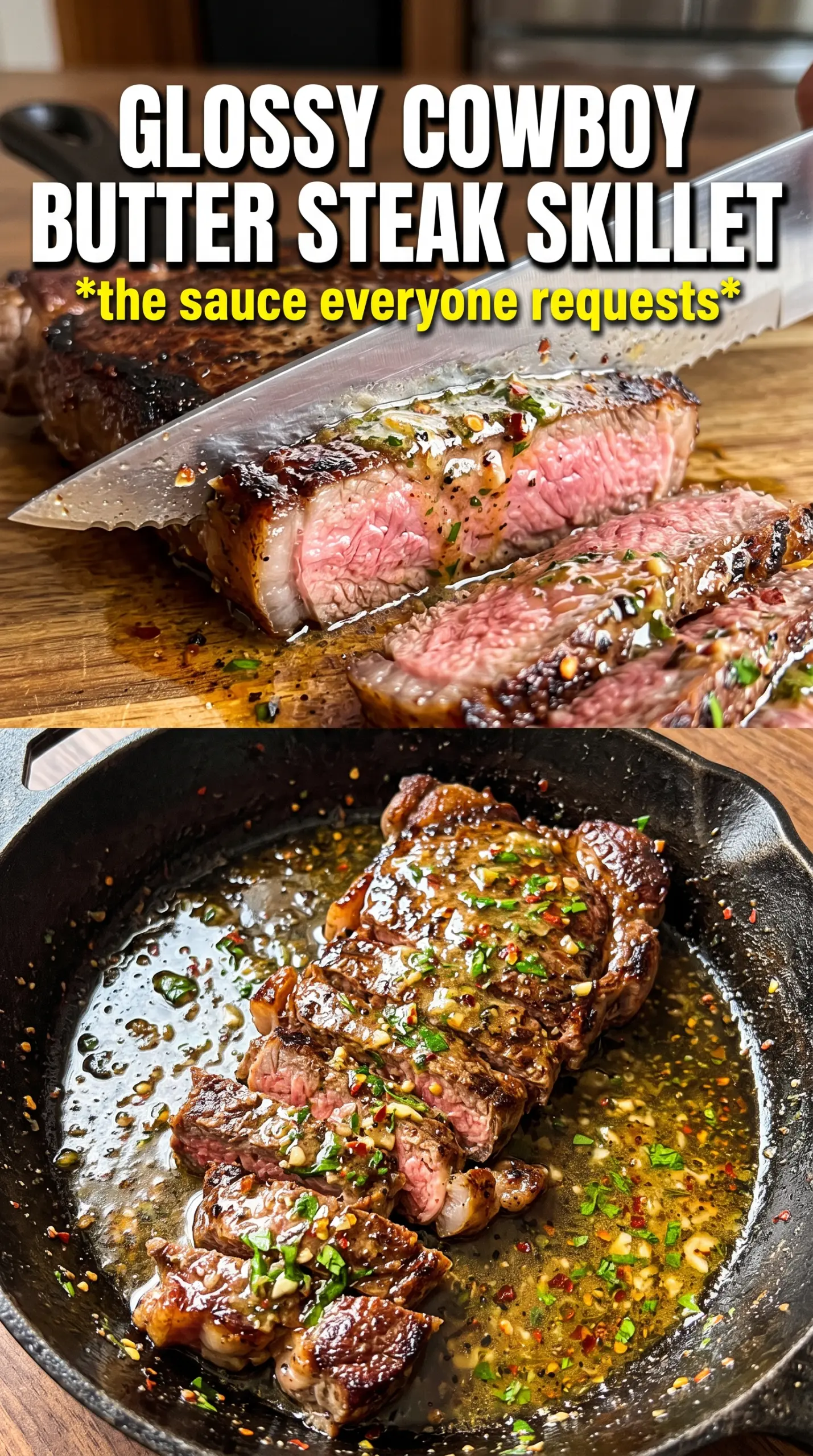
Cast iron-seared steak gets even better when it’s finished with a thick slice of cowboy butter melting into every ridge and edge. The steak stays deeply browned on the outside, juicy in the center, and coated in a glossy garlic-herb butter that clings instead of sliding right off the pan. That final spoonful over the warm meat is what turns a good ribeye into the kind of dinner people remember.
What makes this version work is timing. The butter is mixed ahead and chilled so it holds its shape, then added at the very end when the steak is off the heat and ready to rest. That keeps the garlic, herbs, lemon, and paprika bright instead of dull or bitter. A screaming-hot skillet gives you the crust you want, while the rest time keeps the juices where they belong.
Below, I’m walking through the sear, the butter, and the one step that keeps the whole thing from feeling greasy. There’s also a simple way to adjust the heat if you want the cowboy butter a little calmer or a little bolder.
The butter melted into the steak without turning oily, and the cast iron crust came out exactly the way I wanted it. I chilled the cowboy butter like you said, and it sliced cleanly on top of the hot ribeye.
Save this Cowboy Butter Steak for the nights when you want a hard sear, a silky garlic-herb finish, and almost no cleanup.
The Part Where Most Steak Loses Its Juices
The biggest mistake with a butter-finished steak is adding the butter too early. Butter can burn in a ripping-hot skillet, and once the milk solids go dark, the flavor turns bitter fast. Here, the steak gets its crust first, then the cowboy butter goes on after the pan work is done, which keeps the garlic sweet, the herbs fresh, and the finish glossy instead of greasy.
Ribeye earns its place here because the marbling gives you built-in richness. You still need a hard sear, though, or the butter just tastes like an add-on instead of part of the steak. A thick cut matters because thin steaks overcook before the crust has a chance to develop.
- Ribeye steaks — The marbling gives you flavor and a little forgiveness if you miss the exact resting point by a minute. A thinner steak can work, but it won’t hold the same juicy center after searing.
- Vegetable oil — Use a neutral oil with a high smoke point so the skillet can get properly hot before the steak goes in. Butter in the pan at this stage would burn before the crust forms.
- Unsalted butter — Unsalted lets you control the seasoning in the cowboy butter. If salted butter is all you have, cut back on the added salt until you taste the mixture.
- Fresh garlic, herbs, lemon, and Dijon — These give the butter its lift. Dried herbs won’t taste the same here, and the lemon and mustard keep the butter from feeling flat once it melts over the steak.
What Each Ingredient Is Actually Doing in This Recipe
- Primary ingredient (the star) — Quality matters most. Choose the best you can find.
- Cooking medium (oil, butter, or broth) — This carries flavors and prevents dryness.
- Seasonings (salt, pepper, spices, herbs) — Layer flavors so nothing overpowers. Build depth gradually.
- Aromatics (garlic, onion, herbs) — Cook with fat to bloom flavors. Become the foundation.
- Supporting ingredients — Complement the main ingredient without overpowering it.
- Sauce or liquid (if applicable) — Brings flavors together. Balance richness with acid.
- Acid (lemon, vinegar, wine, or other) — Brightens and prevents flat-tasting results.
- Final finish (garnish, glaze, or sauce) — Prevents one-dimensional taste and adds visual appeal.
Building the Crust Before the Butter Hits
Mix and chill the cowboy butter
Stir the softened butter, garlic, lemon juice, parsley, chives, Dijon, smoked paprika, red pepper flakes, and salt until the mixture looks uniform and flecked through with herbs. Roll it into a log and chill until firm enough to slice cleanly. If the butter is too soft, it melts into the steak too fast and you lose that final glossy finish.
Season like the crust depends on it
Coat the ribeyes generously with salt and coarse black pepper on all sides. The seasoning should look obvious on the surface, not dusted on lightly. Underseasoned steak tastes flat, and once the butter goes on, there’s no saving a bland crust.
Sear in a smoking-hot cast iron skillet
Heat the skillet until it’s smoking, add the oil, then lay the steaks in and leave them alone so the crust can form. For medium-rare, 3 to 4 minutes per side is the range, but the real cue is a deep brown crust that releases from the pan without sticking. If the steak tears when you lift it, give it another 20 to 30 seconds before trying again.
Baste at the end, not the beginning
In the final minute, add a pat of cowboy butter and tilt the skillet so the melted butter pools. Spoon it over the steak a few times, then pull the pan off the heat. This gives you flavor on the surface without scorching the aromatics, which is the difference between rich and bitter.
Rest, then finish with a cold slice
Move the steaks to a plate and rest them for 5 minutes tented with foil. Resting keeps the juices from running out the moment you cut in. Place a thick slice of the chilled cowboy butter on each steak while it’s still warm so it melts slowly into the meat instead of disappearing into the pan.
How to Bend This Steak Dinner Without Breaking It
Make it dairy-free
Use a good dairy-free butter-style stick that firms up in the fridge. You’ll still get the herb, garlic, and lemon notes, but the melt will be a little less rich and a little more clean-tasting than classic butter.
Dial down the heat
Cut the red pepper flakes in half or leave them out entirely. The cowboy butter still tastes layered because the paprika, mustard, garlic, and herbs carry the flavor, just without the back-end heat.
Swap in a different cut
Strip steak works well, and even a boneless New York strip gives you a cleaner, beefier bite. Just watch the cook time closely because leaner cuts can go from perfect to dry faster than ribeye.
Plan for leftovers
Leftover steak slices best when cold or just barely warmed. Reheat gently in a low oven or a covered skillet over low heat so the meat doesn’t dry out, then finish with a fresh slice of cowboy butter after reheating.
Storage and Reheating
- Refrigerator: Store cooked steak and cowboy butter separately for up to 3 days. The butter firms up and the steak loses a little tenderness, but both hold up well.
- Freezer: The cowboy butter freezes well for about 2 months. Wrap it tightly in plastic and thaw in the fridge before slicing; cooked steak can be frozen, but the texture is better fresh.
- Reheating: Warm the steak slowly at low heat, either in a 250°F oven or in a covered skillet over low. High heat pushes it past medium-rare fast and makes the edges chewy before the center is warm.
Questions I Get Asked About This Steak
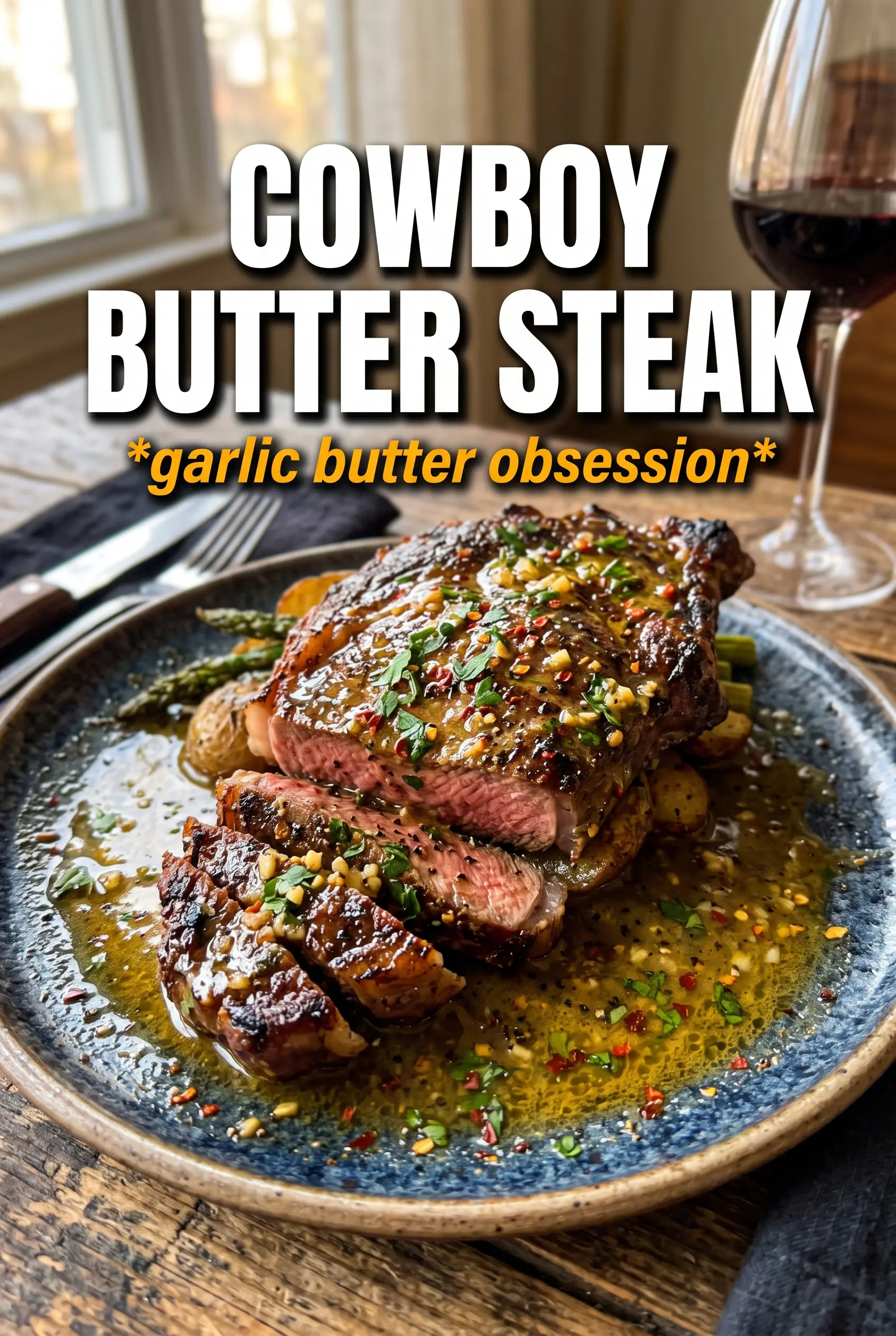
Cowboy Butter Steak
Ingredients
Equipment
Method
- Blend unsalted butter, garlic, lemon juice, parsley, chives, Dijon mustard, smoked paprika, and red pepper flakes until smooth with visible herb flecks.
- Roll the cowboy butter into a log shape in plastic wrap, then refrigerate until firm, 5 minutes.
- Season ribeye steaks generously with salt and coarse black pepper on all sides.
- Heat a cast iron skillet over high heat until smoking, about 2–4 minutes, then add vegetable oil.
- Sear steaks for 3–4 minutes per side for medium-rare, flipping once, and baste with a pat of cowboy butter in the final 1 minute.
- Remove steaks to a plate and rest for 5 minutes tented with foil.
- Place a thick slice of cowboy butter directly on each steak while still warm so it melts.
- Serve with extra cowboy butter on the side.