Penne coated in a thick ranch cream cheese sauce has a way of disappearing fast, especially when shredded chicken, crisp bacon, and melted cheddar are all tangled through every bite. The sauce clings to the pasta instead of sliding off the bottom of the bowl, and that matters here. You want each piece of penne carrying enough of the creamy ranch sauce to taste rich without turning heavy or gluey.
This version works because the cream cheese melts into broth first, before the heavy cream and ranch seasoning go in. That gives you a smooth base instead of a lumpy one, and it keeps the sauce loose long enough to coat the pasta evenly. Cooking the bacon until it’s properly crisp also gives you little salty bites that stay crisp on top instead of turning soft in the sauce.
Below, I’ll walk through the part that keeps the sauce silky, what to swap if you need a shortcut, and how to reheat leftovers without drying out the penne.
The sauce turned out silky and coated every noodle, and the bacon stayed crisp on top even after I mixed everything together. My husband went back for seconds before I even sat down.
Save this Crack Chicken Penne for the nights when you want a creamy ranch pasta with bacon, cheddar, and almost no cleanup.
The Sauce Breaks When You Rush the Cheese
Crack chicken penne lives or dies by the sauce. If the cream cheese goes in over high heat, it can turn grainy before it ever fully melts, and once that happens the sauce never gets back to perfectly smooth. The fix is simple: start with the broth and cream cheese over medium-low heat, then stir patiently until the cubes disappear into a glossy base.
Once that base is smooth, the ranch seasoning and heavy cream go in to round it out. The broth gives the sauce enough looseness to coat the pasta, while the cream adds body without making it pasty. If the sauce looks a little thin right before the pasta goes in, that’s fine; the cheese and noodles will finish thickening it in the pan.
What Each Ingredient Is Actually Doing in This Pasta
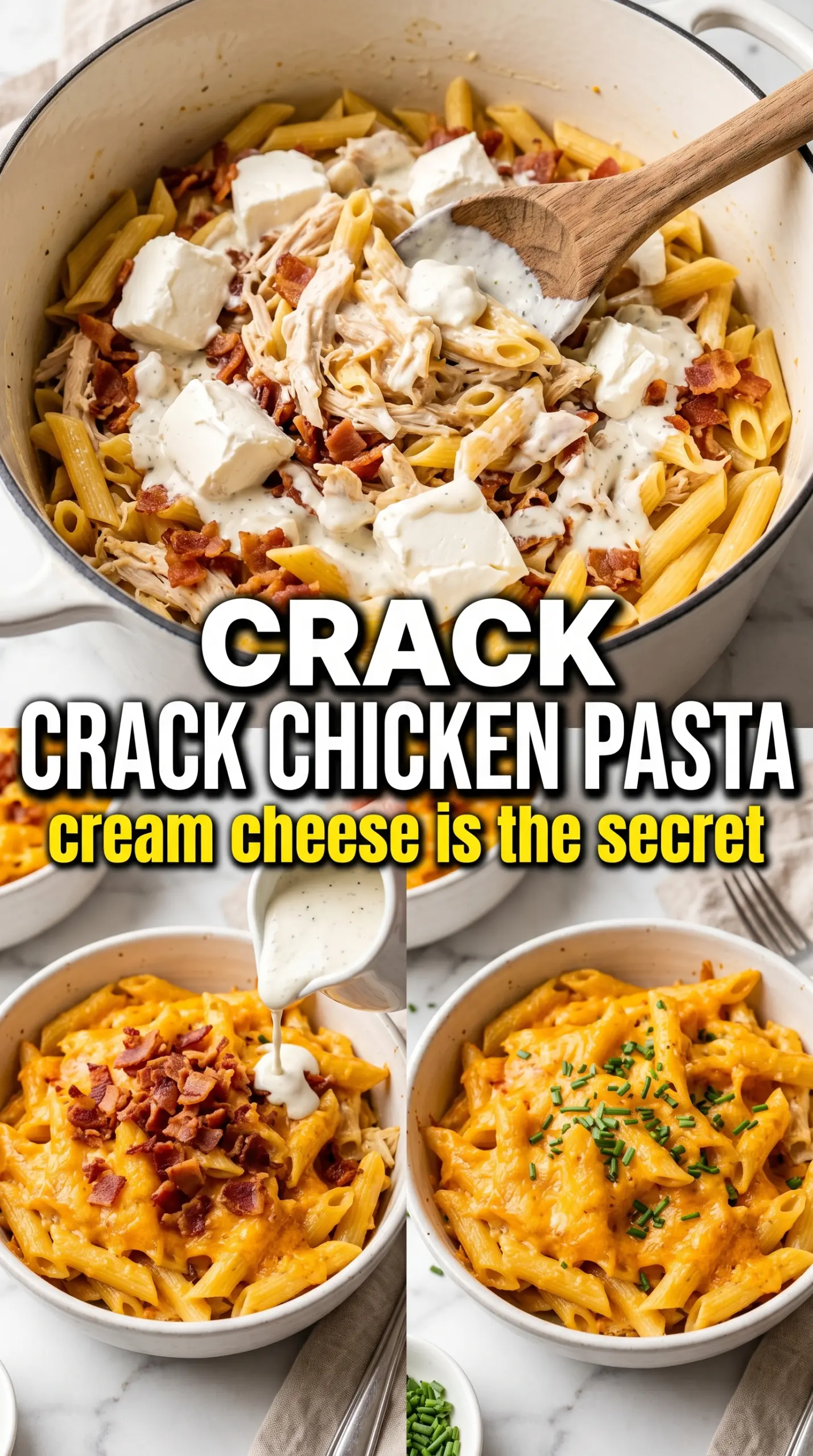
- Shredded chicken — This gives the pasta its main body and makes the dish feel like a full meal instead of just a cream sauce with noodles. Rotisserie chicken works well here because it’s already tender and seasoned, but any cooked chicken you have on hand will do.
- Bacon — Crisp bacon is what gives this dish its salty edge and keeps it from tasting flat. Cook it until it’s truly crisp before crumbling; soft bacon turns limp once it hits the sauce.
- Cream cheese — This is the ingredient that makes the sauce cling. Full-fat cream cheese melts the smoothest, and the softened cubes help it disappear faster into the broth.
- Ranch seasoning mix — This brings the herby, tangy note that defines the whole dish. There isn’t a perfect substitute for the packet’s blend, but if you need to reduce sodium, use a low-sodium ranch mix and season the finished pasta after tasting.
- Heavy cream — This softens the cream cheese and gives the sauce a richer finish. Half-and-half can work in a pinch, but the sauce will be a little looser and less plush.
- Cheddar cheese — It melts into the top layer and adds that sharp finish that makes the pasta feel extra rich. Shredding your own cheddar melts more smoothly than bagged pre-shredded cheese, which is often coated to prevent clumping.
- Penne — The ridges and tube shape catch the sauce inside and out. Short pasta with some texture is the right choice here; smoother shapes won’t hold onto the sauce as well.
Building the Pasta So Every Piece Gets Coated
Cooking the Garlic Without Browning It
Start the garlic in olive oil over medium heat and give it just a minute. You want it fragrant, not colored. If it browns, it can taste bitter once the dairy goes in, and that bitterness stands out in a sauce this rich. Keep it moving in the pan and add the liquid as soon as the garlic smells sweet and sharp.
Turning Broth and Cream Cheese Into a Smooth Base
Add the chicken broth first, then the softened cream cheese cubes. Stir over medium-low heat until the cubes melt into a unified sauce and no pale lumps remain on the bottom of the skillet. If the pan is too hot, the cream cheese can seize in little bits before it melts, so stay patient and lower the heat before it gets away from you.
Finishing the Sauce Before the Pasta Goes In
Stir in the ranch seasoning and heavy cream and let the sauce simmer for 3 to 4 minutes. It should look glossy and a little thicker, but still loose enough to move easily around the pan. Add the chicken, most of the bacon, and cooked penne, then toss until every noodle is coated. The cheese on top melts best when you cover the skillet for a couple of minutes at the end instead of stirring it straight into the sauce.
Three Ways to Work This Into Your Week
Make It Lighter Without Losing the Creamy Sauce
Use reduced-fat cream cheese and half-and-half instead of heavy cream, then add a splash more broth if the sauce feels too thick. The result is still creamy, but it won’t be quite as rich or velvety as the original.
Make It Gluten-Free
Swap in your favorite gluten-free penne and check that your ranch seasoning is certified gluten-free. The sauce itself is naturally gluten-free, so the pasta choice is the part that matters most.
Turn It Into a Spicy Version
Add a pinch of cayenne or a spoonful of diced jalapeños when the ranch seasoning goes in. That heat cuts through the richness and gives the creamy sauce a little more edge without changing the core flavor.
Use Turkey or Ham Instead of Chicken
Cooked turkey or diced ham both work well if that’s what you have on hand. Ham brings more salt, so hold back a little of the bacon until the end and taste before adding anything extra.
Storage and Reheating
- Refrigerator: Store in an airtight container for up to 4 days. The pasta will absorb some of the sauce as it sits, so it gets thicker in the fridge.
- Freezer: It freezes, but the cream sauce can separate a little after thawing. Freeze in portions if you want to use it later, and expect a slightly less silky texture when reheated.
- Reheating: Warm it gently on the stove or in the microwave with a splash of broth or milk. High heat is the mistake that dries out the pasta and can make the sauce split, so reheat slowly and stir often.
Answers to the Questions Worth Asking

Crack Chicken Penne
Ingredients
Equipment
Method
- Heat the olive oil in a large skillet over medium heat, then cook the minced garlic for 1 minute until fragrant. Keep the heat at medium so the garlic softens without browning.
- Add the chicken broth and the cubed cream cheese, then stir over medium-low heat until the cream cheese melts completely. The sauce should look smooth and glossy before you season it.
- Stir in the ranch seasoning and heavy cream, then simmer for 3-4 minutes until slightly thickened. Let small bubbles form around the edges as a visual cue.
- Add the shredded chicken, most of the crumbled bacon, and the cooked penne, then toss to coat evenly in the ranch sauce. The pasta should be fully covered, with visible chicken and bacon throughout.
- Top with shredded cheddar, then cover the skillet for 2-3 minutes until the cheddar melts. You should see the cheese soften and sink slightly into the surface.
- Garnish with the remaining bacon and fresh chives, then serve immediately. Finish with chives on top for a fresh green pop.